
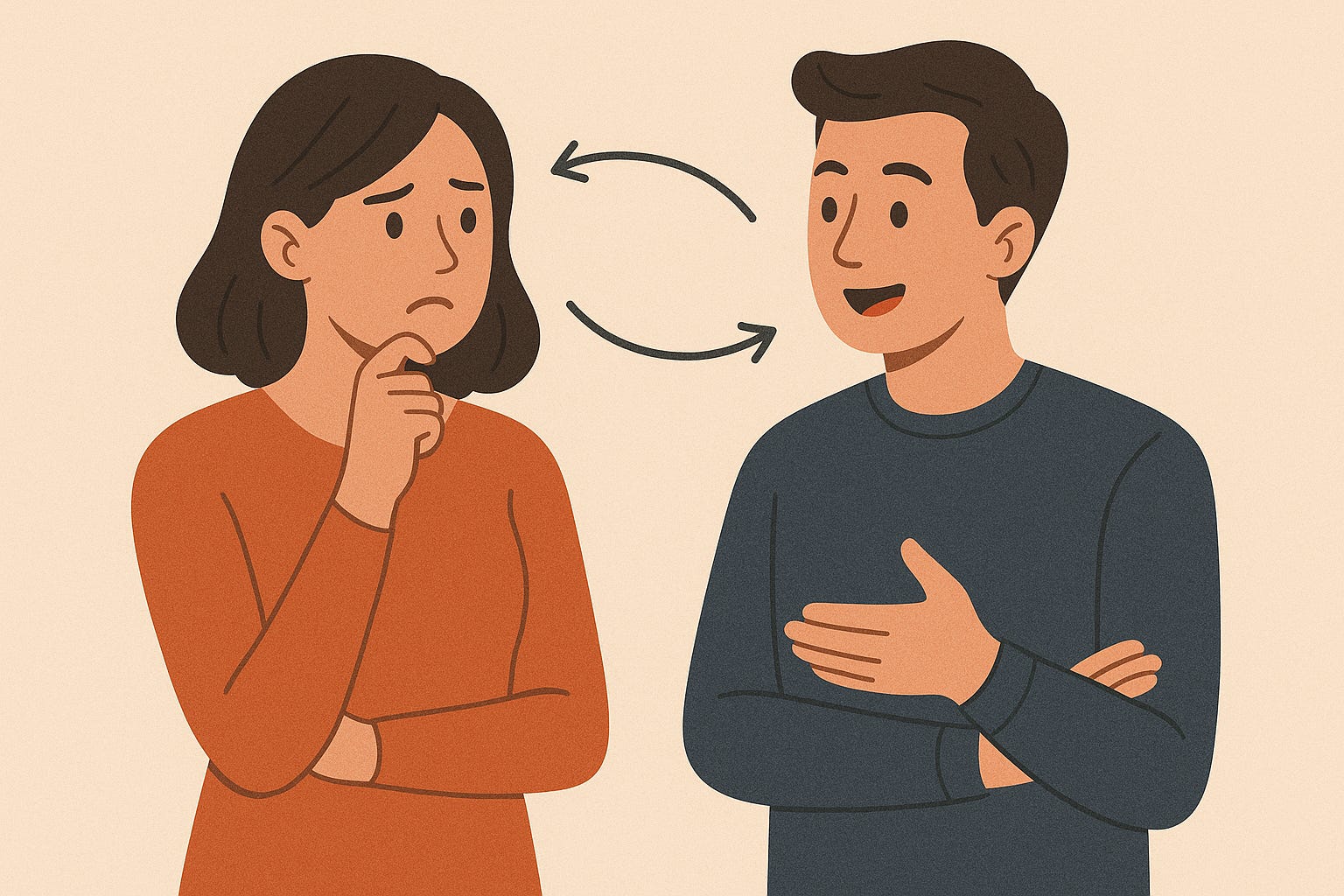
Walk into any room and you’ll notice a symphony of the unsaid. A nervous tapping of a pen, a quiet stare into space or a furrowed brow while reading something. We tend to think that communication begins when we speak, but it has already begun the minute we step into a room, long before we utter a single word.
Our bodies are always talking, narrating stories our minds might not even be aware of. They are putting out signals out to the world and to ourselves. A slouched posture can signal defeat before the first idea is shared, a steady gaze can establish authority without a word, and a bright smile or simply the energy can command an audience’s attention more than any well-rehearsed speech.
Noted psychologist Albert Mehrabian of UCLA has a 7-38-55 communication model that says that 7% of communication is words, 38% through tone and voice and 55% through body language. While this model is often generalized, and incorrectly so, Mehrabian’s research is more nuanced and valuable than the popular myth surrounding non-verbal communication. It highlights that when a speaker’s words are inconsistent with their emotional tone or facial expressions, listeners rely more heavily on the nonverbal cues to understand the speaker’s true attitude. Essentially, you could lie, but your bodies don’t.
But this isn’t just about perception, it is also about noticing whether our minds are congruent with our bodies when making decisions. The Co-Active Training Institute’s teachings emphasize the need for coaches to rely on energy shifts and body movements when working with a coachee. When we use the Balance techniques to try on different perspectives, or when we talk about their life vision or their leader within, there are often shifts in the coachee’s body that speak so much louder than their words do.
I have personally seen my coachee’s postures shift quite suddenly when they move from something that doesn’t align with their values to something that does. Their shoulders lift, breath deepends, hands open up. It’s as if their body exhales everything it has been holding so far. A shift that often surrounds a ‘breakthrough’
So much of our modern communication happens through screens, yet even in digital spaces, body language persists. A distracted glance off-camera, a delayed smile or a deep breath, all of these signals shape the emotional texture of our exchanges.
Perhaps the most profound part of all this is awareness. When we begin to notice our own body shifts, and those of others, we start observing the unsaid. And it is in this unsaid that alignment lies. When we begin thinking and leading with our brains and bodies combined, we often make decisions that are completely in congruence with what we truly believe in.
Maya Angelou famously said ‘’I’ve learned that people will forget what you said, people will forget what you did, but people will never forget how you made them feel.”
There is deep truth to this statement, because in the end, when all the words have been said and heard, it is your presence that remains.
And it is this language that transcends all borders, the language that every human being speaks and understands.
A language that needs no words.
No posts
Comments
Nothing yet. Say the first thing.
Sign in to join the conversation.