
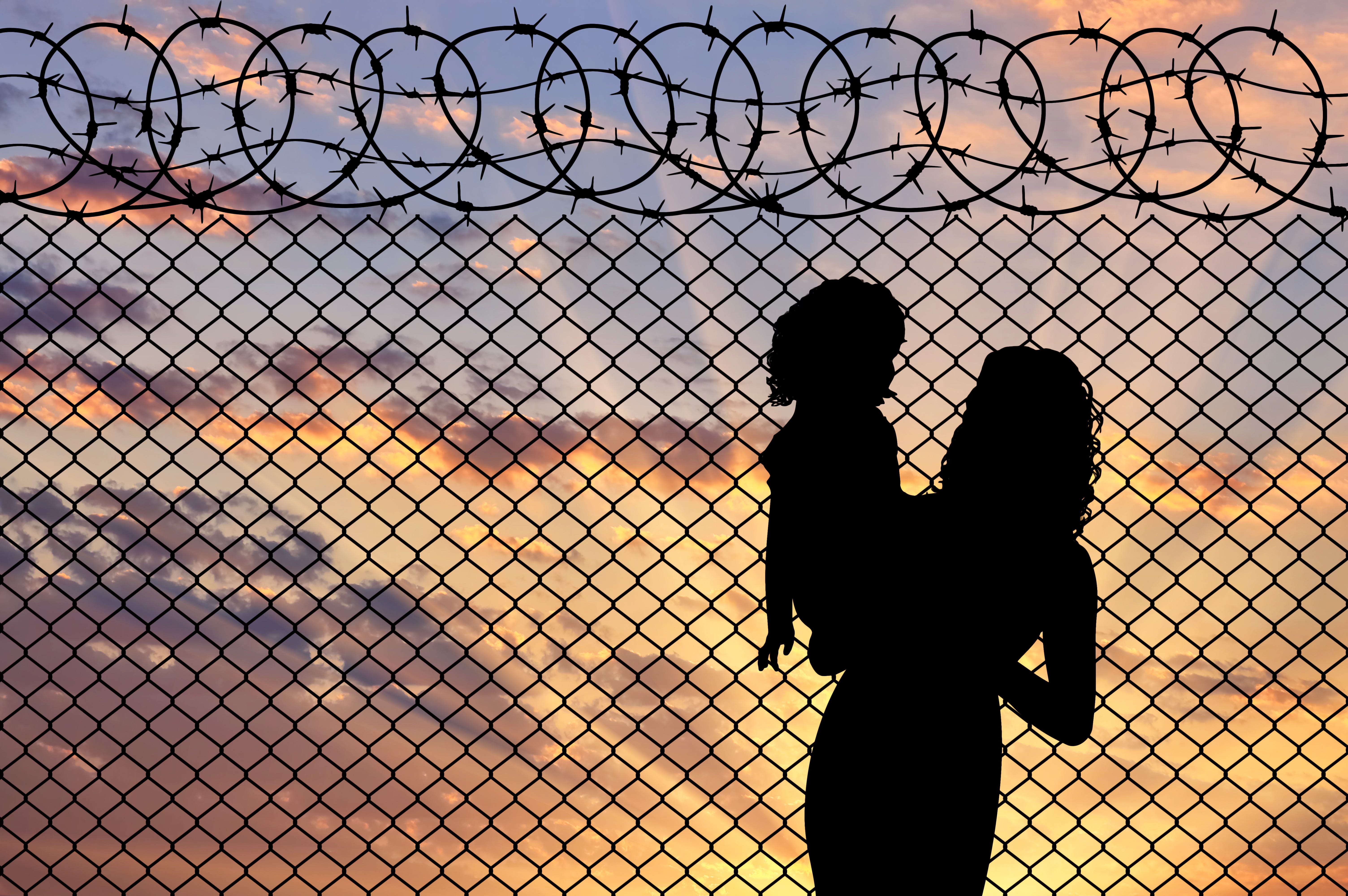
When someone is arrested and taken away from their families and communities, it can have a ripple effect of harm, especially among the children who are left behind. On any given day, about 2.7 million children have a parent incarcerated in the US, and more than 5.2 million children have experienced their parents being incarcerated at some point in their lives. Many studies over time have proven that parental incarceration can lead to a wide range of issues including loneliness and other emotional and behavioral difficulties among children.
It can be even more traumatizing when the arrest happens right in front of the child. There is growing attention among researchers and policy makers to consider how witnessing a parent’s arrest impacts children as well as things that can be done to minimize the harm.
Noticing a gap in research on witnessing parental arrest, Miaomiao He, a PhD student at Monash University, worked with a team to conduct a scoping review of studies that analyze the correlation between the event and its individual and interpersonal implications on the children.
“Witnessing a parent’s arrest does have very strong implications for children and for their well being and also development in their future, and we’ve seen lots of negative effects showing up later in their lives, and it’s important to do more research and to see how we can change the practice in reality to improve their outcomes,” He said.
The review, titled “The Impact of Witnessing Parental Arrest on Children: A Scoping Review,” published in November, asserted:
Individually, children may experience emotional and behavioral difficulties, elevated posttraumatic stress (PTS) symptoms, physiological stress, poor school performance, and developmental delays. Interpersonally, their family relationships, as well as attitudes to and perceptions of police officers, were negatively affected. Furthermore, children who witnessed an arrest were more likely to be exposed to other forms of violence, compared with those who did not witness this event.
Her review also stated that witnessing a parent’s arrest is influential on children’s attachment, sense of safety and security, as well as their social and emotional development. They were also more likely to have greater anxious/depressed behaviors than children who didn’t witness a parent’s arrest.
A separate study from 2017 that analyzed attachment in young children with incarcerated fathers found that 22% of children they surveyed had witnessed their father’s arrest. Another study found that when it came to a mother’s arrest, 70% of children witnessed it.
The study also included research on parental arrest by ICE agents in the US and Israeli Occupation Forces in Palestine. The research similarly showed that children who witnessed their parents get arrested are more likely to be fearful of themselves being arrested in the future and vulnerable, angry or distrustful of the arresting agency.
The study did acknowledge that in some instances, a child witnesses the arrest because they are the ones who called the police and could be removing the child from a bad situation.
“I think there is a need to synthesize the existing knowledge on the evidence of the impact of witnessing parental arrest and to inform those policies, and also to raise awareness of the importance of this issue and to call for future research,” He said.
She said that she hopes policy makers will take the impacts children have of witnessing their parent’s arrest into consideration when making procedures. In some places, these changes are already underway.
There are some initiatives in Sweden where the police officers are asked to follow up with the care arrangement of children after arresting a parent. In the United Kingdom, there is an initiative called “Operation Encompass” providing training to police officers to interact with those justice-involved families. Some states like New York and California have child sensitive arrest procedures, but He said more attention, thought and sensitivity is needed to address this issue.
“Parental arrest is not just a procedural action, it is a distinct event with its own implications for children,” He said. “So there should be changes, particularly when children are involved.”
No posts
Comments
Nothing yet. Say the first thing.
Sign in to join the conversation.