
In spring 2023, I started working on a story about how the California Department of Corrections and Rehabilitation was transferring people in their custody to US Immigration Customs and Enforcement detention centers on the day those incarcerated individuals were supposed to be released to their families. Along the way, I made a discovery: the CDCR was also sending US citizens to ICE for deportation.
Public records I obtained (which I had to pay nearly $200 for) showed that between 2018-2022 the CDCR had sent at least 250 people they acknowledged to be US-born to ICE, despite having it in their records that those people were born in the US. They also transferred to ICE another 600 people they deemed as having an “unknown” place of birth and did not respond to my request to clarify what “unknown” meant.
Those figures were part of the more than 7,200 incarcerated people from 109 different countries CDCR sent to ICE. Latinos and Asians were disproportionately targeted to be sent to ICE. More than 5,000 of these incarcerated people were from Mexico. Even some of those that were born in other countries could have been naturalized citizens, like a man who was incarcerated at San Quentin whom I interviewed.
While CDCR had said that they referred individuals to ICE based on their intake form when they first went to prison, lawyers and advocates including the American Civil Liberties Union said that the CDCR was racially profiling people. The ACLU found that CDCR sends names and release dates of people in their custody to ICE for the agency to pick them up when they are about to go home.
Additionally, even before I started my investigation, legislators had told CDCR to stop sending incarcerated people to ICE.
This issue was also personal to me — over the course of reporting, I found out that my dad, a naturalized citizen who was born in Mexico and is currently in San Quentin, has an ICE detainer meaning CDCR intends to let ICE pick him up when he is done with his sentence.
I found out because my mom had heard me doing an interview for that story and was asking me questions about it — “your dad has one of those,” she told me.
I asked my dad about it. At first he said he didn’t know what I was talking about, then I told him that my mom told me about the ICE detainer. Even though he is in prison, he is still a protective father and doesn’t like for my family to worry about him.
I called an immigration attorney, and she told me that it was something that would have to be dealt with closer to the end of his sentence. She also told me it would cost more than a hundred dollars an hour to actually hire someone, but I would most likely have to send a cease and desist letter to ICE along with copies of his documents to resolve it.
It felt unfair. If he wasn’t a person of color and immigrant, we wouldn’t have to worry about him getting swept up by ICE instead of coming home after his sentence. ICE detainers are a double punishment on immigrant communities. It doesn’t only impact him, because as the oldest daughter, I have to figure out how to prevent ICE from taking him, on top of everything else I am doing. It is a stressor other people don’t have to feel.
Additionally, ICE has fully gone through with deporting citizens, so that makes me worry that they could actually deport him, too. In my opinion, incarcerated people are vulnerable to ICE because they lack the resources and support to fight their case before ICE picks them up, and they are less likely to have support from the general public when they do fight.
In March, Edwin Chavez, who is currently incarcerated at San Quentin, wrote an op-ed stating that he “is safer in San Quentin than if paroled” because he might otherwise be sent to ICE and deported. This partnership between prisons and ICE is so atrocious that some people think they are actually safer in prison and dread the end of their sentence because they don’t want to be deported.
More people need to care about what happens to incarcerated people. Last October, ProPublica reported that citizens were being detained by ICE at the largest number in decades — but this was happening in prisons first. It’s like that saying, “first they came for other people and I didn’t do anything, then they came for me.”
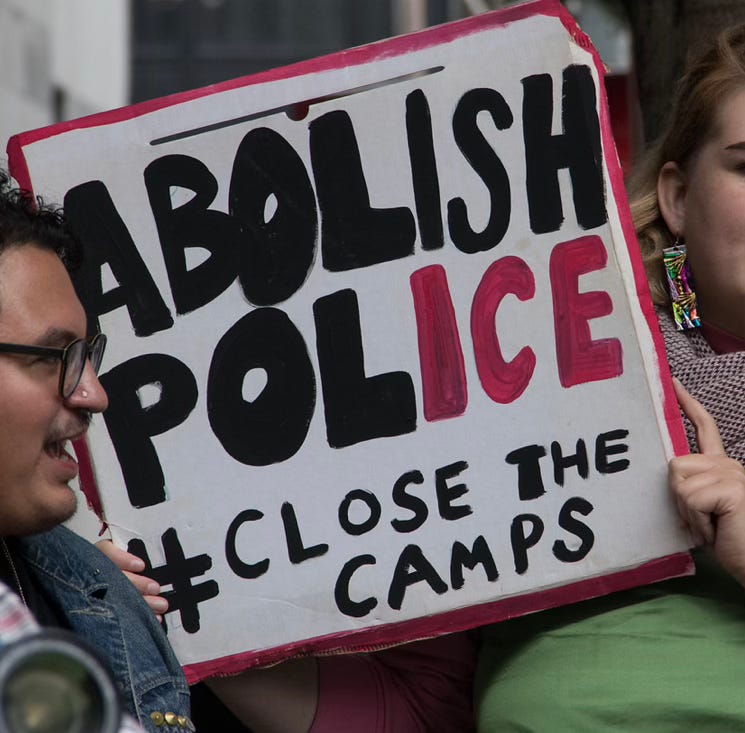
The California Model is trying to make people think that the prison system is changing for the better, but the reality is that we don’t just want a new learning center — we want an end to the partnership between prisons and ICE.
No posts
Comments
Nothing yet. Say the first thing.
Sign in to join the conversation.