
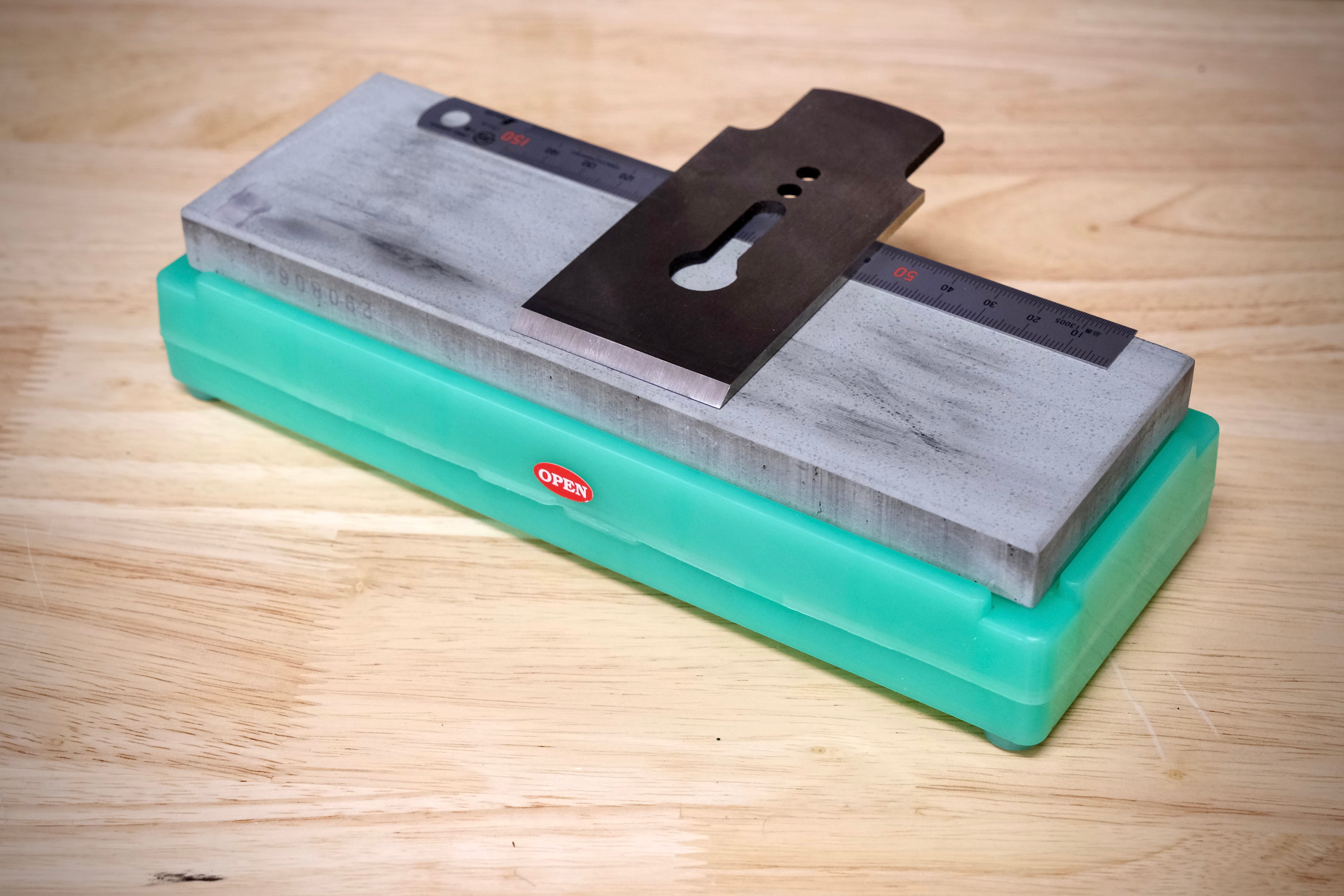
There are certain woodworking techniques that become gospel. Someone respected says it, enough people repeat it, and before long it becomes “the way.”
The ruler trick is one of those.
If you’ve somehow avoided the sharpening rabbit hole, the ruler trick was championed by David Charlesworth. The idea is simple enough. Place a thin ruler at the edge of your sharpening stone to lift the back of the blade ever so slightly. Instead of polishing the entire back of the iron, you only polish the leading edge. In theory, it saves time and gets you to a sharp edge faster.
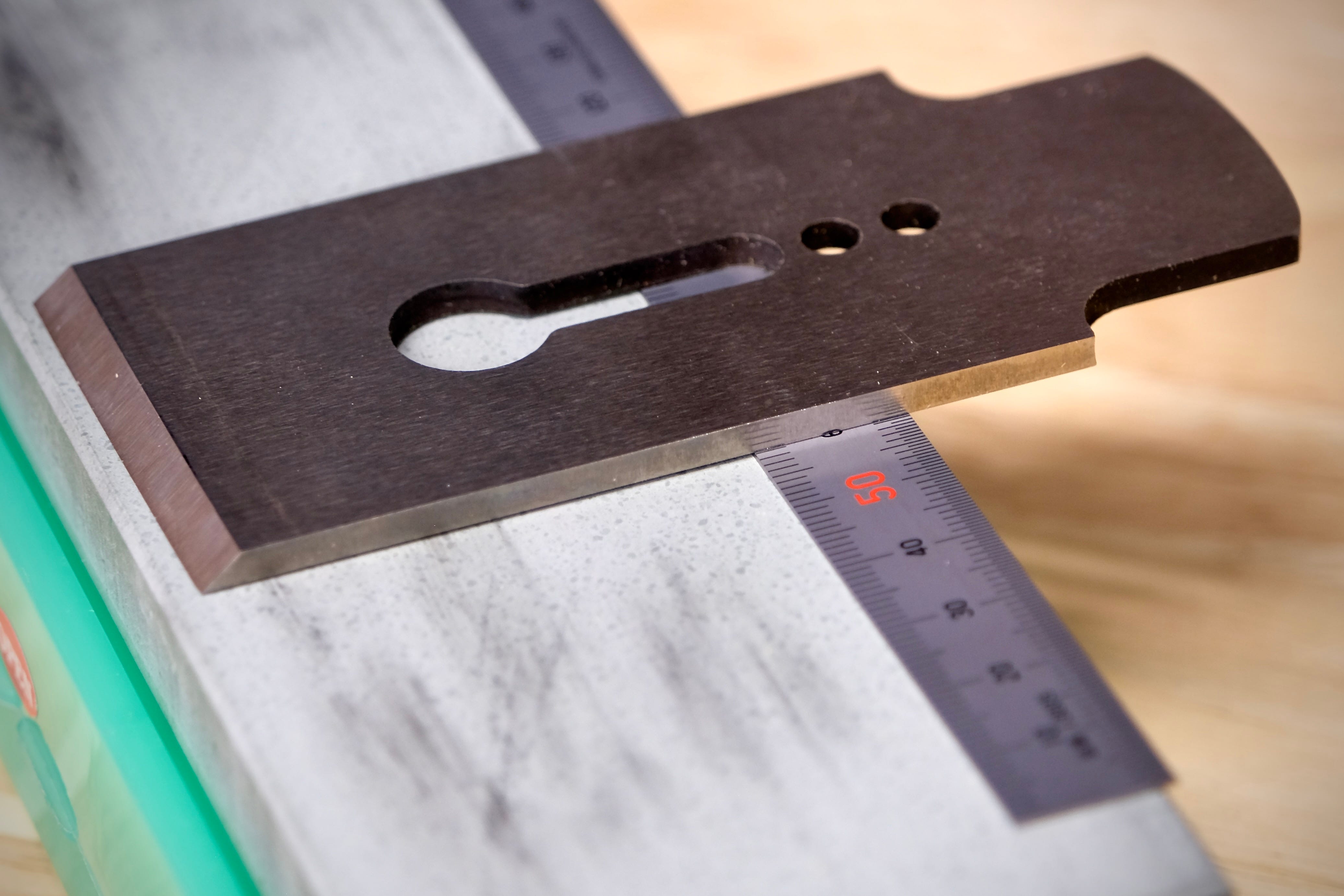
Sounds great. In practice? I’m not a huge fan.
Before anyone sharpens their pitchforks, let me be clear. This isn’t me saying the ruler trick is bad. It absolutely has its place. But like many things in woodworking, context matters, and this is the part that often gets left out. The issue I have with the ruler trick is consistency.
For it to work predictably, the ruler has to sit in exactly the same spot every time. The blade projection has to be exactly the same every time. Change either variable and the angle shifts, even if only slightly. Add in sharpening media that isn’t perfectly flat, like a Japanese water stone with a little dish in it, and now things get even murkier. Suddenly, the tiny back bevel you intended can become steeper than expected.
That’s a lot of moving parts for something many beginners are told is a shortcut.
And here’s the thing about shortcuts in woodworking. They’re only shortcuts if you understand what’s happening.
Years ago, I had the good fortune to spend some time with David Charlesworth in England at an event. We got chatting about the ruler trick and I asked him directly why he liked it so much.
His answer made complete sense.
He said that when you’re working with old vintage Stanley planes, the irons are often thin and nowhere near flat. Some have humps on the back that would take forever to remove. The ruler trick gets those old irons back into service much faster.
Fair enough.
Then I asked him about newer blades. Most modern manufacturers do a pretty good job flattening the back of an iron these days. His answer?
“You don’t need to do it if it’s a newer blade.”
This is the part nobody quotes.
Thanks for reading Wood Slivers! This post is public so feel free to share it.
The ruler trick wasn’t intended as a universal sharpening method for every blade under the sun. It was a practical solution to a specific problem: old, stubborn, vintage irons.
And honestly, David was right.
Most modern blades need maybe five minutes (at most) of work to go from a factory surface-ground finish to a mirror polish on the back. That’s hardly a hardship. Vintage blades, on the other hand, can be an exercise in frustration. Some are so warped or humped that flattening them feels like a punishment. Truthfully, one of the first things I often do with an old plane is replace the iron with a modern one and save myself the grief.
Now, if you use the ruler trick and it works brilliantly for you, fill your boots. Woodworking isn’t religion. You don’t need my blessing. Just understand what it’s for.
Because every extra step in a process adds complexity, and complexity adds opportunities for inconsistency. If the ruler trick helps you get sharp edges faster, great. But don’t assume it’s necessary, especially on a modern blade.
Sometimes the simplest approach is still the best one. And sometimes the woodworking internet forgets to include the fine print.
In order to understand, you must do - Vic
If sharpening still feels more like guesswork than process, mentorship might help. One of the biggest advantages of working with someone experienced is cutting through the noise, especially when the internet has twelve different opinions on something as simple as sharpening a plane iron.
Whether it’s sharpening, hand tools, machine setup, or getting unstuck on a project, I offer one-on-one woodworking mentorship tailored to where you’re at. Sometimes a single conversation can save you hours of frustration, and possibly one rage-induced trip to buy yet another sharpening system you probably don’t need.
Comments
Nothing yet. Say the first thing.
Sign in to join the conversation.