

Access VICO forecasts or make your own at www.vico.io as well as on the Bloomberg Terminal at WSL PREDICT<GO>, WSL ELECTION<GO> and WSL VICO<GO>.
Domestic Politics: Wisconsin Governor Primary, DSA, Vaccines, Lisa Cook
Global Politics: We Called It: US x Iran, Russia x NATO, Alberta Secession
Economics: Job Growth, Fed Rates, US Treasuries
On Tuesday night, moderate Democrat David Crowley defeated DSA-endorsed favorite Francesca Hong. The race highlights a continued trend of DSA candidates running in tight elections with establishment-backed picks as the future of the Democratic party appears up for grabs. Meanwhile, The President signed an executive order to change vaccine scheduling recommendations for children. And the White House renewed threats to oust Fed Governor Lisa Cook. This week:
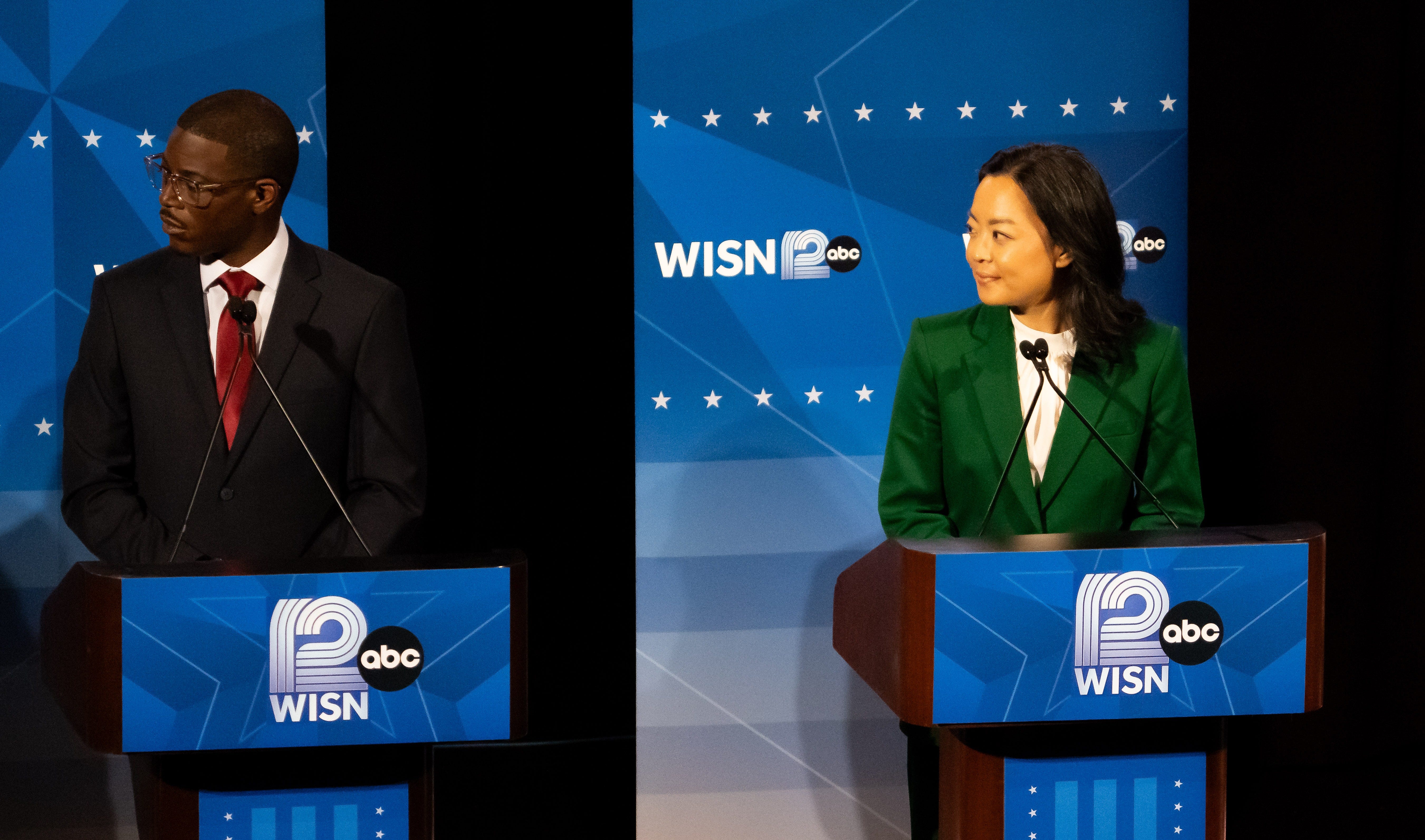
We Got it (less) Wrong: Wisconsin Governor Primary
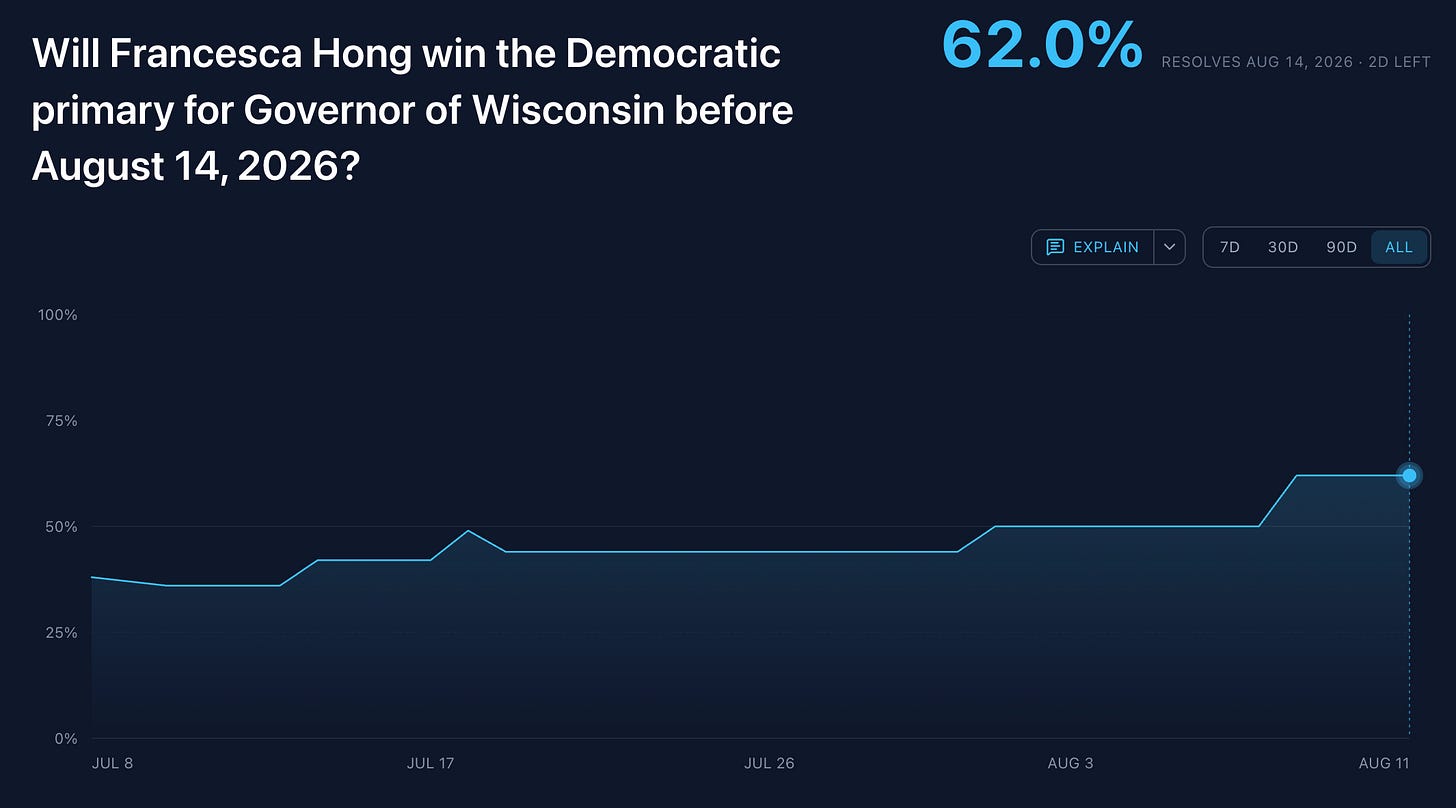
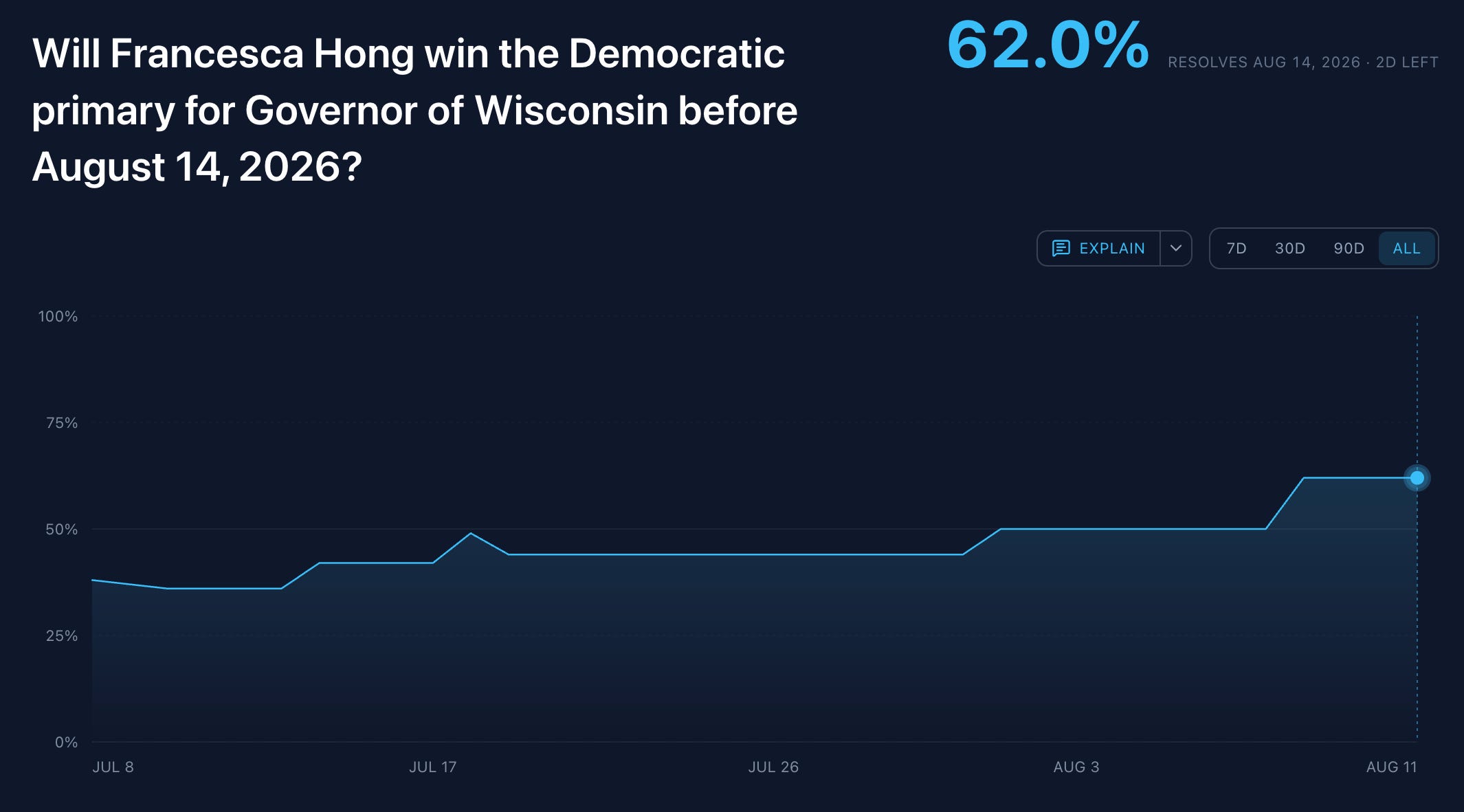
Prior to Tuesday’s election, the VICO model gave DSA-backed Francesca Hong a 62% chance to win Wisconsin’s gubernatorial primary election. In a surprise upset, Hong went on to lose by less than 1 point.
However, prediction markets priced Hong at 97% on the day of the race, so far more wrong than us.
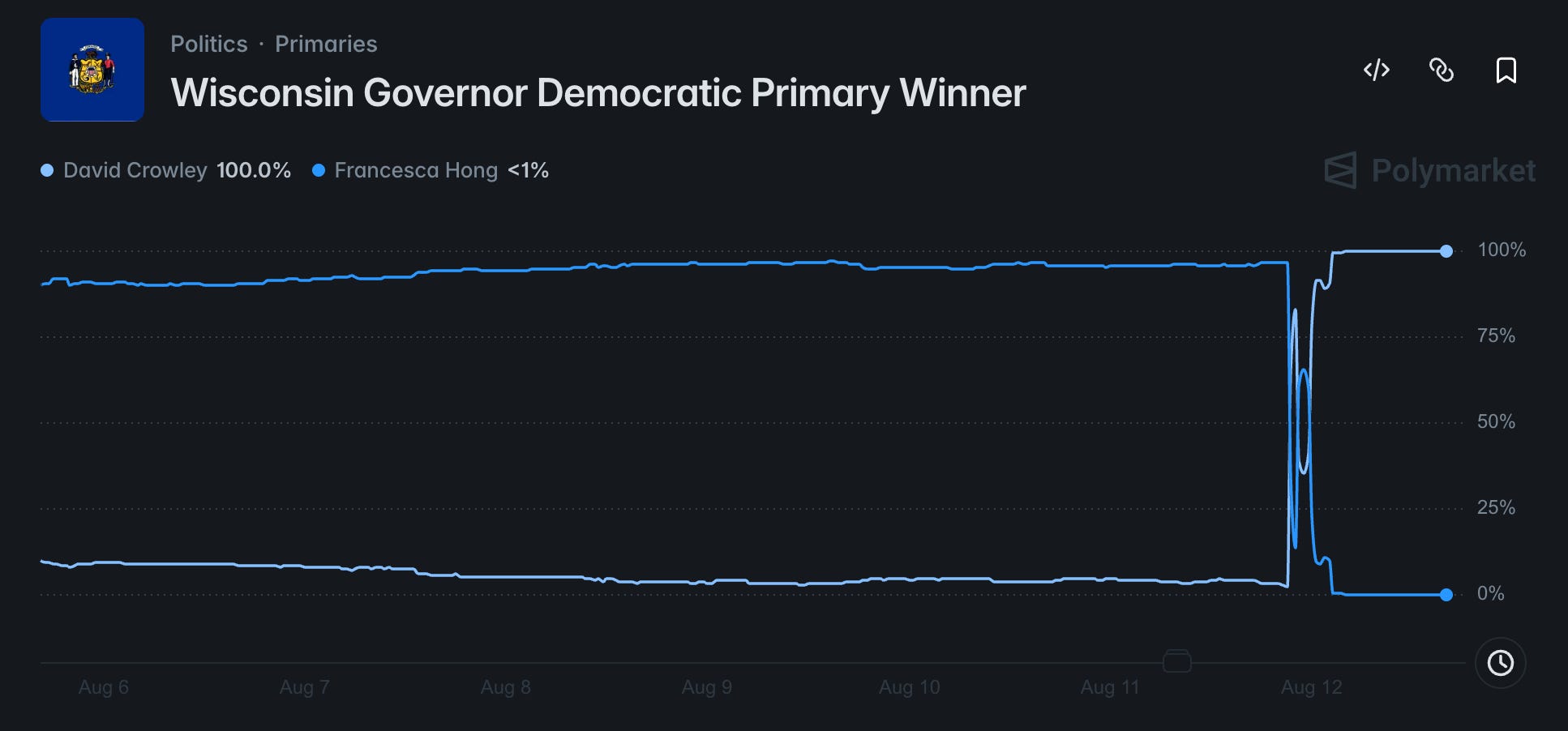
Markets were responding mostly to polling data which showed Hong with a 20%+ lead over moderate David Crowley.
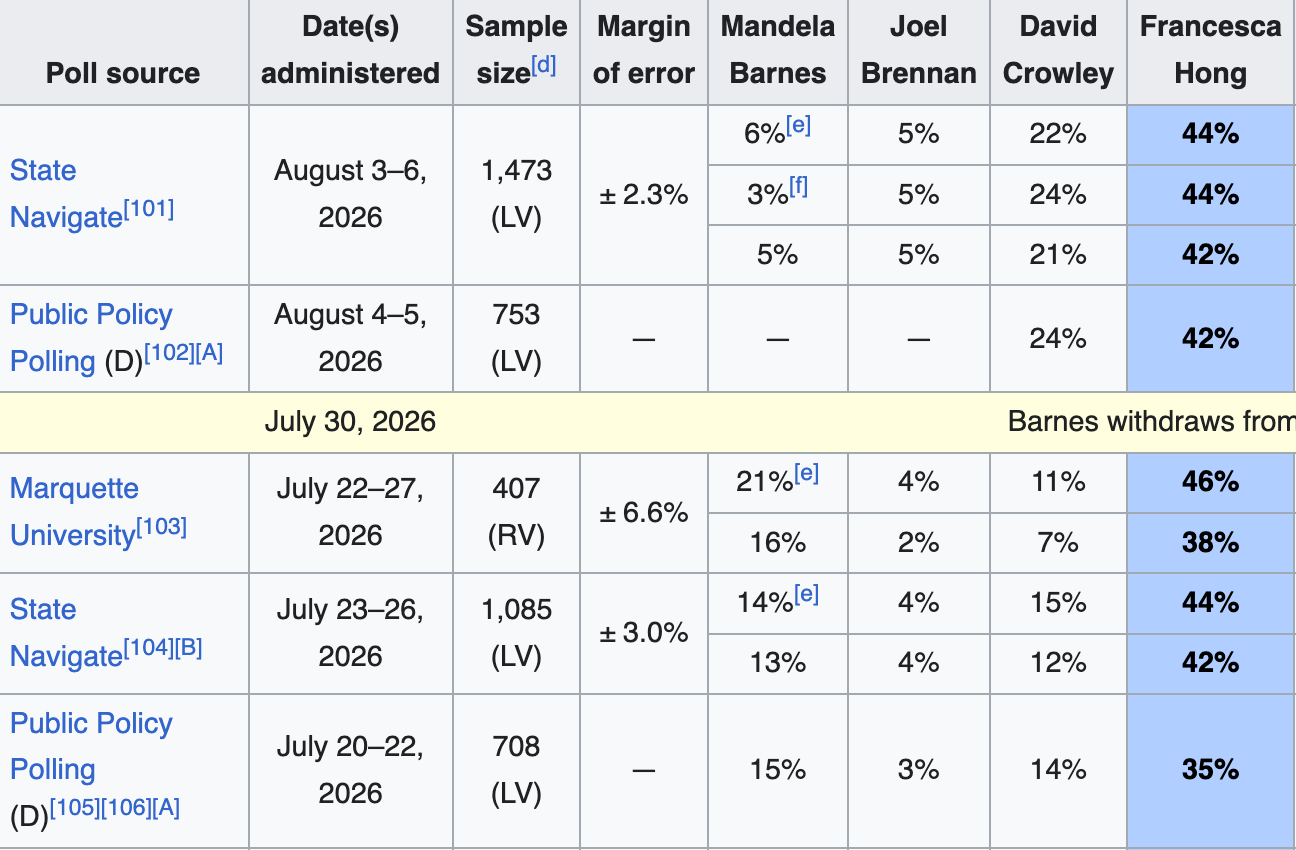
The result mirrors last week’s election in Michigan, where prediction markets forecasted a 15%+ victory for progressive El-Sayed while the VICO model forecasted El-Sayed as the slight favorite in a tight race. El-Sayed went on to win by less than 1 point.
We covered the difference between us and prediction markets on the Michigan race in last week’s newsletter.
Note: We believe that part of the explanation for why we were more right is that prediction markets have been highly reliant on polling data and the news cycle. The VICO model by contrast considers polling, but puts more weight into fundamentals like electorate history and fundraising numbers. This approach may be particularly useful in primary races given that Congressional primary polling is historically unreliable relative to general election polls, a fact the VICO model takes into effect.
46%: The probability that David Crowley wins the Wisconsin gubernatorial election. (Polymarket: 77%)
The VICO model raises concerns for Crowley over a bruising primary in which he inched past Francesca Hong by less than 1%. It argues that in a state as tight as Wisconsin, Crowley’s problems motivating the Hong base could swing the election in favor of Republicans.
Democratic Socialists of America - overhyped?
12%: The probability that at least 10% of Democratic members in the House of Representatives are members of, or endorsed by the DSA in the next 5 years.
The VICO model is skeptical of long-term growth potential for the DSA. The model cites extreme policies like support for abolishing the US Senate as an electoral anchor likely to restrict most members to a few urban areas.
18%: The probability that the number of DSA-endorsed members in the House is greater than the margin between the majority and minority party after the midterms.
Assuming Democrats take the house (73% on VICO), this would provide DSA members control over Democratic legislation by allowing them to partner with Rs to kill bills they view as inadequate.
14%: The probability that AOC wins the Democratic nomination for president in 2028. (Polymarket: 21%)
AOC is now the favorite to win the nomination on Polymarket, but the VICO model is concerned about the likelihood of establishment consolidation behind a more moderate candidate in order to avoid general election concerns that come with running a more progressive candidate.
11%: The probability that a coalition of leftwing members of the House successfully keep Jeffries from becoming speaker.
Vaccine change - courts make it unlikely
The President’s new executive order would reduce the number of federally recommended vaccines for children from 18 to 11.
82%: The probability that a Federal court issues an injunction or ruling that blocks the implementation of President Trump’s vaccine executive order in the next 365 days.
65%: The probability that any state loosens existing vaccine requirements in response to the executive order.
Ultimately, the model argues that courts are likely to block the executive order from taking effect. However, the order provides political incentives for Republican state legislators to revise existing vaccine requirements as a show of being aligned with the President.
Lisa Cook
The Trump administration attempted to fire Fed Governor Lisa Cook earlier this yer but was rebuffed by the Supreme Court which concluded the President needs cause for such an action. The administration has indicated they are planning to try again, this time using alleged mortgage fraud as cause for the firing.
92%: The probability that the Trump administration attempts to Fire Lisa Cook again in 2026.
65%: The probability that Lisa Cook is successfully removed as a Fed Governor within the next 365 days.
The VICO model argues that mortgage fraud allegations could provide a sufficient pretext for a firing, especially with a 6-3 conservative supreme court that is likely to give the President more favorable rulings.
Last week, the President again touted negotiation progress and suggested a deal with Iran could be finalized by mid-week. Elsewhere, recent reporting indicates Russia may soon test NATO’s resolve with a limited incursion. And Canadian province Alberta is set to vote on seceding from the country over differences with the federal government. This week:
We Called It: US x Iran
Again the President stoked anticipation of a deal, again the market jumped, again VICO remained steady, and again it fell apart. That was the story of last week’s potential deal to reopen the Strait of Hormuz which has since collapsed.
In last week’s newsletter, we put the odds for a deal to partially reopen the Strait of Hormuz in the next 14 days at 38%.
Meanwhile, Polymarket priced the odds for a deal by August 15th as high as 70% on Wednesday of last week. That probability has since cratered to just 4%, and the market on a deal by August 31st has done the same, now down to just 20%.
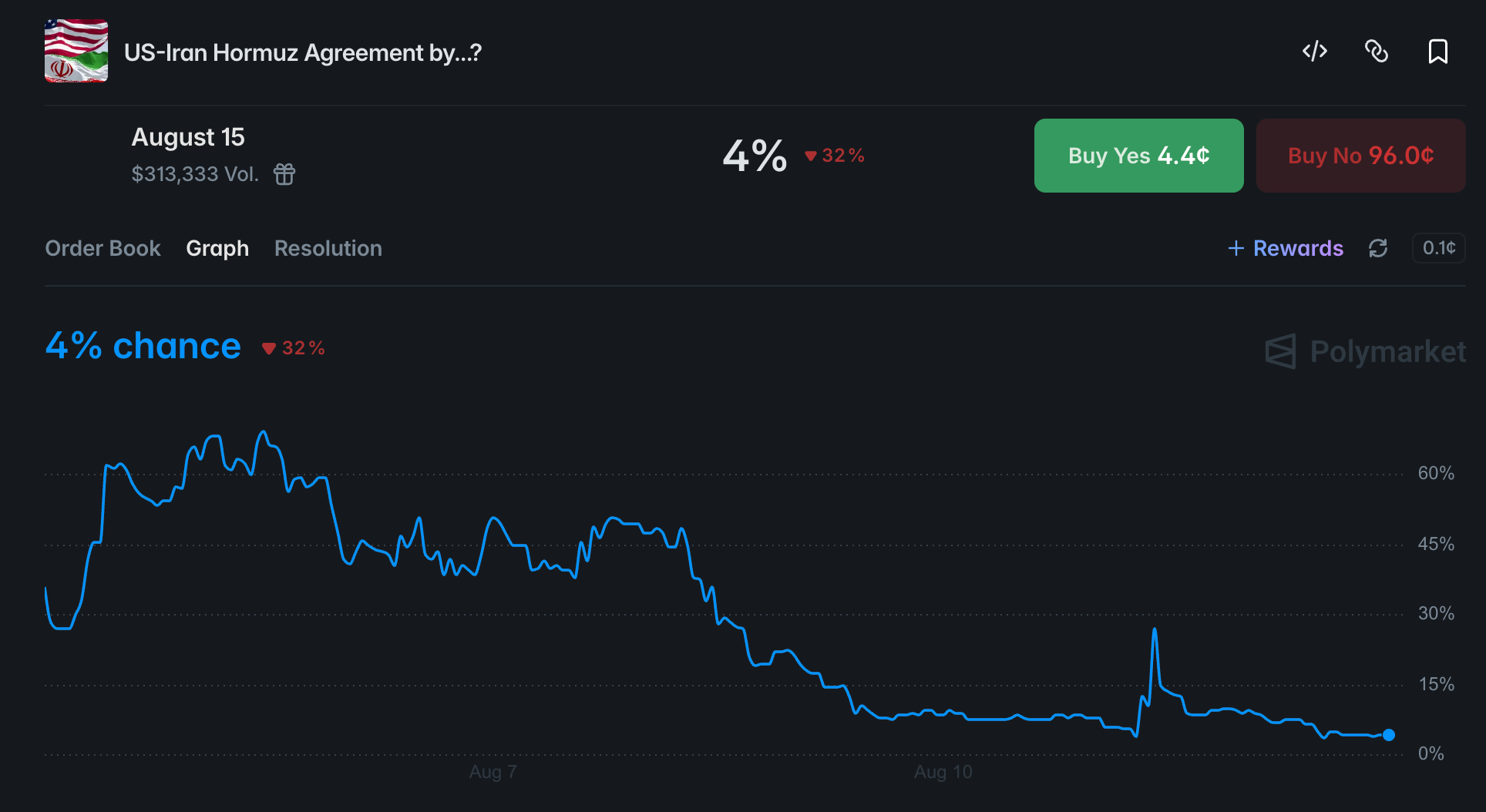
The VICO model’s simple read of both sides simply remaining far apart on basic terms continues to see through the noise that is shaping prediction markets.
19%: The probability that the US and Iran reach a deal to at least partially reopen the Strait of Hormuz in the next 14 days.
82%: The probability that the US levies more or harsher sanctions on Iran in the next 30 days.
The VICO model argues the US is shifting from military pressure to economic pressure following increased sanctions and a focus on the naval blockade.
12%: The probability that the US announces an end to the naval blockade of Iranian ports by August 31. (Polymarket: 35%)
38%: The probability that Congress passes a supplemental budget for munitions beyond the proposed FY 2027 defense budget by March 31, 2027?
18%: The probability that US Patriot interceptor missile stockpiles are restored to their pre-war point by the end of 2028.
The VICO model argues that US stockpile issues are serious and likely to leave a lasting mark. Look for the US to increasingly use economic pressure like sanctions and the blockade in an attempt to bring Iran to the table.
Russia x NATO
8%: The probability that Russia launches overt military strikes into NATO territory in 2026.
32%: The probability that Russia launches a covert military operation on NATO territory in 2026.
10%: The probability that Russia launches a large cyberware attack against a NATO country in 2026.
The VICO model argues that a covert military operation would be the most likely form of aggression against NATO. Interestingly, the model attributes this to the incentive for NATO countries to label any covert military action as an accident rather than an incident attributable to Russia. This allows NATO members to avoid the political pressure of an article 5 trigger, and potentially opens the door for Russia to launch operations into NATO territory.
What if: Russia performs a covert operation targeting Baltic energy infrastructure, and does not trigger article 5.
The VICO model identifies the Balticconnector (a gas pipeline in the Baltic sea) as a natural target. In 2023, the pipeline was damaged and gas prices jumped over 10% in a single day. The incident was ruled an accident and attributed to a dragged anchor.
90%: European natural gas futures surge over 30%, and European Brent crude oil prices spike more than $8.
85%: Electricity prices in the Baltics and Finland rise by more than 100%.
65%: NATO deploys 12-15 additional warships to enforce mandatory inspections of all non-NATO commercial vessels in the Danish Straits.
Alberta Secession
38%: The probability that Alberta votes in favor of secession.
4%: The probability that Alberta secedes in the next 5 years.
Despite the news attention it is receiving, the October referendum is actually a referendum to have a referendum. If secession gets more than 50% of the vote, the province will hold a legally binding referendum at a later date to secede. The VICO model believes that if the election reached a legally binding phase, it would be unlikely to pass even if it gets more than 50% the first time.
Quebec has twice held votes on seceding, although no Canadian province has ever seceded successfully. Losing Alberta’s large oil revenue would hurt both the Canadian economy and the government’s tax revenue. Fortunately for them, we believe this story is mostly noise.
Last week’s job growth numbers showed a loss of 23,000 jobs in July, and revised down previously optimistic figures for June and May. As job numbers indicated a slowing economy expectations for a rate hike changed in response to fears that a rate increase could further slow economic growth. And 30 year treasury bonds recently reached a 19 year high as markets struggle to interpret the Federal Reserve. This week:
Job Growth
58%: The probability that the US economy gains net jobs in August (Polymarket: 80%)
38%: The probability that the US economy adds at least 50,000 jobs in August (Polymarket: 56%)
32%: The probability that the US economy adds at least 100,000 jobs in August. (Polymarket: 25%)
While the VICO model is overall more bearish on the August jobs report than prediction markets, the model is actually slightly more bullish on best-case scenarios with growth over 100,000.
Last month’s revisions continue a pattern of repeated downward revisions of previous jobs numbers.
68%: The probability that the majority of remaining jobs reports in 2026 will be revised downwards in subsequent months.
The VICO model argues that the recent trend of downward revisions is likely to continue given the current movement of the labor market, essentially suggesting that release day figures be taken with a grain of salt.
Fed Rates
67%: The probability that the Fed raises rates at the September meeting. (Polymarket: 33%)
The VICO model revised down after the weak July jobs report but only slightly, falling from 76% to 67%. The VICO model continues to emphasize inflation worries over job growth concerns.
72%: The probability that the Fed raises rates at least once in 2026. (Polymarket: 55%)
US Treasury Bonds
82%: The probability that 10-year US Treasury yields cross above 4.75% in 2026.
10%: The probability that 10-year US Treasury yields fall below 4.00% in 2026.
24%: The probability that a second major rating agency downgrades US sovereign debt from its current level in the next year.
42%: The probability that US net interest payments on the federal debt exceed 5% of GDP in the next 10 years.
About Us
VICO empowers decision makers to quantify and navigate event risk. Forecast, simulate and monitor political, geopolitical and economic events.
Learn more and obtain a beta account at www.vico.io or email us at inquire@vico.io
Thanks for reading VICO Future Monitor! This post is public, so feel free to share it.
Methodology and Copyright Notes:
All percentage changes are over the last week except where noted.
Our proprietary AI models are rigorously backtested and do not rely on any betting market information.
All data and content are owned by and copyrighted by VICO Technologies Inc.
No posts
Comments
Nothing yet. Say the first thing.
Sign in to join the conversation.