
I need to start this one with a confession:
I didn’t give any of this stuff enough thought when I first started out making docs away from the structures of broadcast television, 20 years ago.
Back in 2006, frustrated with the tabloid and increasingly exploitative nature of the factual shows I was making (The World’s Strangest UFO Stories, Asbo Fever, Sleeping with the Au Pair to name but a few), I decided to strike out solo to make independent documentaries on topics that felt more serious and meaningful.
I’d done a little bit of filming myself on taster tapes for pitched shows and as an occasional additional camera on location (shout out to the mighty PD1501). But I was lucky enough to come into the industry before the move to self-shooting was fully entrenched and so most of the docs I’d worked on had been helmed by highly skilled, experienced crews of lighting cameramen and sound recordists.
This meant that when I moved to working independently, I was naturally inclined to seek out crew I knew could produce images and sound that would be night and day better than anything I could hope to capture myself as a self-taught rookie.
This was the route I took - outside of a few vox pop-style interviews I grabbed myself - on the early short films I made.
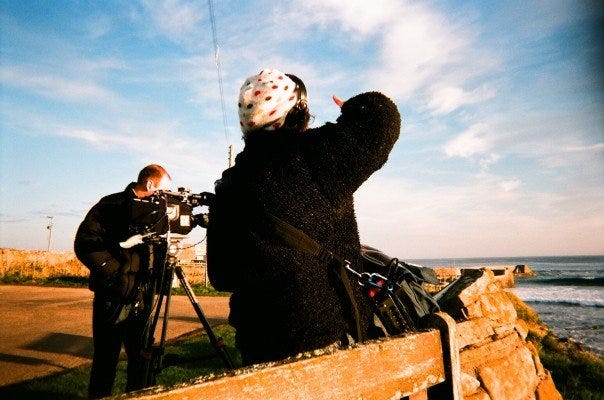
And by the time I committed myself to making the feature doc that would eventually become The Atom: A Love Affair, there was no question in my mind that the way to go was to surround myself with the best and most experienced people I possibly could, in order to make the best film I could.
There’s a lot going for this as a strategy and I’m incredibly proud of the quality of the film it resulted in. But I also learned a lot of lessons along the way which I’m taking with me into this new project – and I figured it would be illuminating to share these, both to give an insight into my own thought processes and to contribute to the important discussions the industry needs to keep on having about who makes the films we all watch.

To start us off then, here are the main categories covering the different ways I connected with the many and varied collaborators I worked with on The Atom:
People I’d directly worked with previously in my factual TV career, camera and sound particularly;
Recommendations from my network – this is how I found my archive producer, film editor and final post-production team;
Cold approaches to people I’d not worked with before but admired and hoped would want to work with me – in particular this applies to my executive producer, UK documentary legend Christopher Hird, who’s gone on to become not just one of the most incredible professional collaborators and mentors I’ve ever had, but someone I’m proud to call a friend2; but it’s also how I got actor, activist and writer Lily Cole to narrate the film and found the fantastic screen printer who created the film’s gorgeous artwork for me;
Cold approaches made to me by people interested in working with me – the main example in this category being my wonderful composer Paul Honey, whose agent reached out after seeing a synopsis of the film.
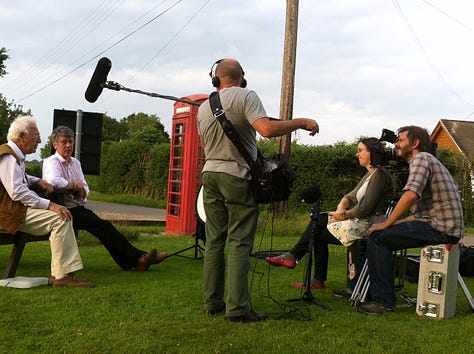
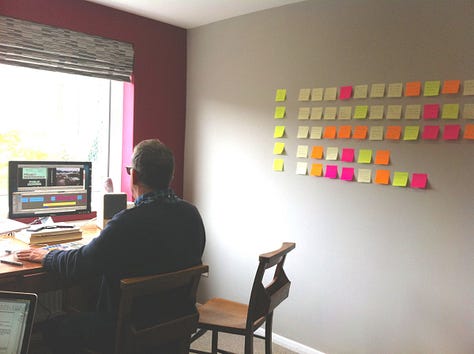
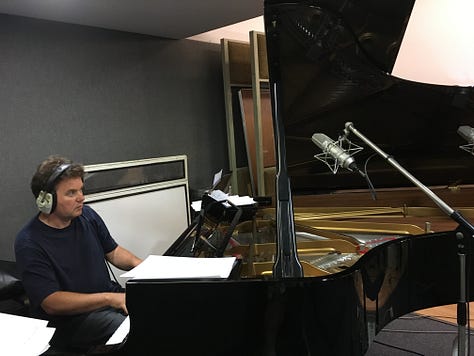
All of these methods let to brilliant, creative working relationships and I have nothing but praise for those who helped me bring my vision to life.3
This meant that the majority of the time, I defaulted to working with older, white men - all of them hugely talented and incredibly generous in their support of me as a first time director on a feature-length film.
But as a woman who experienced being passed over in favour of up-and-coming young male directors in my TV career - the other factor that encouraged my move into working independently, alongside the morally dubious nature of much of the subject matter - I regret not making a conscious effort to hire more women or colleagues from other under-represented groups (I worked with some of the former, but none of the latter).
I should stress too that these were all good, properly paid roles, not working for free or on mates’ rates - at least if you don’t count me and my exec (more on that in my no-holds-barred deep dive into the finances of of The Atom: A Love Affair: I sold my film around the world. But I’m still in debt). And with thanks to editor Zan Barberton for crystallising the thought around how internalised patriarchy limits the opportunities for women, even when women are the ones doing the hiring, as she did in this reply to a Substack Note I posted while writing this:
I think as women OR men we are as hardwired to look to older, white men as a sort of authority, which when we are going alone on a daunting creative enterprise, then that sort of reassurance can be fantastic. And it goes without saying that many white men are prodigiously talented and use their privilege to bring people up around them, and support others, including me!
But then the other issue is when you are working on a creative project with no immediate payment in sight, it helps to be working with mates, who will share their talent on the hope of it paying back later, or maybe just because they like you. And white men tend to have white men mates they team up with, who then come up with them.
I seldom get asked by men (even my friends) to join forces on a crazy project, and yet I’ve often created fab opportunities for paid work I’ve then employed men to do. And I think my experience isn’t unique - it’s the patriarchy working inside our brains, and it sadly leads to less paid work for women. So now if I have an actual budget I do try and reach out consciously to women. It definitely requires a mindset shift, and I’m someone who has always surrounded myself by prodigiously talented women in the TV crafts space. I really should know (and do) better.
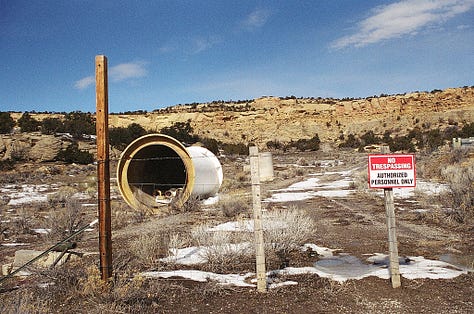
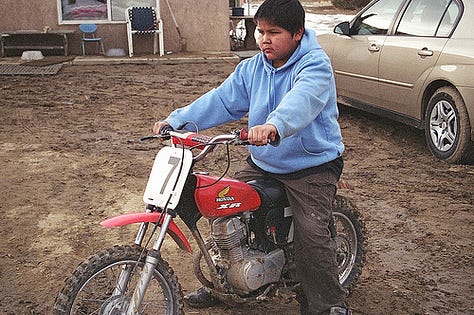
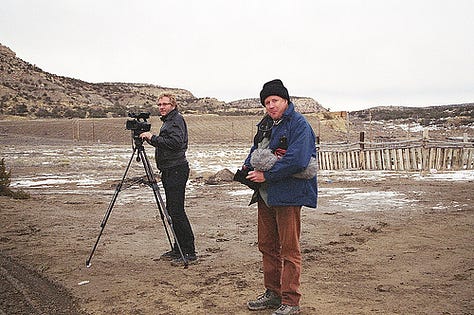
That particular blind spot was most obvious in the first significant bit of nuclear filmmaking I ever did, when I went to the Navajo reservation in New Mexico in 2007 to make a short film about the legacy of uranium mining there.
To be clear, I don’t think I was necessarily wrong to do this – I was coming from a place of sincere shock and outrage about what I’d learned about that history and a genuine desire to shine a spotlight on it. But with the distance of time and age, I do feel a bit uncomfortable that I just parachuted in and filmed for a day with the people in that film and then returned home to England, having formed no real and long-lasting connections with the community.
It’s one of the reasons finding indigenous collaboration for this new film feels so important to me.
MY PRODUCER ASK: Can you help me build in the creative sovereignty this film is calling for?
So far, my cold approaches to Native documentary talent haven’t yielded any responses, but I’m not giving up, because I really do want to ensure the Western Shoshone perspective isn’t just a subject in this film, but is represented through a true creative partnership. My dream collaborator would be a co-director or producer with doc experience, but I’m also open to more oblique ways of embodying the Indigenous truth of the story I’m telling, such as poetry, music or visual art.
If you know anyone - or know someone else who might know someone - in the Indigenous film or broader creative community in the US (and especially in and around Nevada/the Four Corners states), please reply to this email or leave any suggestions or introductions in the comments 🙏
Well, firstly, I’ve changed. And that’s a good thing – because of course, it’s not just about what I want and need in the people I work with, it’s what I bring to the table to attract great people to want to work with me.
And being completely truthful, I don’t think I was always the best collaborator on my debut film because, well, it’s hard to be when you don’t entirely know what you’re doing. I think I was probably a bit of a pain in final post – constantly having to confess my lack of knowledge/full understanding of various technical aspects of grading and sound-mixing (if only I’d had access to the generous, demystifying writing of Shawna Carroll and her Notes from Post then eh!)
That said, if you’ve not done something before, that can’t be helped (as one of my son’s favourite Cbeebies shows4 back in the day has it ‘There’s a first time for everything!’) and in my experience good collaborators aren’t just excellent at their work, they’re excellent at communicating exactly what they’re doing and what they need from you.
Having done lots of things for the first time on The Atom, I can be clearer and more confident in articulating what I want to achieve, though of course I still want to push myself and try out new, different creative possibilities (though I’ve worked with animation and graphics in the past, I see a much bigger role for both on this new film, while working with creative sound design as an integral part of the storytelling isn’t something I’ve really done before).
My wish list remains pretty simple at its heart. I’m looking for brilliant, talented people who:
can creatively brainstorm and engage with me to help refine my ideas and vision to create something better than I could alone
understand and are willing to accommodate the vagaries of independent documentary-making, particularly around scheduling and funding
and quite simply give a shit – both about the subject and the characters, and about how they look and sound on screen
And the great news is that someone has already come my way who fits the bill on all those counts. I received one of those cold approaches, from a motion graphics designer in Dublin who’d found me via the Documentary Film Council, a still-relatively-new members’ co-operative advocating for the documentary sector in the UK and we had a long and invigorating conversation all about my vision for the film. Over more than 2 hours we really clicked and I came away feeling I’d found someone who’s absolutely on the same page as me in connecting with the brief of ‘making visible the invisible’.
Guess what, though. He’s another white man!
While writing this piece, I did have to pause and interrogate myself – am I living up to my own stated ambitions of looking beyond the ‘default’ industry network I’ve spent so many years in?
But yes, I think I am. Because the point isn’t just to do a box-ticking, diversity-for-diversity’s-sake exercise. It’s about being truly intentional in how I create the team I’m going to work with – and if one seat at the table may already be filled, that’s even more reason to make sure I’m mindful about who else I bring to the party.
This film is about women who acted in solidarity with an Indigenous community fighting a battle not so dissimilar to the battle they themselves were fighting. Building a majority-female team with true Native participation to tell that story feels like the right thing to do – so that’s what I’m aiming at.
Watch this space, as they say.
Build with me: If you’re a female animator or sound designer who might be interested in working with me to illustrate the activists’ hike through the Nevada desert to stop a nuclear test, get in touch and let’s talk!
What’s coming next: Later in the week I’ll be inviting you back into the Film Thread film club, with a European-flavoured selection of companion films to watch after this month’s autism pick Ben X (did you watch that one? I’d love to know if so?) And I’ve got a few special treats lined up for August when I’ll be taking my foot off the work pedal during the school summer holidays.

Watch my film on Netflix & Disney+ (UK/Europe only) or Vimeo-on-demand - or see trailer, reviews & bonus content HERE
Find me on Bluesky & at LinkedIn
This was the ubiquitous camera used on SO many factual and factual entertainment TV shows of the mid to late 2000s, but we weren’t the only people using it: a cursory web search led me to this (paywalled) Substack piece all about a towering legend of cinema who it turned out was also a big fan of Sony’s workhorse mini-DV camera…! David Lynch’s Sony Camcorder
And at 3 decades my senior, a rare, intergenerational friend at that, a category I particularly value and cherish (and one I plan to come back to and think/write about more in the future, especially as I get going with my life story commissions, which will involve intergenerational sharing at their very heart)
Actually, there was one horror story involving someone who could scarcely have come more highly recommended from multiple colleagues, but I’ll save that sorry saga for a different day. Fortunately it all turned out ok in the end, notwithstanding some pretty crappy behaviour from said stellar recommendation…
Comments
Nothing yet. Say the first thing.
Sign in to join the conversation.