
I happen to excel at a couple of things (translating and writing) that many believe can be replaced by AI. People have been telling me that robots would replace interpreters since I started grad school back in the 2010’s. It hasn’t happened yet, although I am rooting for it to, for accessibility’s sake. While they’re working on stealing my job(s), I did some interesting work in the past couple of weeks.
I escorted a Chinese delivery driver to a criminal court hearing for “trespassing,” as in, parking his bike in the wrong place for a minute while dropping off a package. To quote the judge, the case was “dismissed in the name of justice.” Hooray.
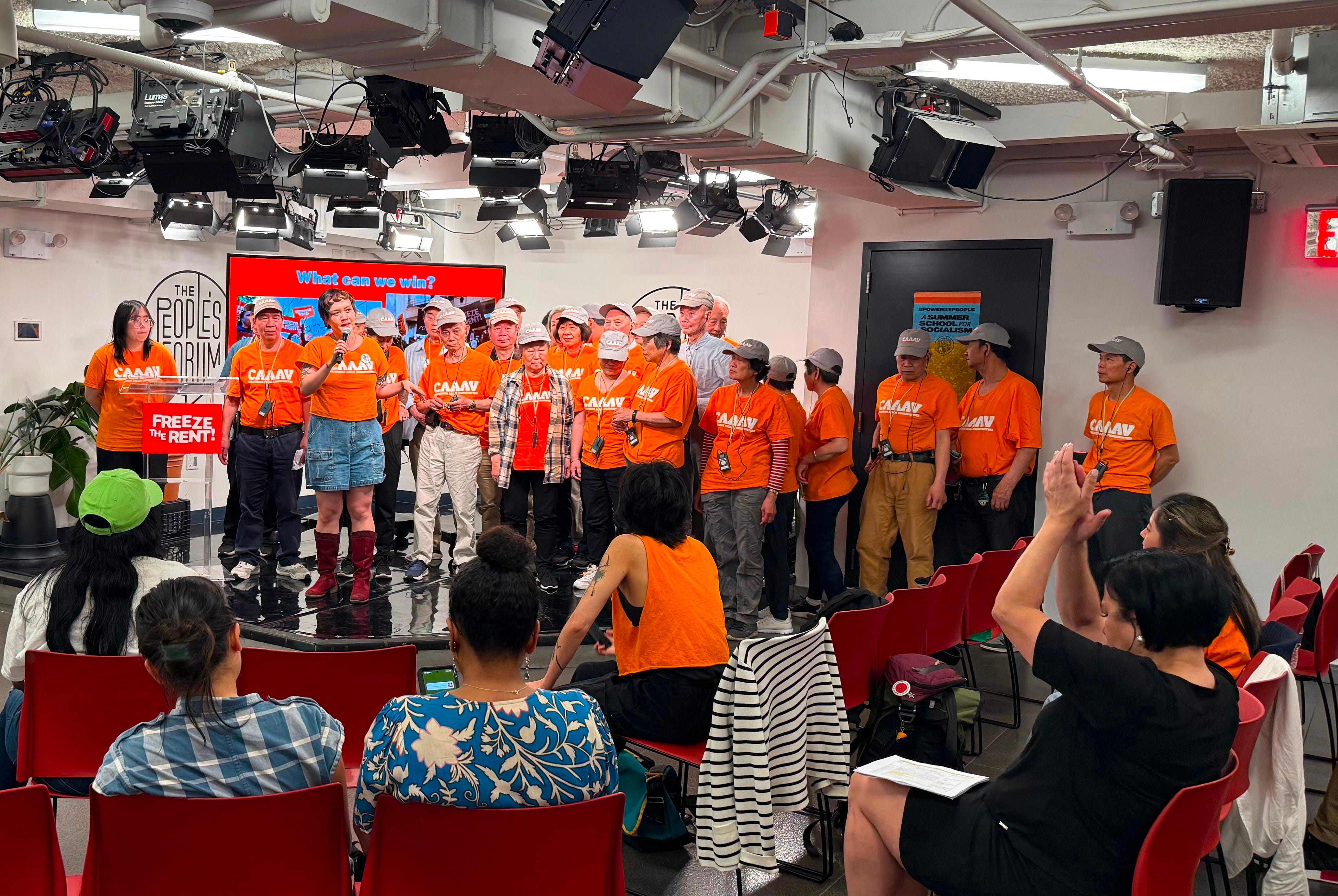
I did simultaneous interpreting at a Rent Freeze event where they taught the participants protest chants in both Mandarin and Spanish. It was adorable.
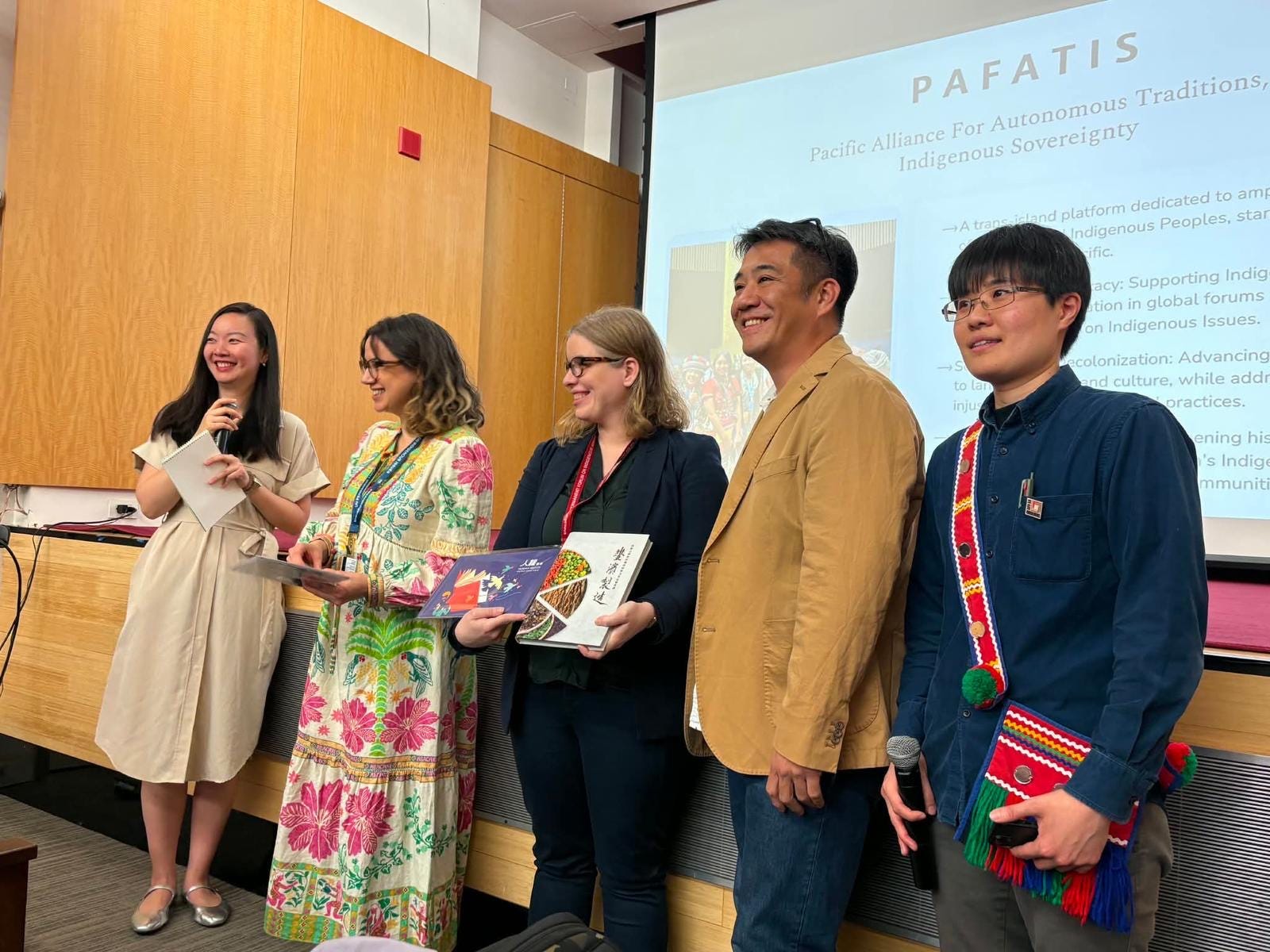
I also interpreted two United Nations side events for a nonprofit called PAFATIS, or Pacific Alliance for Autonomous Traditions, Indigenous Sovereignty, on subjects from slow food culture, sticky rice, to healthcare inequality. Turns out, it’s not just about what you eat, but who you eat it with.
Now, I don’t believe that events absolutely have to have interpreters. As I’ve stated before in a previous post titled somewhat click-bait-ly, I’m an Interpreter. I Want AI to Replace Me. (Sort Of.), interpreters are expensive. If you didn’t have equipment for simultaneous interpreting, consecutive—where the speakers take turn with the interpreter—eats up half of everyone’s valuable time, while the whole room and the speakers takes turn waiting for their turn.
For one of the UN side events at Taipei Economic and Cultural Office, the speakers from 3 different indigenous tribes in Taiwan decided to give their presentations in English and have me assist during the Q&A only, because there was too much content to get through and we didn’t have simultaneous interpreting equipment.
Before they went onstage, I told each speaker: Do not apologize for your English fluency. You are here representing your tribe, you already speak a second language (Mandarin Chinese) that was forced upon your people. You’re speaking English for their convenience.
To express yourself in a foreign language adds a heavy mental load, and your words become imprecise, your intentions lost. It’s harder to emote and persuade in a language you’re not comfortable in. And the reality is: People have a harder time understanding you when you have an accent.
In that context, I was there not just as an interpreter, rendering their speeches from one language to another; I was their advocate, their speaking coach, and their biggest supporter. In a world where English is the lingua franca for academia, business, and politics, where fluency is a privilege associated with a first world education, people with limited fluency are expected to be apologetic and ashamed. They shouldn’t be.
In that context, I was there not just as an interpreter, rendering their speeches from one language to another; I was their advocate, their speaking coach, and their biggest supporter.
Plenty of “expats,” Western, Caucasian immigrants living in Asia and other… What’s the least stupid term here? Global South? Developing nations? Whatever, many Westerners never feel the need to learn the local language. I’ve met Americans, Brits, and Aussies who lived in Shanghai or Taipei for a decade or more and couldn’t read a newspaper or make a phone call without someone else’s (free) linguistic support.
I had also been in many meetings where everyone in the room spoke Mandarin Chinese. But then a single non-Mandarin speaker would join in and the whole room would immediately switch to English. That is not a courtesy I’ve ever seen extended in the U.S. to people with limited English proficiency.
Hiring an interpreter is a sign of respect for the speakers, a gesture signaling that while we all come from different parts of the world, your voice is as important as mine. It is also about fair access to information. Many people—be they an immigrant, a tourist, an activist, a visiting scholar, or a foreign dignitary—don’t have the luxury of time or budget to sit down and learn a new language or top of trying to make ends meet or excelling at whatever it is that got them the opportunity to come to the United States in the first place.
Sure, it’s a hassle to have to hire an interpreter or translator. But I’m not there just as a conduit for the words spoken, I’m there to build relationship and trust. I don’t mind letting AI take over the tedious parts of my job, that’s just going to allow me to serve more people.
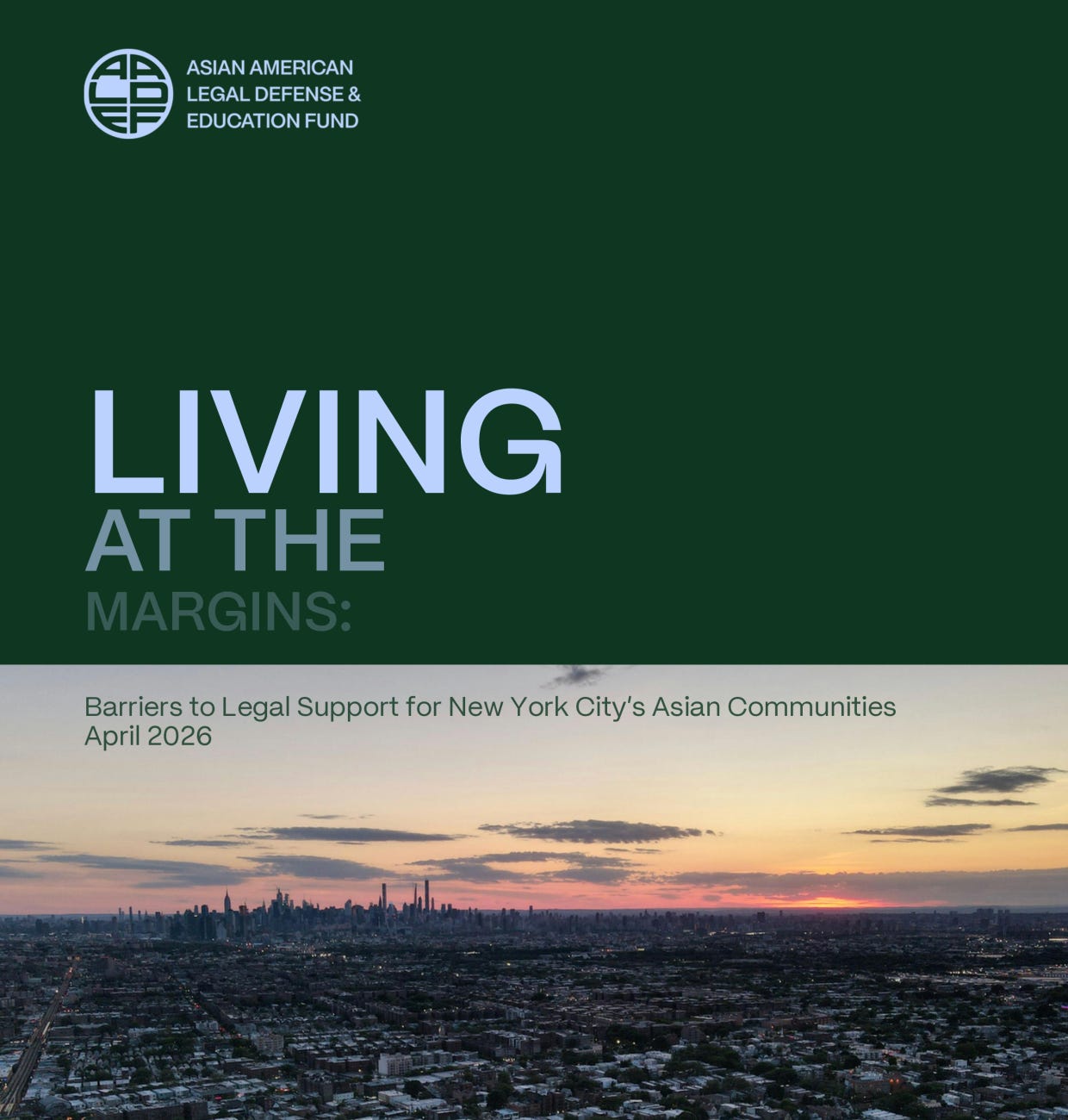
It’s a linguistic last mile problem. Recently there was a report from The Asian American Legal Defense and Education Fund (AALDEF) titled Living at the Margins: Barriers to Legal Support for New York City's Asian Communities, about the systemic obstacles keeping Asian immigrants from accessing immigration legal services.
Their report shows that over 70% of New Yorkers in these communities require interpreting services, but only 1 out of 10 legal services orgs in New York that provides free legal aid offer any Asian-language hotline options. Many of the website landing pages are in English, even when the organizations’ main focus is serving the Asian American and diaspora communities.
The gap is self-reinforcing: providers receive fewer requests because they do no outreach to Asian communities, which is then cited as evidence that the demand doesn't exist.
Many immigrants live in linguistic isolation. That makes them extra vulnerable to misinformation. I’ve learned from Chinese friends that many in the community who have pending asylum cases and work authorization consider themselves “illegal,” because they’re misinformed by social media and news headlines. As a result, they minimize contact with people outside of work, and their employers take advantage of their ignorance.
As a result of linguistic isolation, Chinese immigrants are the single largest group of noncitizens AND largest group of asylum seekers in being threatened with deportation in New York City.
As AALDEF's Razeen Zaman said, "the first phone call to get help is also the last."
Having an interpreter is a lot like hiring a lawyer. Most of us have watched plenty of court room dramas, but would probably fumble a criminal trespassing charge if we had to defend ourselves, while a court appointed lawyer would get the case dismissed within minutes. You might be able to read a legal document but not fully understand it, or to be able to put it in context. A lawyer can tell you what actually matters and what the words really mean.
They defend their clients. I advocate for mine.

Meenu Batra, the only licensed Punjabi, Hindi and Urdu court interpreter in Texas, was detained by ICE at an airport. She’s been living in the United States for 35 years.
Information from the American Translators Association.
Call or email your local representatives to highlight Meenu’s case.
Share Meenu’s story and this letter of support from ATA within your networks.
This will be a regular section where I recommend books, comedy specials, and Taiwan stuff I love. Got recommendations for me? Drop them in the comments!
Invisible Nation 看不見的國家 is a wonderful documentary about Taiwan's first female president Tsai Ing-wen 蔡英文. Director Vanessa Hope is a dear friend and long-time advocate for Taiwan who managed to build trust and secure access to our former president.
The film will start airing on PBS nationwide starting May 1, and streaming on the PBS App and PBS.org. It’s been making the rounds at major film festivals and university campuses, and is the third highest-grossing documentary of all time in Taiwan. Timely watch for AAPI Heritage Month 😉
No posts
Comments
Nothing yet. Say the first thing.
Sign in to join the conversation.