LLM-powered development (vibe coding) promises enormous productivity gains, but often reaches its limits when dealing with complex enterprise applications. When probabilistic systems encounter deterministic requirements, systematic architectural errors creep in. This article analyzes typical error classes in AI code generation based on a real-world project. Learn how you can incorporate…
AI is rapidly changing the economics of software development. Code generation, automated testing, AI-assisted debugging, and agentic development workflows are making implementation faster and more accessible than ever before. But when code becomes easier to produce, the real bottleneck moves somewhere else. The post Watch Keynote: When Code Becomes Free: The Organizational Bottleneck of the AI Age…
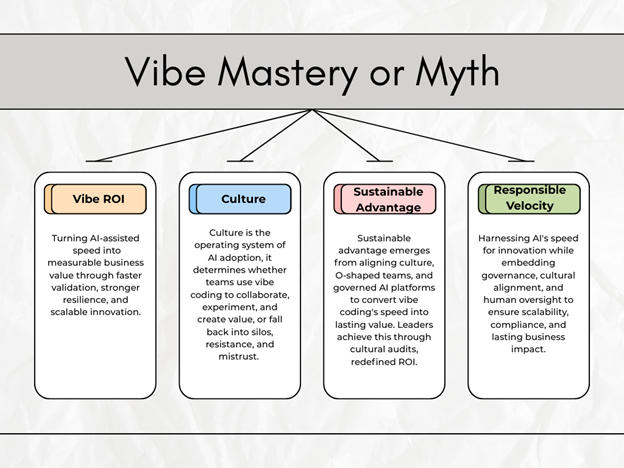
This article examines how culture, teams, and tools must evolve to deliver measurable ROI beyond faster prototyping. It explores the cultural pivot from siloed engineering to distributed innovation, the redesign of teams blending non-developers with governed AI agents, and the strategic balancing act of tool investment and governance. Drawing from industry surveys showing structured AI adoption…
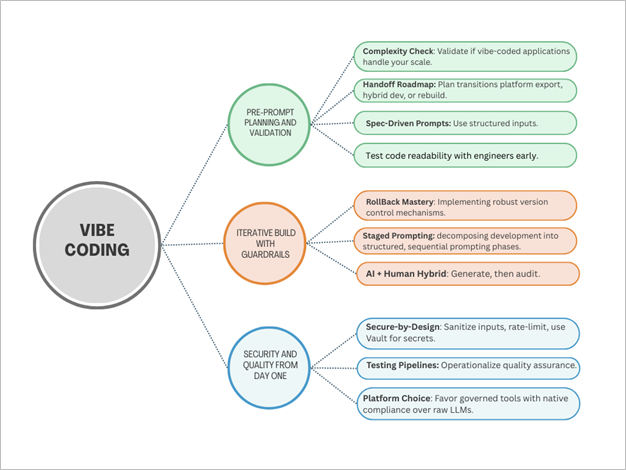
Vibe coding promises dramatic speed gains by allowing teams to generate software through natural-language prompts, but many early adopters struggle to turn rapid prototypes into reliable, production-ready systems. This article explores the “Turmoil Sprint,” the chaotic early phase of AI-assisted development, and outlines practical strategies including planning frameworks, guardrails, security…
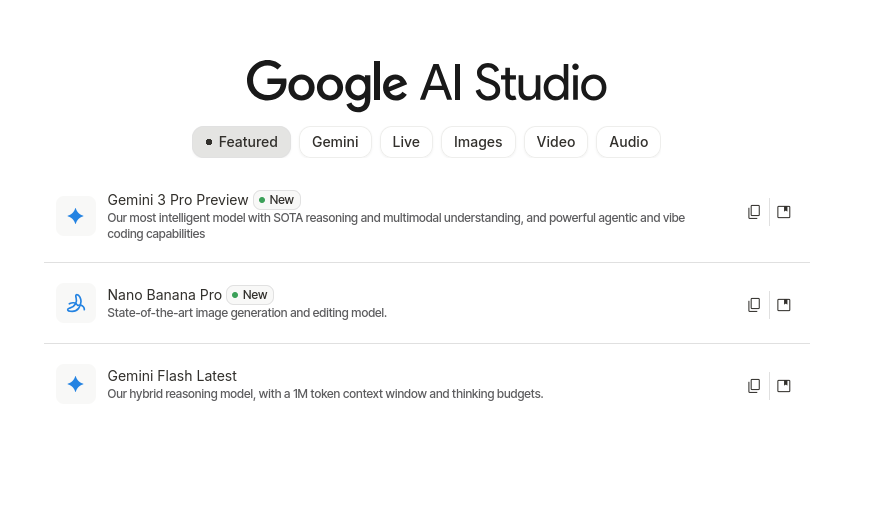
Google AI Studio offers developers a versatile, web-based environment for experimenting with Gemini models across image generation, audio, prompting workflows, code generation, and full-stack app prototyping. This article walks you through setting up API keys, using the Playground, generating code, and deploying AI-powered applications, highlighting both the platform’s capabilities and practical…
AI-accelerated source code development is transforming the daily work of many developers. LLMs and coding agents can generate functions in seconds, but they also carry risks including hallucinated dependencies, slopsquatting, and insecure automation steps. This article shows how to systematically mitigate these risks using engineering principles, guardrails, and automated validations. The post…
In executive circles, there is a growing belief that software will soon be free. At the same time, tech gurus are declaring software engineering dead because humans are no longer needed. Both are wrong. When software is produced at the speed of light, entirely new questions arise about purpose and direction. The post AI-Driven Software Development and the Limits of Decision-Making appeared first…
Picture this: you give a single voice command and, minutes later, an OpenAI-powered writing agent drafts an event brochure, a Gemini spreadsheet agent reconciles supplier invoices, and a Claude negotiation agent emails final quotes. Each working from the same facts, updating the same timeline, and handing off sub-tasks automatically. The post Can MCP Enable Truly Cooperative AI Agents? appeared…
Generative AI accelerates software development – that is real and measurable. But most teams introduce AI at one point in the process and call it done. They speed up code generation. They ship prototypes in days. And then the overall system starts breaking in ways they didn't anticipate. The problem is not the AI. The problem is that local optimization is not system optimization. The post AI in…
Vibe coding and AI coding tools are rapidly changing how software is built. Developers are experimenting with LLM-powered assistants such as Cursor, Claude Code, and Copilot to speed up coding, debugging, and prototyping. But where do these tools actually help and where do they create new risks? Experienced developers share how they use AI in real-world software development and what skills still…