
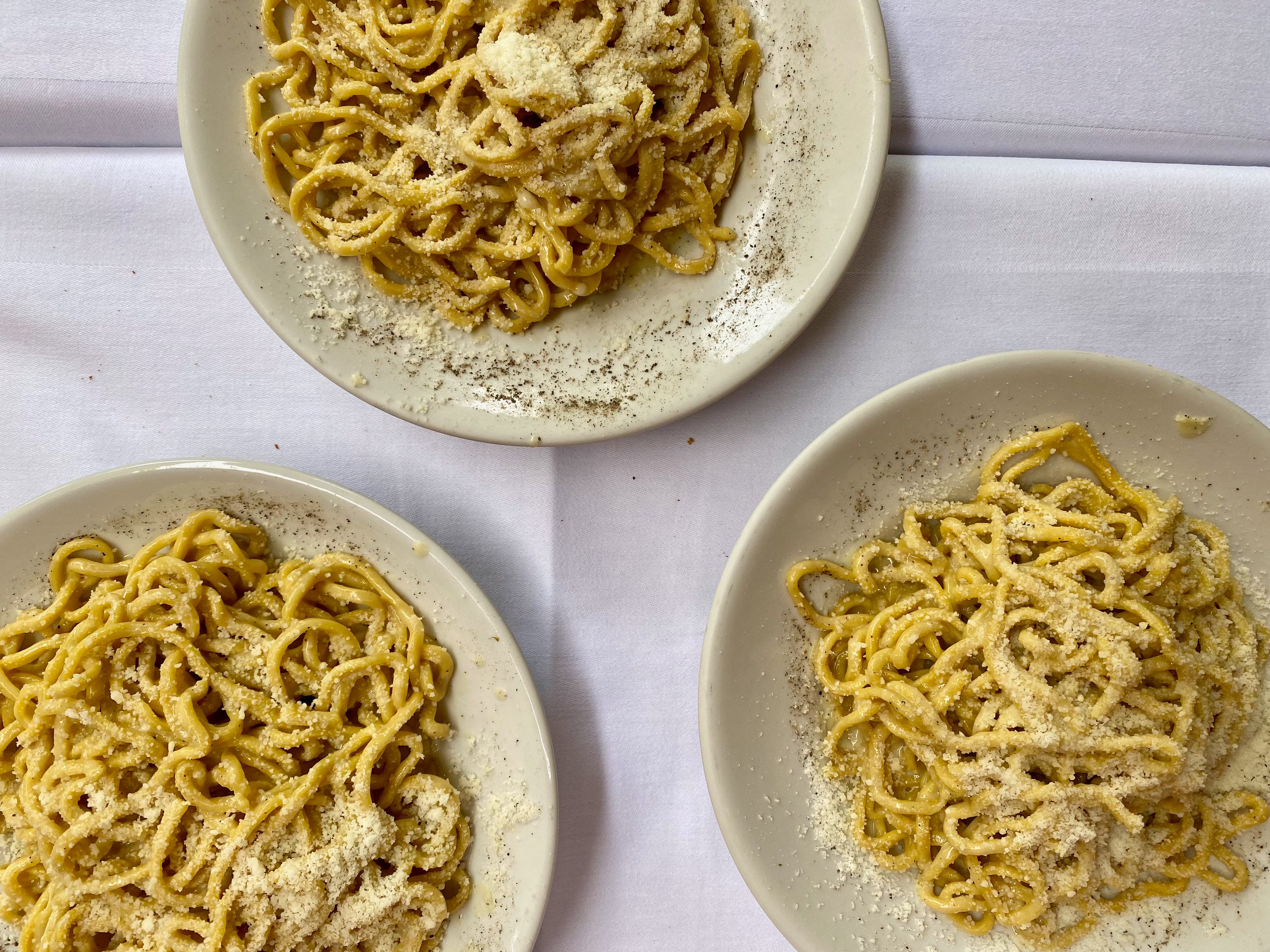
If you’ve heard of pecorino, chances are it’s because you decided to make Cacio e Pepe and discovered that it’s one of the three essential ingredients. When a recipe is that stripped down, every component matters. A lot.
Which brings us to a common problem: finding true Pecorino Romano isn’t always as straightforward as it should be.
Pecorino 101
First things first: not all pecorino is Pecorino Romano.
“Pecorino” simply means a cheese made from 100% sheep’s milk. Since sheep are raised all over Italy, pecorino can come from anywhere, from Sicily to the Alps, and each region produces a cheese with its own distinct flavor.
Here are a few of the most well-known:
Pecorino Toscano
If I’m buying pecorino for the table, this is often my go-to. From central Italy, it tends to be slightly nutty, balanced, and mild enough for snacking. The town of Pienza and its surrounding countryside are particularly famous for it.
Pecorino Sardo
They say there are more sheep than people in Sardinia, which translates into a lot of pecorino. Produced by shepherds in the island’s mountainous interior, it’s typically more rustic and assertive than its Tuscan cousin.
Pecorino Romano
Traditionally from Lazio, the region around Rome, this is perhaps the most famous, and most misunderstood, of them all. Its origins go back to ancient Roman times, and it remains the backbone of some of Rome’s most iconic pasta dishes.
So far, so simple. But here’s where things get complicated.
The Pecorino Romano Problem
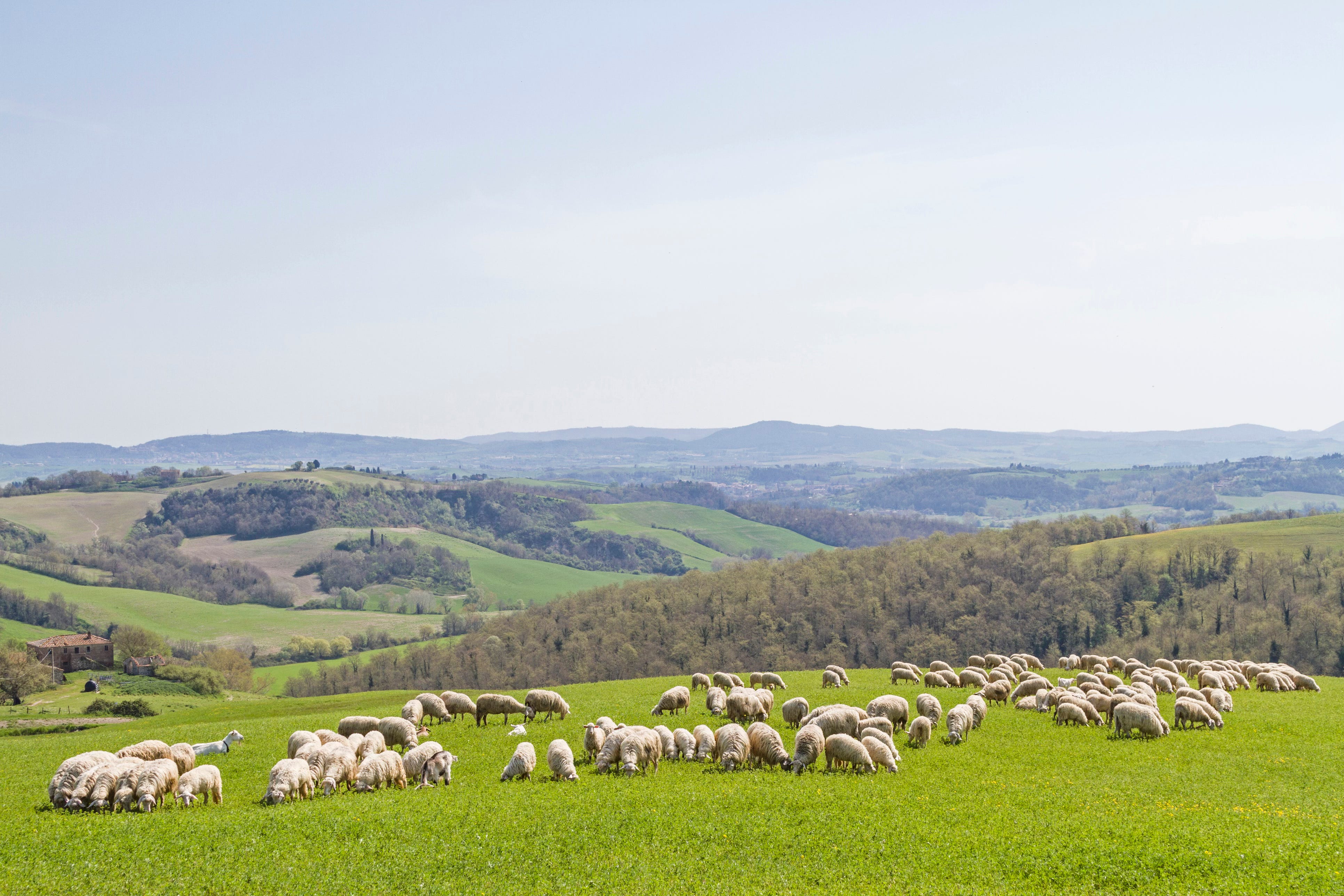
Today, most Pecorino Romano is actually produced in Sardinia, despite its historical ties to Lazio. And yes, that shift matters.
Even when the production method remains the same, the environment changes everything. Sheep grazing on different grasses, living in different climates, produce milk with different characteristics. It’s the classic terroir story, and you can taste it.
Sardinian Pecorino Romano is produced on a larger scale. It tends to be milder, more consistent, and slightly less aggressive in sharpness. None of these are bad qualities, but they do result in a more uniform cheese.
Lazio-produced Pecorino Romano is incredibly rare. Only a handful of producers still make it. The result is a more complex, nuanced cheese, shaped by local pastures, traditional methods, and smaller-scale production.
And then there’s something else to watch out for: “Romano” cheese made in the United States. Despite the name, it’s not the same thing at all. Often made from cow’s milk, or a mix, it is hard, brittle, and one-dimensionally sharp, lacking the depth and character of true Italian pecorino. It’s probably the reason you think you don’t like Pecorino Romano.
Why It Matters
All of this matters because Pecorino Romano is the backbone of some of Rome’s most beloved pasta dishes, not just Cacio e Pepe, but also Amatriciana and Carbonara.
When there are so few ingredients, the cheese isn’t just part of the recipe. It is the essential part of the recipe.
So if you’ve ever wondered why your pasta doesn’t quite taste like it does in Rome, this might be the missing piece.
The Good News
I’ve tracked down a source for Pecorino Romano that’s still produced in Lazio, using milk from small local farms just outside Rome. The wheels are formed and then aged in traditional cellars, resulting in a cheese that’s far closer to what you’d find in a Roman kitchen.
For Via Rosa subscribers, we’ve partnered with a shop we love, to offer a special discount code, along with our go-to recipes for this trio of pastas, plus a few step-by-step videos.
The code and recipes are waiting just below the paywall.
Comments
Nothing yet. Say the first thing.
Sign in to join the conversation.