
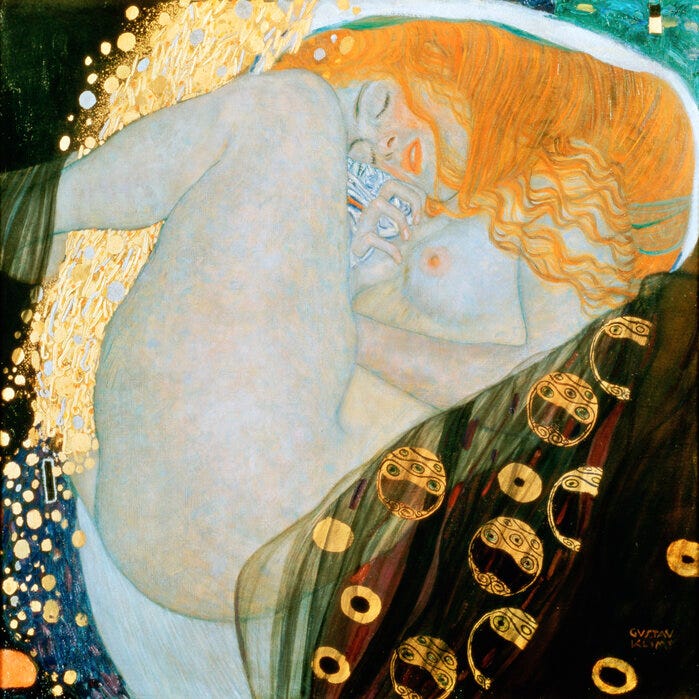
Speaking of the poor, forgotten souls buried in a rural churchyard, Thomas Gray says:
Perhaps in this neglected spot is laid
Some heart once pregnant with celestial fire;
Hands, that the rod of empire might have sway’d,
Or wak’d to ecstasy the living lyre.
But Knowledge to their eyes her ample page
Rich with the spoils of time did ne’er unroll;
Chill Penury repress’d their noble rage,
And froze the genial current of the soul.
Full many a gem of purest ray serene,
The dark unfathom’d caves of ocean bear:
Full many a flow’r is born to blush unseen,
And waste its sweetness on the desert air.
These three stanzas are the heart of “Elegy Written in a Country Churchyard,” and they are, I think, despite the poem’s excesses, the reason it has been renowned for hundreds of years. For here we have, beautifully expressed, one of the most piteous truths about life: namely, that a staggering vastness of human potential is wasted by talented individuals being born into circumstances which do not allow them to flourish. So many artworks are uncreated, deeds unaccomplished, discoveries undiscovered, because the minds who could have created, accomplished, and discovered those things were not given the chance– by dint of class, sex, race, ethnicity, culture, location, or historical moment. Victims of fate, these potentially great minds were forced into labor that was unworthy of them. Hearts that were “pregnant with celestial fire,” quenched by the need to provide for a starving family; hands that could have “waked to ecstasy the living lyre,” forbidden the education that they needed to put those hands to good use. Later in the poem, Gray speaks of those individuals who undoubtedly existed who could have been as great a poet as Milton, a better leader than Cromwell, but who had no choice but to mindlessly work the soil from birth to death. These are the beautiful flowers which bloom in the desert which no one ever sees, and which wither into dust unappreciated.
In our world, we struggle with many of the same problems as the 18th century. Class disparity and bigotry ensure that many precious voices remain undeveloped and unheard in a wide variety of fields. Regarding artists, however, we also face brand new problems. To an impressive degree, the historical obstacles artists have faced based on race, gender, ethnicity, and sexual persuasion have been significantly reduced, except perhaps in certain pockets of the entertainment industry. Indeed, it has now become the case that, at least in the literary sphere, we have overcorrected.
But overcorrections of this kind are small potatoes indeed compared to other developments. To begin with, the advent of the internet, streaming, and now AI has made most art essentially free. As any musician will tell you, there is no money in selling music anymore, but the availability of free content online has also sabotaged the market for countless writers and visual artists as well, and in multifarious ways. Not only must the poet face the fact that even those who are interested in his work will read him online for free rather than immediately order his book– and the poet can’t afford not to be online– but the sheer glut of available media, whether it is poetry or otherwise, makes it nearly impossible for any given artist to be discovered, and if they are discovered, to hold anyone’s attention– much less a vast group of people’s attention– for long enough to make an impression. Barring the uncontrollable chance of going viral, obscurity is the necessary fate of most. There is no artistic hierarchy to ascend anymore– there is only the pandemonium of the masses, all shouting to be heard.
Poetry of course has the added obstacle of having steadily declined in cultural importance for the past hundred years, a tragic and exasperating phenomenon I have discussed elsewhere. In the New York Times list of the 100 Best Books of the 21st century, not a single book of poetry made the list. Not one, unless you count Claudia Rankine’s Citizen– which is still almost entirely prose by anyone’s metric. In no other century in the history of civilization– any civilization– would this have been the case.
Even when people turn away from their Netflix series, their video games, or their social media to engage in a literary pursuit, that literary pursuit is almost never poetry; most grotesque of all, even when people do turn their attention to so-called “poetry,” what they are reading is not usually anything that would have been recognized as poetry more than a hundred years ago– you know, back when poetry was still relevant to most people’s lives. The contemporary poetry that is neither a hopelessly dated modernist exercise masquerading as avant-garde nor a barbaric yawp of personal or political sentiment receives very little attention indeed, and it is doubtful whether many people know it exists. Part of the intention behind Versecraft is to show people that an alternative– good, meaningful, well-crafted poetry– is indeed still being written.
At this point, we can now state the painfully obvious: outside of the upper echelons of the entertainment industry (or Substack!), there is very little money to be made in art of any kind, and almost no money to be made in poetry. This does not mean that artists must as a rule be destitute, but it does mean that they must obtain their financial support elsewhere than their art.
The artist who is unable to support themselves by their vocation– read: all of us– has, in theory, four options. The first and by far most common strategy is to get a job separate from but related to one’s field. For writers of the past many decades, the default was to get a job in academia as a professor of English or Creative Writing. Unfortunately, the world in which a young writer can get a stable, well-paying academic position is now almost entirely a thing of the past. English departments are in their death throes across the country, and what few jobs are available are applied to by hundreds of qualified people, many of whom have PhDs and/or prior teaching experience. Even should one be lucky enough to get one of these jobs, it will almost certainly be a low-paying, overworked adjunct position with no guarantee of future employment. Such prospects do not enthuse. We are living in a new world– a cultural cataclysm which promises a future of semi-literacy– and the young writer of ambition will have to explore new, perhaps radical paths to success. The literary world is going underground before our eyes, as my fellow Substackers can attest. The great poets of the future will be like the cloistered Irish monks who preserved literacy after the collapse of the Roman Empire.
There are writerly professions outside of academia, of course: editor, publisher, advertiser, copywriter, journalist. In every case however, these are jobs which not only require many hours per week and years of soulless career climbing, but writerly energy that would be far better spent elsewhere. There are a few literary service jobs, like bookselling– but as I or anyone else who has been in the biz will tell you, it hardly pays a living wage.
Wishing to preserve enthusiasm for their own work, many artists deliberately opt for a second option: a career completely separate from their field. Pre-WWII, before academia conquered the literary world, this was an extremely common path for writers: William Carlos Williams was a doctor; Wallace Stevens worked at an insurance company. Now, this is all very well if you can stomach it. Those who possess a passion for a profession that happens to be lucrative are blessed indeed. For me however, and for many like me, to devote the majority of my days to something I have zero interest in smacks of the absurd. This is not a matter of petulance or entitlement– it is an awareness that life is distressingly finite, and that one should, as much as one possibly can, spend one’s days on earth doing what one was born to do. Forced with the choice of working a meaningless job or starving, I will work the meaningless job. But this is not how we should force our artists to live. It is an appalling waste of their energies. Like Thomas Gray, we may ask: how many great works of art have been lost because our artists were too busy trying to survive to spend their time creating? How many hours have they wasted doing mind-numbing work that does not make use of their talents?
A third option, in theory, would be for the government to give financial support to artists. Many people have criticized government funding for the arts, pointing to how it often elevates mediocrity and separates the artist’s activity from market forces and the approval of the public, to the detriment of the art itself. Yet there are several ways a government can go about patronizing the arts. A couple of years ago, Ireland began providing what they call a Basic Income for the Arts for qualified applicants– a weekly stipend of 325 euros. Nothing lavish, but enough to humbly live on while one does the work that matters. Given this basic financial scaffolding, the artist must then rise or fall on their own merits. In America, of course, this sort of thing is a pipe dream. Shameful as it is, the American artist, because he is not a soldier, an athlete, or a business, cannot rely on his country to support him, and must look elsewhere.
Finally, there is a fourth option. A very old school option: patronage. Back when I lived in Cleveland, I hosted a reading for the wonderful poet, novelist, essayist, and translator Amit Majmudar (Measureless). Amit is not only a furiously prolific writer but a radiologist who runs a successful practice outside of Columbus. I asked him if he had as much of a passion for medicine as for poetry. After all, it is not easy to become a radiologist– one must spend about a decade of one’s life in school for it. “Not even close,” he told me. “I became a radiologist in order to fund my writing habit.” Now, it is of course very impressive that Amit had the drive to do this, but let that sink in: this man had to devote a decade of his life– more than 12% of the average man’s total lifespan– to qualify for a job he doesn’t have a passion for just in order to be able to reliably fund his own artistic pursuits. “I chose to become my own patron,” he said. Even a jovial, heroic personality like Amit however feels understandably bitter at having had to make this sort of sacrifice. He expressed his frustration in a recent lyric published in 32 Poems, entitled “Patronage.” It goes like this:
O for the days of assassin-dispatching, cousin-poisoning
Renaissance dukes with an ear for beauty in ottava rima,
Of big-spending cutthroat Borgias in papal regalia
Willing to lavish blood-slick ducats on the fine arts,
Kings with rotten teeth who hanged pickpockets from bridges
But paid their pet playwrights a living wage, sherbet-sipping
Sultans who shuttle between the harem and the mehfil,
O for my very own surveillance-state Caesar Augustus
Asking only that every so often a stanza liken him to Jove,
O for a dissolute aesthetic Pasha, or a Medici who gets me,
Or some Rilkean widow offering a rent-free seaside castle,
Anything but this committee of rivals and fossils,
Unpublishable judges with grudges in a coffee conclave
Glancing at my heart like a passport handed over
At heaven’s border, snug mediocrities with slovenly offices
Deciding whether I am fit to have a future here, the light
From my unwritten books still light years in the distance
Reaching me for now, though there’s no way to tell
If they’ve blinked out already, making way for the tenured night.
This very fine and very fun utterance is doubly cathartic as a jeremiad against both the lack of funding in the arts and the fusty decadence of the academic world. Though delivered playfully, Amit’s points are not to be taken lightly. The aristocrats of the past may have been moral monsters, he says, but at least they had good taste and valued the arts, which is more than can be said of most in today’s philistine hellscape. When I visit a splendorous den of old money like the Driehaus Museum in Chicago or the Morgan Library in New York or Versailles, the very same thought always occurs to me.
There is one crucial respect however in which the contemporary world resembles the past that Amit describes. Namely, in the ascent of what we might call aristocrats– or, more properly, plutocrats. As everyone with a pulse knows, the wealth gap widens more and more every year, and as the middle class disappears, our 21st century world begins to look more and more pre-modern in its economic structure. Impossibly wealthy, impossibly powerful men like Jeff Bezos and Elon Musk are harbingers of a new age– what the economist Yanis Varoufakis has called techno-feudalism. Obviously, this is an alarming turn of events for the free world; yet unless drastic political reform is achieved, a de facto plutocracy seems to be what we are stuck with for the time being.
For artists versed in the history of their professions, this situation looks very familiar. We recall Maecenas, the great Roman aristocrat who supported Virgil and gave Horace a villa from which to write his poetry. We recall the Medici and Borgia families, without whose backing a vast chunk of Italian Renaissance masterpieces simply would not exist. We recall, indeed, all the figures that Amit mentions in his poem: the caesars, kings, sultans, and pashas who were the principal providers of livelihood for artists up until the rise of the bourgeois in the 19th century. Perhaps the last major instance of this sort of patronage, at least in poetry, was Teddy Roosevelt’s support of Edwin Arlington Robinson in the early years of the 20th century. A very fine note to go out on, one must say.
Now, are you crazy enough to think what I’m thinking? If the wealthy are going to be the movers and shakers of our society, we might as well get some good art out of it. Why should artists toil for years of their lives on non-artistic work just to make a living, forgoing precious opportunities to write, paint, or compose, when there is so much, and I mean so much wealth just sitting around in the bank accounts of our richer neighbors and their companies? Let us convince them what we know to be true– that our art is valuable and glorious, and a credit to their names. Let us revive the hallowed tradition of poetic patronage.
Easier said than done, you might say– and indeed, this will strike many of you as a totally pie-in-the-sky idea. After all, what use does a business executive have for a poet? Gone are the days when, like the Medici, the rich counted on artists to give them everlasting glory and demonstrate their good taste. The closest thing we have to that phenomenon now is consumerist devotion to particular designer brands. The nature of conspicuous consumption, it seems, has changed irreversibly.
On top of that, we find that poetry in particular seems to be in the worst possible position for this sort of arrangement. For one thing, poems are not made of gold or Tuscan leather– they are made of words, and therefore not only have no material value but are infinitely fungible. For another, while sentimental slogans that are called poems may go viral on Instagram and Tiktok, poetry as an art form has almost zero cultural pull. The potential patron therefore understandably asks the poet: If I supported you, what on earth could possibly be in it for me?
Well, let us first get the obvious out of the way: the poet can offer personalized poems. While it is true that no one is lining down the block to get books of poetry, and poets are not filling up stadiums, walking red carpets, or providing the spiritual compass for their nations, poetry still, despite everything, retains a vestigial sense of the sacred in many people’s minds. This is borne out by the fact that the two places you are still likely to encounter the common man reading poetry are at weddings and funerals– the two most significant public rituals of most people’s lives. What poetry lacks in popularity or prestige, it partly makes up for in its ability to sanctify an occasion, even if that sanctification is somewhat mystifying to most.
In my years of experience as a bookseller, I don’t believe I ever encountered someone who outright hated poetry or thought it was a joke– in fact, the most common thing I heard from customers was “I wish I read more poetry” or “I’d like to get into reading poetry,” relayed in a sheepish tone of uncertainty and insecurity, as if they were unsure of their ability to fully appreciate this glamorous, cerebral art form which was clearly not their favorite but which exerted a mysterious pull upon them.
It is these sorts of things which I observe in my fellow man, as well as the overwhelming popularity of rhythmic, rhyming lyrics in Hip-Hop and Pop music, and, oddly enough, Silicon Valley’s obsession with AI poetry, which give me a glimmer of hope– people hunger for language that is both sacred and musical. It is part of what it means to be human. If poetry has receded from the limelight in the past 100 years, it is to a great extent the fault of poets who have deliberately alienated the public, as Dana Gioia convincingly argued in his famous essay, “Can Poetry Matter?”
What is needed to regain this lost ground is for poets on the academic side to acknowledge that accessibility is not the same thing as dumbing down– a basic confusion that even a great mind like Geoffrey Hill was capable of making; for “poets” on the Slam, Beat, and Instagram side of things to acknowledge that greater subjects exist than their own raw feelings and personalities; and for both contingents to acknowledge that meter and rhyme are powerful tools which are not to be abandoned without sufficient musical justification.
Beyond the drive to make poems clear and interesting and musical and intelligent all at once, it is also incumbent upon the poet of today to promote his work and the work of others beyond the cozy, incestuous enclave of his own literary circle– something even many formal poets are guilty of not doing. Publishing in literary journals is important, and may even be a ticket to an academic position, but it is not a ticket to being read or known outside of a highly limited coterie. Poets should be promoting, performing, and selling their work in any venue that will have them, busking on the street, collaborating with artists in other media and other genres, and generally making poetry part of the lifeblood of their society in any way they can, much as oral poetry was in the lifeblood of Ancient Greece, or Blues in the lifeblood of the Deep South, or Flamenco in the lifeblood of Andalusia. The more poetry is normalized as a part of everyday life, and the more it is composed with all of humanity in mind, the more people will come to recognize it as something not only approachable but delightful and necessary. People already want to be sold on poetry– they are hungry for it. We must make it easy for them to be sold.
Part of the selling of poetry now must be to appeal to people of means to fund poetic lives and poetic projects. Before I digressed, I mentioned that one pitch that the poet can make is to write poetry on commission for their patron. There is a desire– a market, one might say– for language that will make important events feel more meaningful– weddings and funerals, but also births, birthdays, galas, celebrations of major accomplishments, intimate correspondence, domestic entertainment, and much more. If you are a poet and the idea of writing for such occasions makes you cringe, consider why you feel that way– your great predecessors, from Pindar to Pope, certainly did not.
One might protest that, even should a wealthy person desire a poem for some occasion, they will sooner turn to ChatGPT than an actual poet. If this is true, I don’t think it will be true for long. Not only is the cultural consensus against AI, but I believe that as AI becomes the standard tool of communication (God help us), human-made literary works will take on an artisanal quality in the minds of many. Just as the rich like to wear garments that are hand-stitched, so too may they desire to possess works of art that are genuinely human-made.
Ultimately, however, the possibility of receiving poetic services is only a secondary appeal for a potential patron. The primary appeal is this: the opportunity to do something culturally meaningful and have beautiful artworks be part of one’s legacy. Most people who are wealthy have spent their lives either pursuing or maintaining their wealth, and while this sort of lifestyle has its obvious rewards, it can, in the end, feel spiritually hollow. That is why so many wealthy individuals, from Bill Gates to Andrew Carnegie to millions of others past and present, have dedicated the latter part of their lives to giving back much of the wealth they spent so many years accumulating: founding and funding charities, museums, libraries, universities, concert halls, and all sorts of other humanitarian and cultural institutions, sometimes spending many millions if not billions of dollars doing so.
Funding an artist whose work one believes in need not cost more than 50,000 dollars a year– that’s a million dollars for 20 years of patronage. Some rich folks spend that much money all at once on a different color of Ferrari just because they’re bored. But neither the Ferrari nor the important business they run will satisfy their spiritual needs, and neither will contribute to their names being remembered hundreds of years from now. Being a patron of the arts, on the other hand, just might. So why shouldn’t a person of means, a person concerned with their legacy and impact, invest in artists? I think the only reason it isn’t done is because we, the artists, haven’t done the work to make it happen.
So, with all of that being said– if you are an artist who truly believes in the value of what you do, I would urge you not to be afraid or ashamed to ask people to fund your efforts. It is not begging– it is compensation for your work, and the opportunity for you to do more of it instead of being bound to the grindstone of careerism and commerce. Unlike a bum, or what TLC would call a “scrub,” a serious artist knows how to make use of the time that is given to them, and knows that they shall be judged by their fruits. Apply for residencies, and fellowships, and grants, and MFA programs, but also consider reaching out to connections of yours, or connections of connections, who might be able to help give you back the luxury of your time.
And of course– if there is anyone you know whom you think might be interested in becoming the Medici of Versecraft or the poet Elijah Perseus Blumov, or if you are such a potential patron, do not hesitate to contact me at versecraftpodcast@gmail.com. Smash that paid subscriber button if you have the means. It makes a huge difference. The future of the literary world is in your hands.
No posts
Comments
Nothing yet. Say the first thing.
Sign in to join the conversation.