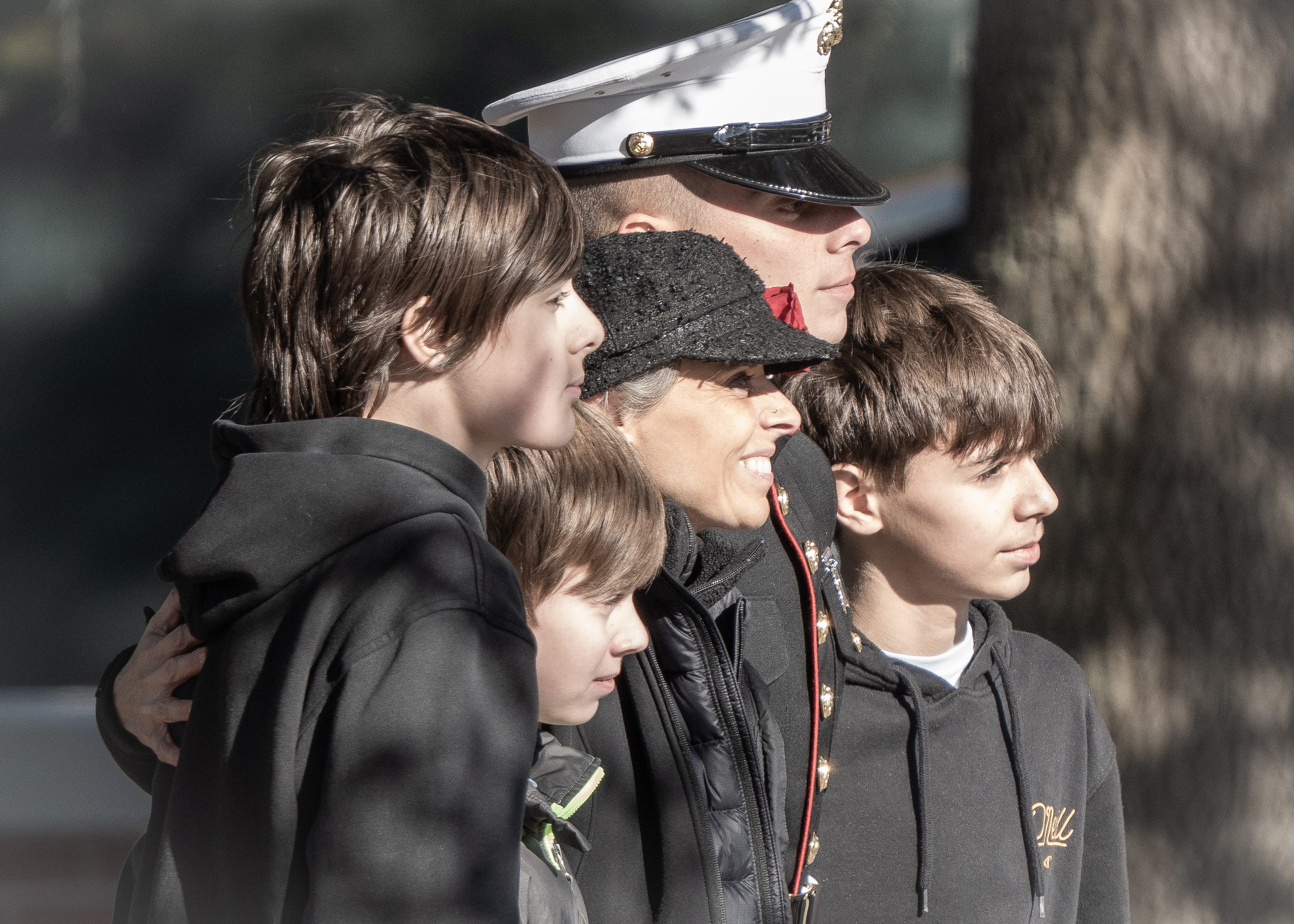
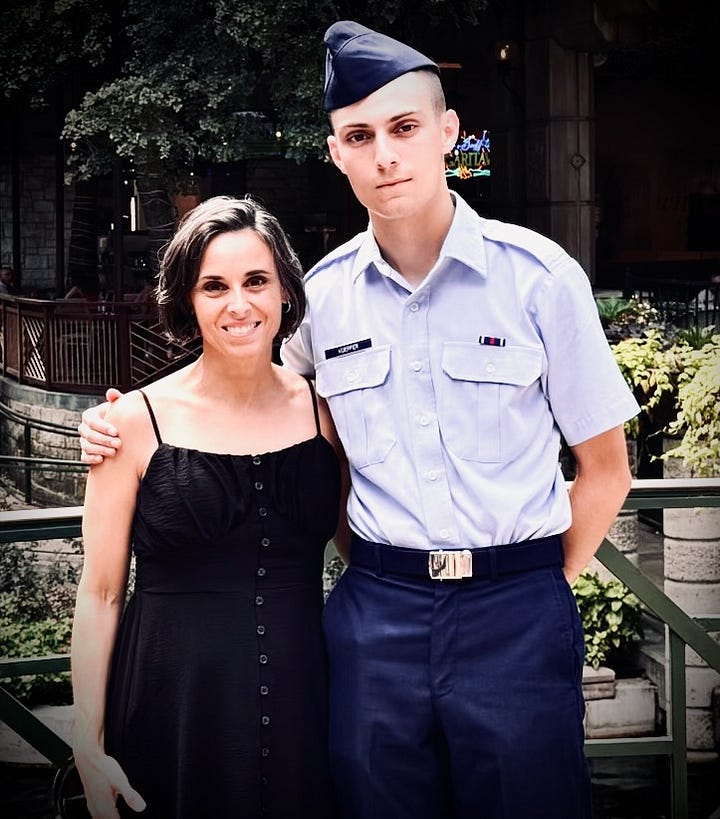
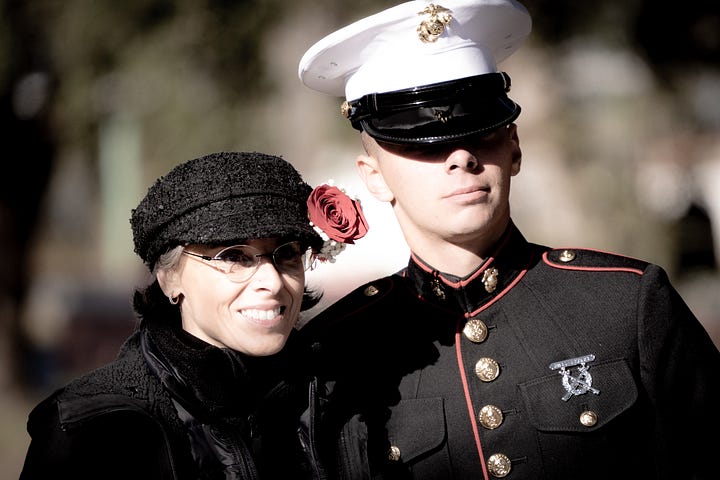
Author’s Note: I am not a Veteran, I have not served in the Military, (I very much wish that I had), but I am the mother of two active servicemen — an Airman and a Marine — whose whereabouts and service deployments I cannot control; for reasons of security and confidentiality, if they are at a battle front, I may not even know about it until after the fact. As the news tickers flash images of the Strait of Hormuz and tensions in the Middle East remain at fever pitch, my thoughts naturally turn first to the wellbeing of my Military Sons … But then my attention turns to those who currently are serving on frontlines, wherever they may be, and then to those who have served, in any capacity, in the defense of their nation. As the Managing Editor of VeritasChronicles.org, I am pleased to post the first of our series of stories that will feature Veterans and showcase their Industrial Strength Asset Value.1
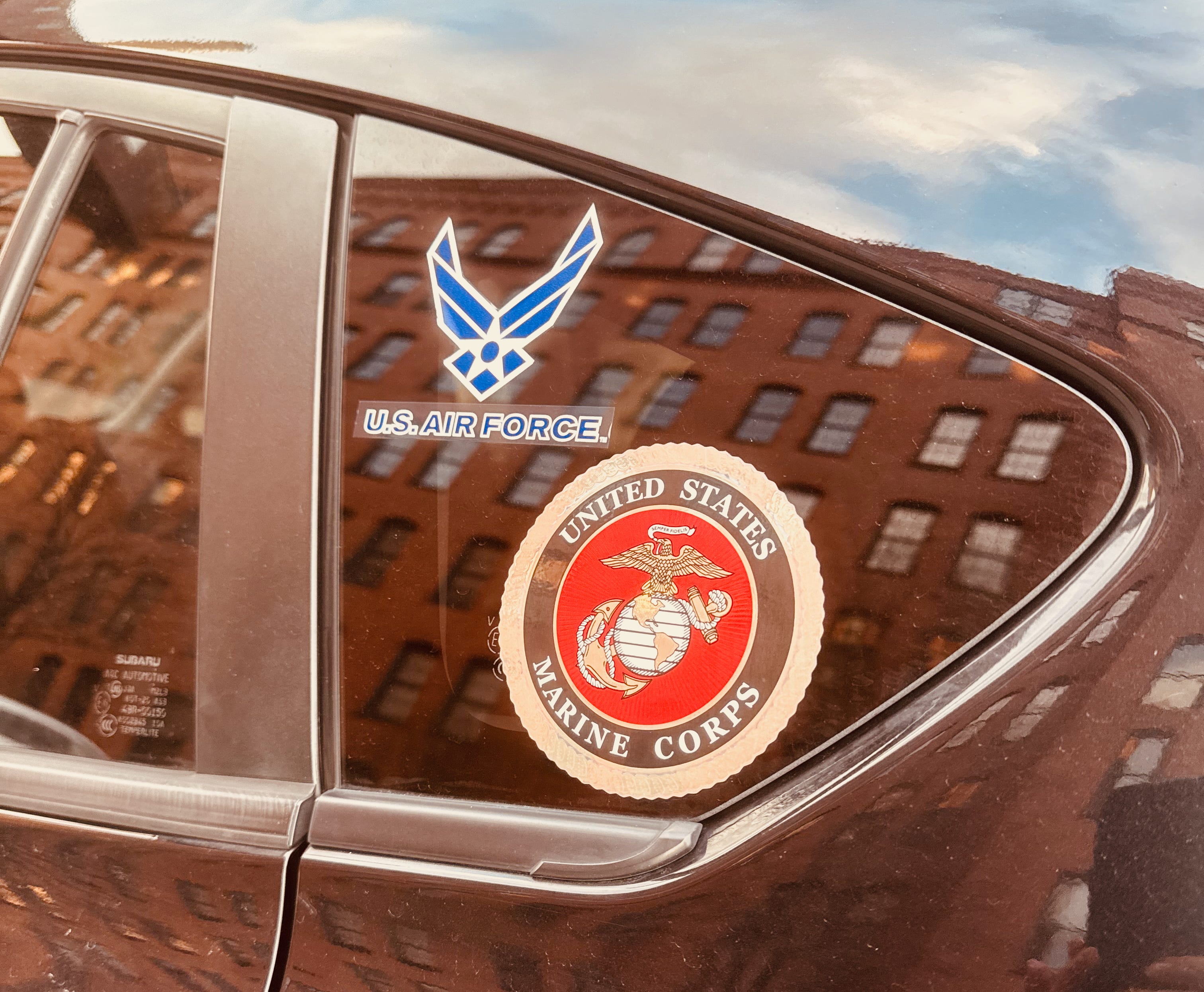
My vehicle proudly displays the badges of my sons’ military branches. I actively look for opportunities to honor serving men and women and Veterans. But my research is showing me that, “Thank You for Your Service,” while appreciated by those who hear it, is nowhere near enough to do justice to the price they have paid.
For Veterans, the Middle East headlines aren’t just “current events.” They are echoes. They are the sights, smells, and sounds of a life lived on the razor’s edge of national sovereignty. While the world’s eyes are fixed on attack and defence on foreign borders, a different, quieter conflict is being waged at the kitchen tables of those who once stood the watch. In the North America of 2026, the most disciplined segment of our population is facing a new kind of invisible front: the erosion of their own economic autonomy.
If the 19.5 million North American Veterans formed a single country, they would be the 65th most populous nation on Earth, outranking the Netherlands, Chile, and Romania. If concentrated in the U.S., they would be the 5th largest state, wielding enough influence to command nearly 30 seats in the House of Representatives.
Yet …
The men and women who are trained to secure a nation’s sovereignty often possess the least of it themselves. In numbers that are far too large for anyone’s comfort, they are “renting” their homes, “renting” their energy, and “renting” their time to employers who don’t understand their language or how to fully deploy their talents.
Every year, approximately 200,000 elite-trained individuals, in 800+ disciplines, transition from the military to the civilian sector. This is not just a “labor pool;” it is the equivalent of a mid-sized city of highly disciplined, drug-free, and mission-oriented leaders being “injected” into the economy every 12 months.
There are currently over 5 million working-age Non-Commissioned Officers (NCOs) in the civilian workforce. These are the “Engine Rooms” of the military—individuals trained to manage multi-million dollar asset portfolios and lead diverse teams in high-consequence environments.
Air and ground fleets, construction, logistics, engineering, sciences, communications, medicine, rapid deployment, asset and portfolio management — you name it, the Veteran population of North America has been trained for it.
Despite their pedigree, nearly 50% of post-9/11 Veterans report being underemployed in their first civilian job. This represents a massive “Innovation Gap,” where elite operators are sidelined in roles that do not leverage their strategic or technical capabilities.
Nearly 50% of post-9/11 Veterans report being underemployed in their first civilian job. Trained specialists who manage millions of dollars of assets and lead diverse teams in high-consequence deployments are being largely under-utilized.
While we want to honor them, we have also been conditioned to see Veterans through a lens of brokenness: we talk about PTSD, homelessness, the “difficult transition,” and suicides. While those challenges are real, they often mask a much larger and more systemic crisis: The Leadership Leak.
Every year, thousands of Non-Commissioned Officers (NCOs) leave the service. These are men and women who have managed multi-million dollar equipment portfolios and led hundreds of personnel through high-consequence environments. Yet, upon returning home, they are often funnelled into entry-level logistics roles or mid-tier security jobs. This isn’t just a “translation error” on a resume; it is a massive under-utilization of a nation’s most resilient human capital. In an era of high inflation and a crumbling housing inventory—estimated at a $100-billion gap for the US Veteran community alone—the “Thank You For Your Service” greeting and bumper sticker may have become a bit faded for some.
The modern American dream is currently built on drywall and debt. For many Veterans, the homecoming is not to a “homestead,” but to a “rental trap.” With traditional pensions being eaten alive by inflation, the goal of achieving a stabilized, sovereign life is moving further out of reach. Why is it that the very people we trust to secure a nation’s energy lines and infrastructure abroad are the most vulnerable to energy spikes and grid instability at home? There is a growing realization that the solution won’t be found in another government program or a new charitable foundation. Those are “push” models—they impose solutions from the top down, often creating a cycle of dependency that makes systems poorer over time.
What if the Veteran wasn’t a “social problem” to be solved, but the architects and managers of a new industrial paradigm? Imagine a scenario where US and Canadian infrastructure for Veterans is built to an elite standard. Why not, instead of substandard, or “affordable,” or just good enough, instead of particle board … why not make Veterans housing from modern material science methods with beautiful finishes that make Veterans proud owners?
Imagine Veteran-oriented neighborhoods scaled to village or hamlet size, where trust and camaraderie isn’t a slogan but a function of architecture and design. Where Veterans and their families are providing the key inputs to design of local organizational systems and lifestyle innovations. Imagine energy supply that is local, self-sustaining — reliable and cheap — managed by the same hands that kept tactical grids humming in conflict zones.
This is the concept of the Sovereign Steward. We will speak more of that in future stories here at VeritasChronicles.org. It is the idea that the Veteran can—and should—be given the fighting chance to own the means of their own survival: their home, their power, their food, and their wealth. Instead of “claiming” benefits, they are actively engaged in “creating” assets.
At Veritas Chronicles, we are beginning a series that explores this shift. We aren’t looking for stories of “recovery;” we are looking for stories of re-engagement. Over the coming weeks, we will be diving deep into the mechanics of this movement. We will speak with those on the front lines of Veteran advocacy, those who see economic sovereignty as a medical necessity for the modern warrior, and strategic thinkers who are helping to define what a “Self-Sustaining Veteran Oriented Community” looks like in a world that feels increasingly unmoored.
Perhaps, the era of the “broken veteran” is ending. The era of the Local Steward Industrial Leader—the ones who are workers and owners of the plant, the power, their own home, and their own future—is just beginning.
Global and Domestic Demographic Weight: With a combined population of 19.5 million, North American Veterans would constitute the world’s 65th largest sovereign nation, surpassing the populations of the Netherlands or Chile. Domestically, this group would represent the 5th largest U.S. state, possessing the demographic mass to hold roughly 30 Congressional seats.
The “Metropolis” of Annual Transition: The civilian sector receives a yearly infusion of roughly 200,000 highly disciplined personnel. This is the operational equivalent of adding a city the size of Salt Lake City to the economy every twelve months—not merely as workers, but as a drug-free, mission-ready leadership class.
Operational Management Reserves: The civilian labor market currently holds more than 5 million prime-working-age NCOs. These individuals serve as the “human engine room” of the military, having been rigorously trained to oversee multi-million dollar equipment inventories and manage high-stakes personnel operations.
The Talent Utilization Deficit: A significant “Efficiency Gap” exists in the labor market, with half of post-9/11 Veterans reporting that their initial civilian roles fail to utilize their actual skill levels. This systemic underemployment sidelines elite strategic assets in positions that ignore their advanced technical and leadership training.
Prime Economic Vitality: Defying the “retired senior” misconception, the median age for post-9/11 Veterans is only 42. With 45% of the demographic under age 55, this population is in its maximum productivity phase, uniquely suited to spearhead long-term industrial and infrastructure projects.
The Propensity for Ownership: The “Steward” mindset is a documented trait, as Veterans are 45% more likely to launch their own enterprises than the general public. Currently, Veteran-led firms generate $1 trillion in annual revenue and support 4 million jobs, highlighting an inherent drive toward economic self-determination.
Social Cohesion Dividends: Veterans act as a “Social Multiplier,” with a 50% higher likelihood of engaging in neighborhood assistance and a 30% higher rate of civic participation. Their presence transforms a standard housing development into a high-trust community, providing the necessary “social glue” for decentralized governance.
The Erosion of Traditional Security: The Purchasing Power Parity (PPP) for military retirees has been destabilized, with basic living costs rising 20–25% faster than pension adjustments since 2016. This creates an urgent requirement for non-pension income or benefits derived from a new, adapted, closed loop economy.
The $100 Billion Blue Ocean: The demand for resilient, Veteran-centric housing represents a $100-billion market vacancy. Rather than a philanthropic burden, this gap identifies a massive, unaddressed commercial opportunity for large-scale, ownership-based industrial and real estate development.
When we look at these numbers, we stop seeing a ‘special interest group’ and start seeing an under-utilizedIndustrial Power. We are looking at a workforce larger than most countries, with more leadership experience than any Fortune 500 company, currently waiting for an infrastructure that is actually worthy of their capacity.
I have always felt a deep calling to honor those currently in service and the millions of Veterans who preceded them. From the front lines of the 1940s to the elite operators of today, and like so many other, my family’s story is woven into this legacy; my own relatives were among the 17.5 million North Americans who mobilized to defend freedom in World War II, and 4.4 million to Korea and Vietnam.
Historically, some 44 million people have worn the uniforms of the United States and Canada since the era of the Declaration of Independence. That lineage of discipline and sacrifice lives on through every conflict, both remembered and forgotten. Today, the living Veteran community of North America remains nearly 20-million-strong —a demographic with the sheer mass of the 5th largest U.S. state, collectively larger than more than 130 sovereign nations.
I have always felt a deep calling to honor those currently in service and the millions of Veterans who preceded them. From the front lines of the 1940s to the elite operators of today, and like so many other, my family’s story is woven into this legacy; my own relatives were among the 17.5 million North Americans who mobilized to defend freedom in World War II, and 4.4 million to Korea and Vietnam.
Historically, some 44 million people have worn the uniforms of the United States and Canada since the era of the Declaration of Independence. That lineage of discipline and sacrifice lives on through every conflict, both remembered and forgotten. Today, the living Veteran community of North America remains nearly 20-million-strong —a demographic with the sheer mass of the 5th largest U.S. state, collectively larger than more than 130 sovereign nations.
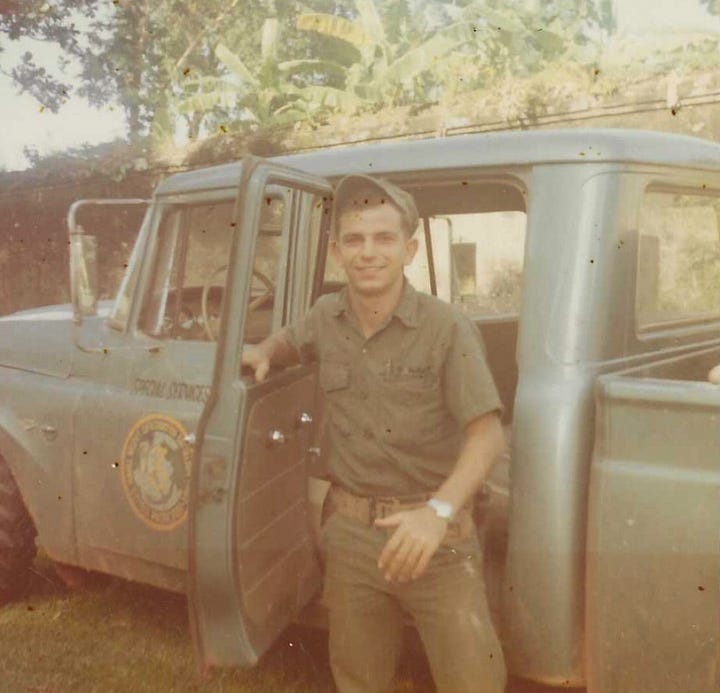
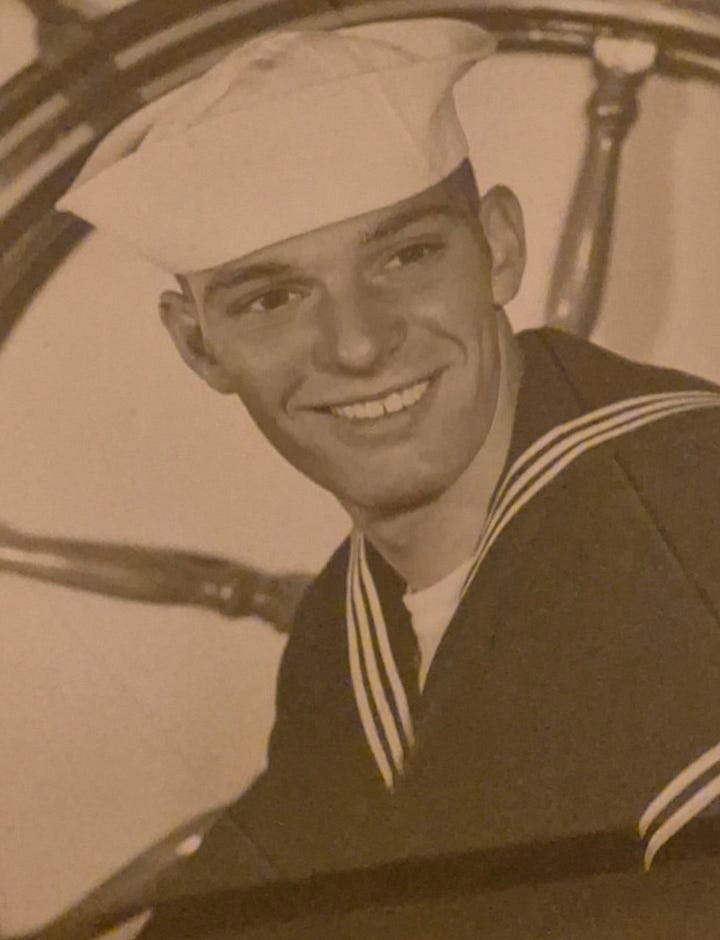
As I look at these faces from the past, the question for our future becomes clear: What would it take to mobilize this unparalleled force from a state of ‘dependency’ and convert it into an autonomous industrial powerhouse, serving their nation in a completely new way?
My maternal uncle, also a Seabee, constructing for the Marine Corps. My family’s military tradition includes Veterans from the Second World War, the Korean War (Army), and the Vietnam War. Top left, the patch is the logo the “Can Do Spirit” of the Fighting Seabees. The Seabees (a branch of the Navy created during WWII) were commissioned for construction - to go in first and build whatever the Marine Corps needed. Every branch of the Military Services is no less essential than another; they all do what needs to be done; and it is my privilege to honor all Veterans and all Service Men and Women.
My maternal grandfather (left) enlisted as a Navy Seabee circa 1943 in the midst of WWII. Uncle John served in the U.S. Coast Guard.




Comments
Nothing yet. Say the first thing.
Sign in to join the conversation.