
I’ve been a fan of Bakken & Bæck for a long time. They are one of the most respected design studios, consistently producing world-class work year after year.
I spoke to Ianthe Bato (Head of Product Design) about how they hire, how they’re using AI, and what they’re building towards. What stands out for me about BB:
The clear love of design as a practice across the entire company.
Focus on culture and talent density. People stay at BB because of the focus on culture and the opportunity to work with ambitious teams on cutting-edge technologies.
AI doesn’t replace craft, it raises the bar on it. If you can’t get to 70% without AI, you’ll never get the work to 100% with it. AI is a big focus right for BB, but it’s not a separate thing for them.
BB have had an in-house AI team for over a decade and has been designing and shipping intelligent products for a long time, so they are very well set up to thrive in this AI-focused era we’re now firmly in.
Whether AI was used matters less than the eye and effort behind the work. When assessing craft, they’re looking for the moment something makes you sit up and go “I didn’t see that coming.” How you got there is secondary to whether you pushed past good enough.
There are lots of these nuggets in the article. Here’s the full conversation:
In our team, there are 13 product designers, working across everything from research and ideation to implementation. And then we have a Brand and Comms team, which includes art directors, brand, digital, motion and type designers. Our teams have different focus areas, but there’s also a lot of overlap - especially when it comes to brand expression in product or web work - and on many projects we work closely together. We’re spread across Oslo, Amsterdam, London, Barcelona and Bonn, but we really operate as one team and work across offices every single day.
I came to BB from a more corporate environment and was really surprised by how much trust and autonomy the team is given here. I was used to more hierarchy and top-down direction, which can be helpful as a more junior designer, but when I joined BB and was just trusted to do my job, it also felt really freeing.
And at the core, that hasn’t changed in the 7 years since I joined: we still value trust and autonomy hugely. As a team - across all levels and disciplines - it’s seen as a given, not as something to be earned. We hire people that we believe in, and give them the space to approach the work in whatever way they feel is best, and to bring their own point of view and experience to it.
When teams do need more support, we try to find what works best: maybe it’s a weekly sync with more senior leads to act as a sounding board, or perhaps we bring in someone with a specific skillset to help unlock the work. As a small team that knows each other well, we are pretty nimble and quick to jump in and help out on other projects. But as a general rule we start with as little structure as possible, and add more as is needed - not the other way around.
We usually work in teams of at least two designers. It makes the work more fun, and it helps to have someone to challenge and build on what you’re doing, and to learn from each other - especially now that our workflows are changing so rapidly. We also have full-team rituals like bi-weekly meetings where we share work or talk process - like what’s working well with the new AI tools we’re using, where we’re getting stuck, and little side projects we’re working on.
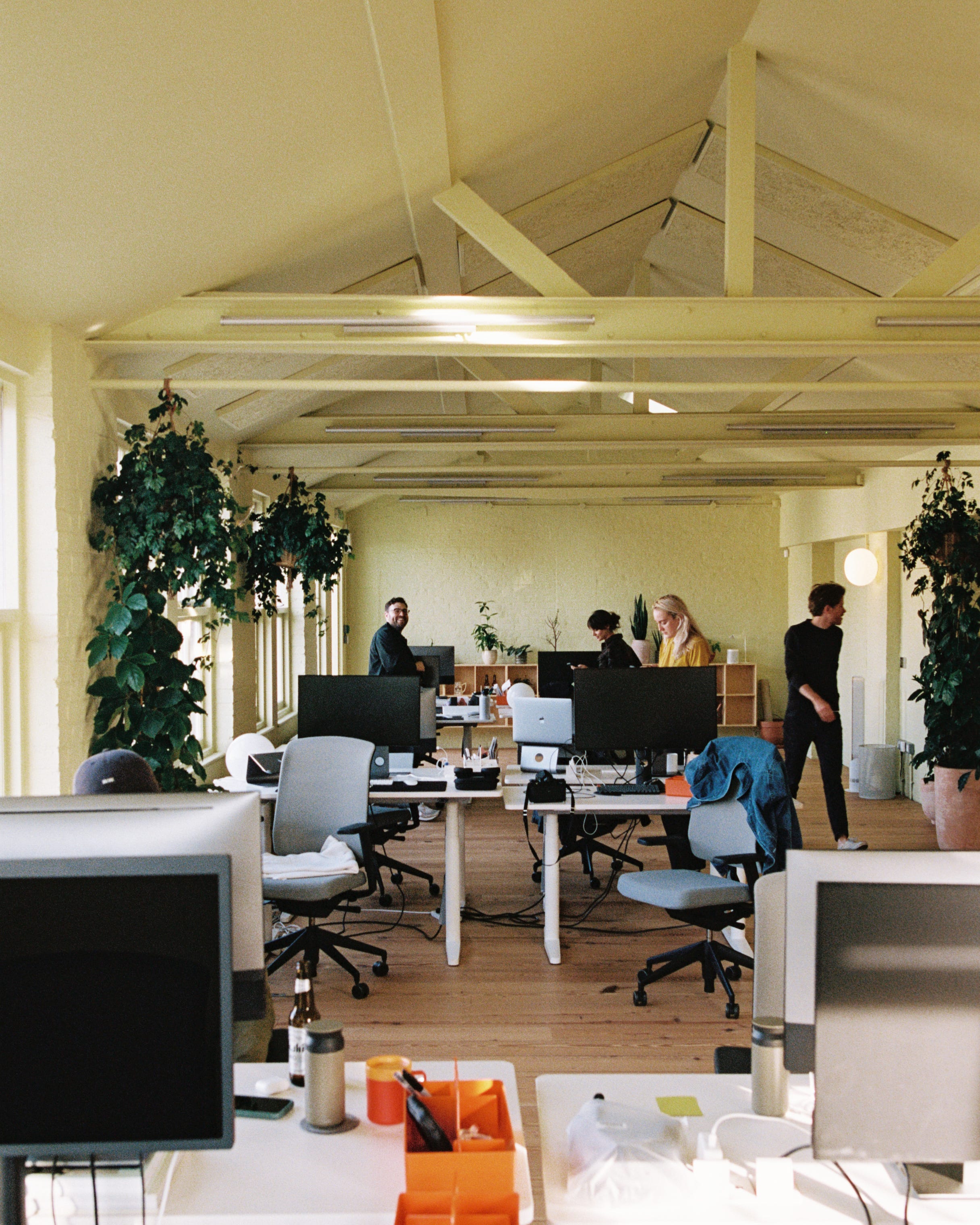
Finally, I think a love for design runs through our team across all disciplines. It’s not something we need to fight for internally, which feels quite rare. And that love for design is kind of ingrained in everything that we do: for a small team, it’s amazing to me how much care goes into big and small things, from our internal merch to our events to the design of our offices.
We’re always keen to meet people with interesting backgrounds (Creative Technologists and Design Engineers, etc.) and tend to shape roles around individuals rather than the other way around. That said, as a small team, we’re primarily focused on building bridges across disciplines every day and making sure we have a real understanding of and curiosity about each other’s craft, rather than on hiring individuals with experience in both.
Craft and taste are buzzwords now, but visual quality has always been very important at BB - so having a discerning eye is one of the key things we look for. We also look for people who enjoy figuring things out as they go and are not fazed by the unknown.
We’ve always worked with early-stage founders so it’s important that designers can run with an idea: they don’t need a full brief to get started but are excited at the idea of shaping that brief together. And that’s also a very helpful trait in this AI transition we’re in - being comfortable not having all the answers and just working your way through. Beyond that - someone who thinks systematically, has good judgment, a humble and collaborative attitude, and communicates really well.
Our interview process is simple: we do a screening interview followed by a couple of portfolio interviews. The exact process can vary by role, but we always involve several people on the team so that both the candidate and the team hear different perspectives along the way.
When assessing portfolios I am looking for a sense of storytelling, an eye for (visual) detail and a real curiosity about new technology.
You always notice when someone has gone above and beyond what is “good enough” and really taken the time to make something inventive and delightful. Whether or not someone has used AI to get there interests me less than the effort and eye involved in pushing it to the place that makes you sit up straight and go like “wow, I didn’t see that coming!”
Someone who is curious and thoughtful, has a great eye, and is interested in new technology and how it might be experienced. Someone who doesn’t hold their cards close to the chest but welcomes different perspectives and feels comfortable not knowing and adapting their process to changing circumstances. Someone who enjoys the responsibility as well as the freedom to really own their work.
We’ve always had a lot of people at BB who have hybrid backgrounds - designers who started as developers, studio managers who are film directors, writers who studied design, or people who did something completely different and are self-taught. I think it’s wonderful if people have a solid background in traditional design, but it’s also great if someone has a masters in economics and carved out their own path into design - it’s a testament to their curiosity and drive, and it makes me feel they can handle change and adapt easily to new contexts.
As a team, we give a lot of trust - and value both the freedom and responsibility that comes with that - and we believe that collaboration makes the work both better and more fun.
Many people stay at BB because of our culture and the opportunity to work with ambitious teams on cutting-edge technologies. So much is changing around us, and we get a chance to do work that helps us make sense of, or give shape to, that change. And I know it sounds cheesy, but we do have a wonderful team, who are not just super talented but also curious and humble and great to be around.
We pay a lot of attention to staffing and finding the right fit between what a project needs and what the team is interested in, what their strengths are, which areas they want to develop. A lot of our projects are both very ambitious and very ambiguous, which can be a bit of a challenging mix! So a big part of managing a team is understanding what motivates people, when to create space for someone to do something they haven’t done before, when they need a bit of a nudge or a confidence boost, and when to add more support.
We also have the usual things like a learning and conference budget, solid team rituals, etc., but I think what helps more is fostering a culture that is very open, where the threshold to connect is low, and where we (especially at a leadership level) are open about our mistakes and failures so that the team feels they can do the same.
Finally, we have really great perks :) We create a lot of opportunities for the team to hang out, whether that’s for office dinners, studio events or full BB team trips. But we also support people’s time off work, and sponsor things like sports subscriptions and mental health resources. We recently introduced a hobby budget, which the team has used to buy anything from bike racing shoes to a pond for their backyard.
Like everyone else, we’re still finding our feet. On the one hand I see a real excitement among designers about the possibilities these new tools unlock. Like, it’s been great to see a resurgence of personal expression online - designers of my generation who grew up with that and then saw the web settle into sameness and predictable patterns are energised by everything that’s possible now. I think there’s a lot of enthusiasm on our team to use AI to unlock new skills, amplify our capabilities, or bridge gaps between our disciplines.
At the same time, I think a lot about where AI necessitates change and what still holds true and is worth protecting. Like, we continue to invest a lot in our culture and our offices - if anything, our field is changing so rapidly that it makes it more important to be together in person, and to figure it out as a team. I also believe it’s important to keep flexing the muscles that got us here in the first place. A big part of why the team is so skilled is that they spent years studying design or dedicated a lot of their own time and effort to learning this craft. Many will argue that AI can easily create work that is mediocre, and it’s on us as designers to elevate it - using our craft, our eye, our judgment. But if you don’t know how to get to something that is 70% without AI, how will you ever get to a 100%? And it’s not just the craft itself, but also the (sometimes tedious and slow) process of learning a new skill that I worry we’re unlearning.
At a more practical level, when it comes to new tools, we aim to pair broad experimentation with deep familiarity: our projects are so diverse that we need to be able to switch tools to whatever fits the work and not get too set on a single workflow. One project may have the work coming together in Replit, whereas another will see the team working with Claude Code. So it’s very important for us to have an open mind and try lots of different tools, but also to know one or two very well and really understand it’s capabilities and limitations. We’ve had an in-house AI team for over a decade, and we’ve been designing and shipping intelligent products for a long time. So the design team has a lot of context on the technology itself, emerging design patterns, and new narratives for these kinds of products.
Change is a big part of who we are. We’ve always built digital experiences, but what that means is constantly shifting. As a small, independent studio, we have the flexibility to respond to new opportunities as they come up, and we like this shape-shifting quality, always doings things we haven’t done before.
What stays the same is how we collaborate across disciplines: design and development in constant conversation, brand informing product and the other way around. AI is obviously a big focus right now, but it’s not a separate thing for us: it’s just woven into what we’re building, whether that’s a brand system or a digital product. So the buzzwords change over time, but the overlap between disciplines is where we are at home.
I’ve worked on many projects that have pushed me to figure things out, from my time at IKEA Studio to the product work we’re now doing for Sierra. But the things I think about most usually have to do with the team and our discipline - how to thoughtfully adapt our practice to a changing landscape, how to find and keep great designers on our team, and how to create the conditions for them to enjoy the process and do great work.
There are enough opinions out there about where design is heading and what will make or break your career. I think, especially today, if you follow whatever you’re passionate about, rather than doing something just because everyone else is, you’ll find your audience and your niche. This is also true within a company. Advocate for what matters to you and share your work and ideas. You’ll become known for that type of work, and opportunities to do more of it will come your way.
And if you’re not sure what work that is, get out there and try different things. I think it’s quite easy to overthink and try to figure stuff out in your head, whereas some practical experience can often teach you more about what you’re good at and what you enjoy. And if something is not for you, that’s fine too. So many of us in design have taken divergent paths to get to where we are today. Careers don’t have to be linear, you don’t need to (nor could you!) plot the entire path upfront. So don’t overplan, you’ll figure it out along the way.
BB are hiring designers in Amsterdam, Barcelona, London and Oslo. So if you want to work for a studio that values design, gives you high autonomy to do your best work and an enjoyable place to work, you can apply here:
Comments
Nothing yet. Say the first thing.
Sign in to join the conversation.