
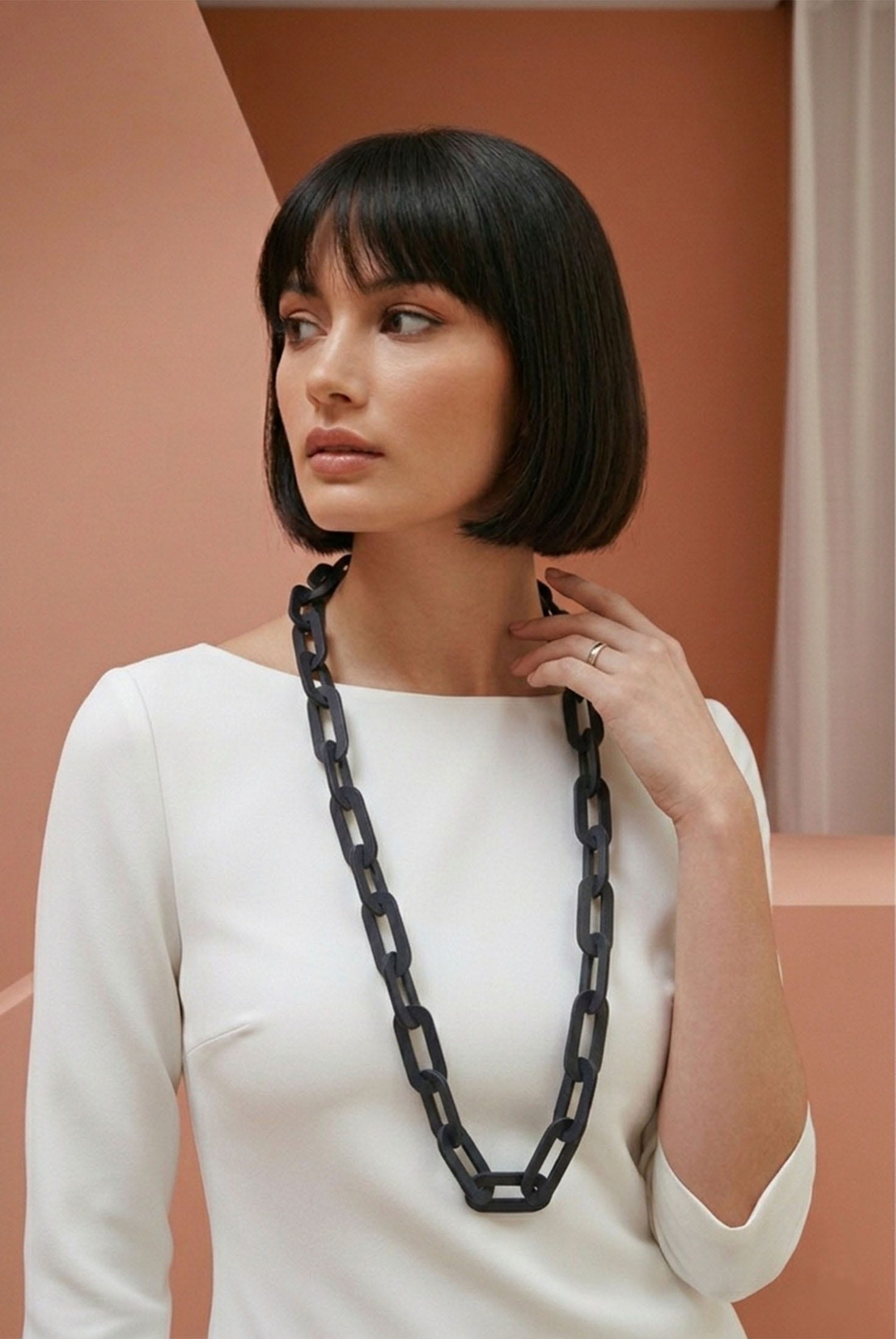
Chains have a very ancient origin in jewelry. Since antiquity they have been used not only as functional elements, but also as symbols. Each link connects to the next, creating continuity, rhythm, and strength. A chain is made of simple units, yet together they form something resilient and meaningful. Perhaps this is why chains have remained so present in jewelry through the centuries: they embody the idea of connection.
In my work, however, chains move slightly beyond the traditional idea of jewelry. The pieces I create are entirely handmade and are conceived not only as necklaces but as sculptural design objects. They belong to the world of jewelry, yet they also touch the territory of artistic design: objects that can be worn, but whose structure and presence are intentionally sculptural.
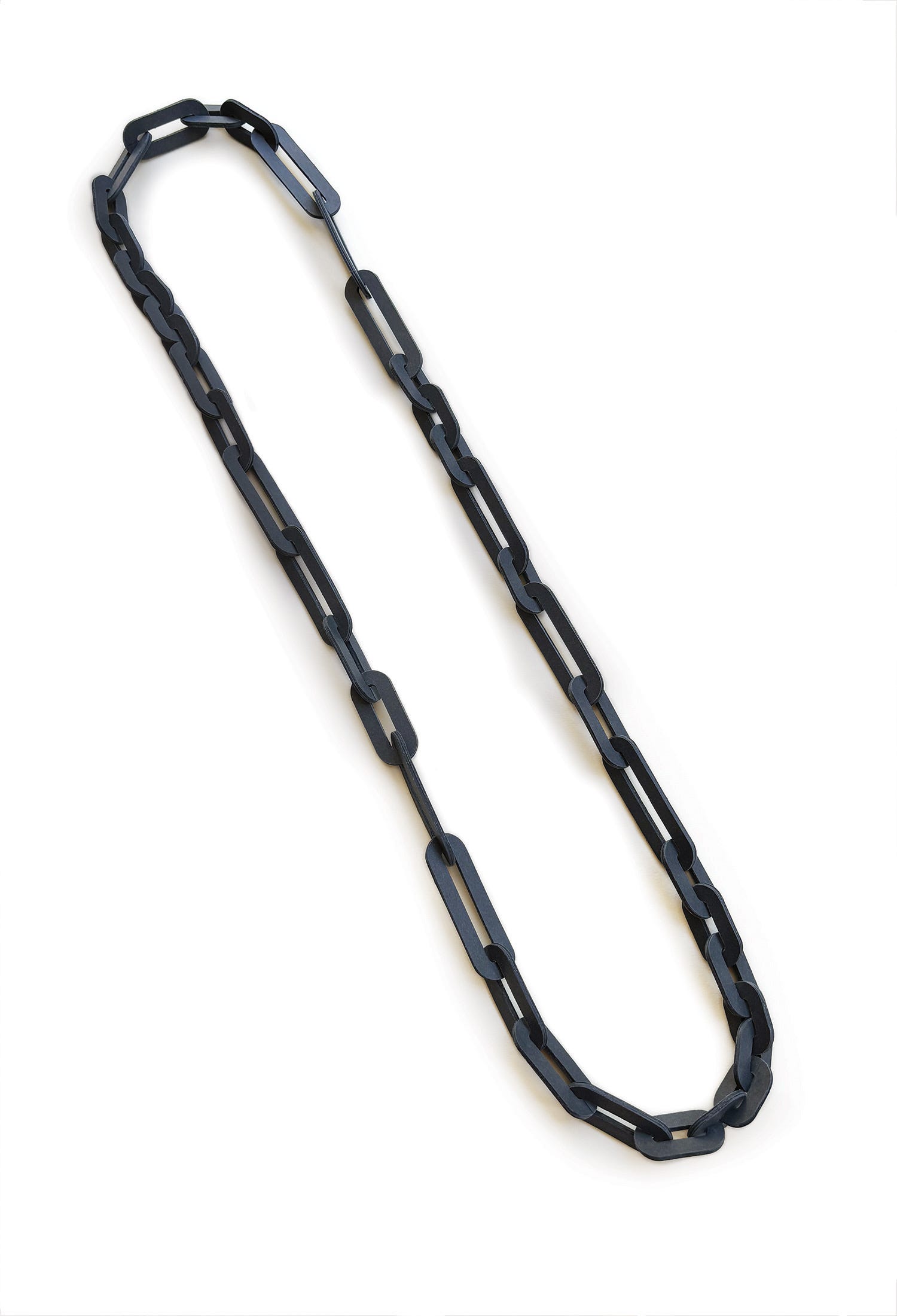
A central aspect of these chains is the technique used to create the links. They are not made from thick cardboard. Instead, each link is constructed through a layered paper technique that I designed and developed myself. Thin sheets of paper are cut and then built up in multiple layers, carefully glued together to form every single link. This process creates a material that becomes strong and structured while still preserving the lightness and character of paper.
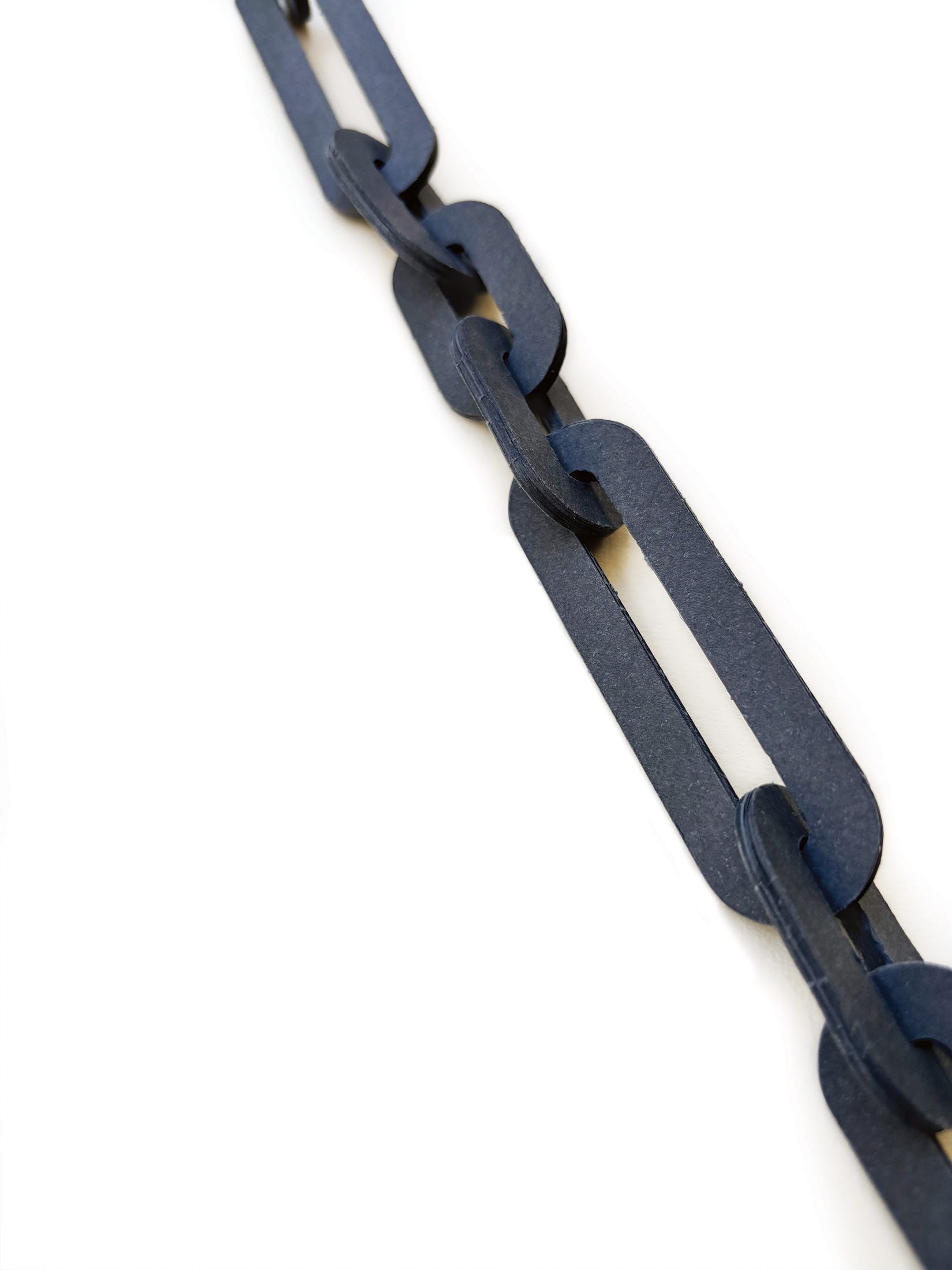
Every link is therefore the result of a slow manual process. Layer after layer, the form grows until it reaches the necessary thickness and stability. Only then can it become part of the chain, joining the other links in a continuous sequence.
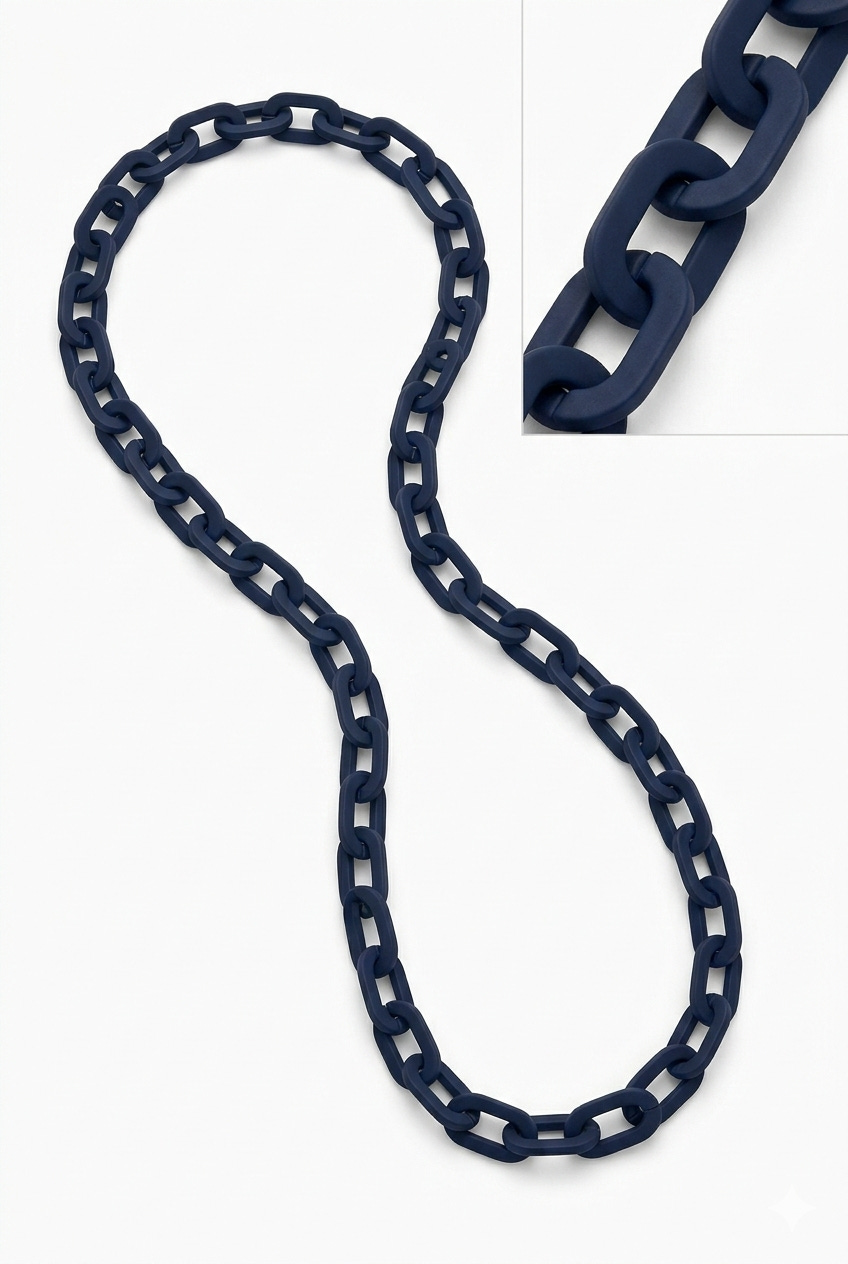
My ongoing fascination with chains is also inspired by the long tradition of chains created in precious metals, whether ancient or contemporary. Goldsmiths have explored the beauty and complexity of chain structures for centuries. Their work is a constant source of inspiration. In my pieces, however, that tradition is translated into a contemporary design language, where the material changes but the idea of structure, rhythm, and connection remains.
What emerges is a chain that belongs to two worlds at once: jewelry and sculpture, tradition and experimentation, craftsmanship and design.
No posts
Comments
Nothing yet. Say the first thing.
Sign in to join the conversation.