
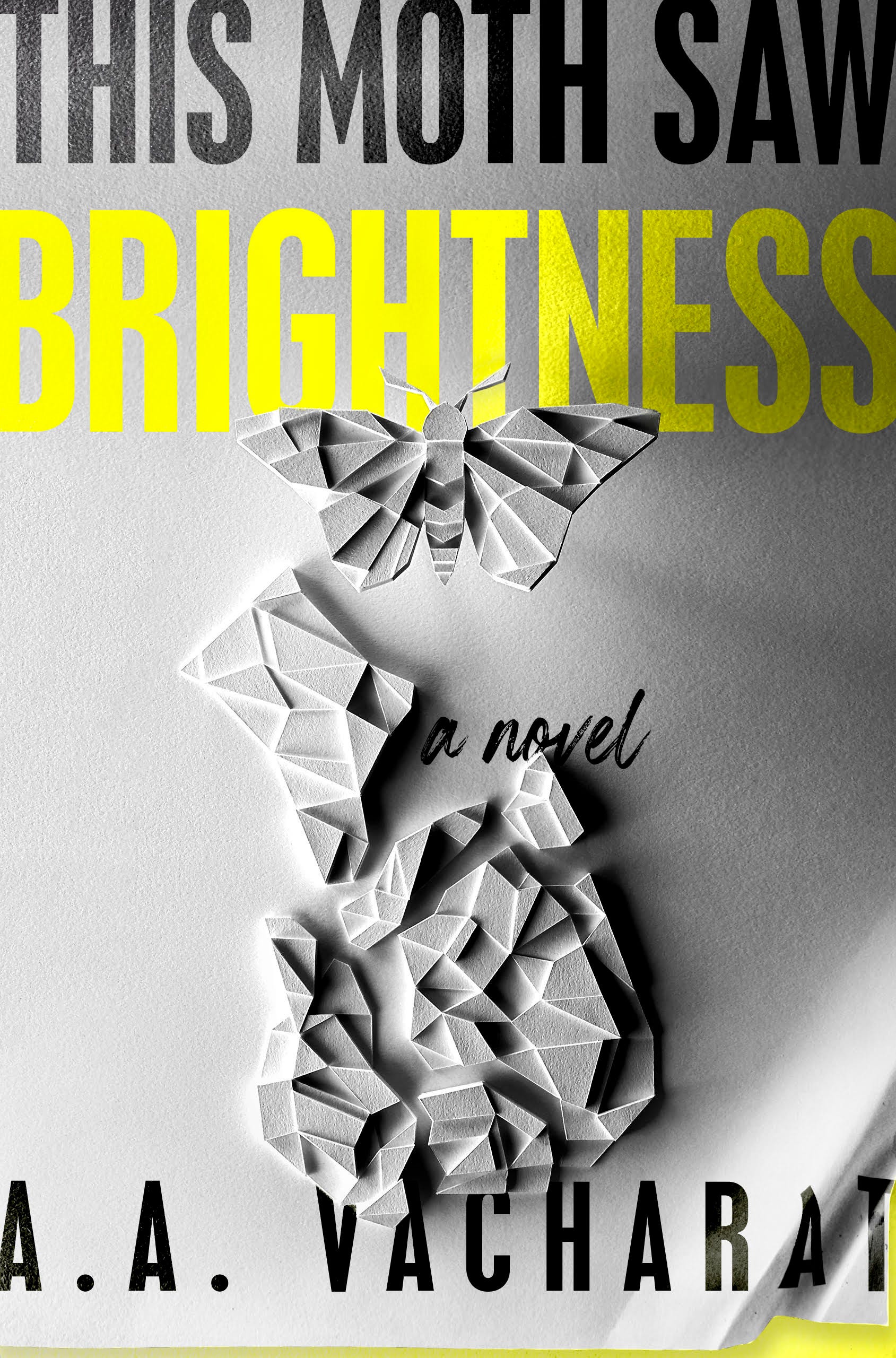
We’re back this week with a new Vent, author-passengers, from A. A. Vacharat discussing her novel, THIS MOTH SAW BRIGHTNESS, as well as giving some really perceptive takes about self-marketing in publishing. Also, I didn’t know I needed a story about a girl who loses her cat on a spaceship until A. A. described her WIP, and I think we all can collectively agree that, despite any publishing or algorithmic pressures, the world needs that book 🐈🚀 You’ll see what I mean when you dive in!
Jason June (JJ): When you started on your writing journey, what was the biggest frustration you encountered as you tried to find an agent and/or went on sub to editors for the first time?
A. A. Vacharat (AAV): Publishing says it wants originality, but it has so many systemic barriers for authors who want to do something different.
How often have you heard it on a panel? Read it on a #MSWL?: “I want something I’ve never seen before. Something totally new.”
I believe they believe they want that. But even if the agents and editors genuinely do, they usually can’t take those books—because they know they won’t convince their team at acquisitions, and sales and marketing can’t count on selling them to the public.
Something “new” won’t have comps—and that means no evidence of sellability, and no connections that publishers can use to shuffle readers from one title to the next (“you might also like…”). Your very original Victorian ghost story corporate thriller cookbook won’t have tried-and-true keywords for SEO and algorithm-baiting.
Corporate capitalism isn’t set up for newness. The system demands our work be derivative in order to be “original” enough to sell. It needs to be pitchable as “WELL-KNOWN-THING but dragon school instead of wizards.”
Before I met my agent, Kelly, I sent out THIS MOTH SAW BRIGHTNESS (my satirical, semi-literary thriller/mystery-esq speculative novel) to forty agents who said they wanted “something new,” or “genre-bending” work; I got one request for a full—and that was ultimately a rejection.
It speaks to a fundamental brokenness in the industry. Agents and editors enter publishing because of their love of books. But they so often have to pass on the books they love—the books they believe should exist not to pay someone’s rent, but because they make the world better.
Of course, there are exceptions.
For me, I didn’t get an agent because the system worked as promised; I got one because of relationships and sustained work (things, it should be noted, that not all people have the time and resources and privilege to develop). Kelly invited me to read for her because of our shared network—we’d attended the same graduate program, a decade apart. For two years, I critiqued manuscripts from her slush pile. That work built her trust in my judgment, and when I finally sent her my novel, she read past the “unsellable” impulse and signed it because she loved it—even though she believed (she only told me this after the book had a pub date) it would be very hard to place. And my editor—who was the editor I wanted from the moment I finished the first draft in 2016—is one of the rare few with the privilege to take on projects that don’t have a pre-defined, easy-to-target market.
I worry about all the fantastic, original books we’ll never see—because their writers gave up, or gave in.
JJ: How about after you got your first book deal and continued on to write more manuscripts? How did your frustrations change?
AAV: I thought I was emotionally and mentally prepared for the marketing frustrations. I wasn’t.
I expected it to be like teamwork, as long as I made it clear that I was willing and able to play on their team—to do the work of it—that they would contribute a bit of support.
To be very clear: the marketing teams are trying to meet sales goals and expectations presumably set by someone else, to market and sell too many books on too little time, and they are doing the best they can given the constraints of The System. Still, it’s frustrating, perhaps more so, because there is no specific person to go to, no easy solution to fix it.
It’s a lot of small things that make you feel like your efforts—and your book—don’t much matter. The way you post or send ideas and emails and the publisher doesn’t acknowledge them. The errors (e.g. your book’s title and cover, but with another book’s description) in the content the publisher puts out.
A specific example: I’d wanted to do a collaborative post for Autism Acceptance month—it was good timing, a month before my book release, and there aren’t many books with authentic autistic characters out there, and RFK Jr was in the public discourse for his anti-autism rhetoric and proposed autism registry. There was, I thought, a great opportunity to point out the uncanny relevance of THIS MOTH SAW BRIGHTNESS, a novel about corrupt governing and conspiracies, which brings up the question of why humans repeatedly get the urge to decide who is worthy of living. But I never got a response from marketing. Months later, the publisher put up a post with suggested books for disability pride month, but did not include my novel.
When I asked my agent about this, she reported that I shouldn’t worry myself—that all of this is totally typical. Which is ironically even more worrisome—this is so normalized in the industry that authors are being told to accept and ignore it. It’s a recipe for learned helplessness.
What makes it worse is the pressure the publishers are putting on authors to market themselves. For a current project on sub, I was required to research and write “The Marketing Plan.” There are so many problems with this, the least of which is that I, as an author, do not have any tools or knowledge to write a competent or meaningful marketing plan. Why do publishers want whatever bullshit—because it will be bullshit—I create?
I wish that sharing information with authors was the default. The industry implies they want you—expect you—to be part of the marketing team but with none of the data or tools. You don’t get any information from them—sales numbers, sales expectations, what has and hasn’t worked for selling your book, their target audiences, what they are working on behind the scenes.
Marketing should be call and response: try, measure and analyze, then adjust. You throw things at a wall and see what sticks. But all authors can do is throw stuff at a wall they can’t see, just throw and throw and throw never knowing if they are even hitting the wall let alone sticking to it. The question about whether we can “move the needle” feels unanswerable because we have no way of seeing the needle.
To be fair—I’ve never gotten this pressure from my publisher. I truly don’t think they care if I try to sell the book at all, which of course has the pro of making me feel less pressure but the con of making me feel even more irrelevant.
Again—I don’t blame the individuals on the marketing team, they are doing truly huge lift with what little they are given. But something has to give. The industry can’t survive like this, especially with increasing options for self-publication—at some point authors will start to wonder…what’s the point of hopping on board? It’s a hamster wheel in quicksand.
JJ: Tell us about your latest book? And what’s the biggest vent you’ve got about the process of creating this novel?
AAV: I’m currently working on a middle grade mystery about a girl who loses her cat on a spaceship, and it’s heavily reliant on illustrations. I’m having a great time, with nothing to complain about except, perhaps, the pressure I feel not to write it. Because my first novel was a YA, I “should” be writing another YA. The world caters to people—like it does to novels—who fit in definable boxes. The algorithms and markets reward consistency. Heaven forbid we authors should want to keep learning and evolving as artists.
JJ: Any words of wisdom you have for writers whether they are at the beginning of their journey or multi-published?
AAV: If you’re feeling the pressure to make your work more like other work you’re seeing succeed, take a step back. Study everything you’ve made—not just writing, not only published work, and ask: Which pieces made me proud? Which felt the most satisfying?
Then, line them up and look for what they share. Maybe they’re all funny. Maybe they’re joyful, centered around certain themes or issues, or unapologetically strange. That’s the thread of you-ness woven through your work.
When you know that thread, you can hold onto it. That’s your brand. You won’t be as likely to try to be blown off your creative path and into whatever generic brand box the industry is holding out for you.
JJ: Thanks so much for joining us aboard the Ventorship, A. A.! Author-passengers, read below for more info about A. A. and THIS MOTH SAW BRIGHTNESS!
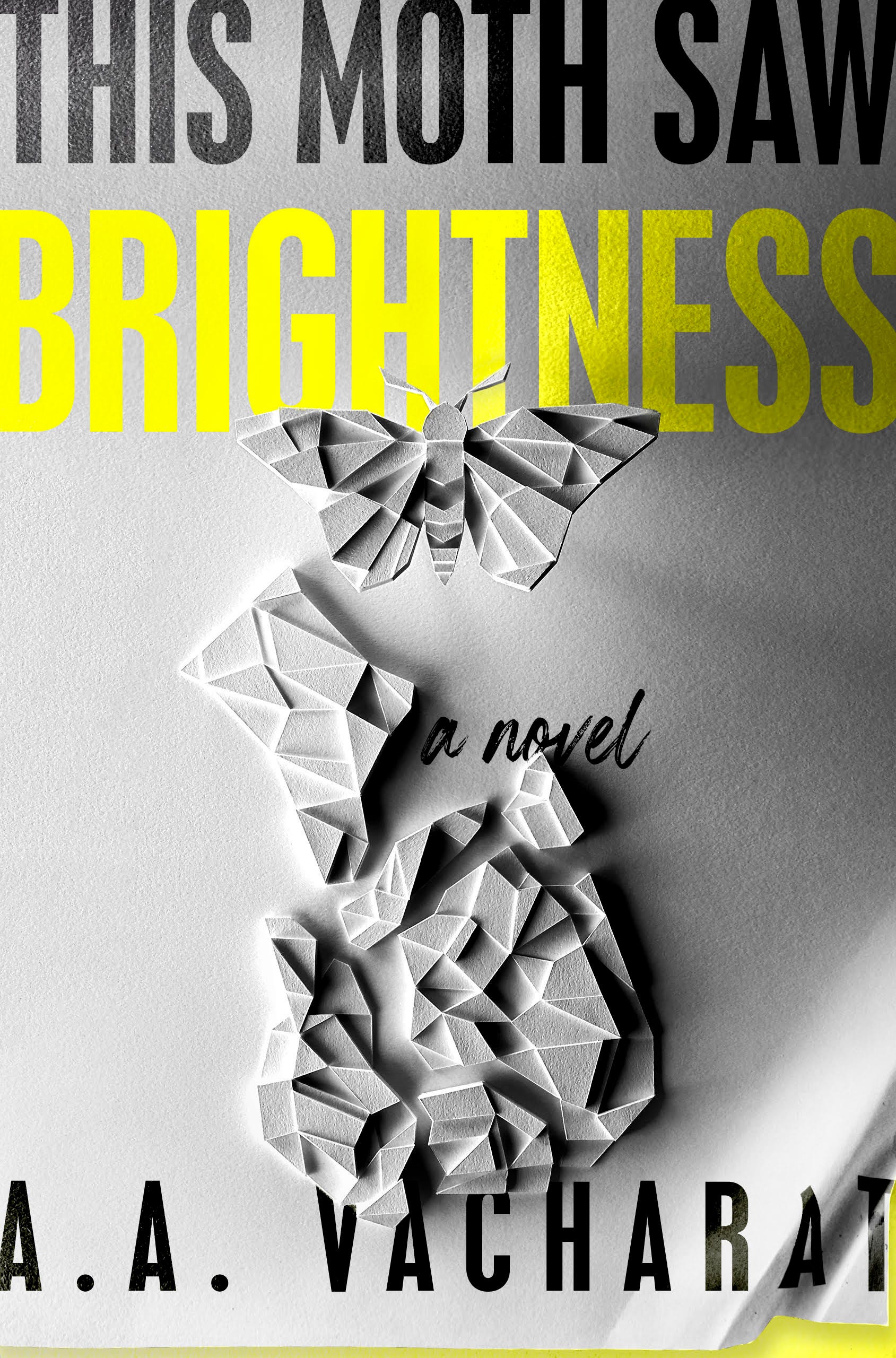
About THIS MOTH SAW BRIGHTNESS
For fans of Severance’s unnerving blend of humor and insight, and appreciators of A.S. King’s bold stylistic choices, this weird and un-put-downable novel captures the dislocation of growing up BIPOC and neurodivergent in a country awash in both conspiracy theories and genuine conspiracies. ‘Wayne Le—known as “Invisible-D”, or “D”—knows he’s a disappointment. When John’s Hopkins University offers him the chance to participate in a prestigious study, D jumps at the chance to make his father proud. The program seems strange but simple. As it progresses, though, the study begins to seem not-so-ordinary, and D teams up with with crush Jane, and best friend Kermit, to try to uncover the truth about the program’s purpose. They find themselves sucked into an M. C. Escheresque maze of conspiracies that might be entirely in their heads or might truly be a sinister government plot.
About A. A. Vacharat
A. A. Vacharat is an author, illustrator and web developer. Her books include elements of science, technology, and usually a touch of absurdity. She includes characters that her child-self longed to see—such as children with one Asian parent and autistic protagonists—and portrays worlds beyond those most often seen.
Authors, the Ventorship is looking for traditionally published writers to be featured with their latest book release in a future edition of The Vent! Email me at heyjasonjune@gmail.com with the subject: THE VENT to let me know you’re interested. All you’ll need to be featured are answers to the same four questions asked above, as well as an author bio, cover image, and book description.
If you’d like to vent about anything author/writing related, write to me at heyjasonjune@gmail.com with the subject: VENTORSHIP. I’ll give you my take in a post, and we’ll crowdsource author opinions in the comments. You’ll remain anonymous, and any haters will be thrown overboard. Ultimately, I think you’re going to be buoyed up by author love and support as we realize we really are all in the same boat 🛳️
No posts
Comments
Nothing yet. Say the first thing.
Sign in to join the conversation.