
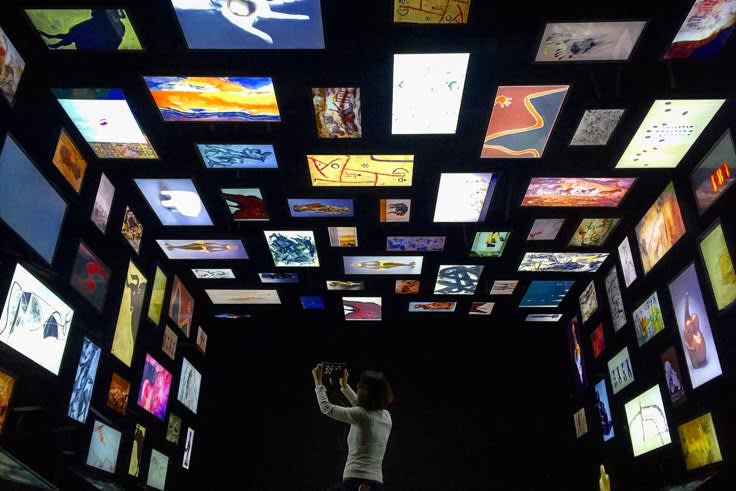
Life arrives first as sensation: the animal brightness of desire, the hot bloom of joy, the electric recoil you do not yet know whether to call grief or fear. We encounter it bodily, overfull, contradictory. It does not yet know what kind of story it belongs to. It may not even belong to a story at all.
Then the narrator arrives.
She is useful. She makes meaning. She takes the pressure behind the ribs and tries to compress it into something another person can carry. The body becomes a sentence, the weather becomes a story. Something is clarified and something is left behind.
A story lets us place one strange thing beside another until they begin to look like a life. It turns raw experience into something communicable, sometimes even beautiful. Without narrative, the world might remain too fast and dazzlingly disordered to hold.
But stories are rarely innocent. They impose motion where there may only be churn. They create a narrator where there may only be a body trying to get through the day. They make the strange thing graspable, but they often also make it smaller.
I have been thinking about the compression of experience into story because I write online. Writing already changes the thing by turning it into language. Public writing changes it again by asking the language to survive other people: their attention, recognition, taste, impatience, generosity, misunderstanding. The experience is first compressed into a sentence, then asked to be a sentence that may travel.
Yet, this isn’t only a writer’s problem. Most of us live with some imagined audience sitting on the shoulder. We narrate ourselves constantly, in conversation and in thought, even when we never publish the narration. The internet intensifies the loop, only making the feedback faster and brighter.
Every act of communication is a compression exercise. Conversation, confession, argument, explanation, even the ordinary attempt to tell someone how your day was, all require translating the overfull thing itself into a shape another person can hold. You cannot give someone the full system of your experience, and they could not receive it if you tried. You choose, cut, arrange, compress. You leave out the too-bright supermarket lights and trim the dead air. You turn the chaos into something portable enough to cross the distance between bodies.
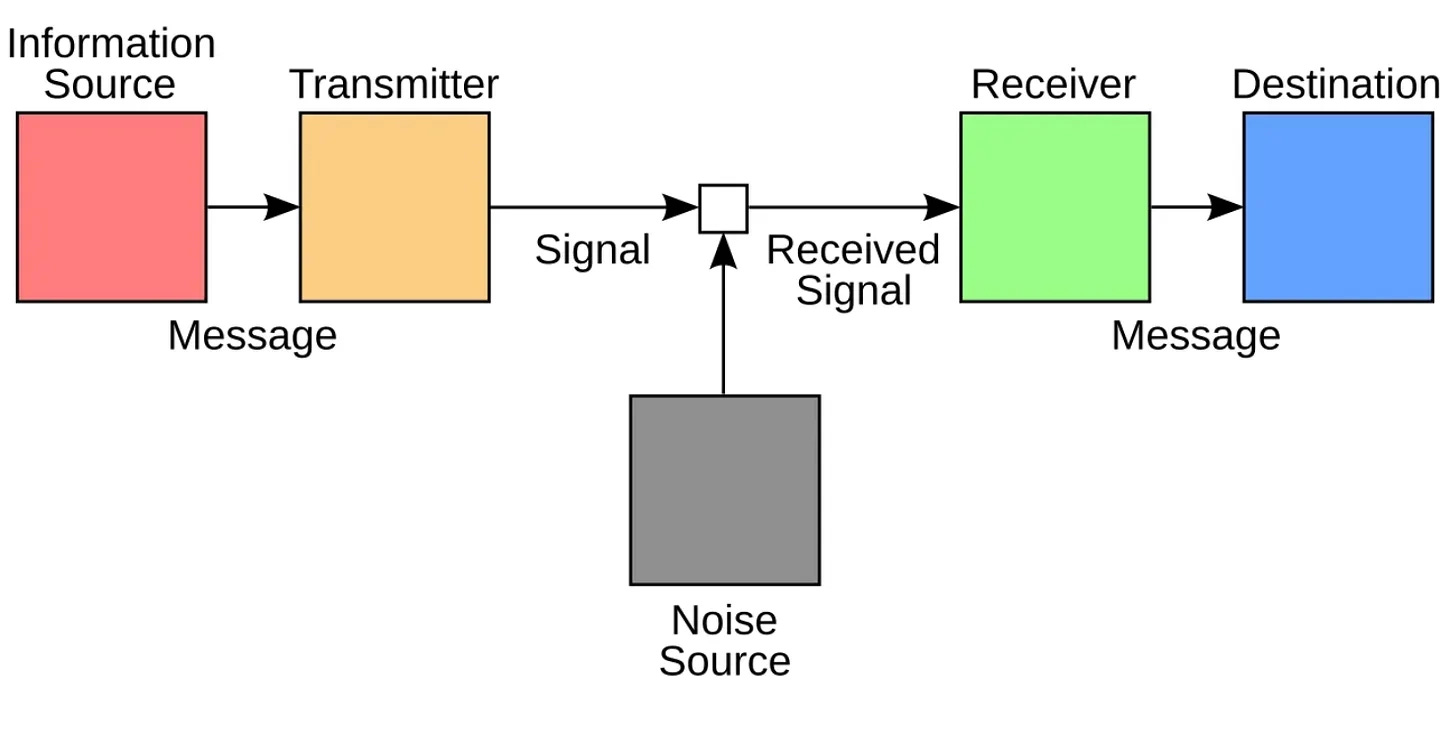
Writing makes this lossiness more visible because the artifact remains. The sentence sits there, pretending to be the experience, when really it is only the pressed flower of it: flattened, preserved, beautiful maybe, but altered by the pressure that made it legible. Something always gets lost, but different forms teach you what to cut.
Online, once algorithms enter the frame, clarity often becomes the work of making language travel. The sentence must carry itself without too much context. The feeling must be recognisable before the reader leaves. The idea must be specific enough to feel earned, but general enough to belong to strangers.
This is where resonance can become suspect. A sentence can resonate because it is exact, because it has found the pressure point of reality. But it can also resonate because it is familiar, elegantly phrased, or emotionally convenient.
All art has always lived in tension with its audience. The pop song wants to be loved. The film wants to be watched. The novel wants to be held open by another person. Art may begin in necessity, but it is never completely untouched by reception. Even the fantasy of making something only for yourself contains an imagined future reader, listener, witness, lover, judge.
Today, platforms intensify the old bargain by making anticipated reception part of the creative act itself. The song hears the TikTok snippet before it hears itself. The poem imagines the Instagram square. The essay feels for the highlight. The work begins to encounter its audience before it is finished being made.
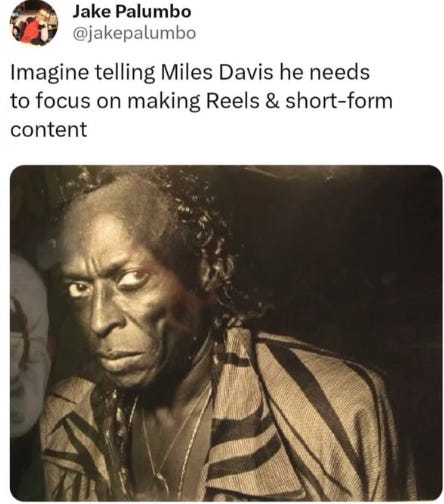
A catchy hook is not necessarily a capitulation to the market, and a beautiful sentence is not guilty because someone wants to quote it. But the anticipated fragment changes the whole. A song written around the ten seconds that will circulate is different from a song whose ten seconds become beloved by accident. An essay written toward the highlight is different from an essay whose highlight emerges from the pressure of the whole.
The problem with writing an essay against neatly ordered stories is that the critique of content becomes content. The suspicion of performance becomes its own performance of suspicion. Even here, I cannot separate the sentence from the forces acting on it: the imagined audience on my shoulder, the desire to be lucid, quotable, understood, the pressure to let the argument land without letting it become too clean.
A legible, public self is not automatically fake. It is made from real raw materials: real desires, real memories, real experience. But it is inevitably edited into a coherence the living self can never sustain. It has cleaner desires, clearer wounds, more stable themes. It knows what it means.
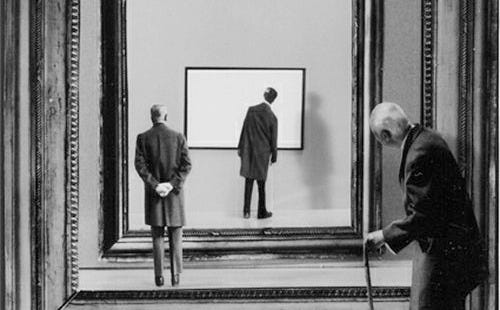
There may be no pure place outside audience, language, story, market, performance, selfhood. There may be no untouched self waiting underneath, no original fragment we can recover unchanged. I am describing the machine’s walls from the inside.
Still, some arrangements of experience may be more honest than others. Some stories make life feel simpler than it is, smoothing the contradiction until it can pass for wisdom. Others make life more available in its textured, dazzling complexity. They do not resolve the trouble so much as keep us in contact with it.
Living is not automatically pure, and stories are not automatically corrupt. But writing is powerful enough to reach backward and alter the thing it claims only to describe. It can make a life more visible to itself. It can also make a life obedient to its own description.
Some truths are still in the trees. There are leaves in my hair. Somewhere in my bag, unopened, is a small notebook full of sentences I am not yet ready to make beautiful.
“We tell ourselves stories in order to live... We live entirely, especially if we are writers, by the imposition of a narrative line upon disparate images, by the “ideas” with which we have learned to freeze the shifting phantasmagoria which is our actual experience.” ― Joan Didion, The White Album]
Inspired by:
Joan Didion, The White Album: narrative as both survival mechanism and distortion
Walter Benjamin, The Work of Art in the Age of Mechanical Reproduction: how distribution changes the artwork itself
Guy Debord, The Society of the Spectacle: directly lived experience moving into representation
Jean Baudrillard, Simulacra and Simulation: the map preceding the territory, the representation shaping the real
Conversations with Ethan
Comments
Nothing yet. Say the first thing.
Sign in to join the conversation.