
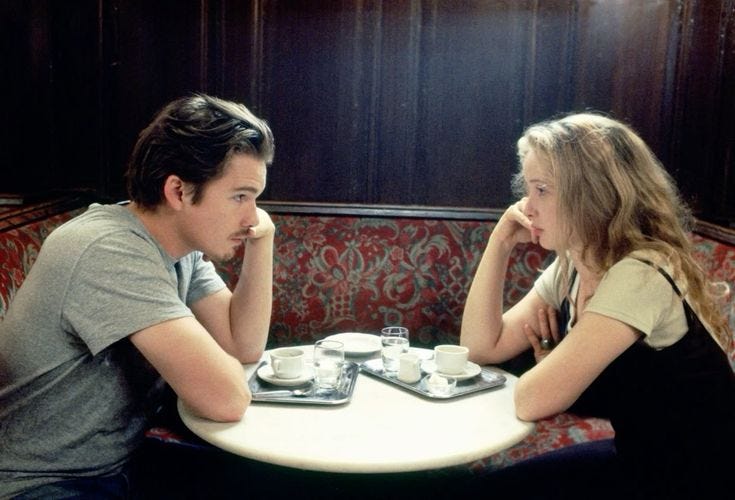
For a long time, I thought conversation was mostly a way of reporting on life, not participating in it.
I understood that it could be pleasant and funny, even often useful, but I did not yet understand that it could be generative. So much of it seemed to be people passing static facts back and forth, reporting the surface of their lives without anything really happening between them. I dreaded certain kinds of talking because they felt hollow to me, as if we were all politely taking turns placing objects on a table and then walking away unchanged.
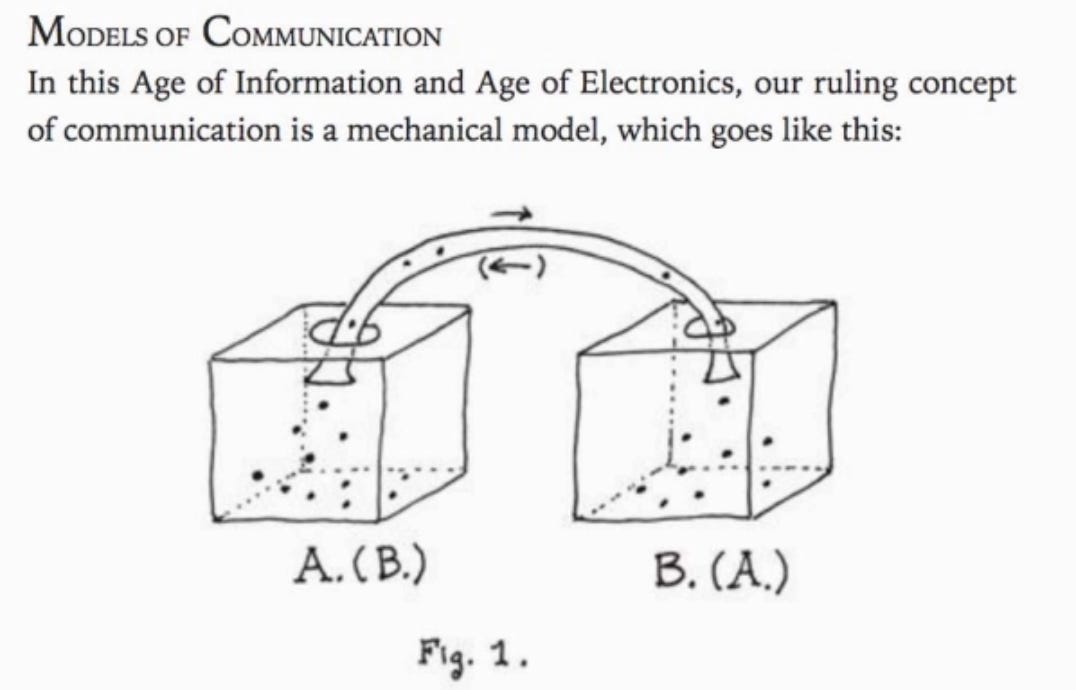
This is close to what Ursula K. Le Guin critiques in her 2004 essay ‘Telling Is Listening’ as the mechanical model of communication: one mind transmitting information to another, as if language were a tube connecting two sealed boxes.
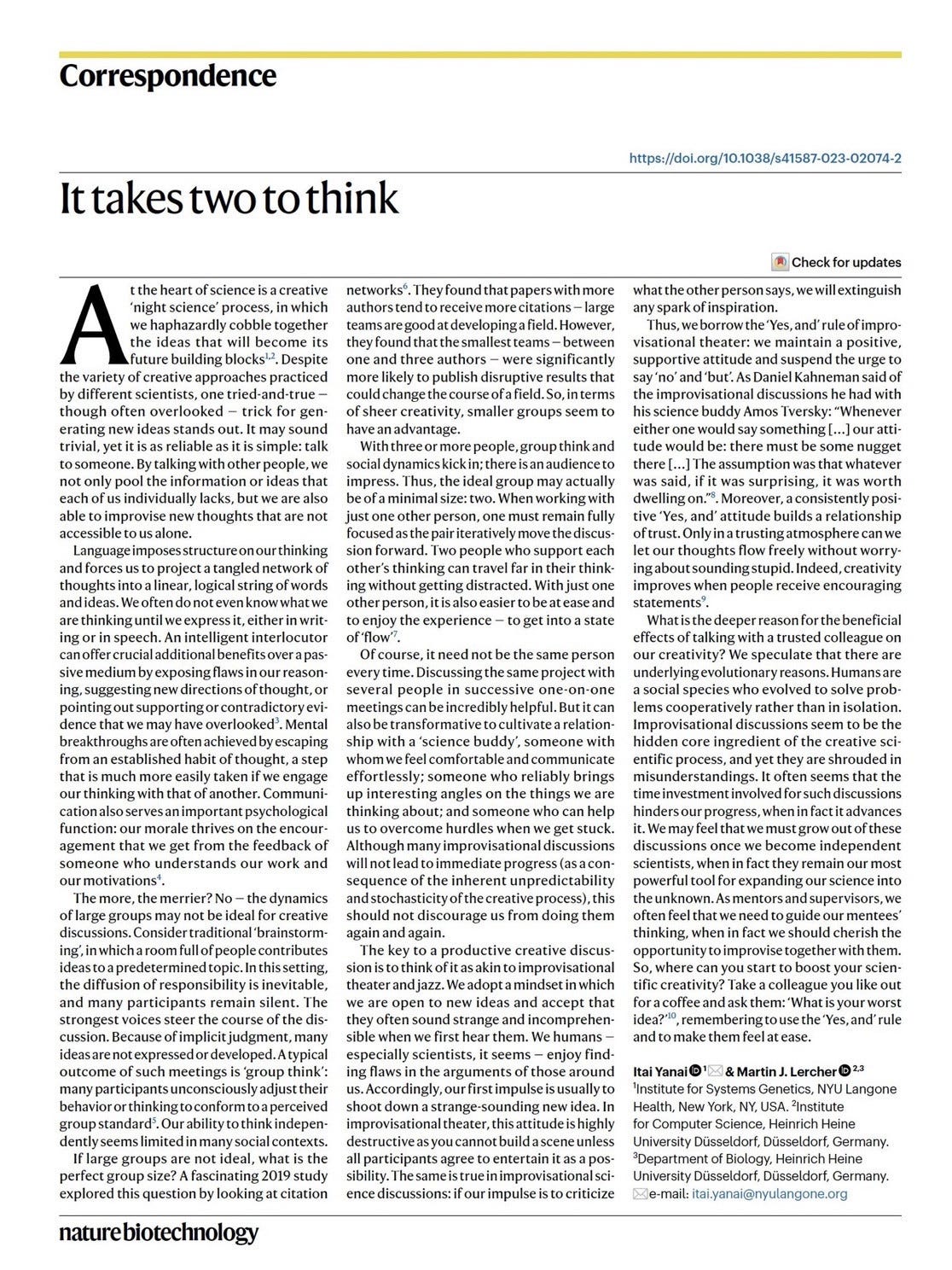
I discovered this difference through Vivi, my college roommate who would become one of my closest friends. She expanded my understanding of what a conversation could be. The best way I can describe it is that talking to her often felt like playing jazz. I am far from a musician, so I mean this less as a technical comparison than a felt one in the improvisation, the aliveness, the way each person has to stay awake to what the other is doing in order to enter. She had a way of making a room feel more alert. You never quite knew where the conversation would go, only that if you followed the thread honestly, something alive would happen.
She listened in a way that made my own thoughts more interesting to me. She asked questions that opened secret doors inside of myself, questions that pulled me out of my familiar scripts and into some more vivid relation with myself. Through talking to her, I learned more about who I was. I became clearer to myself through the force of her witnessing and reflecting. She had a way of drawing out the hidden interesting thing underneath what you said, pulling on the almost-thought until it became visible. With Vivi, conversation started feeling like an act of co-creation.
I think this is the difference between conversation that drains me and conversation that wakes me up. In one, language stays flat, passing the expected object back and forth. In the other, something is in motion. Someone asks a question and you feel yourself searching for what in you might meet it. You retrieve memories, connect distant ideas, sew threads between unrelated experiences, revise in real time.
At its best, conversation helps make something newly available. Under the pressure of being listened to properly, people often discover that they know more than they thought they knew. A generous question, paired with a generous listener, can reach beneath the managed self and help pull something truer into language, bringing something from fog into form.
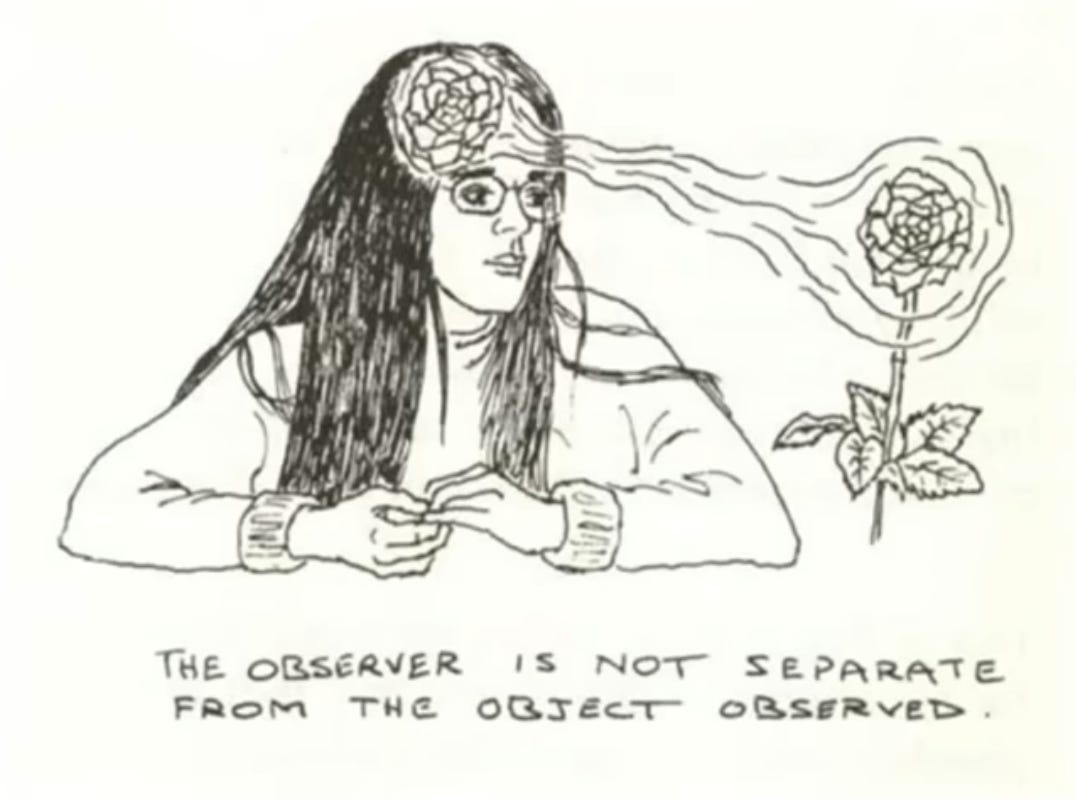
This is why conversation feels like a portal to me. It opens onto things that were impossible to reach alone, including something in the self, something in the other person, and something that only appears between you.
Why does conversation have the power to change our access to ourselves? I think the first reason is that the self often needs a prompt. Another way of saying this: you do not know what you think until something asks you. At least, not fully.
There are thoughts that exist in us before language, but only as a vague leaning or barely visible arrangement of taste and intuition. They sit somewhere subterranean, patiently waiting for the right conditions to become speakable. Then someone asks, What do you think? or says a sentence that irritates us, or notices something we skipped past too quickly. A thought rises through the dark water of the mind and breaks the surface. You hear yourself answer and think, oh, I suppose I believe that. Actually, now that you ask, I suppose that has been in me for some time. In my experience, this can feel quite physical in the body, this rising up of thought from somewhere deep inside you. The other person has has helped make its emergence possible.

I know this from how often I discover my own opinions only after I’ve started speaking. I do not think of myself as a particularly opinionated person. I have beliefs, of course, but many of them are not sitting neatly at the front of my mind, labelled and ready to be retrieved.
But as soon as a friend asks, Do you think people can really change? or What makes a friendship feel alive to you? or Would you ever move back to a city you outgrew?, I feel something in me begin to assemble. I start with a half-formed instinct, then add a caveat, then make a distinction, then hear myself reaching and attempting to sharpen the blurriness. By the end of the answer, I realise I do in fact believe something about the matter. The thought was already in me, maybe, but only as a pattern of memory, longing and aversion. The question gave it a precise shape I could not have found alone, so I could finally see it more clearly.
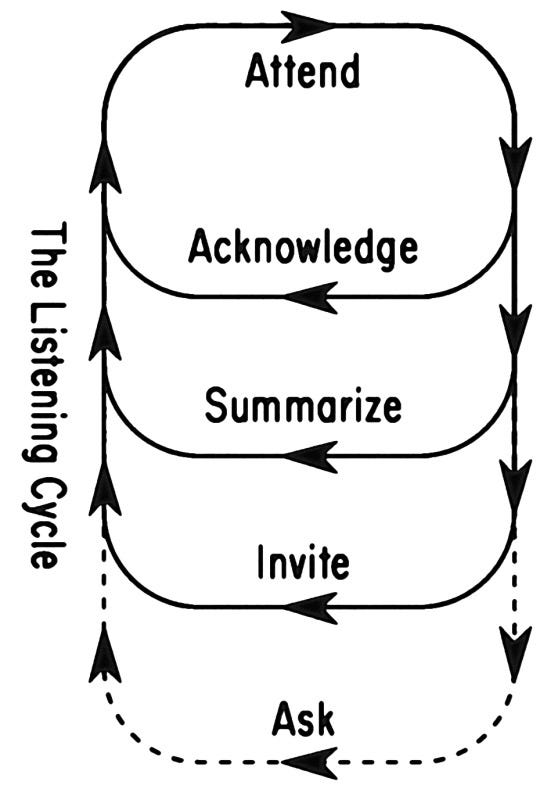
Still, a question alone is only part of the miracle. The deeper magic is what happens when the question comes from someone who knows how to listen.
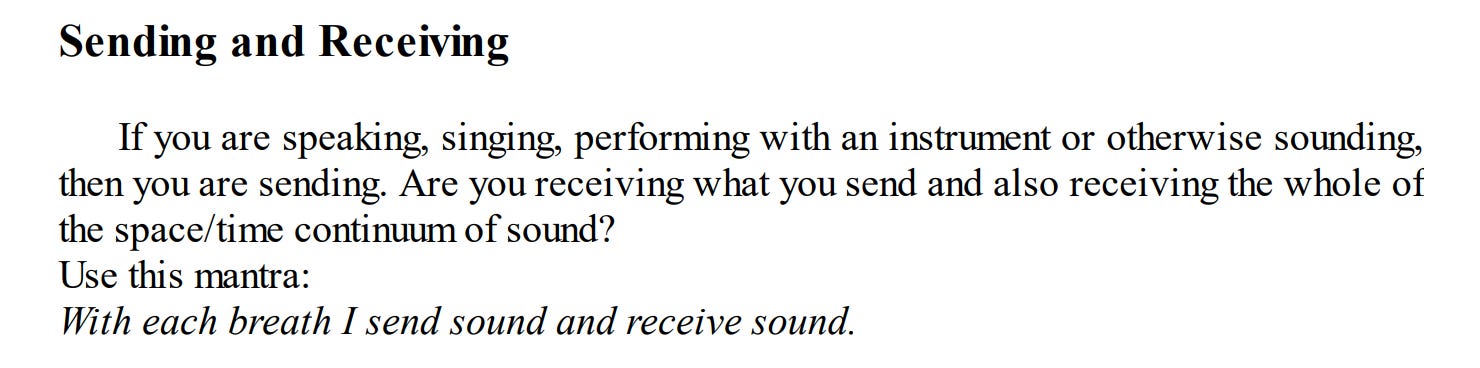
In human conversation, what is said is shaped by response, actual or anticipated. You are never speaking into a void. You are speaking into a particular face, a silence, a tilt of the head, a quickening of attention. The listener is playing an active role in this process, helping determine what kind of thought can arrive.
A good listener creates a space in which you can hear yourself more accurately. They ask the question underneath the answer you keep giving. They hold up a piece and say, Wait, say more about that. And then, somehow, you are saying more about that. As Ursula K. Le Guin writes: talking and listening are ultimately the same thing…The living response enables the voice to speak.
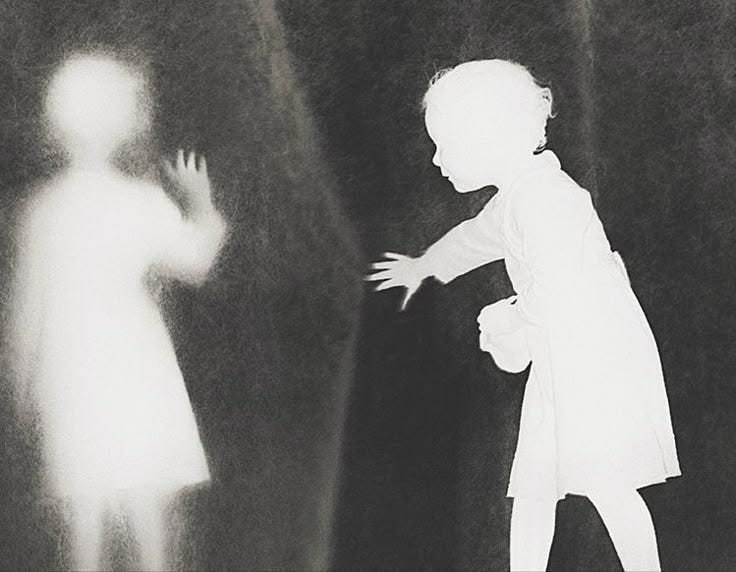
There is an ancient name for this: maieutics, from the Greek maieutikos, meaning ‘of midwifery’. In Plato’s Theaetetus, Socrates, whose mother was said to be a midwife, uses the metaphor to describe his own method of questioning. He imagines questions helping them bring forth thoughts already latent within them, then testing whether those offspring are true or false. In this way, a good question is a kind of intellectual birth assistance. It assumes there is something in the other person worth bringing into form.
There is a moment in good conversation when authorship starts to blur. It came through the speaker, yes, but also through the question, the listener, the room, the trust, the timing. Something was born from the encounter itself. Le Guin calls this a common interchange between two consciousnesses.
Ideas become essays this way too. Someone asked me recently where I get the ideas for my essays, and the honest answer is: conversation. Almost all of my ideas have arrived through talking, far from clean theses lowered into my mind, but as something I notice myself exploring with a friend. An essay begins as a disturbance in my attention. I bring the thing to someone else before I fully understand it myself. I say it badly. They misunderstand it productively. They offer an example I had not thought of, push on the weak part, ask the question underneath the idea. Slowly, the thing gathers gravity and a clearer centre of force.
Conversations like this are a tug-of-war with a living thing, everyone pulling the idea into sharper shape through the back and forth. One person throws something out, another catches it at an angle, a third person notices the live wire, and then the idea has more weight than it did when it belonged to any one person.
This is why most of my writing club time is actually spent talking rather than writing. I used to think this meant I was failing to do the work, until I realised the conversation was most of the work. If I remember to take notes afterwards, I often find that the essay has already begun to assemble itself in the back-and-forth, through the disagreement, the tangent, the sentence someone repeats back to me, the moment my whole inner system responds, yes, no, almost, not quite, this, but different.
I think an interesting word to understand these people is as interlocutors. The word comes from the Latin interloqui, to speak between. An interlocutor speaks into the space between you and the work, helping you understand what the project (work or the self as project) are trying to become.
It would appear talking is far more than just how we document life. Talking is one of the ways life happens. It is where experience becomes real to us, where feeling finds form, where thought discovers its own shape in the presence of another person.
Someone asks the right question and waits. The silence has enough room in it, so something in you loosens, as a thought finds a door. You hear yourself say a sentence you did not know you had, and suddenly you can move more freely inside yourself. Maybe this is what we are searching for as much as answers: the kind of people with presence that makes the best answers possible.
If you find some value in my writing, you can buy me a coffee. Other ways to support are just as meaningful: subscribing or pledging to my Substack, leaving a comment, or sharing this with someone you think would enjoy it. Each small signal helps others find their way through the noise.
Further reading on this topic:
Ursula de Guin ‘Telling is Listening’ (2004)
The Marginalian: Telling Is Listening: Ursula K. Le Guin on the Magic of Real Human Conversation
Simone Weil ‘Attention and Will’ (1952)
Daniel Kahnemann, Attention and Effort (1973)
Brenda Ueland, The Art of Listening (1992)
Kumi Kato Listening: Research as an act of mindfulness (2015)
My are.na channel on attention and listening
In his book on friendship, John O’Donahue asks: “When was the last time you had a great conversation? A conversation that wasn’t just two intersecting monologues, but when you overheard yourself saying things you never knew you knew, that you heard yourself receiving from somebody words that found places within you that you thought you had lost, and the sense of an “eventive” conversation that brought the two of you into a different plane and then forthly, a conversation that continued to sing afterwards for weeks in your mind? Conversations like that are food and drink for the soul.
“Great conversation is cognitively enlivening, as a form of mutual weirdness, an intellectual tango where neither partner quite knows what the next step will be…. We allow each other to unfold, to be dynamically in motion” from:
some parts of you only emerge for certain people
·
August 15, 2025
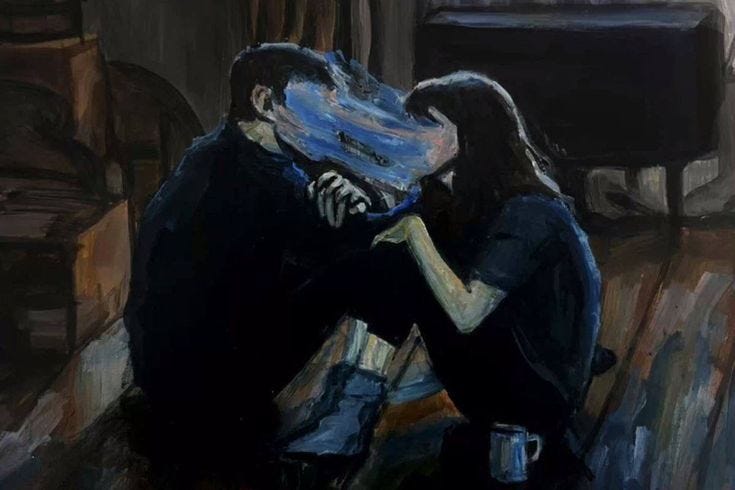
I think about this Virginia Woolf quote often. To me, it speaks to love’s power as an act of invention, the way certain people draw out a version of you that didn’t exist before they arrived. They witness you, and thus, rearrange you. In their presence, words you didn’t know you knew tumble out. Your thoughts sharpen, colours seem richer, you inhabit yo…


Comments
Nothing yet. Say the first thing.
Sign in to join the conversation.