

Hey, welcome back to the VWV Bulletin! This week, we’re covering the latest news and moves in VC and tech. Let’s get into it! 🕺
📌 For this semester, keep up with our content if you’re interested in:
Demystifying & breaking into VC
Finding opportunities in the start-up world
Keeping up with VC investment news at Brown & beyond (pro tip: this is essential to breaking in and finding opportunities)
Enjoy the Bulletin!
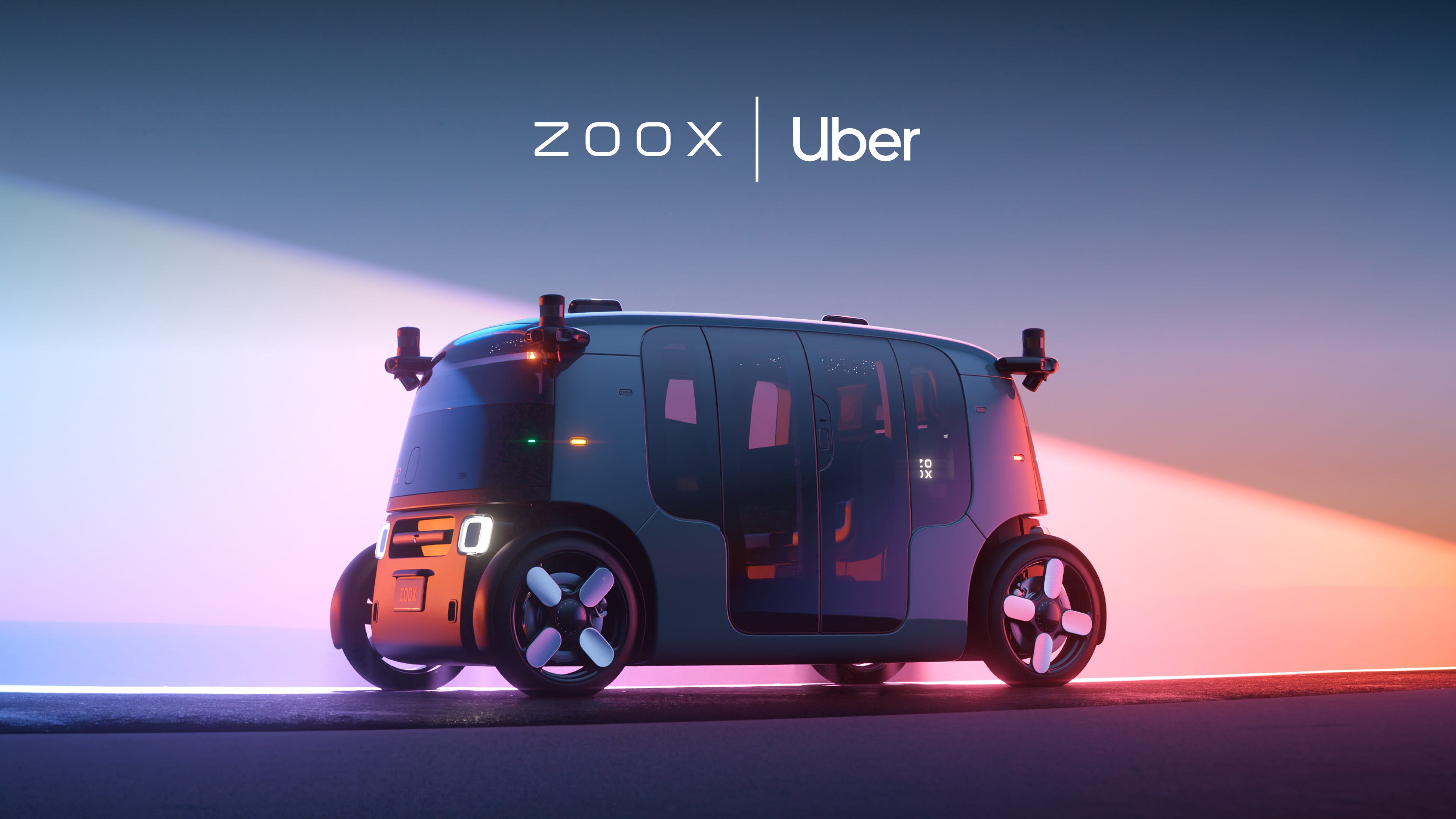
Uber Technologies (NYSE: UBER) has seen a 5% uptick in its stock price this morning, March 17, bringing shares to just over $78, because the announcement of major developments in the autonomous vehicle space. The company revealed an expanded partnership with NVIDIA, and a new collaboration with Zoox, Amazon’s autonomous vehicle division. Together, these deals hint that Uber will host a fleet of robotaxis, a model that doesn’t require the company to own or operate vehicles, a key move that could reshape the company’s economics.
As of latest, NVIDIA’s technology is essential to Uber’s autonomous vehicles. The partnership plans to launch fully driverless robotaxis in Los Angeles and San Francisco by 2027, and plans to expand to 28 cities worldwide by 2028. Uber will use NVIDIA’s DRIVE Hyperion platform and the advanced Alpamayo AI model to power the vehicles. The phased approach starts with data-collection vehicles and eventually will transition to fully driverless operations, reducing the execution risk compared to a hard launch.
The Zoox deal adds immediate visibility to Uber’s autonomous vehicle strategy. Zoox aims to launch in Las Vegas by summer 2026 and Los Angeles by mid-2027, with Uber playing a significant role in supporting the project. Uber won’t own or operate the fleet, but will take a fee every time a robotaxi uses its platform, an “asset-right” model that improves Uber’s margins without increasing costs.
The key question investors are asking is if Uber can scale its autonomous vehicle network fast enough to make a meaningful impact. It’ll be interesting to follow in the upcoming summer when Zoox’s Las Vegas deployment goes live. The live experiences will give investors a sense of the utilization and profitability Uber can expect from its robotaxi service, against current competitors.
Will we see a battle between Uber’s Robotaxi and Alphabet’s Waymo?
Sunday, an innovative robotics company, announced a $165 million oversubscribed Series B funding round, pushing its valuation to $1.15 billion. Coatue leads the round that includes investors like Bain Capital Ventures, Fidelity, Tiger Global, and Benchmark. The company intends to accelerate the deployment of Sunday’s autonomous home robot, Memo, with a beta rollout planned for later this year using the funding.
Sunday came out of stealth late last year, announcing its mission to bring robots to everyday homes. Memo’s purpose is to solve time-consuming household tasks like laundry and dishwashing. It is a robot powered by cutting-edge AI and real-world data. The key to Memo’s development lies in Sunday’s proprietary Skill Capture Glove system, which has gained over 10 million real-world household episodes from more than 500 homes, providing a wealth of data to train the robot for multiple tasks.
What differentiates Sunday from its competitors is its approach to general autonomy. Unlike others in the robotics field, Sunday controls the entire robotics stack, from hardware design to data capture and AI model development. This full-stack integration enables the company to iterate at an unprecedented pace, moving from data collection to model training and field evaluation in short cycles.
Sunday’s data-driven approach is its competitive edge, creating a feedback loop that continually improves the robot’s performance. The company’s “data moat” consists of proprietary data collected from both its Skill Capture Glove and growing fleet of robots, making it uniquely positioned to deploy autonomous robots in homes ahead of others in the industry.
With the recent funding, Sunday is focused entirely on real-world deployment, with beta deliveries of Memo set to begin later this year. CEO Tony Zhao emphasized that the Series B round is a shift from demos to real-world use, marking the beginning of the company’s journey to scale Memo to thousands of households.
The company’s ambitious plans include rapidly expanding its engineering and research teams to meet demand. Since coming out of stealth, Sunday has tripled its engineering team and quadrupled its research staff, and plans to greatly scale its data collection efforts this year.
Sunday’s process and approach have gained much attention, as more than 1,000 people are already on its waitlist for the beta program. Investors, including Bain Capital Ventures, believe that Sunday’s full-stack, integrated solution is the key to building a helpful robot. The company’s commitment to solving general autonomy at scale has positioned it as a leader in the household robotics market.
As Sunday continues to build, all attention has now shifted to its ability to deliver a fully autonomous robot.

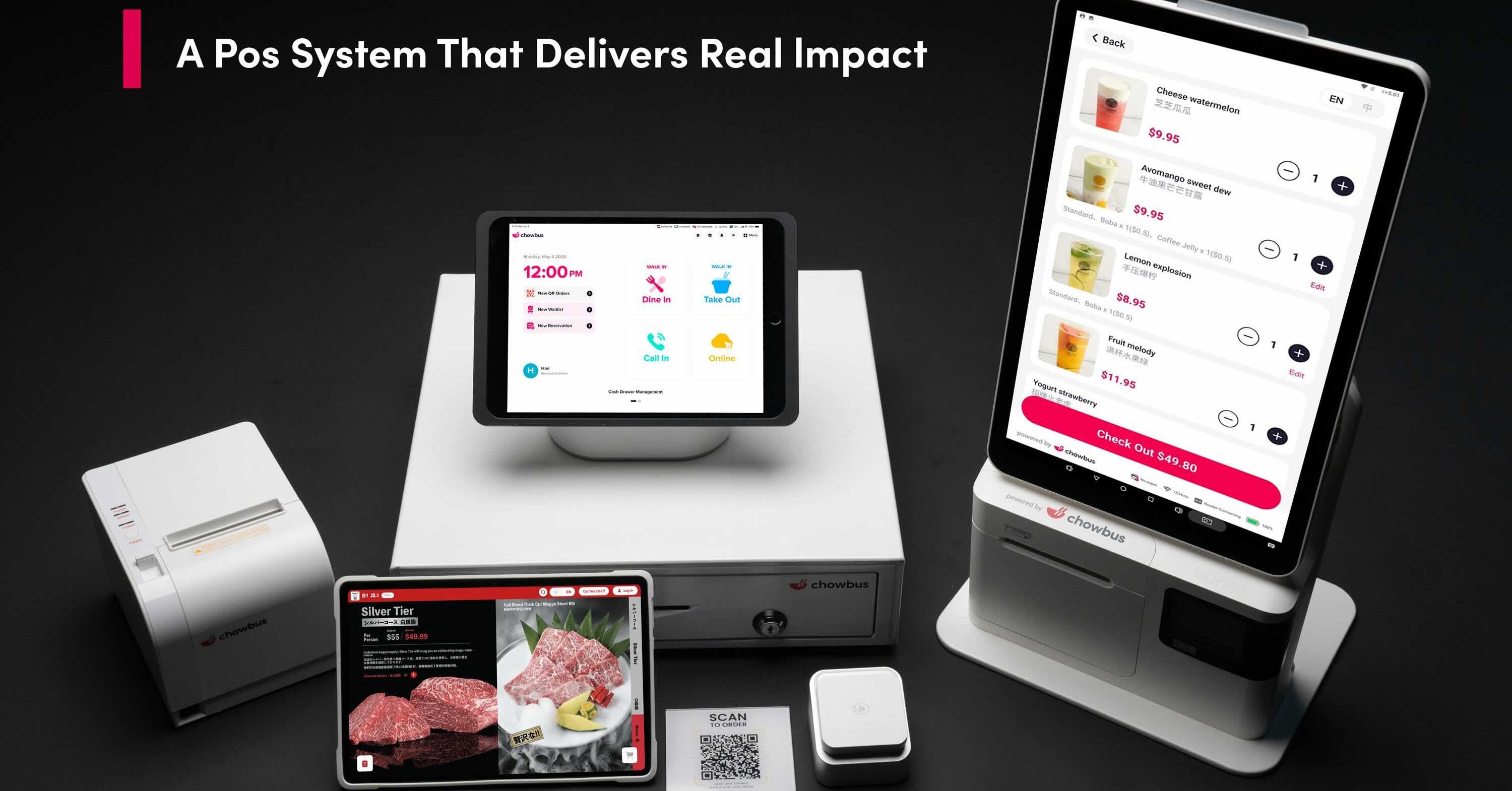
Chowbus, an AI-driven platform used to empower culturally rooted restaurants, has raised $81 million in its latest funding round. The round is led by Prysm Capital and Left Lane Capital, and the company is projected to reach a $240 billion valuation by the end of 2026. The new funding will allow Chowbus to expand its AI-powered tools and deepen service integrations.
Chowbus has made significant strides in supporting restaurants by providing integrated POS systems, marketing tools, and AI-driven solutions. Over the past four years, the company has achieved an ARR of more than $120 million and processed $4 billion in transaction volume. With the funding, Chowbus is now positioning itself to move beyond traditional POS and management systems into a broader set of operational services.
Chowbus’ AI Digital Ads, its first AI product, showed the helpfulness of AI to help smaller and independent restaurants compete more effectively against larger chains. Now, the company is focusing on creating a new wave AI platform that will further support restaurateurs in a rapidly evolving market. The company plans to use the new capital to expand its marketing, automated accounting, and supply chain optimization tools, all powered by its AI. This move is aimed at reducing the operational burden for restaurant owners while helping them thrive in an increasingly competitive landscape.
“Our journey has always been about technology, equality, and reinvention. We are building the next-generation AI restaurant platform to support entrepreneurs, the backbone of our communities,” said Chowbus CEO, Linxin Wen
As Chowbus pushes forward with its AI-powered solutions, it’s clear that the company is not only transforming the restaurant tech landscape but also empowering the entrepreneurs who make up the heart of the industry. With a growing set of tools designed to enhance operational efficiency and support restaurant growth, Chowbus is leading the new era of innovation in F&B.
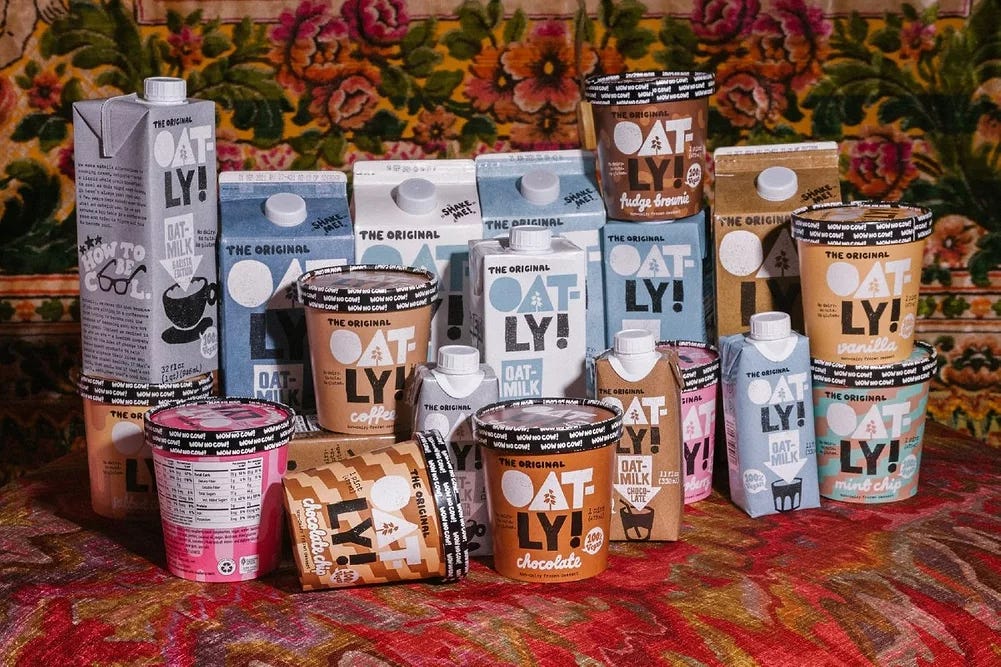
Oatly is a company that was founded in Sweden in 1994. The idea behind oat milk is based on the fact that the milk did not have to come from an animal. What started as an effort to develop a substitute for dairy products using oats became a disruption of one of the most traditional segments in the F&B space. Oatly’s brand definition is based on taste, convenience, and a strong opinion.
The company’s packaging, brand, and marketing defined a new idea of plant-based consumption that felt like a choice of the modern consumer, not a compromise. Oatly knew that in the F&B world, success is not about changing the status quo but about changing habits. The company became a success story by becoming part of people’s daily habits, especially coffee culture. Oatly did not just sell oat milk. It sold a brand that sold a lifestyle associated with sustainability, design, and a new idea of what a dairy alternative could be.
One of the major moves for success for the company was in 2020 when Oatly announced that it had raised $200 million in an equity funding round led by Blackstone Growth. This helped the company increase its growth rate in the manufacturing sector at a time when the demand for such products was high. While other companies have used external investments as a platform to reinvent themselves, Oatly used venture and growth capital investments to increase their growth rate in what was already working well: a brand that had a strong mission, brand identity, and a product that was placed firmly in the middle of a major consumer trend. In 2021, Oatly reached another milestone in their journey, going public at $17 per share, raising $1.4 billion and achieving a $10 billion valuation.
Oatly was boosted significantly by VC funding, especially because the firm had established itself as culturally relevant in the food and beverage space. Oatly was not about having the broadest range of products, nor was it about having the most traditional route to scale, as the firm was about taking one idea and turning it into a movement that could be recognized instantly by the consumer. Oatly, as of the full-year results in 2024, had revenue of $823.7 million, indicating that the firm, which was initially an alternative, had become a large firm in the space.
We love our website, and want to make sure it is accurate and up-to-date. Please let us know through this form if you are a part of the VWV team (Investment Committee, Advisors, Alumni) and have changes you wish to make to your personal profile.
That’s it for this week, feel free to email me eason_zhang@brown.edu with any thoughts or inquiries! 💌
Follow us:
Instagram: @vanwickleventures
Twitter: @VanWickleV
No posts
Comments
Nothing yet. Say the first thing.
Sign in to join the conversation.