
I have been away from this space for a few weeks. Traveling. And I want to write today about what I brought home, because it is not what I expected to bring home.
My son is fifteen. This summer, my husband and I took him with us to India. We had been planning it for some time. Avi had not been in three years, and there were reasons that mattered more than a visit. We wanted him to know where he came from — not in the abstract, not as heritage described from a distance, but in the specific way that only comes from standing in the rooms your ancestors stood in.
Two houses in particular.
The first was our family home in Patna. Built in 1938. My husband was born there. His father and his uncles were born there. I came to it as a bride. Generations have lived under its roof, moved through its corridors, shaped its walls with their presence. Avi had never been. This trip, we brought him in.
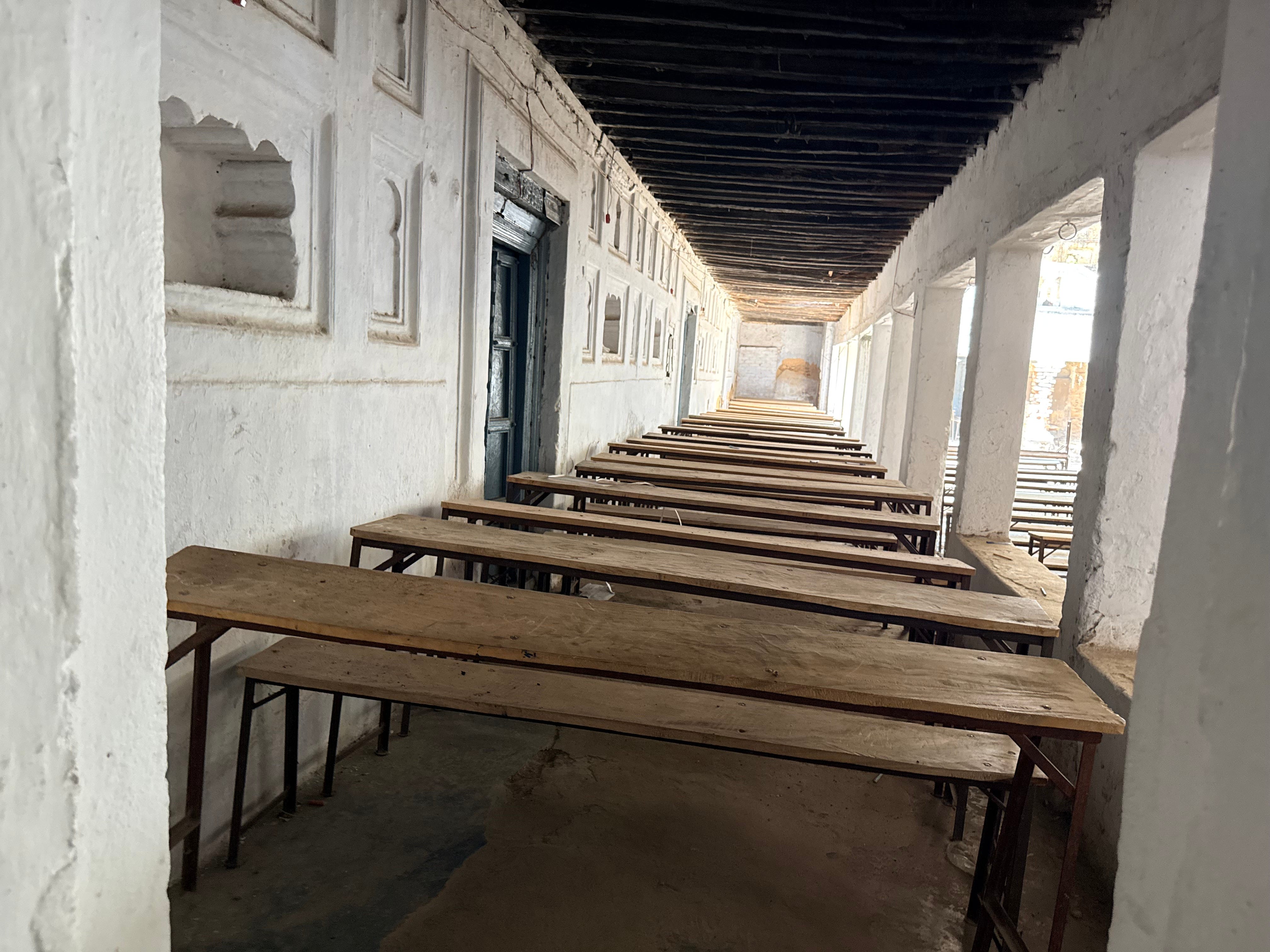
The second was our ancestral village home in Gaya. This one is no longer ours. It was sold, generations after our family had lived in it — ten generations at least, before the migration began and family members left in batches, until the house was finally let go. Today it is a college. The students who study there do not know whose grandmothers walked those floors. But the walls hold what the walls hold.
Many of my own elders have not been back to Gaya in decades. It is not an easy place to reach. Life carried them elsewhere. Time did what time does. So when we took Avi there, we were bringing him to a place many of the people who came before him have not themselves seen in years. A strange kind of pilgrimage — a fifteen-year-old walking through a village that his family called home for centuries, held in trust for him by grandmothers and great-grandmothers he will never meet.
I watched him take it in.
He was quiet in some places, curious in others. He asked questions that surprised me. He touched walls, walked through rooms, stood in doorways. He is at that age when everything makes an impression even when he does not say so. I could see it happening. Something was being received.
I did not know what to expect from the trip. I only knew that I wanted him to have the specific texture of this is where I come from, in a way that words alone could not give him.
The rest of the trip unfolded in the way trips in India unfold. We traveled across the country. We saw extended family and friends, some of whom Avi had not seen since he was a small boy. Our extended family has scattered over the years — to different parts of India, to the United States, to the UK, to many other places. And yet we are all energetically connected in a way that geography does not undo. Meals that lasted hours. Rooms full of people who had been waiting to see him. Aunts and uncles and cousins claiming him back into the fabric of a family that spans continents and generations. He was folded into all of it, and I watched him be folded, and I understood again — the way one understands things one has always known — that he belongs to something much larger than his own life.
We finally reached the end of the trip.
We were at the airport, boarding our flight back to the US. Avi turned to me as we walked toward the gate and said something I have been sitting with ever since.
It does not feel like I am going back home. This also feels like home.
He did not mean that home in the US no longer felt like home. He meant that home in India also felt like home. Both, now. He had walked into rooms his grandfather was born in. He had stood in a village where ten generations of his ancestors had lived. He had been embraced by dozens of people who claimed him as theirs. And somewhere across all of that, without any of us saying anything to him about roots or belonging or lineage, the field arranged what it always arranges when the conditions are right.
He recognized himself.
Not as an American boy visiting India. Not as an Indian boy returning to a country he does not live in. As someone who belongs in more than one place. As someone whose lineage did not begin at his birth. As someone who has been carried, whether he knew it or not, by everyone who came before him, in both directions.
The field did the work. All I had done was bring him into the rooms.
This is what I keep coming back to, in the days since we have been home. The inherited layer of the field is not only about what was passed down as burden or pattern or wealth or wound. It is also about belonging. About the specific rooms and villages and grandmothers and grandfathers who make you possible. About the way your soul recognizes something when it walks into a place it has never been but has always been part of.
I had thought I was giving Avi roots. What he told me on the tarmac was that the roots were already there, and the trip had simply let him feel them.
Most of us carry more belonging than we have language for. We do not always know it. The field does. When the conditions are right — when we walk into the specific rooms, when we let ourselves be embraced by the specific people, when we stop resisting what has already been arranged for us across generations — the belonging surfaces. It is already there. It only needs to be given somewhere to land.
Avi is fifteen. He said what he said without thinking, at the airport, as we were leaving. He will forget that he said it. But I will not.
I brought him to India to give him roots. What he brought back was the recognition that he has two homes now, and that this is not a divided thing. It is a doubled thing. He is more, not less, for having stood in the rooms.
And so am I.
With love,
Vandana
No posts
Comments
Nothing yet. Say the first thing.
Sign in to join the conversation.