
Cars have given me everything. And they’ve taken absolutely everything away from me. My relationship with cars is complicated, deeply personal, and immensely painful.
My mother worked for 30 years at Ford. My grandfather worked at Cadillac. I put myself through college working on the assembly line. And I spent years covering the auto industry for NPR. But I am not an auto enthusiast, not even a little.
Because on a road in Nigeria, a car crash killed my father, Rhodes Batubo. He came to the U.S. in the 1960s for graduate school to study economics. My time covering the auto industry often felt like a blend of the three of us.
A car crash took my friend and mentor Alan Cheuse, the writer, teacher, and longtime NPR contributor, who crashed on the treacherous road to Santa Cruz. I still get angry thinking about it. His death was senseless.
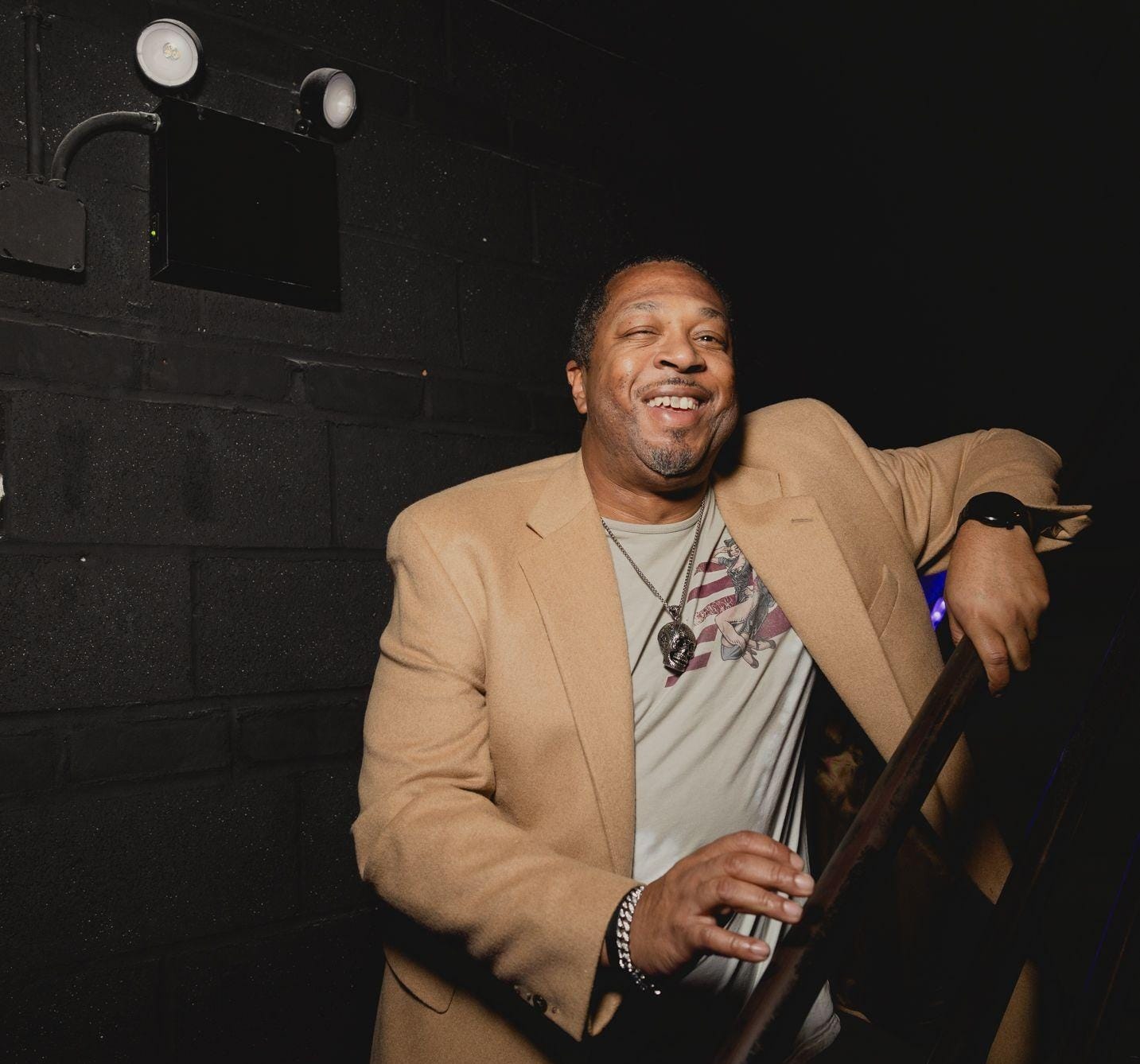
And now, someone else I love is suffering after a car crash. Ralph Cooper was THE Black man at NPR before me. He founded one of the very first NPR podcasts! Ralph is a talented comedian and an even more talented audio producer and editor. Ralph produced my podcast, Shattering the System. Recently, a crash put him in the hospital. What followed was its own kind of violence: an all too common failure of our health care system. Ralph was discharged in a gown and socks, with no medications and no plan for rehab. His wife, Lynn, had to go to war to get him the care he needed.
As CNN’s Roy Wood Jr. put it:
“The hospital failed Ralph. His wife had to beg, scream, and dig just to get him the rehab he needed. This happens to Black patients more than you know.”
That kind of failure isn’t personal. This is our system. Summer is the deadliest season on U.S. roads. According to the National Highway Traffic Safety Administration (NHTSA), fatal crashes consistently peak between Memorial Day and Labor Day, a period often called the “100 Deadliest Days” for drivers.
How Many Have Died in Car Crashes? The True Cost of America's Auto Addiction
Since 1899, car crashes have killed nearly 4 million Americans. That’s according to the U.S. Department of Transportation and the National Safety Council. Think about that. That’s more than all U.S. wars combined. Even when combined, U.S. deaths from all wars, guns, and COVID-19 don’t reach 4 million.
The amount of money we spend on car crashes is mind-numbing. Traffic crashes cost the U.S. economy $340 billion a year, or 1.6 percent of GDP (NHTSA, 2022). In Black and developing nations, the cost is greater. In many African countries, road crashes are as much as 6 percent of GDP. That’s according to the World Bank. The total amount wasted from car crashes is often more than many countries spend on health or education. Brazil, one of the most dangerous countries for drivers in Latin America, loses $10 billion a year on road crashes.
Car culture is a fantasy of freedom. The idea of the individual, in his two-and-a-half-ton SUV is seen by many as a right. According to the U.S. Census, 70% of American workers drive to work alone. It’s the definition of independence, but increasingly at odds with how we live our lives. Just this morning, I saw a truck driver in a large Super Duty blow through a Sunset Boulevard intersection while scrolling on his phone.
People say they love to drive. But if that’s true, why are so many on their phones? The main factors in most traffic deaths are distraction (about 8%), driving impaired (~31%), speeding (~29%), and drowsy driving (~15%).
Even celebrities who can have access to drivers, car shares, and the best safety tech aren't spared. I, along with hundreds of others, witnessed Chance the Rapper collide with a motorcyclist while driving a Bentley in Chicago’s West Loop. In 2021, Tiger Woods crashed his SUV with no signs of braking. In 2019, Kevin Hart survived a near-fatal crash in a vintage muscle car. In 2014, Tracy Morgan was nearly killed when a Walmart truck driver, awake for more than 28 hours, slammed into his van.
What could break this crazy death cycle? What if we said “zero death” is the only acceptable goal? What if we decided to cap the deaths by cars at the ungodly high 4 million? That’s the promise of the “Vision Zero” movement. Like many good things, the movement was started in Scandinavia. The approach is simple: traffic deaths are preventable. Cities like Hoboken, New Jersey (birthplace of Frank Sinatra) have reached zero traffic fatalities year after year by lowering speed limits, raising crosswalks, redesigning intersections, and truly putting people ahead of vehicles.
That basic vision that we seem unwilling to adopt across the country. Along with the many rollbacks, the Trump administration rolled back key federal traffic‑safety efforts. The administration is even advising states to penalize “road diets” (lane removals that reduce speed) when applying for highway funding. That’s despite what we know about speeding leading directly to death.
Under Trump, NHTSA (National Highway Traffic Safety Administration) has seemingly shrugged its shoulders at safety. The administration has shelved rules, like requiring technology that allows the car to detect drunk drivers. A 2012 NHTSA initiative called the Driver Alcohol Detection System for Safety (DADSS) showed promise. The technology could automatically prevent a car from starting if a driver were impaired. But during the Trump years, the agency deprioritized the technology, calling it “premature for rulemaking.” Meanwhile, drunk driving killed more than 10,000 people in 2021 alone.
The push for safety over speed is being won on some fronts. Biden’s infrastructure law mandates alcohol-detection systems in all new cars and requires NHTSA to adopt camera-based technology to spot driver fatigue and distraction by 2027. These features are already standard in much of Europe and could save thousands of lives here. San Francisco, Oakland, and Austin are expanding speed cameras, sidewalk networks, and crash‑review commissions.
Whether you survive a crash in America often comes down to your ZIP code. Black and Latino pedestrians and drivers are more likely to be killed. Not because they drive more, but because the places they live are often more dangerous by design. The numbers are staggering: Black Americans are far more likely to be killed in traffic, 73% more likely while driving, and 118% more likely while walking, compared to white Americans, even when driving the same distance.
Researchers at Harvard and Boston University have found that Black Americans are more likely to live near high-speed roads and less likely to have sidewalks, bike lanes, or working crosswalks. The CDC and the National Highway Traffic Safety Administration report that in many neighborhoods, streetlights are broken, sidewalks disappear, and traffic signals are missing or outdated. In some cities, catching the bus means standing on the edge of a six-lane road with no shelter and nowhere safe to cross.
These patterns don’t change when you account for income. The risks remain because of how streets are built and how long some communities have been overlooked. Researchers at the National Bureau of Economic Research found that when cities improve traffic safety, those improvements don’t always reach the neighborhoods with the highest death rates. The places that need help the most are often the last to get it. And the consequences show up in higher death rates, more grief, and more preventable loss.
I’m writing this on Father’s Day, trying to make sense of a pain that never really fades, the loss of my best buddy, my father. I don’t want anyone else to feel that kind of grief.
You can support Ralph and Lynn here: gofundme.com/f/stand-up-for-ralph. I still think about Alan. Sometimes I imagine he’s spending the summer in Santa Cruz reading. He’s not. And it still makes me mad. We could populate the city of Los Angeles with the people we have lost. But we just shrug. There’s no fury.
I’ll say it again: Cars have killed more Americans than COVID and every U.S. war combined. That truth should horrify us. Instead, we think we’re being safe by only texting at intersections (where most of the fatalities are). When yet another friend or family member’s life is cut short, will we continue to shrug? Traffic deaths are not accidents. They are policy failures. If you want to do something, start here: Slow down. Don’t drive drunk or sleepy. Put your damn phone away. Someone’s life, likely yours, depends on it.
Comments
Nothing yet. Say the first thing.
Sign in to join the conversation.