
The body whispers before it screams.
Most illnesses develop in the background while we go about our lives, ignoring the niggling pain, postponing the test, rationalising the fatigue, and hoping the body will somehow sort itself out.
Prevention is better than cure is one of the oldest truths we know. Also, one of the hardest to practise.
In India, comprehensive health screening is still the exception. I have done this too. Despite having excellent health coverage all my adult life and access to preventive screening, I got my first bone density test only at 60. That too, after repeated reminders and insistence from my GP.
The result sobered me. Severe osteoporosis in my spine, low bone density, reduced calcium absorption, and a T-score of -4.4.
This was not sudden. It had likely been developing for years, beginning around menopause. A test in my 50s could have helped slow it down. Instead, I now need aggressive therapy and daily self-injections.
The science was available. The access was available. But the action was missing.
Beyond my personal story, this is a much larger healthcare challenge.
Chronic diseases already affect one in five Indians, or roughly 270 million people, while noncommunicable diseases account for approximately 66% of deaths in India.
That is why prevention needs to become the real frontline. And the good news is that today, it is becoming practically viable at scale. A few converging shifts stand out.
Consumer-grade health tech is turning everyday devices into early warning systems. Smartwatches can detect irregular heart rhythms and record ECGs. Continuous glucose monitors can offer real-time metabolic insights.
Digital public infrastructure is expanding the reach of healthcare. India’s health stack, from ABHA accounts to telemedicine platforms like eSanjeevani, has already touched hundreds of millions of people. Access is no longer the only constraint.
Policy and awareness are also moving in the right direction. Initiatives around noncommunicable diseases, mental health, and fitness are slowly reshaping public discourse.
Internet penetration adds another layer of possibility. With nearly a billion Indians online, health insights, nudges, and interventions can now be delivered at a scale that was unimaginable earlier.
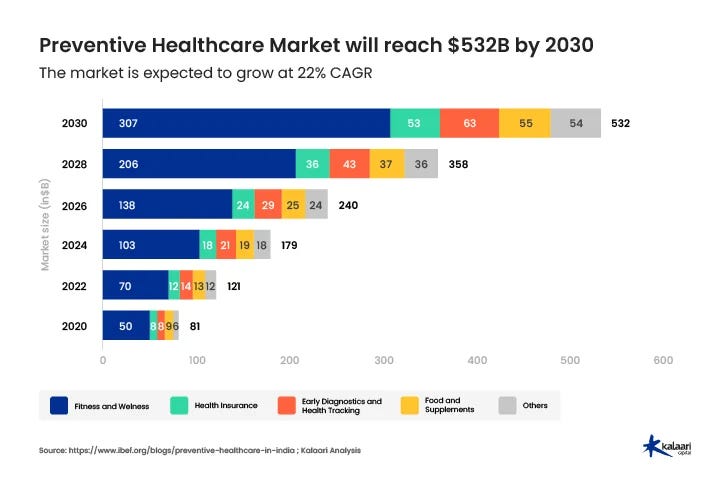
Market momentum is following. Preventive healthcare in India is projected to become a $500+ billion opportunity by 2030.
We are learning to pay attention earlier. To patterns before problems. To small interventions before major disruptions.
The next wave of preventive healthcare will go deeper into continuous monitoring, earlier screening, personalised interventions, and smarter insurance models that reward proactive care.
For founders, this is a rich and multi-layered space.
There is an opportunity to make screening simple, affordable, and habit-forming. To translate complex health data into clear, actionable insights. To build trust through long-term engagement, not one-time transactions. And most importantly, to design for Indian realities, including price sensitivity, diversity, and access gaps.
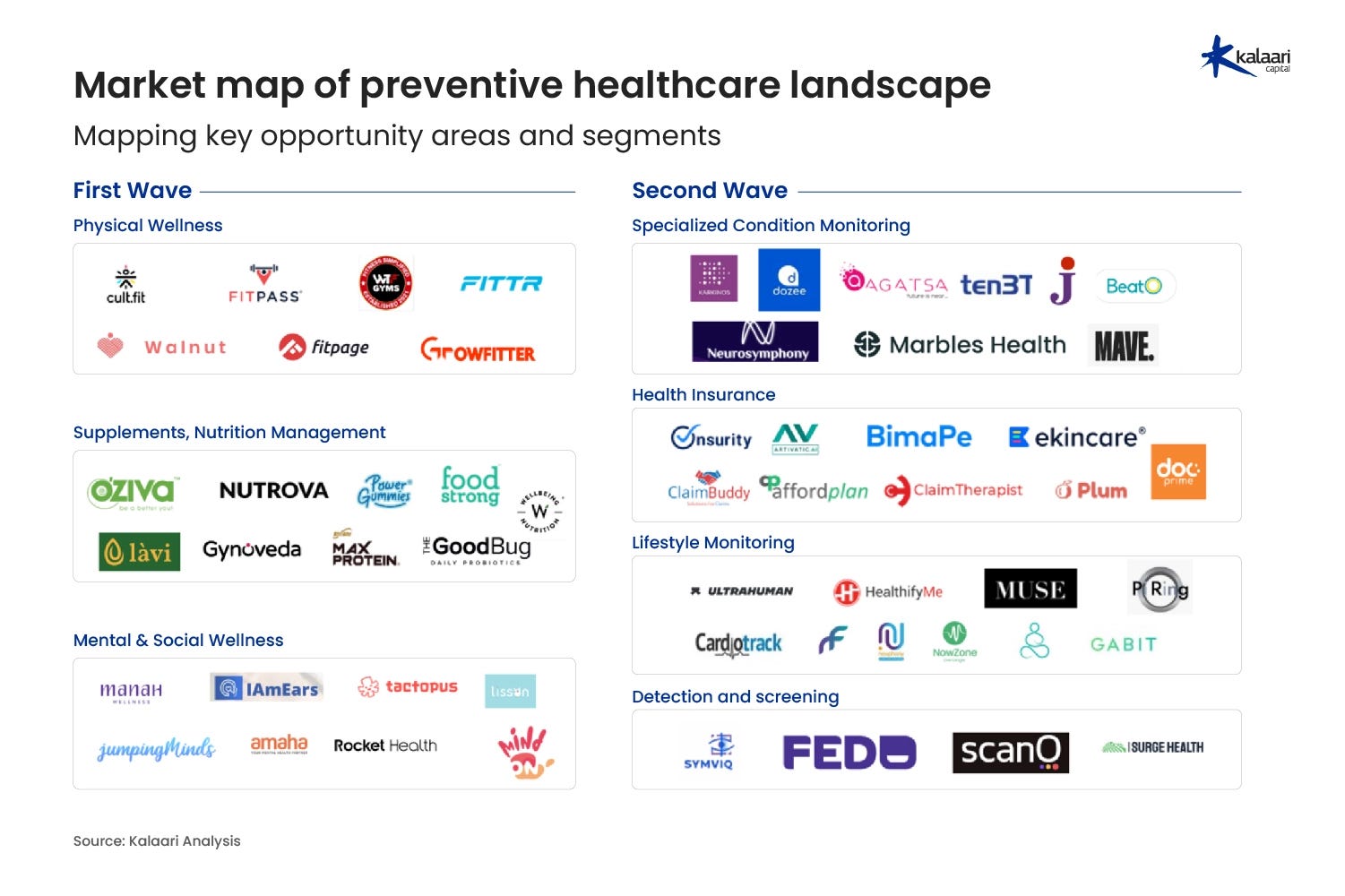
We have spent the last two decades building India’s startup ecosystem. We now have the capital, the talent, and the institutional memory to take on problems that require patience and depth. Preventive care is one of them.
Ageing and vulnerability will always remain part of being human. But the future of preventive healthcare may help us hold on a little longer to strength, clarity, mobility, and choice.
Mini Masterclass on 1 vs 10
Attention is any founder’s most valuable resource.
It loses power when spread too thin. When everything feels important, nothing gets the depth it needs. Teams being busy and burnt out do not guarantee outcomes.
We don’t often ask ’why nots’.
Should we build more products to match competitors? Should we expand because the market rewards motion? Should we chase the adjacent opportunity because it looks promising?
Focus is where enduring companies are built.
Focus is uncomfortable. It forces trade-offs and demands patience in a world that celebrates constant movement. It asks founders to stay with one problem long enough to understand it deeply and solve it well.
The companies that last are often the ones that stay with one problem long enough to matter. Google owned search before it became everything else. Salesforce went deep on CRM before becoming a broader platform. NVIDIA spent years building its edge in accelerated computing before the world fully understood the scale of that bet.
Depth builds trust. Trust builds habit. And habit builds a lasting advantage. So choose one problem. Stay with it longer than most and go deeper than others are willing to go.
The real test of conviction = how clearly you know what deserves your full attention and what you are willing to ignore.
Tales of Tech, Innovation and more
The AI boom is also a power boom.
As data centres grow and electricity demand surges, the search for stable, long-term clean energy is becoming urgent.
For India, one answer has been hiding in plain sight for decades: thorium, embedded in the monazite sands of its shores of Kerala, Tamil Nadu, Andhra Pradesh, and Odisha. India has long built its nuclear imagination around this resource, knowing it has limited uranium but abundant thorium.
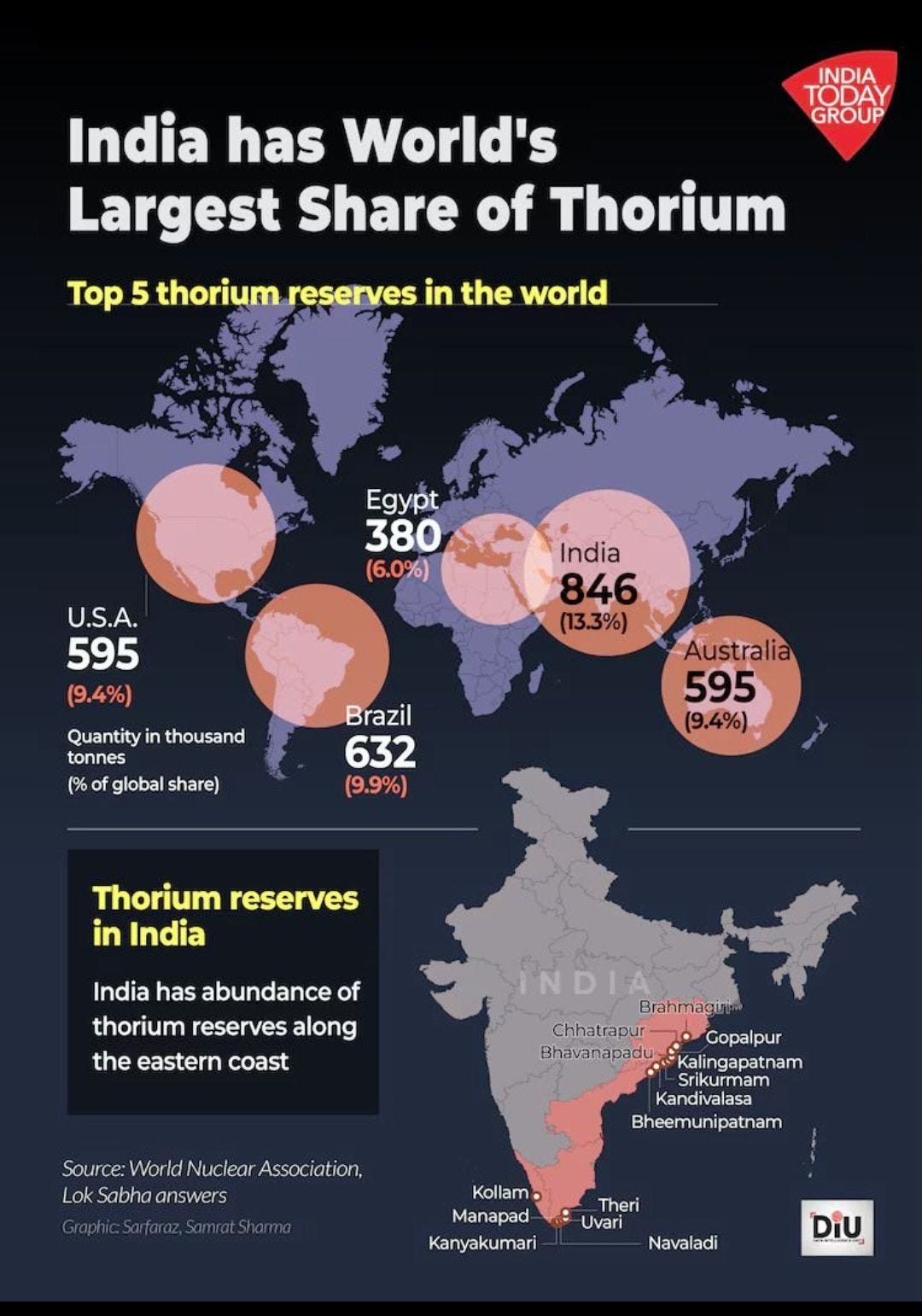
Thorium is not an easy fuel. It cannot be used directly and must first be converted into Uranium-233. That is precisely why Homi J. Bhabha’s three-stage nuclear programme was so strategic: begin with uranium, move to plutonium through fast breeder reactors, and ultimately unlock thorium.
That long game is finally moving. The SHANTI Bill has opened a new chapter in India’s nuclear journey, and the PFBR at Kalpakkam achieving first criticality gives fresh momentum to the roadmap. India also continues to develop the AHWR, its thorium-focused reactor design.
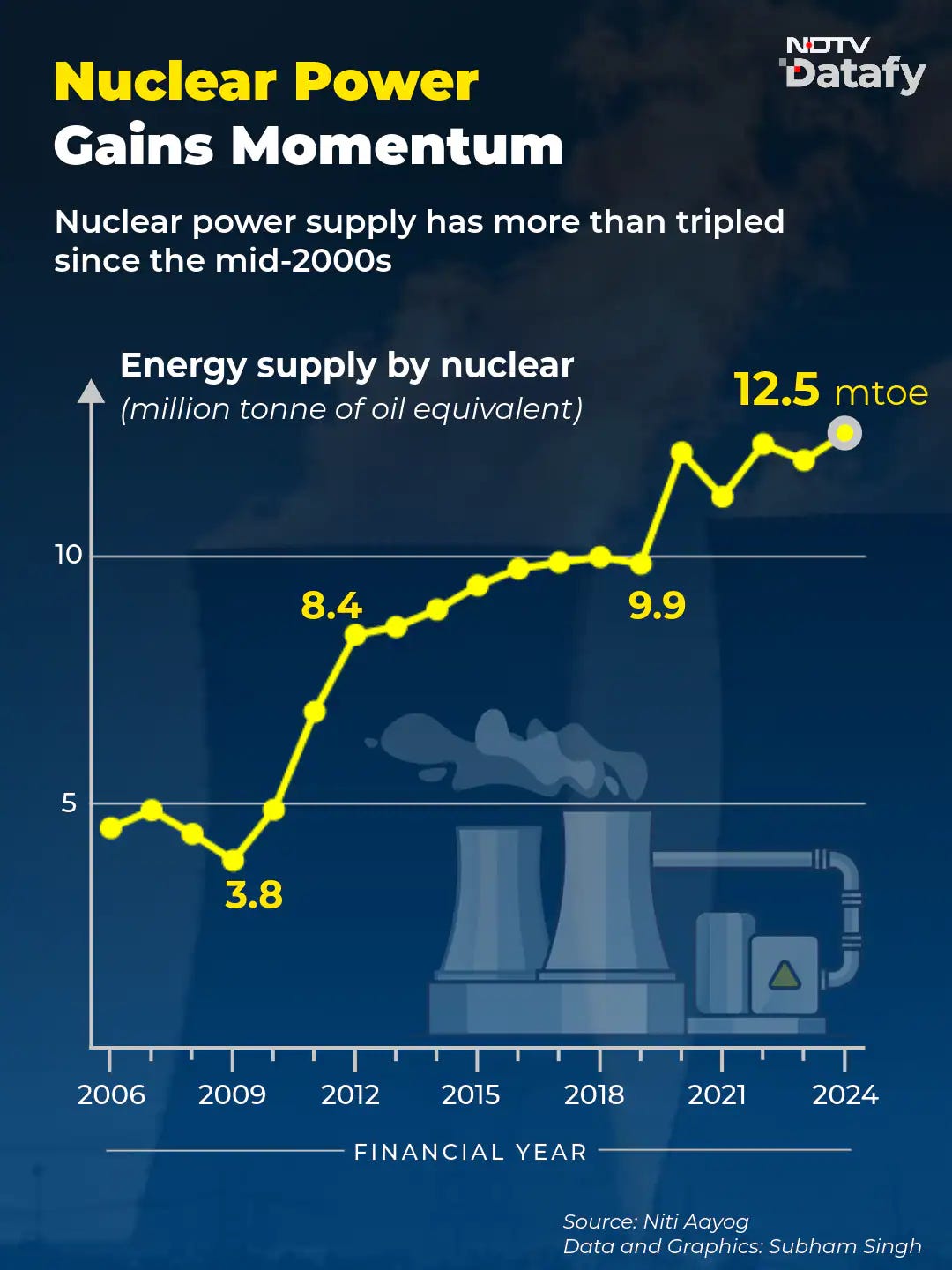
India’s nuclear capacity today stands at 8.78 GW, still a small share of the overall mix, which is exactly why this next phase matters. As solar and wind scale, their intermittency exposes a gap, one that stable, baseload nuclear energy is uniquely positioned to fill.
And that is what makes thorium so critical to India’s energy security. It is a strategic path toward reducing import dependence, strengthening domestic energy resilience, and building a cleaner, more self-reliant power base for the decades ahead.
Thorium does need advanced reactors, deep R&D, and patient capital. But for a country seeking energy sovereignty, climate stability, and deep-tech leadership, it may well become one of its most important long-term bets.

May the force be with you,
Vani
Comments
Nothing yet. Say the first thing.
Sign in to join the conversation.