
The principle of compounding is effective in managing capital, yes, but more importantly, in building endurance, trust, and experience.
Twenty years ago, India wasn’t fluent in the language of startups, and there was no ‘ecosystem’. The words - product-market fit, runway, seed, Series A weren’t dinner-table vocabulary.
Kalaari began with a simple, unwavering belief that Indian entrepreneurs had the audacity to build world-class companies if they had the right risk capital partnership.
We chose the name Kalaari, inspired by Kalaripayattu (an ancient martial art from Kerala), a fitting metaphor for what building truly is: discipline, repetition, resilience, and learning to take a hit without losing your stance.
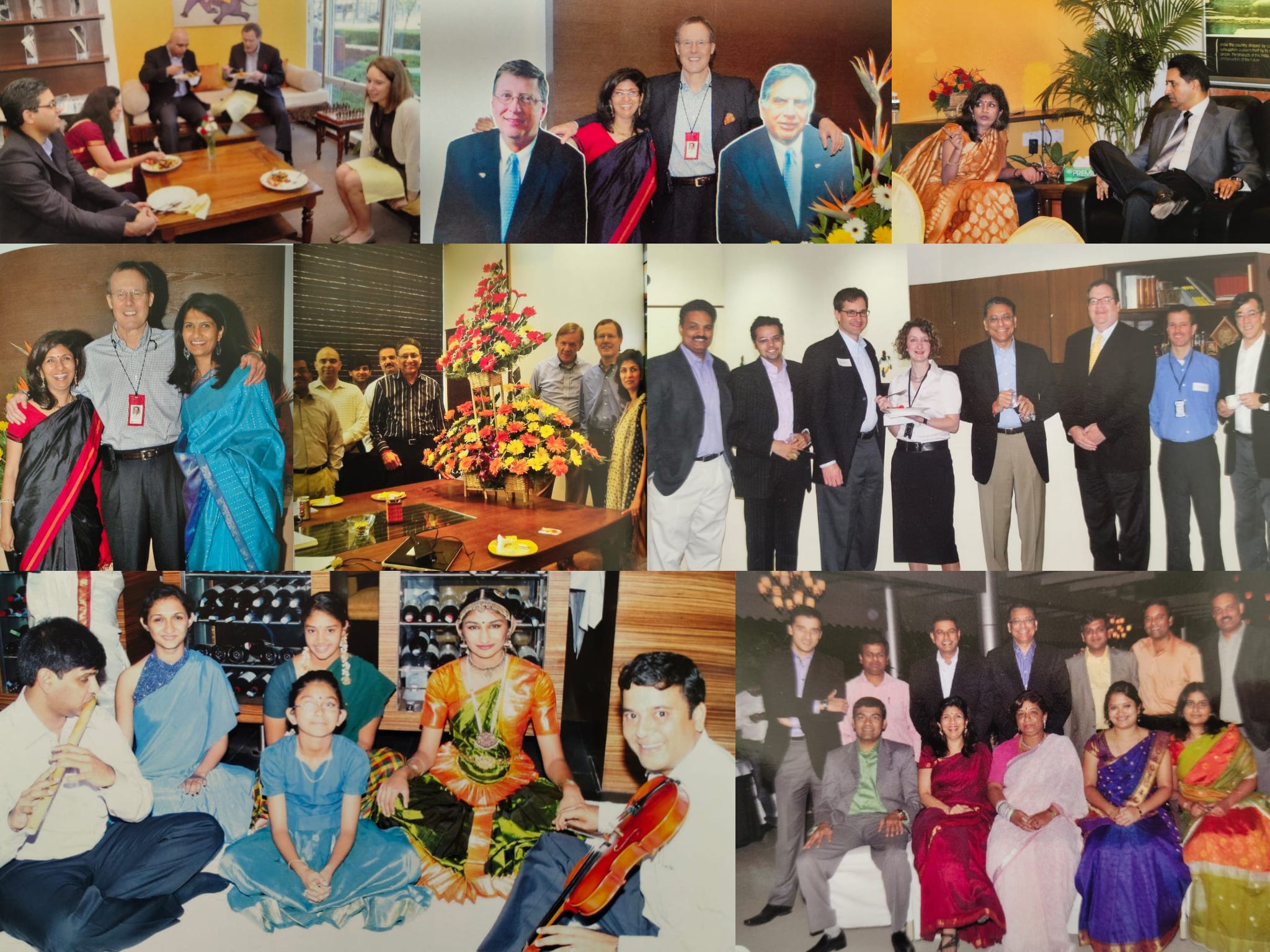
Our core values were forged in that arena: a commitment to being founder-first, maintaining high integrity, and staying curious.
Two decades in this space bring many seasons. We have navigated the dizzying highs of market optimism, the sobering quiet of resets, the chaos of crashes, and the gritty work of recoveries. Each cycle demanded a fresh dose of humility. Staying relevant for 20 years meant a lot of unlearning and thoughtful responses during uncertainties.
Kalaari’s story is, at its heart, a story of trust, compounded.
Some of our most defining decisions were made without playbooks or pattern-recognition frameworks. We backed ideas that looked unconventional, even uninvestable, at the time. We often had to ignore the noise to see the signal.
Some lessons were expensive. Some scars still show and they matter. They serve as permanent reminders of the risks taken and the resilience required to stay in the game. Progress is rarely a straight line, isn’t it?
The India of today is flourishing, awash in ‘can-do’ sentiment. Hardly the India where we started. We have moved from a copy-paste economy to one that is innovating for the next billion.
The next Techade will belong to founders who can combine massive ambition with operational depth. As we look ahead, the mission remains the same: to walk the journey with founders, patiently and with purpose.
For the next twenty, we are polishing the lens, may it be sharper, and the bets, bolder!
Mini Masterclass on Conflicts
Conflicts are everywhere and inevitable.
They exist in teams disagreeing on a product roadmap, in colleagues clashing over work styles, and in that private tug-of-war between your head and your heart, when you know what is right, but you also know exactly what it will cost.
There is a common misconception that harmony equals high performance. In reality, the avoidance of tension creates stagnation.
True leadership is about navigating the thin line between destructive ego and constructive debate. As Mahatma Gandhi famously said: “Honest disagreement is often a good sign of progress.”
In fact, some of the strongest teams aren’t the ones that agree fast. They’re the ones who can disagree without breaking trust. Vulnerability in disagreement sounds counterintuitive, but it’s often what strengthens team bonds.
The true test of leadership is about holding steady while others navigate turbulent opinions, ensuring the heat of the moment eventually turns into the light of clarity.
Here’s my code for managing conflict:
Stop seeing a disagreement as a hurdle and start seeing it as a signal. What is this tension telling you about the process or the product?
Critique the strategy, never the person. When people feel their identity is safe, they are more willing to let their ideas be challenged.
Most people listen just long enough to find a gap for a comeback. Listen instead to find the logic underneath the argument.
Usually, the loudest arguments are fueled by an unspoken anxiety (fear of failure, fear of losing autonomy). Address the fear, and the conflict often dissolves.
You can argue hard about ideas and still leave the room as a unified front. The goal is to create a space where heat transforms into insight.
Because that’s the job, really: hold the space where the heat turns into clarity. Where people can counter hard about ideas, then leave the room still respecting each other, still rowing in the same direction towards a broader, shared goal.
Tales of Tech, Innovation and more
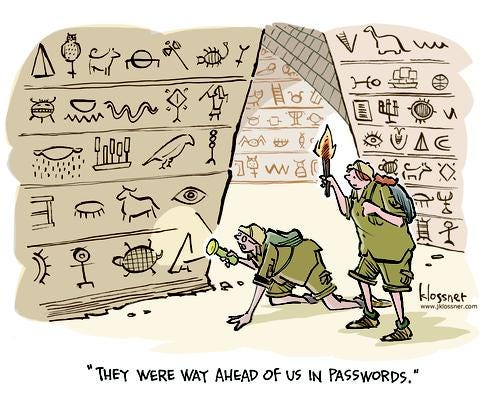
Just like dial-up tones and floppy disks, what if “Forgot Password” became a digital fossil?
Think about your digital life in 2025. How many times have you hit that link in frustration, or struggled with a 12-character string of symbols just to access your own work?
We are finally witnessing the collapse of the knowledge-based security era. For decades, we relied on what we remembered. Human memory is the internet’s weakest link, and attackers treat it like a buffet.
The statistics from the last year are staggering:
7,000 per second: That’s the number of password attacks per second, as cited by Microsoft.
According to the 2025 Verizon DBIR, stolen credentials remain the primary action in breaches, involved in 88% of basic web application attacks.
The average cost of a data breach in the US has surged to $10.22 million, fueled by the fact that 65% of us still reuse passwords across multiple accounts.
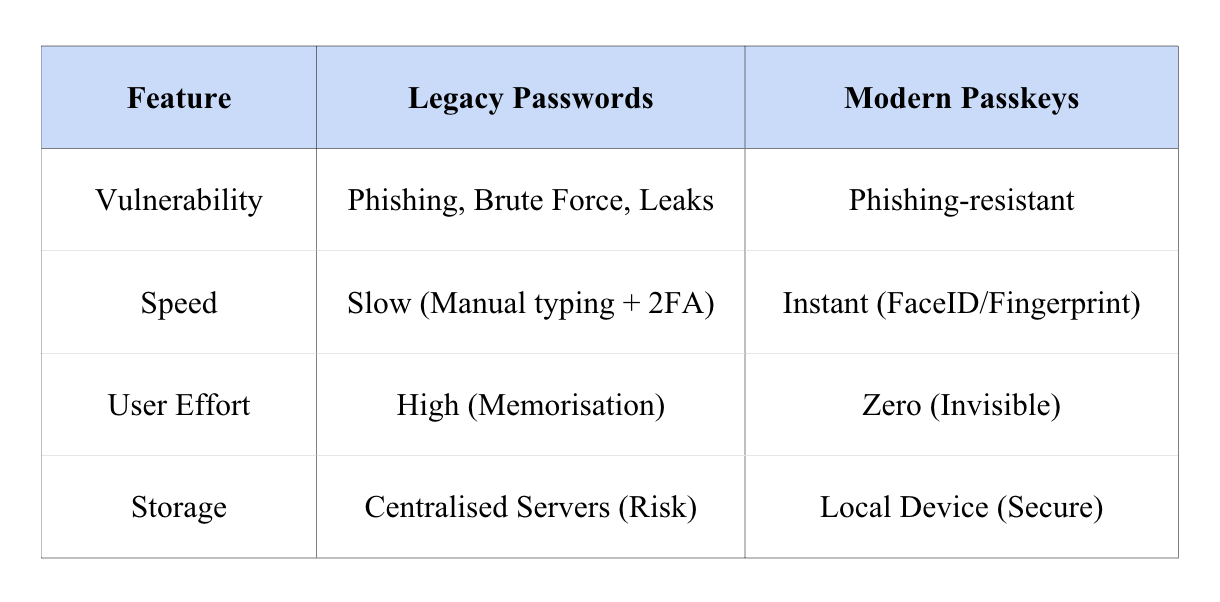
Security is moving from: Something you remember (passwords) → Something you have (your device) + something you are (biometrics/device PIN)
Yes, passkeys.
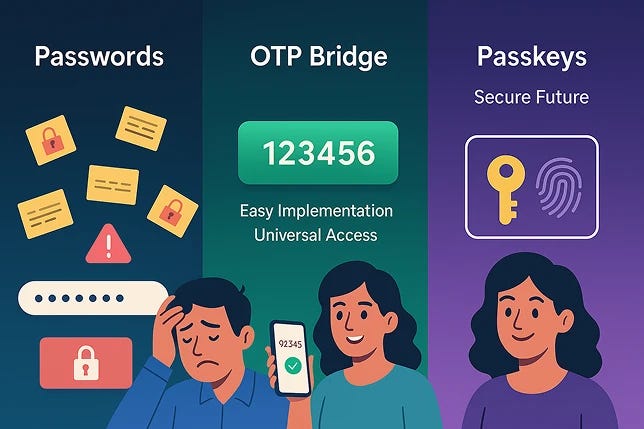
Unlike passwords, passkeys are phishing-resistant sign-ins that are never typed, never reused, and crucially never leaked from a server because the secret stays on your device.
Google recently reported that passkeys have been used over 1 billion times. They are 50% faster than traditional logins because they remove the friction of manual entry and 2FA SMS codes. Today, the FIDO Alliance estimates that over 15 billion online accounts can now leverage passkeys.
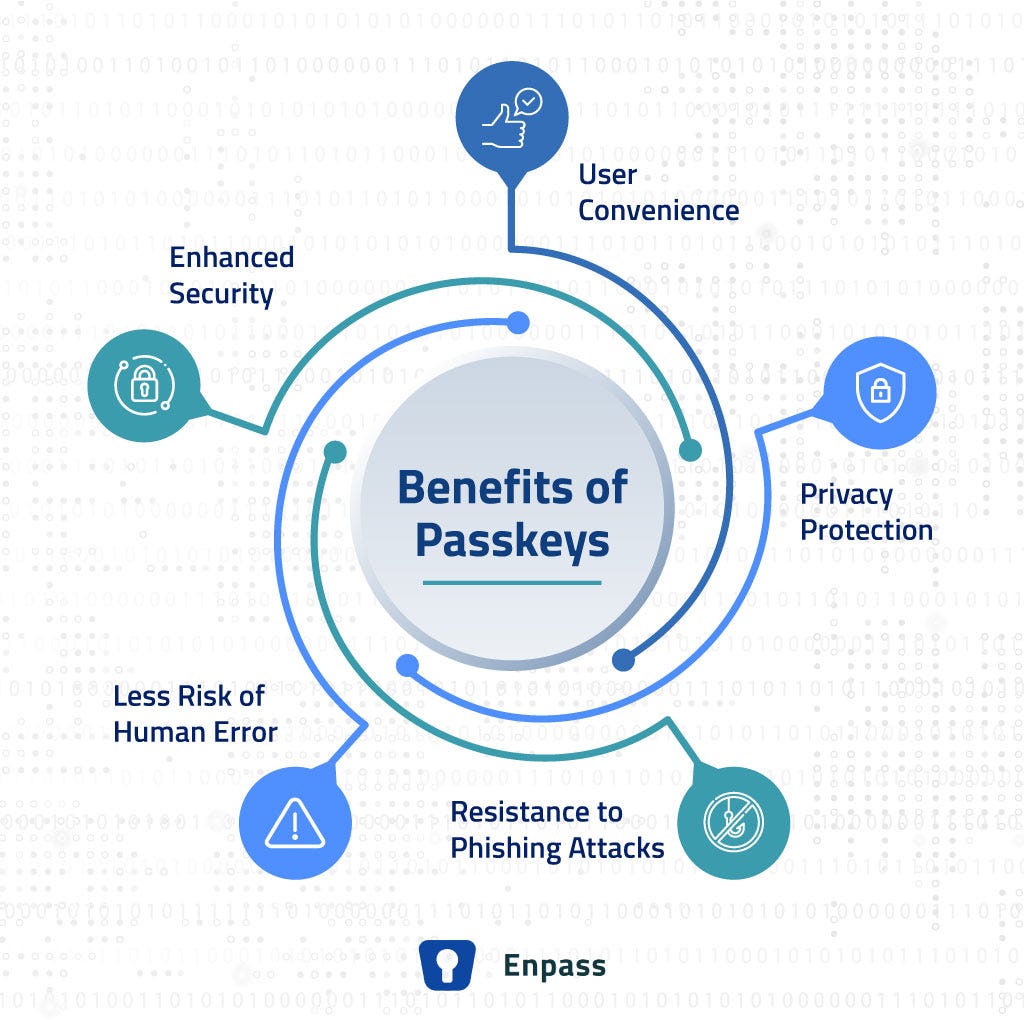
While zero effort is the end goal, users still face friction when syncing passkeys between different ecosystems. If a user is “locked out” of their primary ecosystem (Apple/Google account), recovering passkeys can still be a significant hurdle compared to a simple email password reset. But I am sure we will gradually solve these challenges too.
In today’s digital landscape, security = being.
Losing a device should no longer mean losing your digital identity. With encrypted cloud syncing, your key moves with you.
Are you ready to say goodbye to your passwords, or have you already?

May the force be with you,
Vani
Comments
Nothing yet. Say the first thing.
Sign in to join the conversation.