
There is no clear answer to the question of why most people are right-handed. But I remember reading a book about the development of hunting, foraging, and the collective living that emerged with Homo erectus around 1.8 million years ago. That number does not fit in my mathematical volume of imagination — just like the image of Homo erectus hunting doesn’t fit my visual mood board on Miro.
That book happened to me years ago. I don’t remember its name, its size, or the color of the cover, but I still carry one of its theories: we are mostly right-handed because of women.
Not that women weren’t hunting at all, but when they had a baby, they were mainly foraging for berries and roots. Beautiful as it sounds to my ears — not being spoiled with crying newborns — I heard that a mother’s heartbeat helps calm babies to sleep. So back then, women held their child with the left hand, close to the heart, while collecting with the right. That’s a beautiful theory, isn’t it?
Many thousands of years have passed. Millions of steps forward and back. New habits developed and adapted, making us the humans we are now. But that practice of picking up things has stayed with us ever since. It doesn’t matter if we do it with our right hand or left; we are still scavenging, collecting, foraging, gleaning… I’ll leave an artistic space here for you to pick your own word and then carry on reading. Because I’ve been doing some collecting of my own, and I want to share those thoughts.
It cringed the most back then, but there was no such word to describe the feeling. Thank you, Gen Z, for introducing this wonderful word, so I can name that old world that you — oh, lucky you — never knew.
Please don’t be nit-picky about me taking you down this road of realism, but I’m going to talk about one of the greatest films of all time. If “Hollywood infected your brain, you wanted kissing in the rain1,” here is your last warning: switch to the Disney Channel and go hunting for your happy ending there. But if you’ve decided to stay here, let’s talk about The Gleaners and I, directed by Agnès Varda.
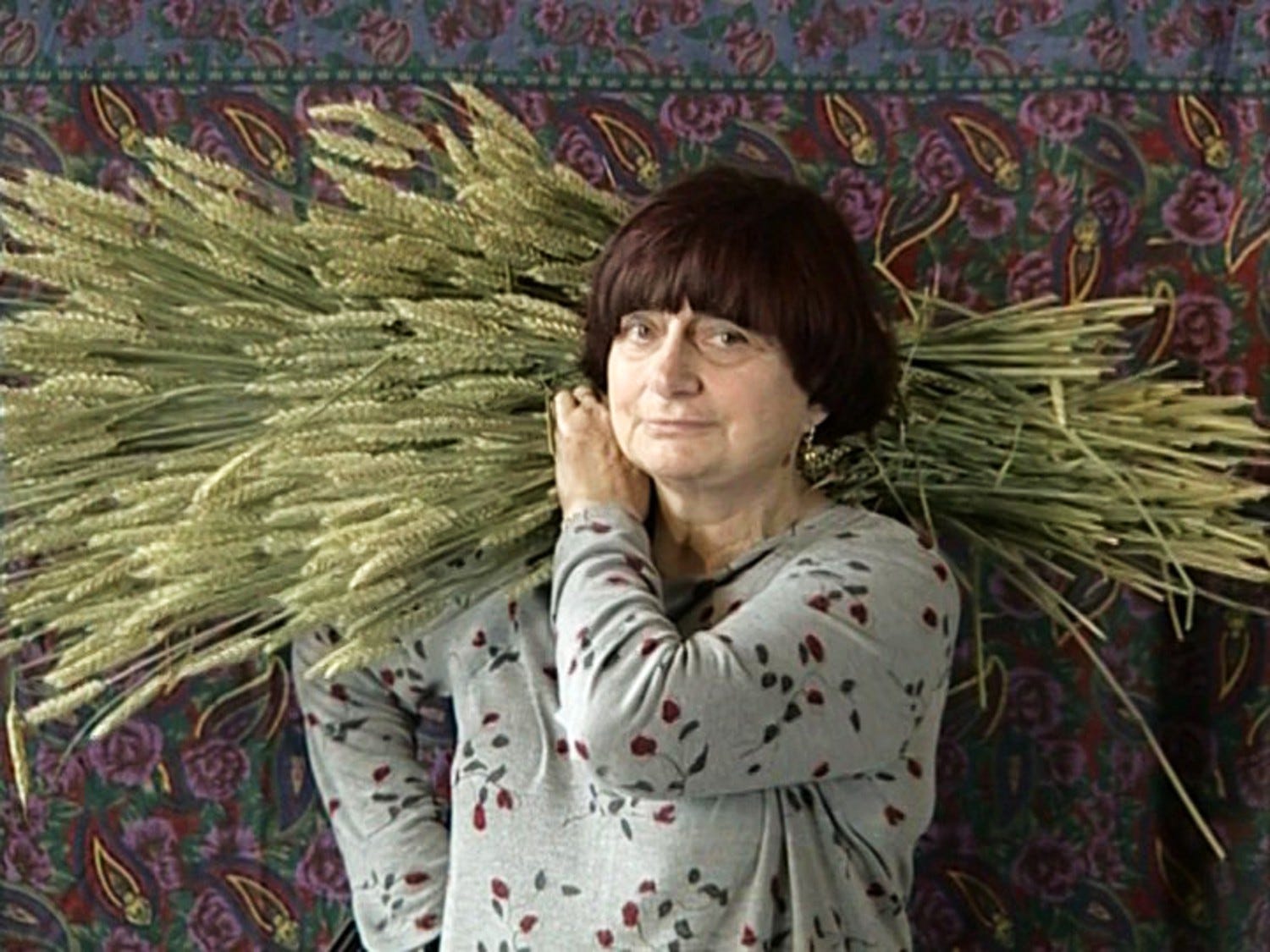
Welcome to the Varda Cult2 — a place where you will become a gleaner, whether you want to or not. Mainly because here, you will finally understand that you are already a gleaner. Everyone is. It’s in our DNA since 1.8 million years. If Homo erectus discovered foraging, Homo sapiens evolved it to perfection. We aren’t only gleaning potatoes and carrots; we are also collecting thoughts, knowledge, art, dreams, and scraps of memory.
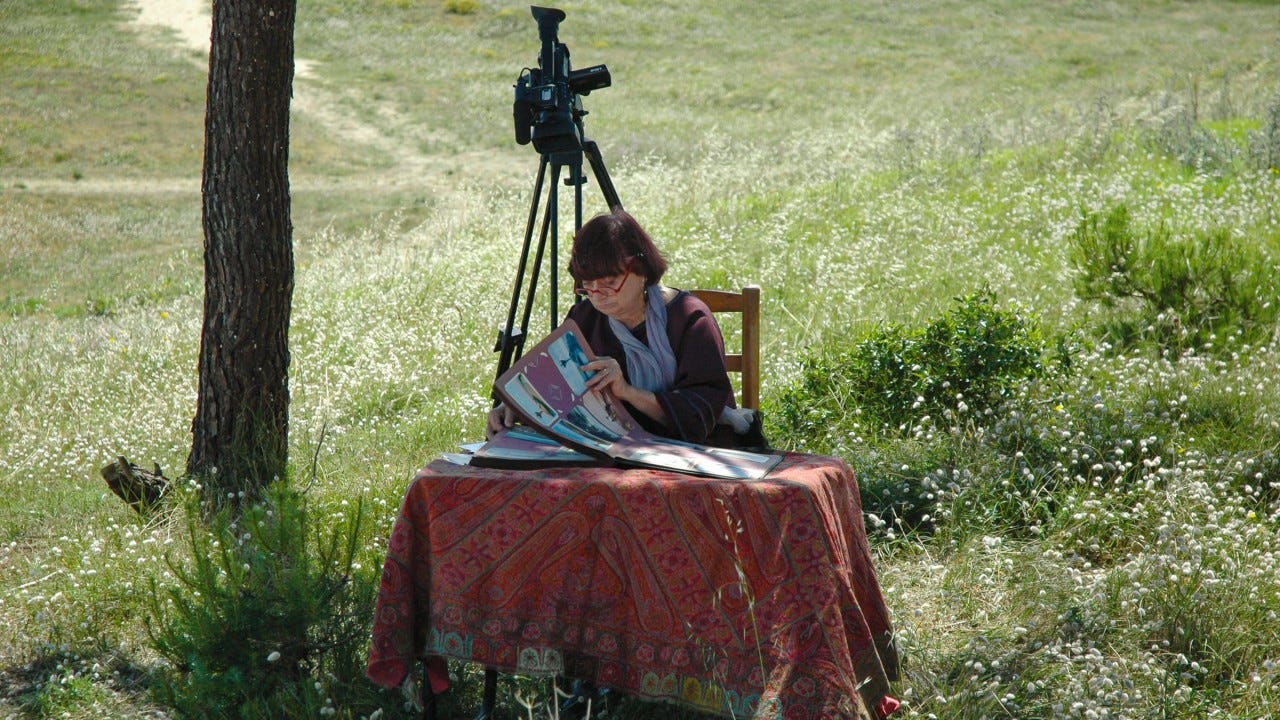
Agnès Varda was a master at it all. While holding her digital pocket camera in her right hand — keeping her point sharp and her heart open — she proves how diverse and layered our skills have become. By that stage in her successful career, it might have been the only thing she had left to prove. Her approach here is playful and carefree, taking the first steps into what we call vlogging these days. When The Gleaners and I came out in 2000, the three guys who founded YouTube were probably still brainstorming in a garage. There was no platform for her to upload to, so she went the “classical” way: she premiered at Cannes.
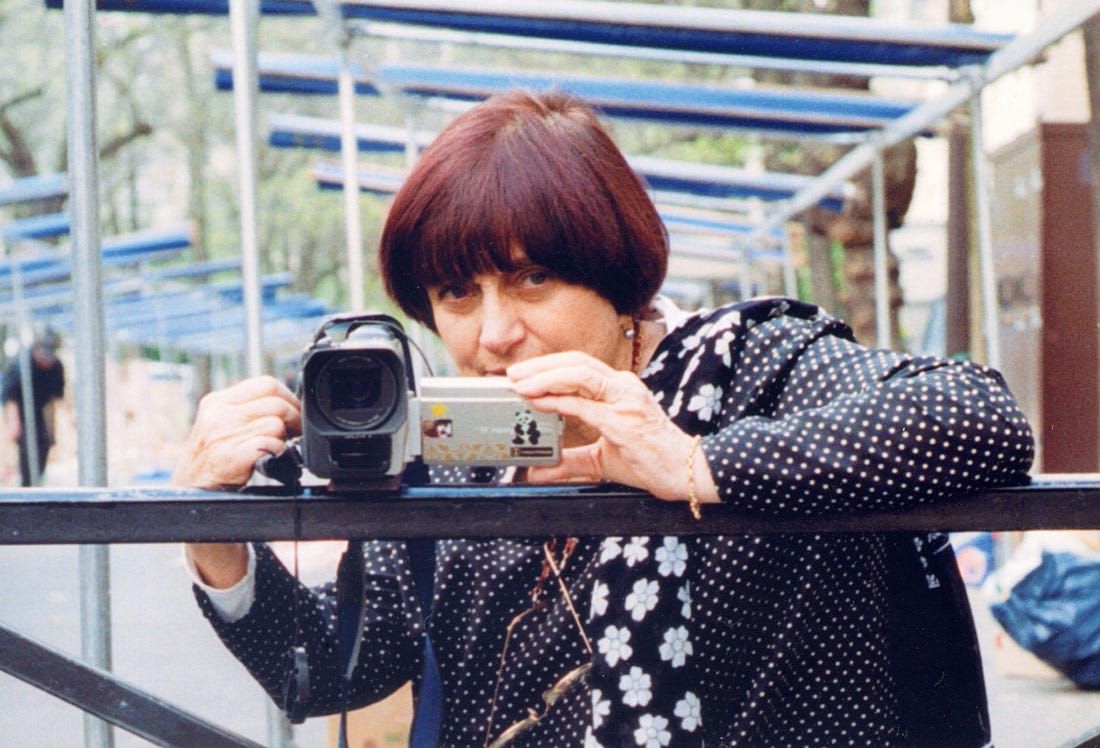
I am being a bit silly, yet I am serious. Agnès Varda was unwillingly but carefully holding her camera and mothering a generation of future vloggers — most of whom, I bet, have never even heard her name, let alone seen her films. That is sad. But we gathered here to fix it... or to fall asleep, since we should be perfectly calmed down by her cinematic heartbeat.
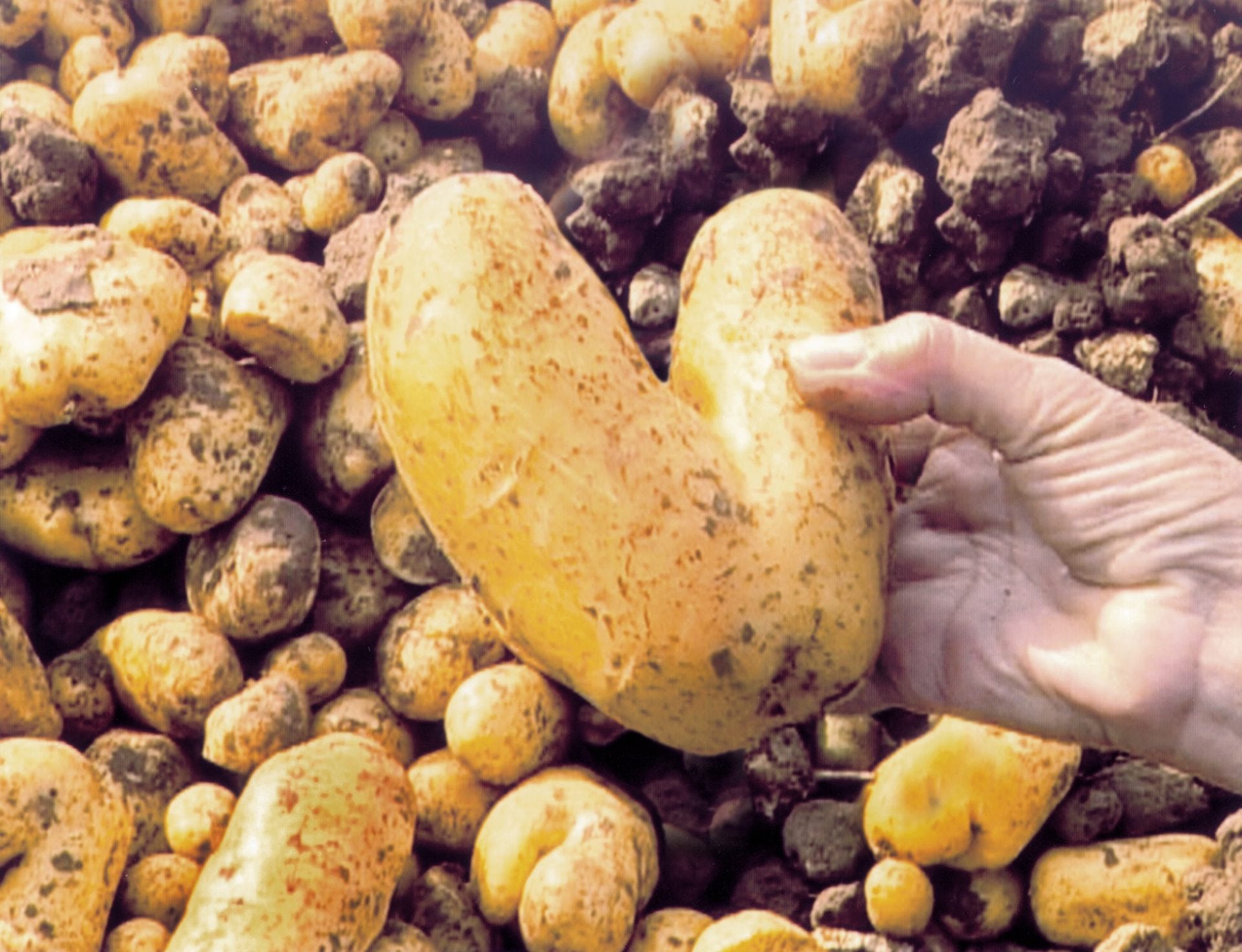
The Gleaners and I is not going to entertain your dopamine kick. It’s not going to please your desire for a well-adjusted frame, but it will frame your thoughts into a treasure chest of some kind. Agnès Varda is the architect, but you are the builder, the one who is still allowed to calibrate, regulate, and reshape your own frame of skills. As soon as you realise that this hard work is paying off, you will notice Varda’s elastic metaphors: how they circle back and how the substance is being recycled. Not only metaphorically, this time.
Here, foraging, or gleaning, is not only about potatoes and carrots. It’s about picking up the food that goes to waste after the harvest; it’s about the poor urban waste rummage; it’s about collecting when collective life gets reassembled by an individualistic way of living. Which, theoretically, brings us back to 1.8 million years ago. Or reminds me personally of something I want to share — if my lullaby isn’t turning into a Grimm story in your eyes just yet.
I was born in the Soviet Union, intense unite care stage of it. On the fringes of falling “greatness”, there was nothing left to be proud of, except the hope for a democratic future in the small, independent Republic where I was raised. But maybe there was one other thing: those dying flames of togetherness, belonging, and collectiveness. That last one wasn’t just forced by nature, but by a transitional economy and a habit of forcing people to be a little screw in a big machine. It cringed the most back then, but there was no such word to describe the feeling. Thank you, Gen Z, for introducing this wonderful word, so I can name that old world that you — oh, lucky you — never knew.
In that world, September wasn’t just the start of autumn or the new school year. To be exact, it was a school-free beginning, because the “collectiveness” of it all was setting us free to go. Sounds like a dream, but we were forced into the fields to forage. All day. For free. In place of an education. Potatoes, carrots, beets, apples, flax. There, I was forced to see myself as a real gleaner.
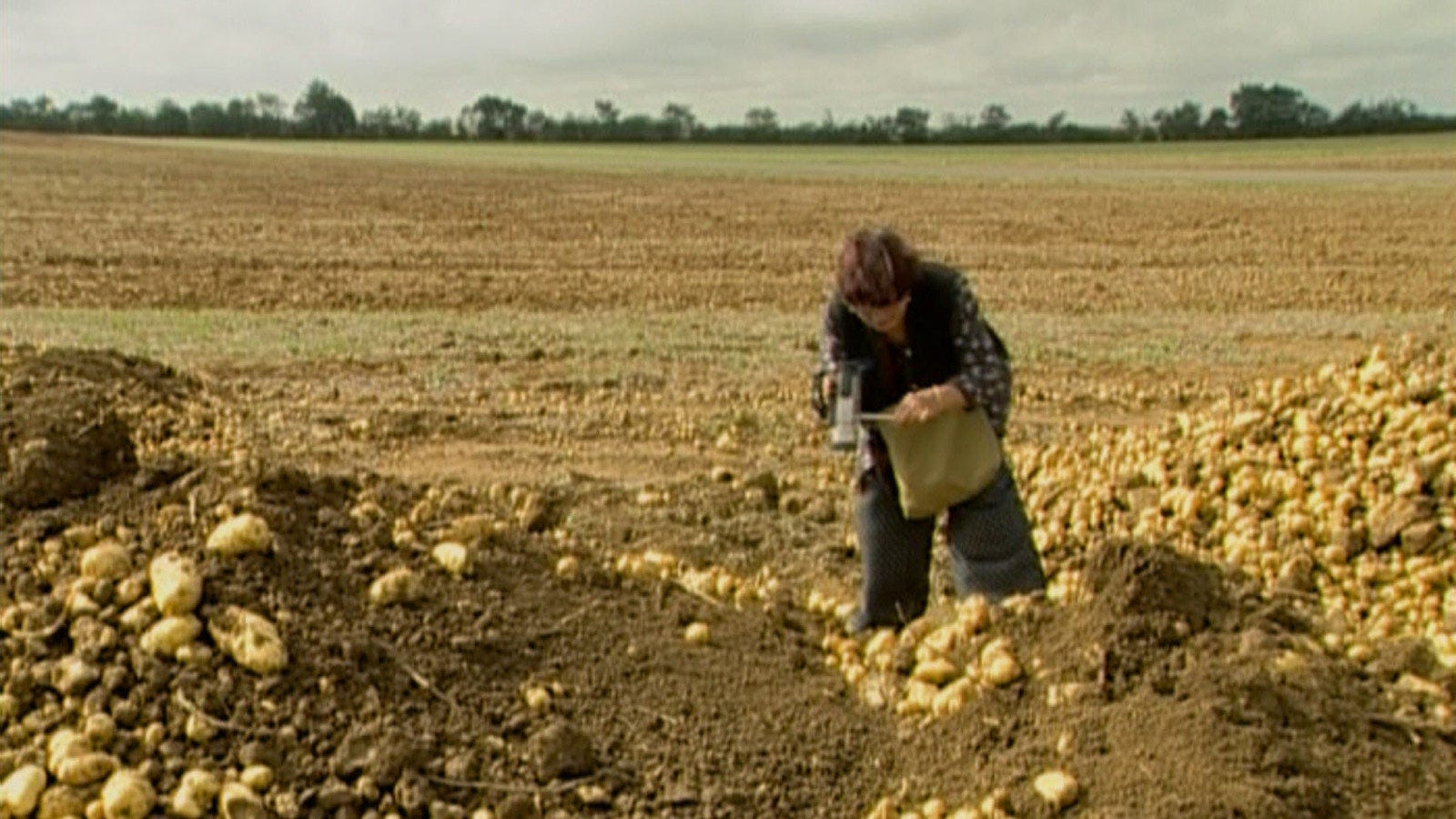
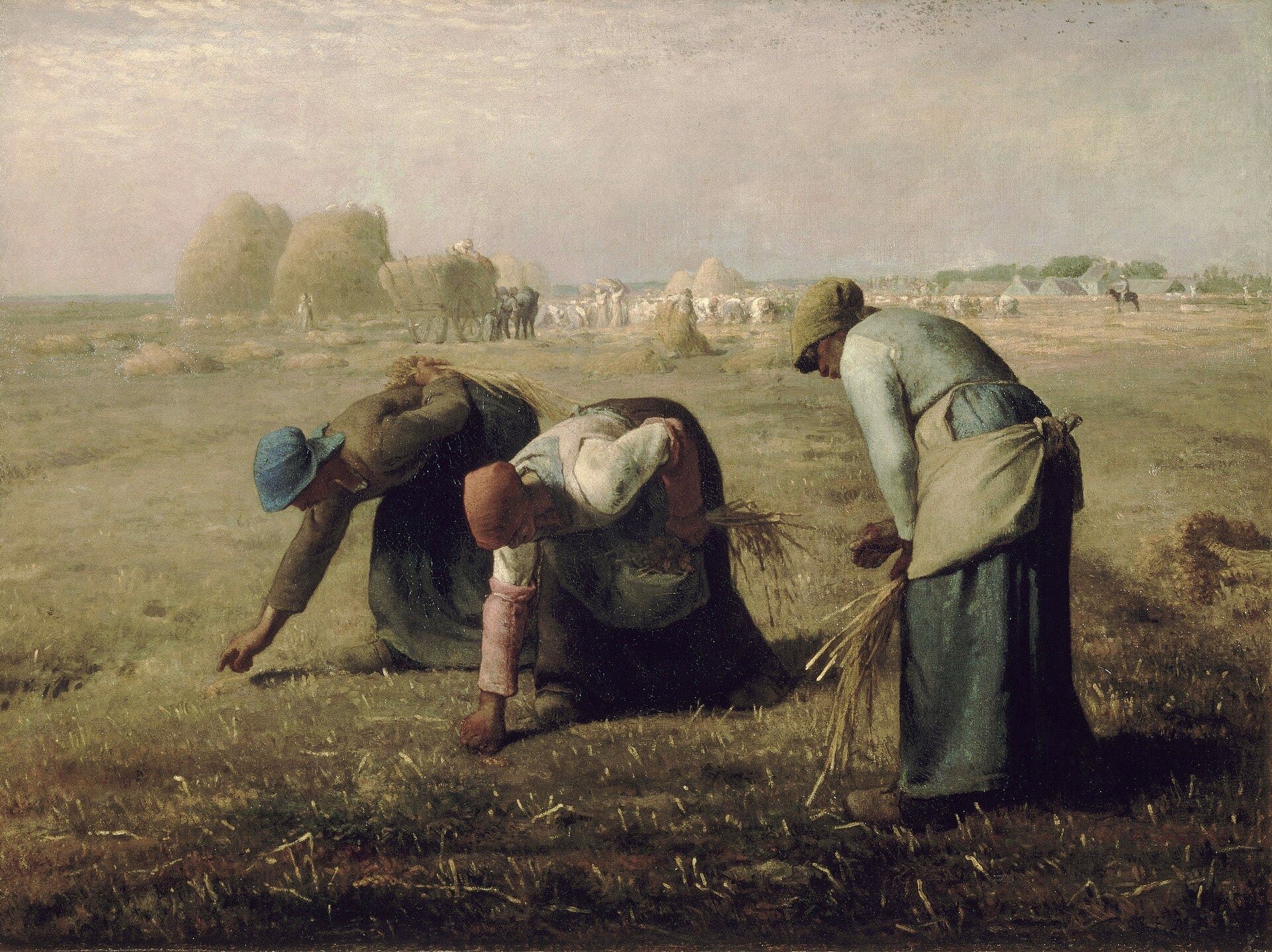
It was 2002, and I could have compared myself to those three poor women from Jean-François Millet’s painting from 18573. That painting inspired Agnès Varda, but if I had seen it or her film back then, I would have gone mad. Not only was I less enthusiastic about collective free labor, but foraging for food was the most hated thing to do. September wasn’t the start of child labor; it was the peak of it. After spending all summer tending crops, September was supposed to be a break. That is how I started loving winter — a time when you could be overly focused, a bit lazy, and free to do whatever you please. It was during one of those winters that I started lecturing people on how cool it is to earn enough money digitally so that one can buy cucumbers in a supermarket.
Not being a gleaner was the goal, and I am glad I did not achieve it. I always thought I had succeeded, but after Varda’s film, I started rethinking my point of view. Mainly because I refuse to let things go to waste. Even my school experience should not be wasted, although I sometimes wish I had never had to do it. But then, I think it would have made me a different person, someone who doesn’t know how a homegrown, freshly picked, dusty cucumber smells and tastes.
Frankly, there’s nothing wrong with not knowing that. But once you know that watery-green taste of decent sweetness, you want to pass by the supermarket stand without stopping. Anyway, it’s not the kind of gleaning we were supposed to do. Or maybe it is. There is no clear answer — everyone finds their own way. I am just hoping it’s not moving backwards. As long as we have stories to collect, it’s all right for the next 1.8 million years.
Now, I want to shake your right hand and thank you for reading this. If you feel slightly overstimulated, feel free to stick around in this little Varda Cult — or what’s better called a collective — for a while. Maybe watch The Gleaners and I. It might calm you down. Or buy me a coffee, so I can energize my brain a little. There are plenty of options here.
“Hollywood” by Marina and the Diamonds
Agnes Varda, “The Gleaners and I”, 2000. Stills
Jean-François Millet, “The Gleaners”
No posts
Comments
Nothing yet. Say the first thing.
Sign in to join the conversation.