
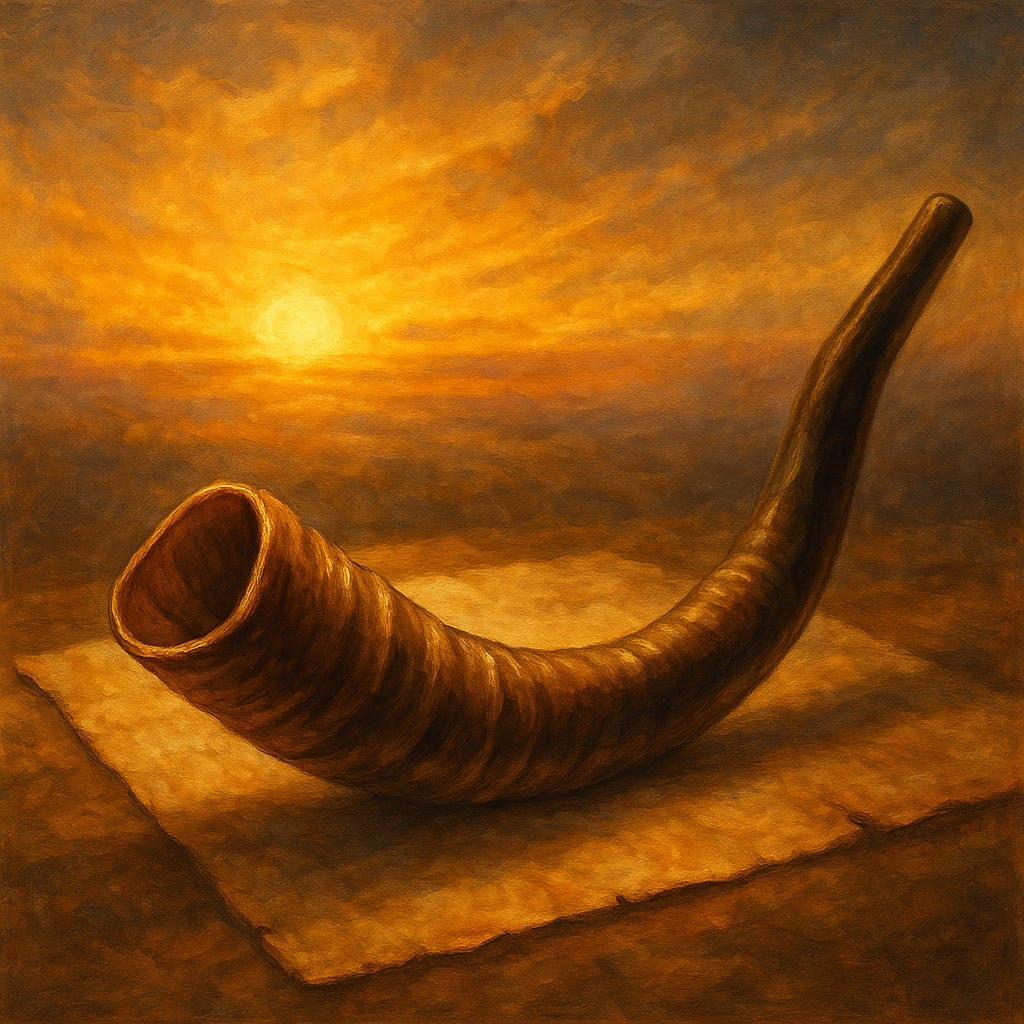
The Feast of Trumpets — Yom Teruah — is one of the appointed times given to Israel in Leviticus 23. Unlike other feasts that spell out their rituals in detail, Trumpets is marked primarily by the blowing of shofars and the call to sacred assembly. This deliberate simplicity makes it unique, almost mysterious. It is a feast wrapped in sound, watchfulness, and expectation.
In the days of the Temple, silver trumpets and ram’s horns echoed across Jerusalem to announce both the new month and the beginning of the seventh month — the holiest stretch of the year. Farmers would pause, priests would gather, and the people would lift their eyes, knowing the Days of Awe had begun. Ten days later came Yom Kippur (Atonement), followed by Sukkot (Tabernacles). Trumpets was the gateway to these climactic days.
Though the Temple is gone, the prophetic rhythm still stands. To this day, observant Jews celebrate Rosh Hashanah (the civil new year) at this time, filling synagogues with blasts of the shofar. For those of us looking through the lens of Messiah, Trumpets still calls us to awaken — to remember that God’s calendar is not lost. It continues to whisper of a coming moment when the final trumpet will sound.
For the Essenes, who followed the 364-day solar calendar, Trumpets always began on the first day of the seventh month — a Wednesday, the day the lights were set in the heavens. That tie between appointed times and the sun, moon, and stars was no accident. Creation itself was designed to keep watch with us.
One of the most intriguing connections comes from Yeshua’s own words: “But about that day and hour no one knows, not even the angels of heaven, nor the Son, but the Father only.” (Matthew 24:36, BSB)
Why did He say this? The Feast of Trumpets was the only feast that began on the first day of a new month — a day determined by the appearance of the new moon. Witnesses had to confirm it, priests had to declare it, and no one could say the precise hour it would begin until the signal was given. To first-century listeners, Yeshua’s phrase was not a riddle but a direct allusion to Trumpets.
In Jewish wedding custom, a bridegroom would go to prepare a place for his bride in his father’s house. He could not return until the father inspected the new home and gave permission. Thus, even the groom did not know the day or hour he would go to fetch his bride.
Yeshua wove this picture into His teaching: He is the Bridegroom, we are the Bride, and the Father alone will send Him at the appointed moment. Trumpets is the feast that points to this reality — a sudden appearing, a joyful shout, the sound of a trumpet, and a wedding procession beginning in the heavens.
Trumpets is not just history; it is rehearsal. It is a feast that looks forward as much as back. Every blast of the shofar is both reminder and prophecy: the King is coming, but at an hour we do not know. The posture of Trumpets is not speculation but readiness. It calls us to live awake, to walk in the light of His presence, and to keep our lamps burning.
The Feast of Trumpets whispers and shouts at once:
Wake up. Lift your eyes. The Bridegroom is near.
#TheFinalTurn #DailyBereanToday #EsseneCalendar #TimeAligned #MarkedByMercy #FeastOfTrumpets #YomTeruah #EndTimes #ProphecyFulfilled
✍️ Val Mullins — Daily Berean Today
Comments
Nothing yet. Say the first thing.
Sign in to join the conversation.