
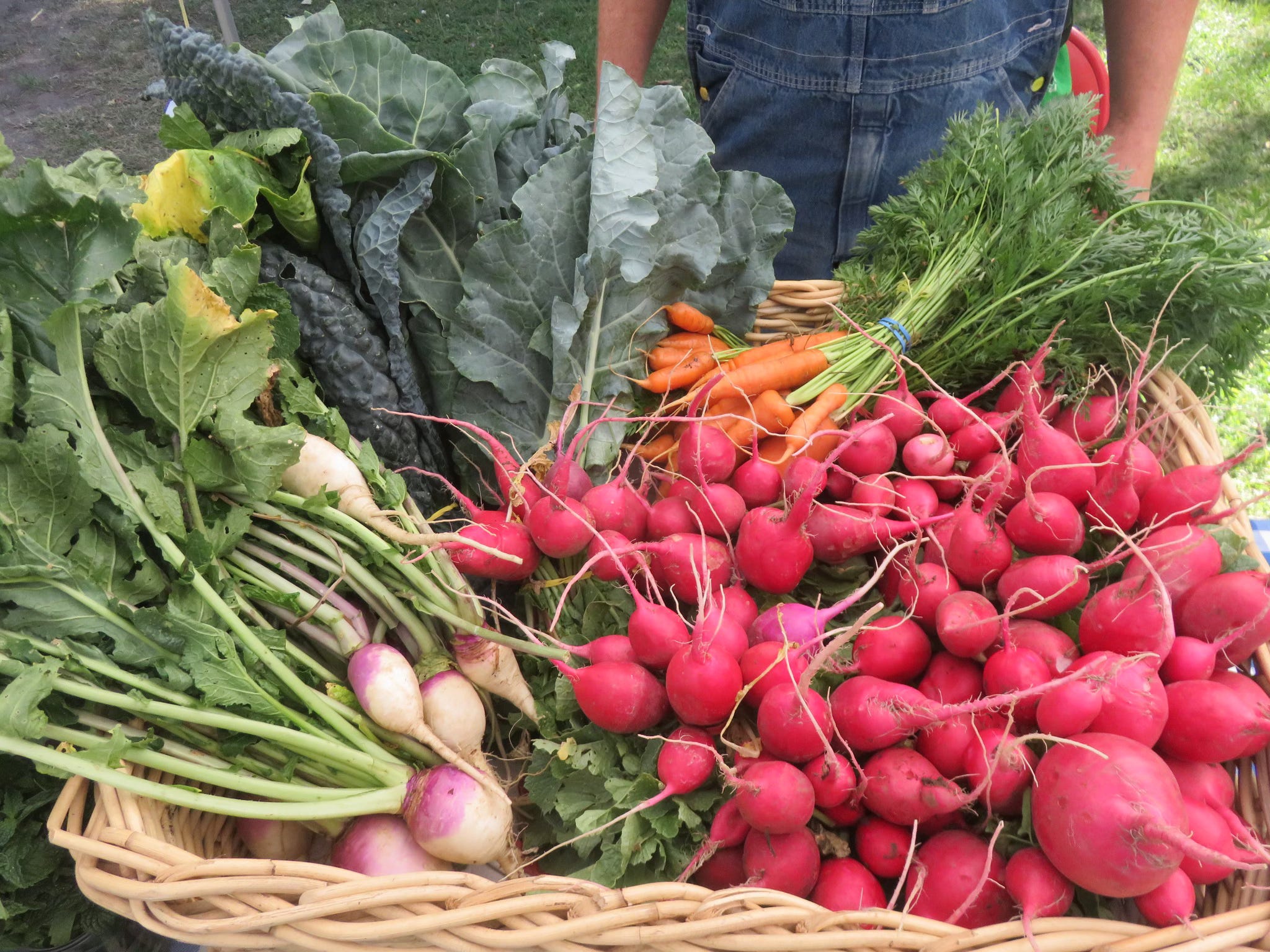
On March 21 it was 82 degrees Fahrenheit in Gardner, Colorado, where I live and where my husband, interns and I grow vegetables and flowers.
That is 34 degrees Fahrenheit above average for this time of year.
Our farm is located at 6,700 ft above sea level, at the very Western edge of the Great Plains, with mountains on three sides. Those mountains are mostly bare, because we have had a remarkably warm winter and little moisture of any kind—snow or rain. That should worry everyone who lives downstream, because without that snowpack, the rivers don’t run, or at least not at full capacity.
Four major American rivers begin in the Colorado Rocky Mountains: the Colorado, the Arkansas, the Platte, and the Rio Grande.
Roughly 40 million people across seven U.S. states (AZ, CA, CO, NV, NM, UT, WY), indigenous nations, and Mexico depend on Colorado River water.
At least 50-75% of that is used for growing food for humans or animals.
The Arkansas River provides water for agricultural irrigation and municipal public supply across Colorado, Kansas, Oklahoma, and Arkansas.
The Platte River Basin provides water for approximately 5 million people across Colorado, Wyoming, and Nebraska, including over 85% of Colorado’s population.
The Rio Grande provides water for over 6 million people, agricultural irrigation, and ecosystems across Colorado, New Mexico, Texas, and northern Mexico. Agriculture consumes roughly 85-90% of the water, while cities like Albuquerque and El Paso (USA), along with Ciudad Juárez (Mexico), rely on it for municipal drinking.
I mentioned here last week when writing about goat births that the land is so parched our goats couldn’t find enough browse to gestate more than one kid each. Now the bears are waking up, and there is no food.
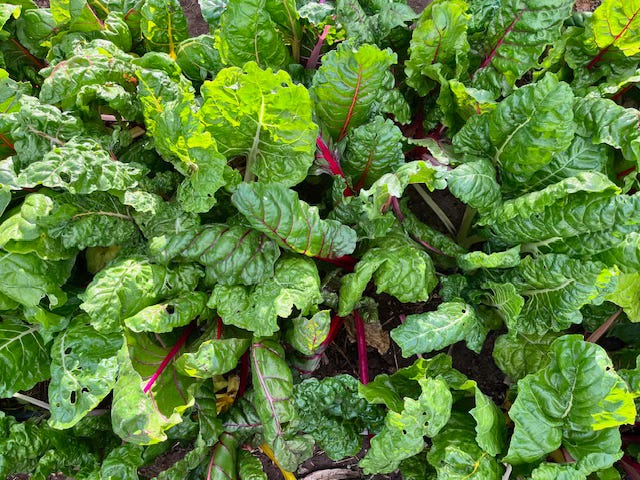
Drought isn’t the only gardening challenge we’re facing, though. The biggest impact of global warming isn’t uniform warming everywhere, but unstable weather.
Because of the unseasonably warm weather, our apricot and nanking cherry trees blossomed last week. Then, last Sunday night, a polar vortex moved in and pushed the temperature down to 15 degrees F/-9.5 C. The blooms all died. There will be no fruit from those trees this year.
Now the warm weather is back and we have another, major problem.
This is the time of year when we seed our “cold” crops: things like chard, spinach, lettuces. But the seeds of such plants cannot and will not germinate in 80 degree weather. Do we wait till it cools down again? When will that be, and for how long? Getting the seed in the ground is the single most important thing you must do to grow food.
Every continent on the planet is experiencing the same agricultural crises: drought in some areas, too much rain and flooding in others, unpredictable monsoon seasons, extreme heat, and super-sized storms, leading to widespread crop failures, which in turn also bankrupts farmers and closes up farms. Just last weekend massive storms in Hawaii dropped two feet of rain on Maui, and almost burst a major dam in O’ahu.
Unfortunately, the U.S-Israeli war on Iran has compounded these problems by stopping the free passage, and much of the production, of mineral fertilizer.
Anyone who knows me knows I’m no fan of chemical fertilizers. But they’re the reason we have 8 billion people on the planet, and without them, close to half of that 8 billion doesn’t eat.
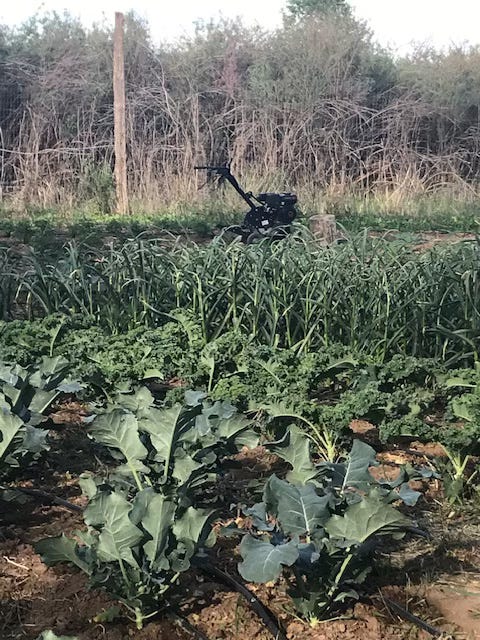
A huge percentage of the world’s fertilizer is actually produced in Iran and Gulf countries and globally traded urea passes through the strait of Hormuz.
That supply is now offline.
The consequence is simple but devastating. No fertilizer. No nitrogen in the soil. No grain from the fields. And it’s time for spring planting in the Northern Hemisphere. That window of opportunity does not wait.
The price of food is going to go through the roof, but that isn’t what scares me.
What scares me is farmers being unable to grow food, period.
“According to the physicist Vaclav Smil, without chemical fertilizers the global population would need to be about 40% smaller.”
Read that, and then read it again. Understand what I’m telling you.
I’m talking about there very soon not being enough food for almost half the people on this Earth: famine, of epic proportions.
Yes, of course I know organic farming is the answer. Or one of the answers. But the 8 billion people currently on Earth are being sustained on industrial-scale farming using mineral fertilizer. That machine cannot just transition to organic methods overnight.
I’m not trying to scare you. I’m trying to help you prepare for what is coming. Because it is coming, soon.
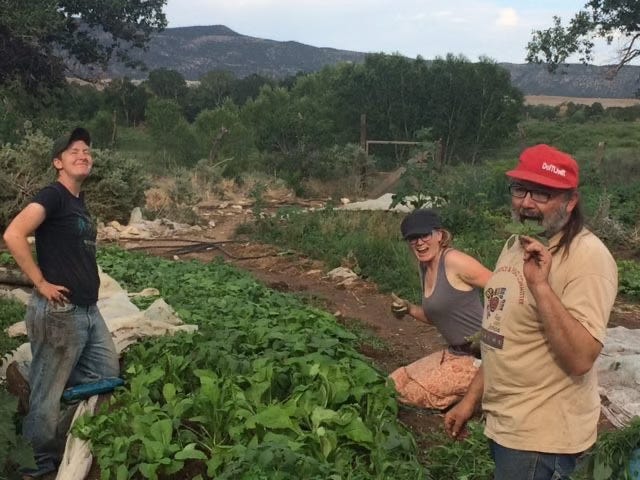
You need to start growing food. Now. Yes, YOU, not the person sitting next to you, or the one over there. Well, actually, they need to start doing so too, but they’re not reading my Substack. Maybe you could pass on the message?
But Val, I don’t have any experience…
That’s what we’re here for! And the extension officer of your county. And books and the ninnanet and elders. Also,
we’re hosting a volunteer day at Shii Koeii Farm on April 11th to get the beds ready for planting. My amazing chef-sister-in-law Jen will feed everyone. If you’re in the neighborhood please join us, but please RSVP so we know you’re coming and make enough food. Come put your hands in the dirt and reconnect to what your ancestors knew…
But Val, I don’t have any land…
Do you have a front yard? A back yard? A side yard? A flower box and a window? My husband and I once grew an entire season of vegetables and flowers in our basement apartment. It was messy, but we did it, with full-time jobs.
This video shows you how to grow enough food for a plant-based diet for an entire year in 1/32 of an acre.
Ever heard of guerrilla gardening? Pot growers did it throughout cities all over America before marijuana was legalized.
These folks in LA are really inspiring.
Aquaponics doesn’t even require soil.
You can start seeds indoors and then plant them out when the weather is amenable/they’re big enough.
What am I supposed to do for fertilizer?
If you know someone who has chickens, or horses, or goats, or cows, you need to ask them for manure. And you need to read up on how to use it.
You can make your own compost from kitchen scraps.
For now, you can buy fertilizer. But there’s another option.
First, read The Martian, because it’s entertaining and it’s a great story of how to survive when everything is working against you. It will inspire you. Then, read The Humanure Handbook by Joe Jenkins to understand what the protagonist in that book/film did and why it worked.
What if climate change destroys my garden?
It won’t just be climate change fighting you. Insects, hungry rodents, seed-loving birds, and larger wild kin desperate for food will be attracted to your garden. We call it the critter tax, and we usually grow enough of each thing that they get their cut, and we get ours.
There is strength in diversity. If you grow a wide variety of things (and enough for the critter tax) at least some will make it. There are some gardening implements you can use to help with sudden weather shifts. If you can put a little money into things like season extender cloth/Ag-Ribbon, you give yourself that much more security.
What about water?
Collect your gray water and use it. If you’re rich and want to go all fancy-pants like the folks at that link, you can install a whole system, which is super cool. If you’re like us you can just use basins to collect it on your own. Mind what you’re putting into your gray water, and, where possible, use it to sub-irrigate, rather than surface irrigate.
What should I grow?
What will you eat? Vegetables are full of essential nutrients and minerals. If you want to grow vegetarian protein and starches, I recommend maize (flour corn), potatoes, and dry beans. But even vegetables have some protein in them.
If you’re capable of planting trees and your climate allows, consider growing nuts and/or olives. Good fats, more protein.
If you have fruit trees, or can grow fruit trees, do so. Even if you don’t like fruit (I’m not a huge fan), it’s good calories.
The best time to have started growing your own food was 10,000 years ago.
The second best time is now.
Comments
Nothing yet. Say the first thing.
Sign in to join the conversation.