

You perhaps expected me to write about Venezuela. I will, in due course, but right now everyone and his or her dog is writing about Venezuela, despite the fact that the dust from the bombs and guns which killed more than 80 people hasn’t even settled yet.
In the meantime, I highly recommend that you watch The Revolution Will Not Be Televised, available for free on YouTube. It’s an extraordinary film, not only for what it covers but for when it was made (accidentally in the middle of a coup attempt), and it will teach you more about the U.S. and Venezuela than 60 Minutes will these days, that for damned sure. It’s 22 years old and wildly relevant.
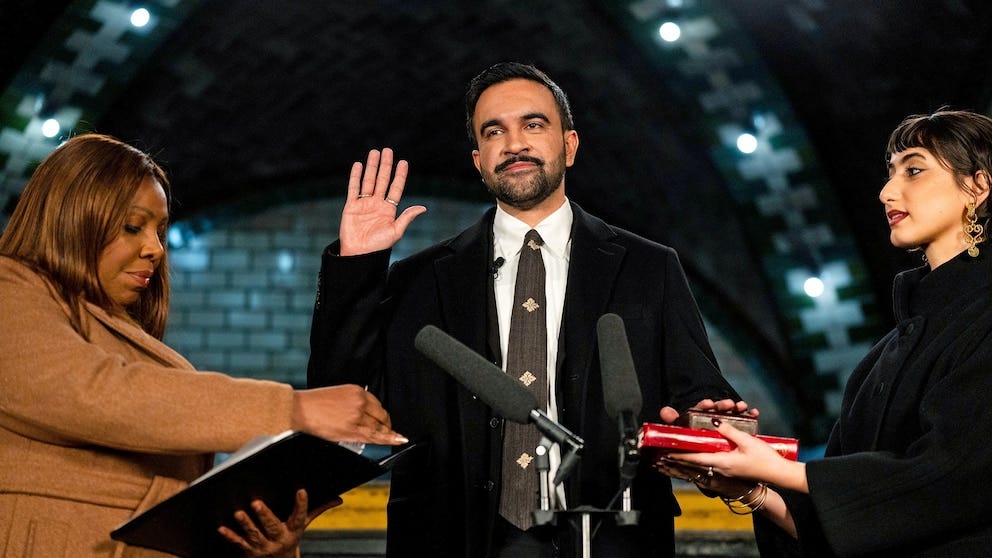
I prefer today to focus instead on the extraordinarily positive historic events which transpired in the U.S. last week, namely two Democratic Socialist mayors being inaugurated in major U.S. cities: Zohran Mamdani in New York City and Katie Wilson in Seattle.
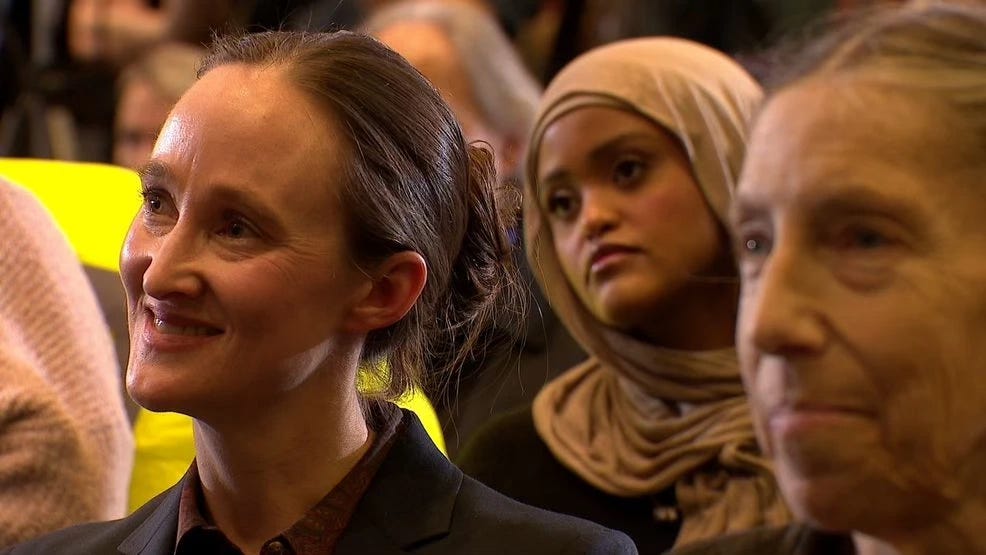
It is their victories that inspires me to talk about something much more empowering, fun and exciting, that is, using the collective power of organized people for grassroots, nonviolent social change.
We know that community organizing works, historically. Whether for civil rights, environmental justice, or labor rights, organizing has proved itself a powerful tool.
But Mamdani’s and Wilson’s victories really upset the electoral apple cart. The two campaigns had much in common.
Both Mamdani and Wilson were community organizers first, and both brought that experience and perspective to the electoral race. Both ran strong on-the-ground campaigns focused on personal connections with voters. Both campaigns energized the electorate months in advance, employing thousands of committed volunteers knocking on doors, phone banking, canvassing, working social media channels and hosting meet-and-greets. Both resonated with and mobilized the youth.
Both fought establishment Democrats and the money behind them, and won. The power of the people defeated the power of money. That is an example of democracy working.
“In all, over one hundred thousand people volunteered for the Mamdani campaign, knocking on doors, making phone calls, talking to their friends, neighbors, and to strangers. The victory that has shocked the country and the world, culminating in Zohran’s swearing in as mayor yesterday, is because of their labor, and is proof that sustained, mass organizing around clear class politics produces results,” wrote Sumathy Kumar and Gianpaolo Baiocchi in Jacobin.
Both inaugurations included references to the song/poem, “Bread and Roses.” Not terribly surprising, I suppose, given that the Democratic Socialists of America reference the song in their logo.
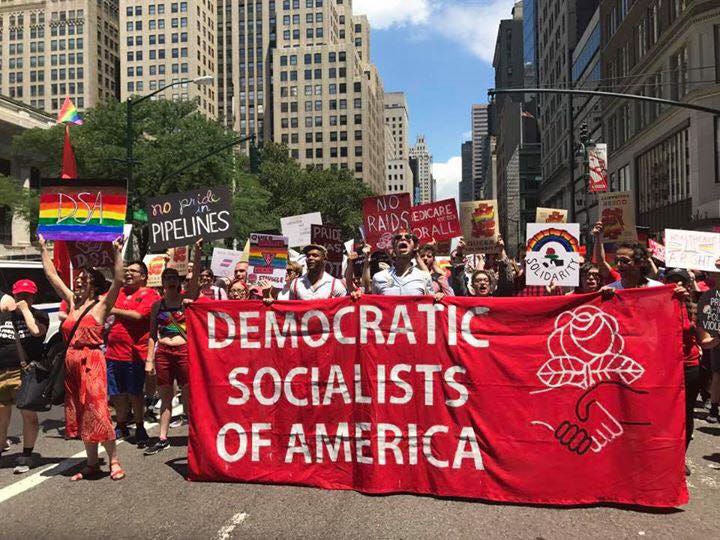
But the message in its use at inaugurations is powerful: joy, beauty, the thrill of what is possible inspired their campaigns. Joy is on their agenda. The joy of eradicating fear with dignity. The joy of feeling secure in one’s home. The joy that comes from believing in a brighter future that you helped create because you can see it unfolding before your eyes. Joy as a defining principle of the world we want and deserve.
Katie herself said, “We need bread, but we need roses too.” At Mamdani’s inauguration, Lucy Dacus of boygenius sang the song in a goosebump-inducing manner (she had to follow Mandy Patinkin singing “Over the Rainbow” and still knocked it out of the park).
Electoral politics is not the only arena in which community organizing can be effective. Relational power, according to Act Build Change, is power we build together with others. Anywhere you need to grow power, build a movement, create a strong community of people working together to achieve positive social change is a fertile place for an organizer.
And organizing is not an esoteric skill unavailable to you and me. It’s a skill that anyone can learn, and a skill that successful grassroots organizations teach.
I was hugely inspired by a recent email message from the U.S. Campaign for Palestinian Rights Committee detailing successes of four of their youth fellows.
In Houston, USCPR Youth Fellow AJ discovered that Chevron, the primary energy provider to the state of Israel, sponsors the city’s beloved marathon. In a city defined by the oil and gas industry, that could have felt impossible to challenge.

But instead, AJ built something powerful. Working with her organization, Houston DSA, and labor unions like Unite Here Local 23, faith communities, and masjids [mosques] across Houston, they helped create grassroots action against Chevron at the Houston marathon, part of a campaign that’s shifting the culture in one of America’s most pro-oil cities. Runners, volunteers, and event staff are now joining the pressure campaign. In Houston, people are mobilizing to boycott Chevron.
In San Diego, USCPR Youth Fellow Eriq transformed a siloed network of organizations into a strategic coalition with real teeth: San Diego for Palestine. When Cisco held their annual conference at the San Diego Convention Center, the coalition didn’t just protest outside—they coordinated with a Cisco worker organizing on an internal disruption. That action sparked this worker’s deeper commitment to Palestine organizing. And the coalition learned exactly what power they have to build on and the audacity it would take to do so.
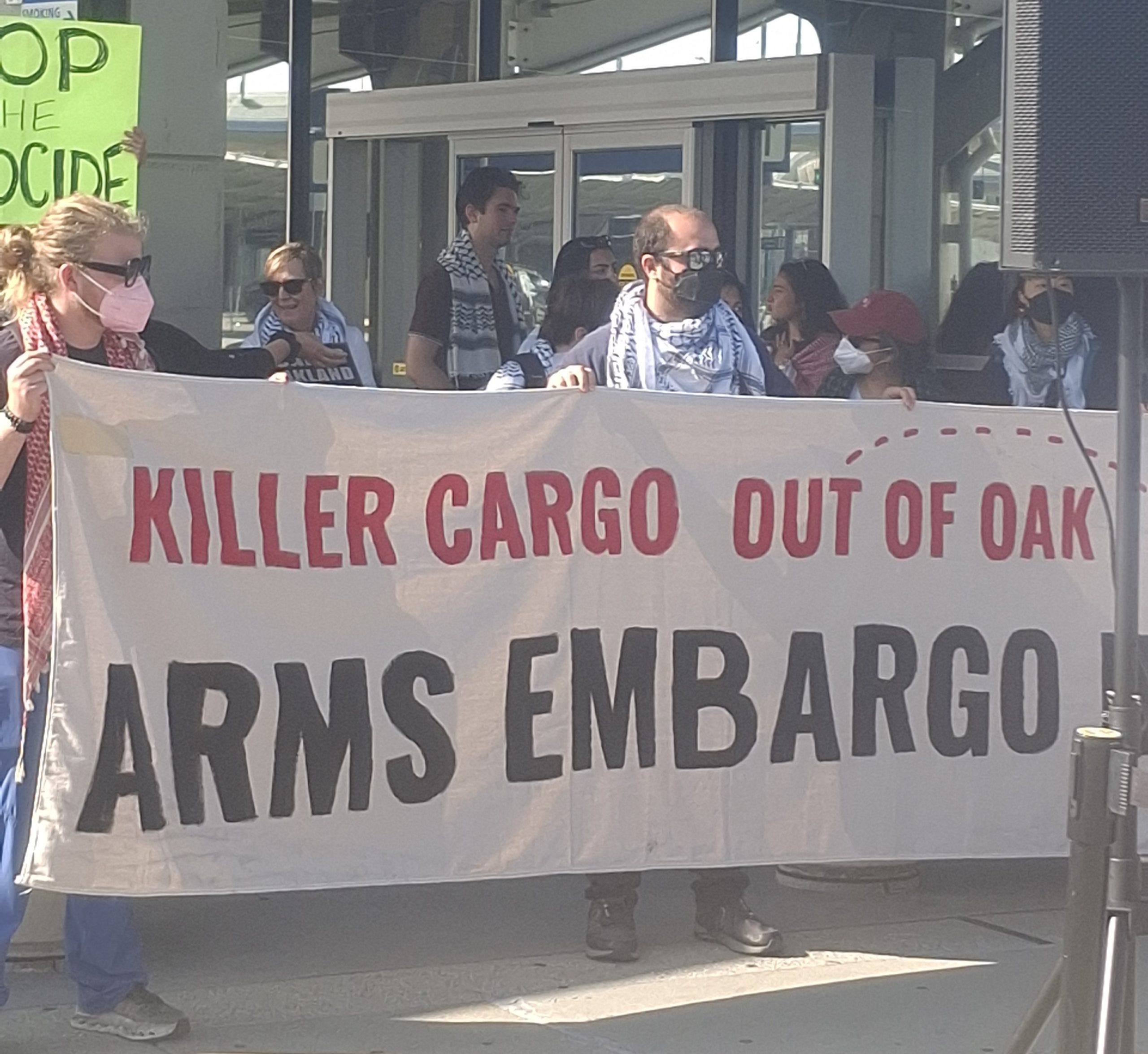
In Oakland, USCPR Youth Fellow Zena and fellow organizers with the People’s Embargo for Palestine uncovered something shocking: Oakland’s airport has been shipping weapons components directly to Israel. The dockworker’s union had already supported an arms embargo, but the airport’s involvement was unknown. Organizers collected over 10,000 petition signatures, and secured endorsements from over 100 organizations and 50+ businesses to stop the shipments. Port commissioners are now discussing binding policy to prevent this from continuing.
In Charleston, USCPR Youth Fellow Kirby has spent over a year organizing weekly pickets at Elbit Systems’ factory with a local group, Elbit Out of SC. On May Day, he and fellow organizers brought out 70 people, and Elbit shut down early. They forced a county council vote on Elbit’s tax breaks, getting officials on record defending weapons manufacturers. They interrupted Elbit’s job fair at a technical college. “In a city with a brutal history—from the slave trade to ICE raids—Kirby is building a future where Charleston says no to profiting from genocide,” wrote Leah Muskin-Pierret.

These may seem like small victories, but it is precisely through such small, local campaigns we build a massive grassroots movement to end the genocide.
If you or someone you know would like to get trained in community organizing,
USCPR trains youth organizers through their fellowship program. Send them young people eager to learn organizing (and send them financial support here).
The Center for Third World Organizing are two of the most famous and accomplished. Both focus on building organizing capacity in marginalized communities.
If you want to get paid to spend a year learning how to organize, look to unions. The American Federation of State, County and Municipal Employees (AFSCME) offers a generous paid year-long organizing training.
But if you can’t attend such trainings, there is plenty you can do to build your skills wherever you are.
Act.Build.Change out of the UK just dropped an online organizing curriculum. The first two courses are free.
A Radical Guide provides educational resources, links liberation spaces across the country, and maintains a mutual aid fund to move resources directly to those most in need.
There are, of course, essential books to read, and they can usually be found second-hand.
Alinsky, Saul. Rules for Radicals
Kahn, Si. Creative Community Organizing: A Guide for Rabble-Rousers, Activists, and Quiet Lovers of Justice
This is a very limited list of resources. There is so much more out there. In the comments, please tell me and everyone else what resources you recommend for training in community organizing.
We can build the world we want. The best time to have started was yesterday. The second best time is now.
Comments
Nothing yet. Say the first thing.
Sign in to join the conversation.