
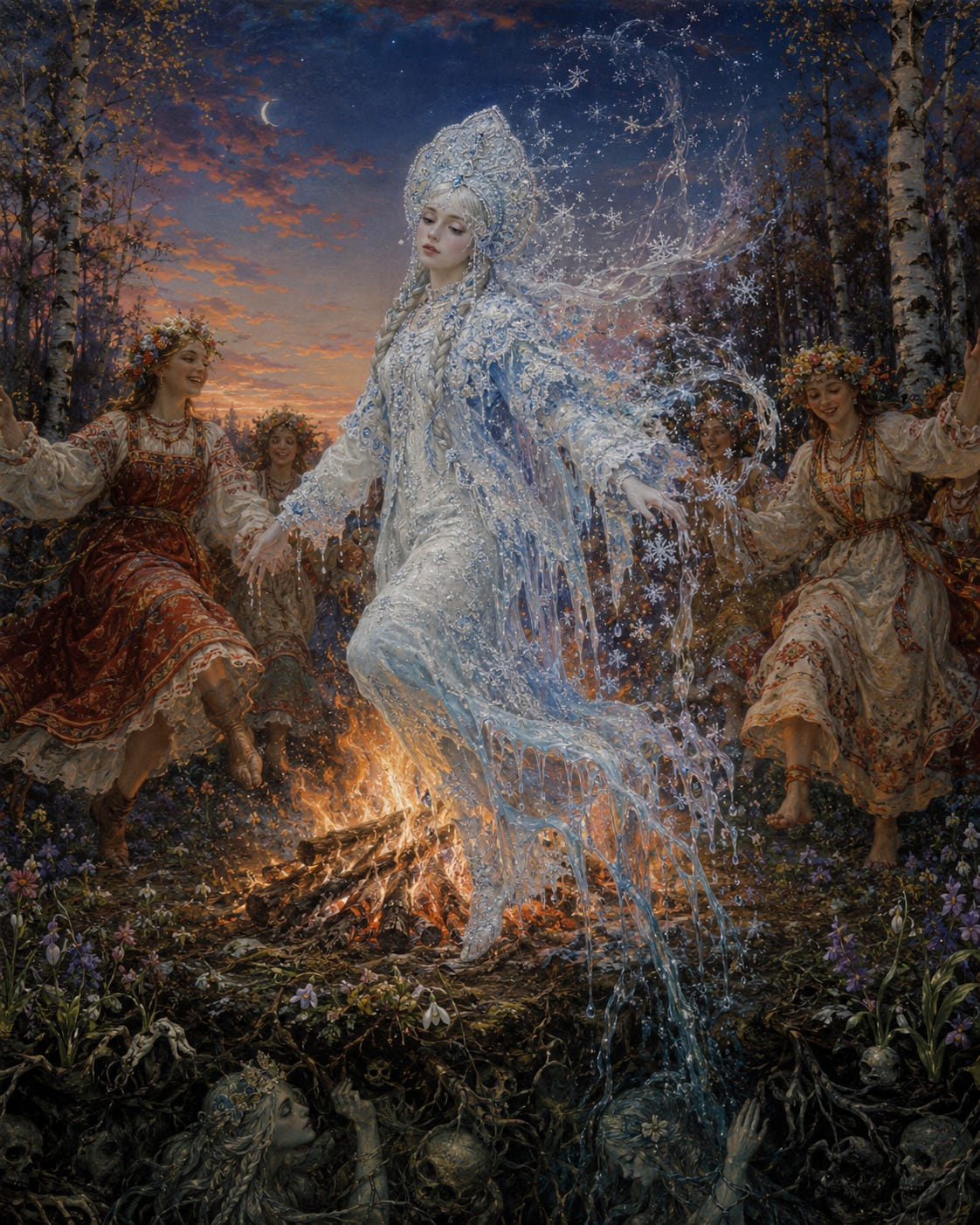
The Russian fairy tale Snegurochka, or The Snow Maiden, begins with a familiar wound: an old couple has no child. One winter day, they make a little girl out of snow, and the snow-girl comes alive. To the human eye, this looks like a miracle of consolation. A barren household receives a daughter. But the form of the miracle is troubling from the start. This child is not born from life. She is shaped from winter.
That makes Snegurochka a strange kind of daughter. She is welcomed into the house, dressed, loved, and treated as human, but she does not come from the human order. She belongs to snow, cold, silence, and suspension. The parents think they have been granted a child. A darker narrator might say they have borrowed a figure from the seasonal world and mistaken the loan for a birth.
This is where Persephone becomes the useful counter-myth. In the Greek story, Persephone disappears into the underworld, and Demeter’s grief brings winter. When Persephone returns, spring comes back with her. The daughter’s return restores the living world. The emotional structure is clear: the mother loses the daughter, the earth becomes barren, the daughter returns, and life resumes.
Snegurochka reverses that structure. Here the daughter does not return with spring. The daughter is destroyed by spring. Warmth, flowers, village life, and fertility do not heal the loss. They cause it. If Persephone is the daughter whose return makes spring possible, Snegurochka is the daughter who can exist only while spring is withheld.
That is why the festival scene is so disturbing. Village girls sing, dance, and jump over fire. For them, the fire is a rite of life: youth, fertility, courage, courtship, entry into the social body. But Snegurochka cannot pass through the same ritual. Fire does not initiate her. It reveals her true substance. She melts. The ceremony that confirms life for everyone else destroys the snow-child.
Seen this way, the tale feels almost as if it were told by Hades rather than Demeter. Not Hades as a villain, but Hades as the voice of limits. The parents love the child, but love does not make her human. The village celebrates spring, but spring is not sentimental. Nature reasserts its claim. Winter may lend the old couple a daughter, but spring comes to collect her.
No posts
Comments
Nothing yet. Say the first thing.
Sign in to join the conversation.