
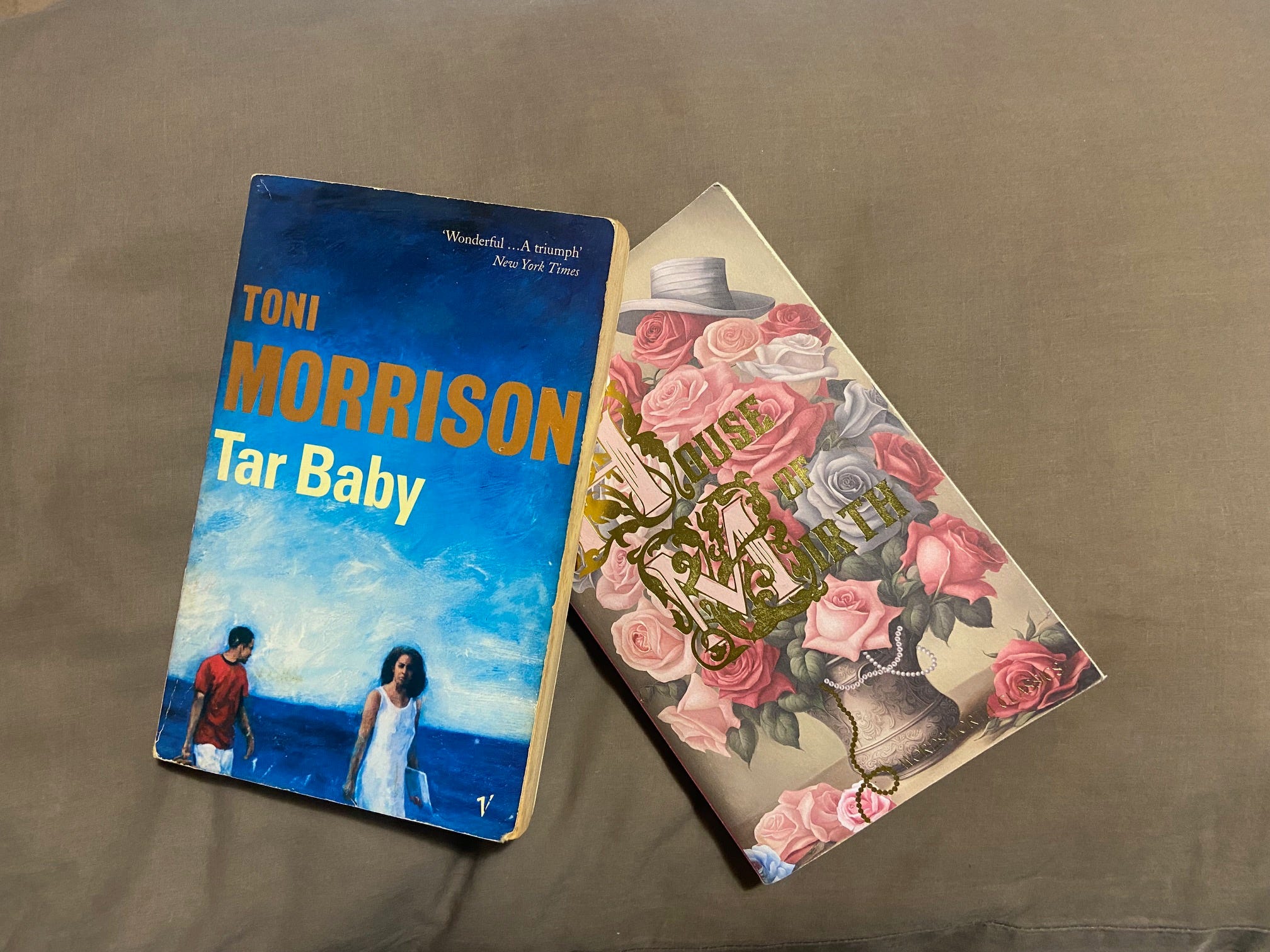
I’m back to reading a lot.
The first six months of this year were spent, at least for me, unemployed and deeply frustrated. My health has been rocky (but fine), my love life non-existent (for now), and my interest in hobbies waning (too much free time). But one thing that did happen is, with the absense of distractions like work and fun, I dove back into reading ferociously. Not that I ever stopped, but I went from reading in my spare time to reading all the time. And some of it was actual books!
So now we’re at the halfway mark and I’m about to have less time to indulge, I wanted to highlight ten amazing books I read in the first half of the year. A mixture of fiction and non-fiction that covers millennia of history, politics, and gossip. All shockingly interesting and available to you at your local library. Probably? I don’t know if you have a local library. If not…get on that.
10. I Told You So: Gore Vidal Talks Politics - Gore Vidal
Gore Vidal has quickly become one of my go-to guys to watch talk about topics in ancient interviews. He has such a quick way with words and depth of knowledge that I always walk away from those videos feeling like I’ve learned something. It might only be a clever turn of phrase, but it is always interesting.
This book is a collection of public interviews that have been transcribed for my reading pleasure (and others, I guess) which were a delight to read. The shortest book in this lot by a long shot, it was dense and humorous without dipping into the informality that can sometimes make transcription obnoxious to read. Vidal was one of our great speakers, partially because his natural rhythms were equivalent to good text. There is nothing in this that feels incomplete or particularly fluffy in the way that some interviews can be. Nor does it drag.
There’s something deeply satisfying about taking in dialogues that are not necessarily dumbed down to the point contemporary political talk often is. Even if many of these answers are still surface level, they’re precise and unflinching in most of his opinions. I’ve only started exploring Vidal’s written work thus far (hence this being his entry onto the list) but his public speaking excites me for his writing.
9. House of Lilies: The Dynasty That Made Medieval France - Justine Firnhaber-Baker
The formation of France as a nation of influence and size did not happen overnight, nor was it particularly easy. In House of Lilies, historian Justine Firnhaber-Baker takes the complex task of squeezing the complex history of the Capetian dynasy into an accessible book that cover roughly 400 years of nation building. It is an excellent entry into this period and place within history.
There’s a surprising amount of complexity in Firnhaber-Baker’s fast paced historical retelling. Each reign is given an appropriate and often vivid description of historical manoeuvring that is comprehensive without being exhaustive. This is as close to we have a history of medieval France in popular history, and it is needed.
James Stuart, first of his name in England and sixth in Scotland, mostly exists as a formless figure in historical recounts. He is often the antagonist in stories where his importance is obvious, whether he be the traitorous son of his mother, the dangerous cousin of Queen Elizabeth, or the useless father of his children. Misunderstood and underestimated by contemporaries and historians alike, he has not received the attention his predecessor or successor have in popular history. Much like his great-grandfather Henry VII of England, he is almost a stopgap in textbooks.
Russell’s biography of James takes on the King as a topic and attempts to fill out the legend into something decidedly more human. Not necessarily ignoring the slovenly and paranoid man he has been depicted as, but exploring and sympathising with where those traits came from. It does so by framing the various relationships James had, not just romantically, but personally as well. The title reflects only part of the book’s interests. This is not a queer reading of history, but the history of a man who happened to have homosexual relationships as part of his life.
Russell is one of those historians who writes with immense empathy for his subjects. Sometimes to his own detriment. While his biography of Catherine Howard was enthralling, it did often feel like the political ramifications of her life and actions were less of interest to his analysis. But Queen James did not fall into quite the same trap. There’s plenty of politics amongst the drama. If anything, this book makes me long for a more specified book on several of the events covered.
7. Heresy: Jesus Christ and the Other Sons of God - Catherine Nixey
There is a tendency within certain circles of theologians and religious scholars to dismiss the work that Catherine Nixey did with The Darkening Age (2017) as politically skewed and flimsy. Some charged that Nixey drew conclusions from isolated incidents, which does seem strange considering how the study of history actually works. I’m not a scholar of the subject, but it does appear that most negative reviews of that book come from people who assume that their field is one that cannot be challenged. That is not to say the book did not have flaws in my reading - particularly in assumptions about the early medieval period - but it is fundamentally solid in what it aims to do. It’s a singular book that defends the premise commendably.
Heresy: Jesus Christ and the Other Sons of God is an obvious and yet fascinating follow up. Rather than a direct sequel book, it instead narrows the focus to one idea. How did the myth of Jesus form and distort through early Christianity?
In that one idea, we get funny and fascinating tangents about the myth of the virgin birth and how scholars massaged the mythology of the Virgin Mary into something that became culturally acceptable. The fellow messiahs of the ancient period and how cults of personality can often orbit each other. Nixey’s ability to switch between the academic and the less formal language of gossip without losing the integrity of her research is a skill she has only gotten better at. The book is informative and funny throughout.
6. The Prime of Miss Jean Brodie - Muriel Spark
Murial Spark is a writer with whom I have fallen in love with. Not literally, as she is long dead and someone I never met. But her writing is undoubtably fantastic. Rich and dense and short without being slight. The Prime of Miss Jean Brodie is undoubtably her most famous book and, after reading it, I can see why. It’s bloody brilliant.
Spark’s ability to sketch out full characters without abandoning her signature writing style - a narration that jumps from moment to moment and across ideas without feeling flighty - is on full display here. The slow forming portrait of one Miss Jean Brodie unfurls as both juvenile icon and adult nuisance is masterful. At no point do you doubt why these girls idolise her so feverently and yet the novel eventually uncovers a woman who is less a teacher and more a cult leader. Somebody who is selfish and controlling while also being seductive to these impressionable girls.
It is a mysterious and intense little book that asks a lot of the reader in a very short amount of time. There are no wasted words or unnecessary descriptors. Spark gives you just enough to slot yourself into the world and then lets you live in the narrative completely. There is an expectation on the reader to contribute to the storytelling that contemporary novels often forego. It is not just delectable, it is nutritious.
5. The Stolen Crown: Treachery, Deceit, and the Death of the Tudor Dynasty - Tracy Borman
The Stolen Crown is the theoretical sister book to the aforementioned Queen James. Covering the most interesting relationship of his life, that between himself and Queen Elizabeth I of England, it tracks the matter of succession under the Virgin Queen and follows the political manuevering that allowed the King of Scots to ascend to the English throne. Borman does this all without sugar coating any one person or letting threads loose. If there is a definitive text on this topic, it would be The Stolen Crown.
It is an incredibly focused book, and I would not recommend it as a singular read. You need at least a solid understanding of who these people are, as Borman has no need to contextualise ever passing moment. For me, as somebody who has read a lot on the era, that makes it invaluable.
Marketing suggested that this book had something revelatory and new in the research, and while that is technically true, it is more interesting to enjoy Borman’s history in a broader scope. Yes, her reveals concerning the written history as propaganda are interesting, but more so in the context of the history that we knew. This is not a historical blind item, as it is too juicy for just the one reveal.
4. The House of Mirth - Edith Wharton
Poor Lily Bart. She was beautiful and proud and that made her vulnerable.
This is a book about how to fail in society through ambition and personal ethics that clash with social values. Wharton, being one of the great writers of upper class tragedies, describes in detail the collapse of one socialite’s reputation despite her character. An unmarried woman of a certain class is on the brink of riches or ruin at any point in time.
There is something decidedly modern about Lily Bart and her aversion to the life her relative poverty and social situation suggest for her. She is fundamentally broken in context of her contemporaries due to her ambition. Her mother sought financial security through her daughter, but Lily sees life as something to be lived more than endured. Her hopes are for a partner who matches her affections and vivacious spirit. I would argue that she does not find one.
The House of Mirth is a book that I did not expect to enjoy as much as I did. Or to find as relatable. Wharton’s greatest gift as a writer is her wit, but more important is her ability to craft characters who are easy to love. Lily Bart is the most loveable person I have read about in a while. Not because of her social graces, but the heart that lies beneath her performance. The tragedy in her that exists beyond the tragic events.
3. Nobody’s Girl: A Memoir of Surviving Abuse and Fighting for Justice - Virginia Roberts Giuffre
Virginia Roberts Giuffre is a figure that history will likely forget as the Epstein files distort into a boogeyman footnote of history. This brave woman, who wanted to expose the crimes of a mass sex trafficking ring that preyed on vulnerable girls across the globe, has been treated just another salacious piece of news that most people cannot be bothered to follow up on. The story that broke should have been world changing. It is instead just more gossip.
Nobody’s Girl is a memoir that travels through Giuffre’s tragic childhood and into her eventual grooming as part of Epstein’s network of abused girls. Her story begins with sexual abuse well before meeting the infamous man and ends with martial violence. The book is unflinching but hopeful until the end, where her later marriage and eventual death rob her of the ending she deserves. There is no justice for Giuffre.
This is a book that begs to be finished. Literally, in some cases, as the text implores you to continue through the more difficult moments. If there is one non-fiction book I implore you to read, it is this one.
2. The Girls of Slender Means - Muriel Spark
If The Prime of Miss Jean Brodie is Sparks’ most famous book, then The Girls of Slender Means takes it’s best qualities and amplifies them. The follow up to her biggest hit, Sparks takes the girlhood friendships of Brodie and transposes them into a wartime tragedy. This is a story of young women forming society beneath the cloud of WWII and how they lived despite the austerity of the times. And it is enthralling.
I’ve spent some time in this article waxing poetic of Sparks and her ability to write with brevity, so I won’t bore you with a repeat of the same compliments. What differentiates this book is the almost poetic way she uses rhythm in the writing. It isn’t necessarily flowery, but there is a bounce within the sentences that speaks both to the age and boredom of the core characters. These are grown women forced into a quasi-girlhood.
It is the details that make the friendships work here. Not only does each girl have their own quirks, but their personalities and even bodies feel real and diverse amongst themselves. The book is neutral on the facts of the characters in a way that does not need softening. This group is not softened for their friendships. Instead, they remain human and in that way, sometimes cruel. It is a blessing to read.
Toni Morrison is a writer’s writer.
That is not to say that Tar Baby is not accessible. Far from it. Morrison is a writer who, first and foremost, writes engaging prose. This is a book that rambles in the way that people do when given too much time and too much heat. In the same way that she describes the tropics as exaggerating life the world it is lived in, the stasis of this unfinished retirement lets the anxiety linger and compound over time. The bored older man and his neurotic and almost insane wife, circling a dark secret that requires them both to forgive each other. The “help”, an elderly black couple who rightfully see themselves as active participants within the household, rather than just paid service workers. Jadine, and eventually Son, who leave the haunted house but never escape their own restlessness. Island living should be idyllic, but that requires a contentment none of them have. This reflects in the text, which doubles back on thoughts and stutters before returning to a languid pace, as if collapsing mid-nervous breakdown.
Morrison writes all this for Jadine, the protagonist of the book and half of a love story that teeters dangerously close to something disturbing. Son is a broken man who is never quite made whole, but it is Jadine who spends her time piecing herself together. Her humanity, her ambitions, her qualities beyond those cultivated via education. That attempt to become something more than herself, to find a cultural connection beyond her own visions of self, does not work within the story of Tar Baby. In what ways she fails to do so are far better expressed by black literary scholars, including Morrison herself. But if a tar is a sacred tool, then the “tar baby” of this story is a girl orphaned thrice over (her parents, her adopted parents, the white family who sponsored her) and never given the tools to hold herself together, let alone a community.
At one time, a tar pit was a holy place, at least an important place, because tar was used to build things.
It held together things like Moses' little boat and the pyramids.
For me, the tar baby came to mean the black woman who can hold things together.
- Toni Morrison
All of this is to say, the book made me think deeply about a character that I obviously am not reflected in. Morrison is a writer who transcends the literal in her writing and makes a reality that is equally as complex as it is accessible. Every character here is full and real and deeply human. They play their lives within the world of the novel itself.
If I must end this section, let me say that Ondine and Sydney are perhaps two of my favourite characters in literature. Rage and Fury that ebb as the other flows. A woman who held a secret within herself for so long that she unfurls as it is let out and finally relaxes into herself, and the man who’s calm hides a deeply felt and earned resentment. Two people who have been understanding to the detriment to their own living. It is beautiful to see them, and to a lesser extent their white mistress, finally take control of the situation under a master who prefers novelty and comfort to all else.
This is a must-read for anyone who enjoys books. Period. There is no other book I have read this year that plays in the English language with such deftness and sincerity. Toni Morrison is the great American writer and nobody can convince me otherwise.
And that is that on that.
I’m currently midway through a million other books, but am always on the lookout for more. What are you reading?
Do not suggest anything that is romantasy or hockey related. You will be blocked.
No posts
Comments
Nothing yet. Say the first thing.
Sign in to join the conversation.