
Welcome to the 80th issue of Urbanism Now, our weekly newsletter curated with brief and insightful urban ideas from around the world to inspire action where you (c)are.
This newsletter is curated by Maria Paula Moreno Vivas and Ray Berger. Learn more on our About page.
Thank you for your interest and support. If you find this newsletter useful, please forward it to a friend!
Our jobs board is officially live! 🎉
Let’s get started:
Decades before recommendation algorithms, movie rental stores functioned as vital “third places,” fostering community, conversation and taste-making among customers and clerks, similar to taverns or post offices. These spaces served as informal civic hubs, uniting neighborhoods through daily interaction and shared experiences.
In Bogotá, where the average trip once stretched to 68 minutes, the city is placing affordable housing near metro, BRT and cable car stations so some residents can cut commutes from as long as 100 minutes to just 20. It is a striking example of treating housing, transit and public space as one urban system.
This article looks at why U.S. passenger trains became so slow, tracing the problem to decades of underinvestment and freight-first planning while arguing that modernizing existing rail corridors could deliver faster service without building entirely new high-speed lines.
Honolulu’s Biki system has lost 60% of its bikes, making the service less reliable for riders. But with renewed public funding and plans to rebuild the fleet, the city still has a chance to restore bike-share as an affordable, useful part of its transportation network.
Landlords are increasingly adopting facial recognition technology as a surveillance tool to harass and evict rent-stabilized tenants, particularly in BIPOC communities. The authors argue that such systems are both racially biased and ineffective, necessitating legislative bans to prevent their use in housing enforcement.
Videos, podcasts, books, and socials:
This video explores the generational shift in housing preferences and zoning attitudes, arguing that suburban-centric policies favored by the Baby Boomer generation have contributed to the decline of walkable urban environments.
Beijing’s cycling renaissance was sparked by a Tsinghua University professor who discovered the Dutch “fietsstraat” concept through a blog, leading to the rapid adoption of hundreds of kilometers of cycling-priority streets and demonstrating effective informal policy transfer. (Thanks Ming!)
Roundabout Southeast Portland is a new geographically bounded, non-algorithmic digital platform designed to strengthen hyper-local social infrastructure and facilitate mutual aid and physical community connection within the neighborhood.
Transportation Alternatives launched its $3 Citi Bike campaign at 3 Dollar Bill in Brooklyn, advocating for more affordable and reliable bike-share services as electric Citi Bike prices have tripled.
Jobs:
See all our new jobs at https://urbanismnow.com/jobs below are a select few.
Dott is hiring a central policy & sustainability intern in Paris to analyze data, write reports, and manage projects that advance the company’s city partnership and sustainability performance. €1,200 EUR salary.
The European Topic Centre on Spatial Analysis and Synthesis (ETC-UMA) is hiring a junior spatial data analyst to work on wetland conservation and restoration at Mediterranean and European scales, focusing on managing and analyzing spatial environmental data. €29k salary. Apply by August 21.
Fair Ground Brussels is hiring a project officer to manage European initiatives like Harmonia and Reno-Hope, which focus on developing affordable, sustainable social housing and innovative renovation practices in Brussels. Apply by August 21.
Events and deadlines:
The Young Mobility Network (YMN) is seeking 2-3 volunteers for expanding hubs in Stuttgart, Dresden, Bremen, Paris, the UK and Netherlands to help organize events, connect members and grow local communities.
The Democracy Stories Lab is an open call inviting creators worldwide to submit imaginative visual content, such as short videos or illustrations, that tell compelling stories about the future of democracy and collective decision-making. Apply by September 14.
Mpact Transit + Community 2026 will bring together city-builders to share real-world solutions for challenges facing cities and regions everywhere. The conference, focused on building transit-oriented communities, takes place in Toronto, Ontario, September 14-17.
What did you love? What did we miss? Let us know in the comments below.
As always, please share with a friend!
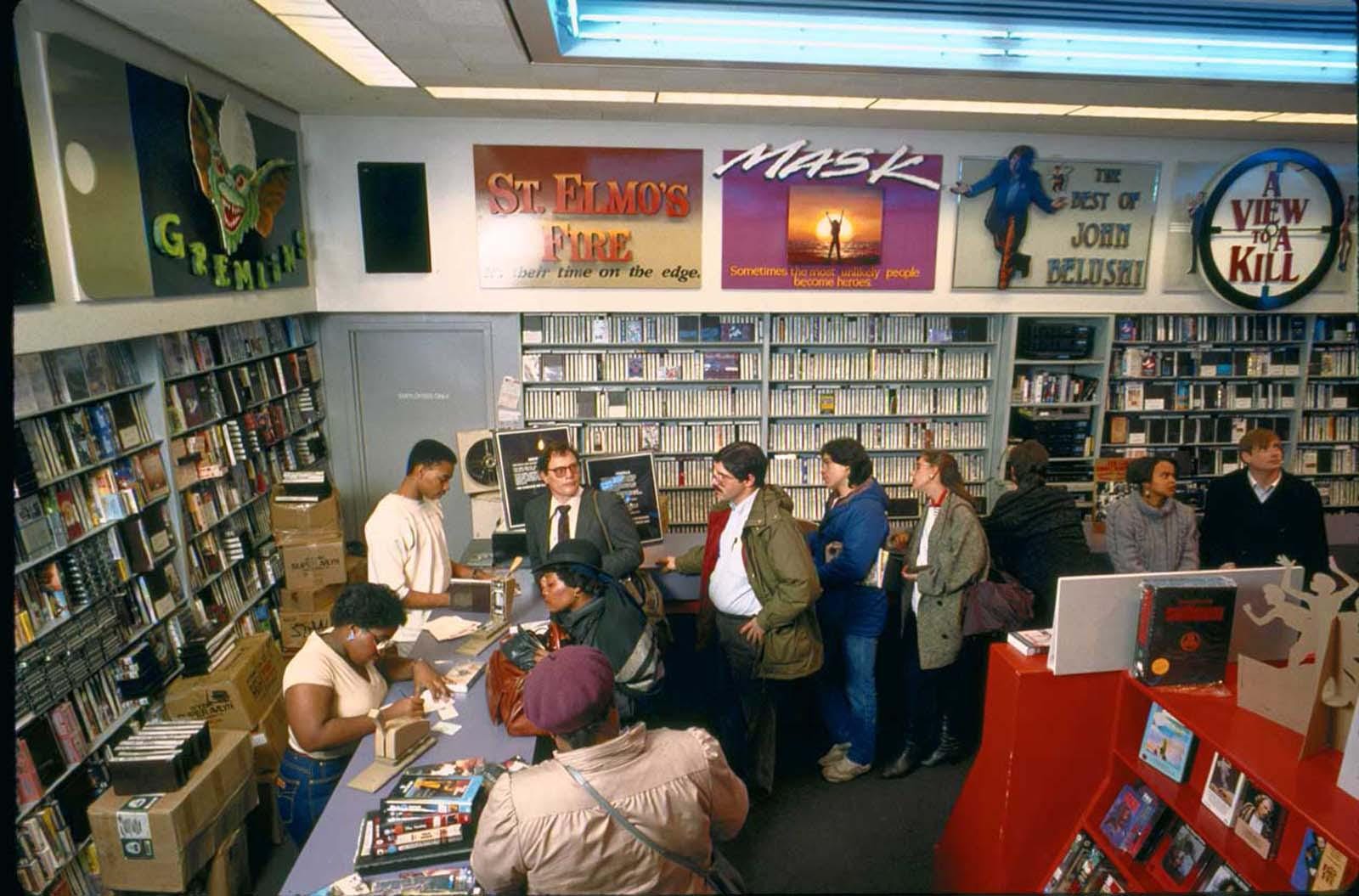
Tower Video store, New York City, 1986. By: Rare Historical Photos
Comments
Nothing yet. Say the first thing.
Sign in to join the conversation.