
In today’s society, debates on mobility are often framed as political oppositions (Henderson & Gulsrud, 2019; Syrda, 2025; Wild et al., 2018; Vreugdenhil & Williams, 2013). On the political spectrum, active mobility is frequently associated with the left wing, while car-oriented policies are often positioned on the opposite side. Terms such as “bikelash,” “white line fever,” “political bike lanes,” “car dependency,” and “car supremacy” are repeatedly used in public and political discourse to shape public sentiment and justify politically expedient mobility decisions. Language thus contributes to the polarization of mobility debates. However, treating mobility as a contest between competing camps is unhelpful and distracts from the core question: how can we best balance the mobility system to meet everyone’s need to travel from A to B?
Rather than viewing mobility as a political struggle between competing transport modes, mobility planning should focus on creating balanced, adaptable, and inclusive systems that provide accessibility for diverse and changing user needs.
Though it is shaped by politics, for most people, mobility is not an expression of political preference but a practical necessity centered on accessing everyday destinations. People travel to school, work, visit friends, buy groceries, or see a doctor. Preferences for particular modes of transport are shaped by individual resources, capabilities, circumstances, purposes, destinations, and social relationships, none of which can be assumed to remain stable over time. For example, someone who prefers driving today may not always be able or willing to do so because of health issues, changes in their financial situation, or life events.
Moreover, people often use a combination of transport modes and the associated infrastructure. One may walk to where a bicycle is parked, cycle to a public transport station, park the bicycle, travel by train, and then walk to their final destination. On another occasion, the same person may choose to travel by car, for instance when public transport requires too much time or effort, or when driving is more affordable while travelling with friends or family. Mobility needs and travel behaviours are therefore as dynamic as the mobility system itself.
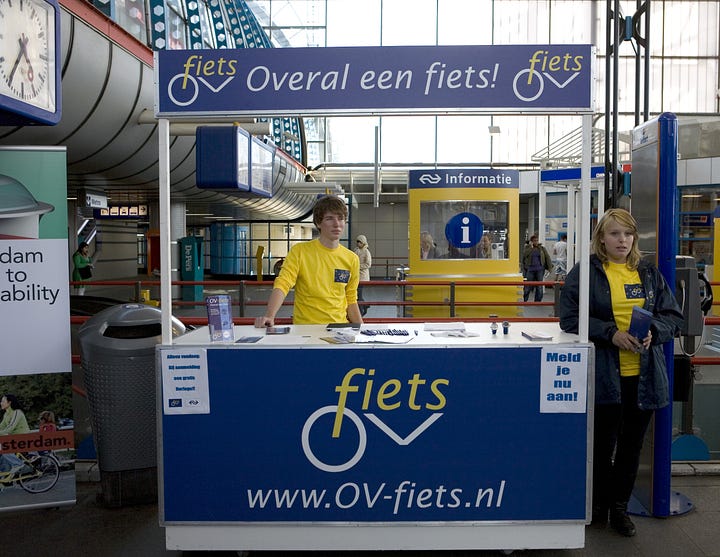
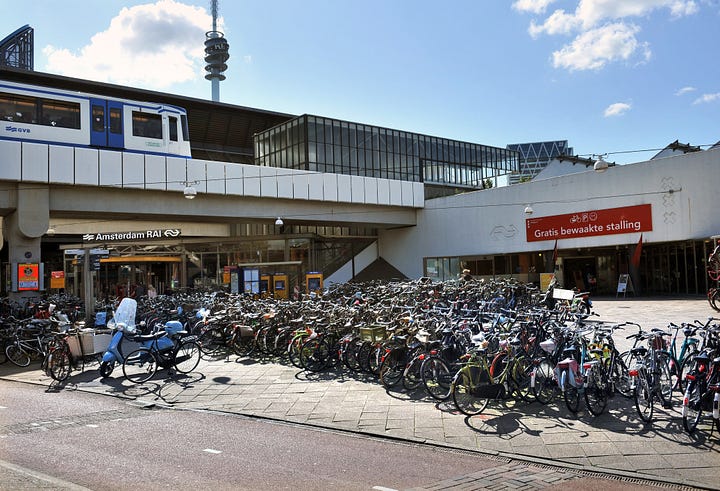
When making decisions regarding mobility infrastructure, it is important to recognize that the transport system consists of interconnected elements. Pedestrians, cyclists, public transport users, and drivers continuously interact within the same transport network. Therefore, prioritizing one mode inevitably affects others. The key question, therefore, is not whether one mode should dominate but which modes should be prioritized, where, for what reasons, and how, while ensuring that the system remains balanced and continues to provide accessibility for all. Framing mobility as a collection of separate camps aligned with particular political ideologies obscures this reality and is unlikely to help address contemporary and future mobility challenges.
When mobility debates become polarized, transport modes are often presented as competing interests rather than complementary elements of a single system. This can encourage decision-making that prioritizes ideological positions over practical mobility needs. As a result, discussions may focus on which mode should receive priority rather than on how the transport system can provide the greatest accessibility for the greatest number of people. Yet the fundamental purpose of mobility planning is not to maximise travel by any particular mode, but to enable people to access opportunities, services, and social relationships.
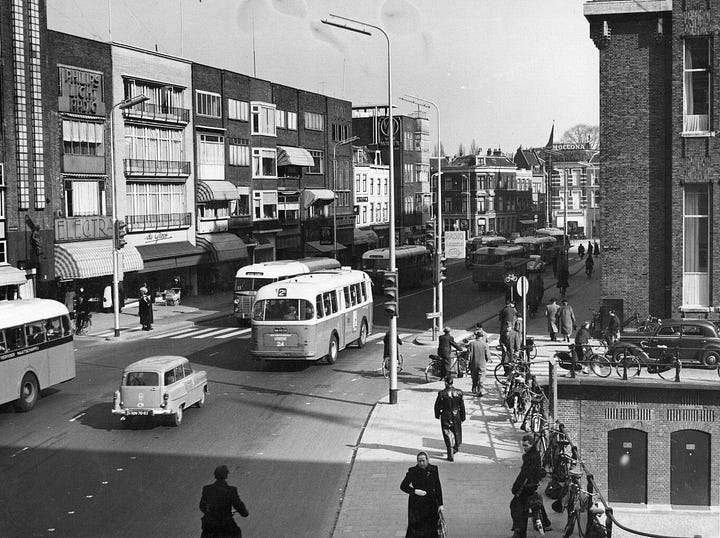
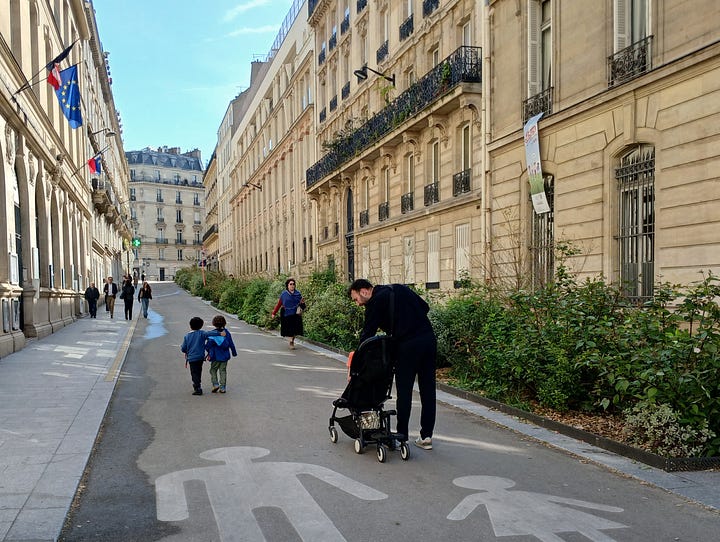
Compared to a mobility system built around a single dominant mode (typically the private car), an inclusive mobility system is better equipped to accommodate changing mobility needs and behaviours. Such a system enables people to reach essential destinations such as work, school, healthcare, and social activities safely, affordably, and independently, regardless of age, income, physical ability, or driving status.
Across Europe, the phenomenon of double ageing—the simultaneous growth of populations aged 65 and over and 80 and over—coincides with an increasing prevalence of age-related conditions such as Alzheimer’s disease, musculoskeletal disorders, diabetes, and visual and hearing impairments. These developments are reshaping mobility patterns and affecting how people participate in transport systems, influencing travel frequency, trip distance, and mode choice (Anstey et al., 2005; Meinders et al., 2025). For example, individuals with dementia may no longer be permitted to drive, while Parkinson’s disease can impair reaction times, vision, hearing, concentration, and overall alertness. Consequently, some people stop driving altogether or restrict their driving to shorter and less frequent trips. Others may choose not to disclose their condition because they fear losing their driving licence and, with it, a degree of independence, particularly where viable alternatives are lacking, or social support networks are limited (Liddle et al., 2024).
In many contexts, giving up driving represents a significant life transition associated with reduced independence, lower well-being, and increased stress. These challenges are often intensified when individuals have little experience using public transport, cycling, or walking infrastructure. The transition becomes even more difficult in environments where attractive and accessible alternatives to driving are unavailable. Conversely, it would be considerably easier if people were accustomed from an early age to using and choosing between different modes of transport. Developing familiarity with walking, cycling, and public transport throughout life helps people remain mobile and independent when circumstances later limit their ability to drive.
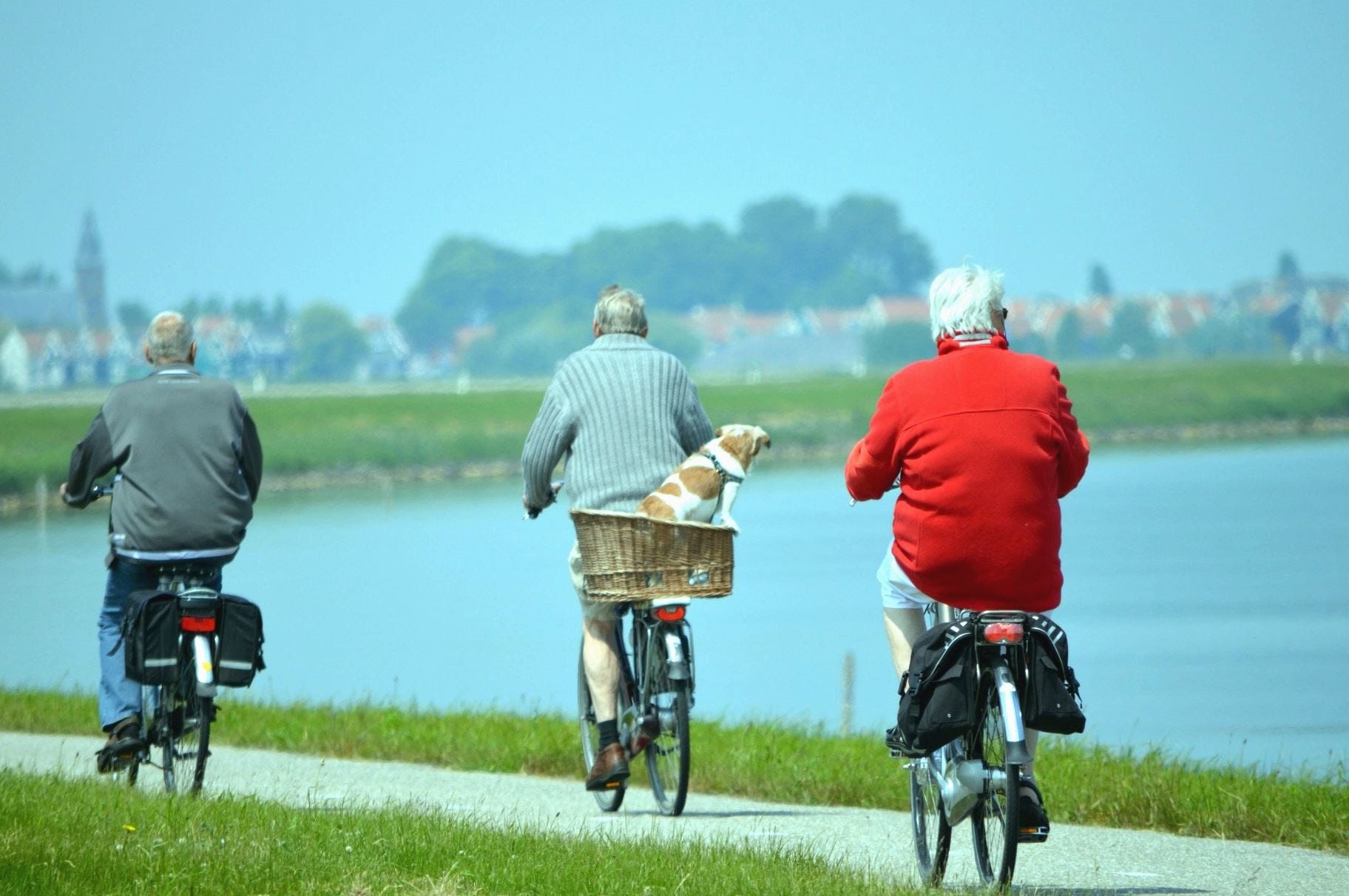
Although exemplified here with aging, this is not a marginal issue affecting only a small segment of society. People’s mobility needs and travel options can change throughout their lives for a variety of reasons. Physical or cognitive limitations resulting from injury, illness, pregnancy, or aging can affect mobility, but so can changes in employment, income, household composition, or place of residence. As a result, the transport options that are feasible, affordable, or attractive to individuals may change over time.
From this perspective, the central challenge for mobility planning is not deciding whether to prioritise cars, bicycles, public transport, or pedestrians in ideological terms. Rather, it is determining how different modes can complement one another within a coherent system that maximises accessibility, safety, and social inclusion. Moving beyond polarized debates creates space for a more constructive discussion: not which mode should win, but how the transport system can best serve society as a whole.
Ultimately, mobility policy should be judged not by its alignment with political identities or modal preferences, but by its ability to provide people with realistic, safe, and accessible travel options throughout their lives. Human circumstances change, mobility needs evolve, and no single mode can meet every need at every stage of life. A well-balanced mobility system therefore recognizes that transport modes complement rather than replace one another and that accessibility is a prerequisite for participation in society. If the purpose of mobility planning is to enable people to access opportunities, services, and social relationships throughout their lives, then moving beyond ideological polarization is not merely desirable; it is essential.
This article was written by Christian Ratering, PhD researcher at Radboud University and Senior Advisor Mobility Planning at the Municipality of Renkum, the Netherlands. Interested in writing or sponsoring an article? Write us an email with your pitch!
Show your support and join a global network of change agents. Become a member today!
Read next:
Anstey, K. J., Wood, J., Lord, S., & Walker, J. G. (2005). Cognitive, sensory and physical factors enabling driving safety in older adults. Clinical psychology review, 25(1), 45–65. https://doi.org/10.1016/j.cpr.2004.07.008
Henderson, J., Gulsrud, N.M (2019). Street Fights in Copenhagen: Bicycle and Car Politics in a Green Mobility City. Routledge. https://doi.org/10.4324/9780429444135.
Liddle, J., Scott, T., Hoyle, M., Salmon, A.J., Gustafsson, L., & Pachana, N.A. (2024). The mental health outcomes of driving cessation for older people: A systematic review. International Psychogeriatrics.
Meinders, M. J., Maas, B. R., Bloem, B. R., van Geluk, H., & Darweesh, S. K. L. (2025). Exploring the Impact of Parkinson’s Disease on Driving: A Population-Based Survey. Movement disorders clinical practice, 12(2), 177–184. https://doi.org/10.1002/mdc3.14275
Syrda, J. (2025). Sharing the road: Political ideologies and political party preference as drivers of public transport infrastructure support. Global Environmental Change 92, 103012. Science Direct. https://doi.org/10.1016/j.gloenvcha.2025.103012
Vreugdenhil, R., Williams, S. (2013). White Line Fever: A Sociotechnical Perspective on the Contested Implementation of an Urban Bike Lane Network.” Area 45 (3): 283–291.
Wild, K., Woodward, A., Field, A., & Macmillan, A. (2018). Beyond ‘bikelash’: engaging with community opposition to cycle lanes. Mobilities, 13(4), 505–519. https://doi.org/10.1080/17450101.2017.1408950
No posts
Comments
Nothing yet. Say the first thing.
Sign in to join the conversation.