
Today’s Big Tech and AI companies are often seen as fantastically innovative. However, after reading James Gleick’s book The Information, it’s easy to see that these firms are merely scaling up and marketing the hard work of hundreds of scientists and mathematicians who for centuries did painstaking foundational research.
Many excellent books describe the history of information technology, but Gleick’s book is valuable because it also explores the deeply rooted premises, values, and ethics that have motivated and guided humans into the information age.
The book starts by documenting how ancient humans used drumming and signal fires to communicate across long distances. Cave paintings allowed people to say something meaningful about their lives across centuries. He describes the use of stone, clay, papyrus, and parchment for writing down our ideas. Since ancient times, people have demonstrated an innate need to share our stories, to strengthen relationships, and to educate others through meaningful communication.
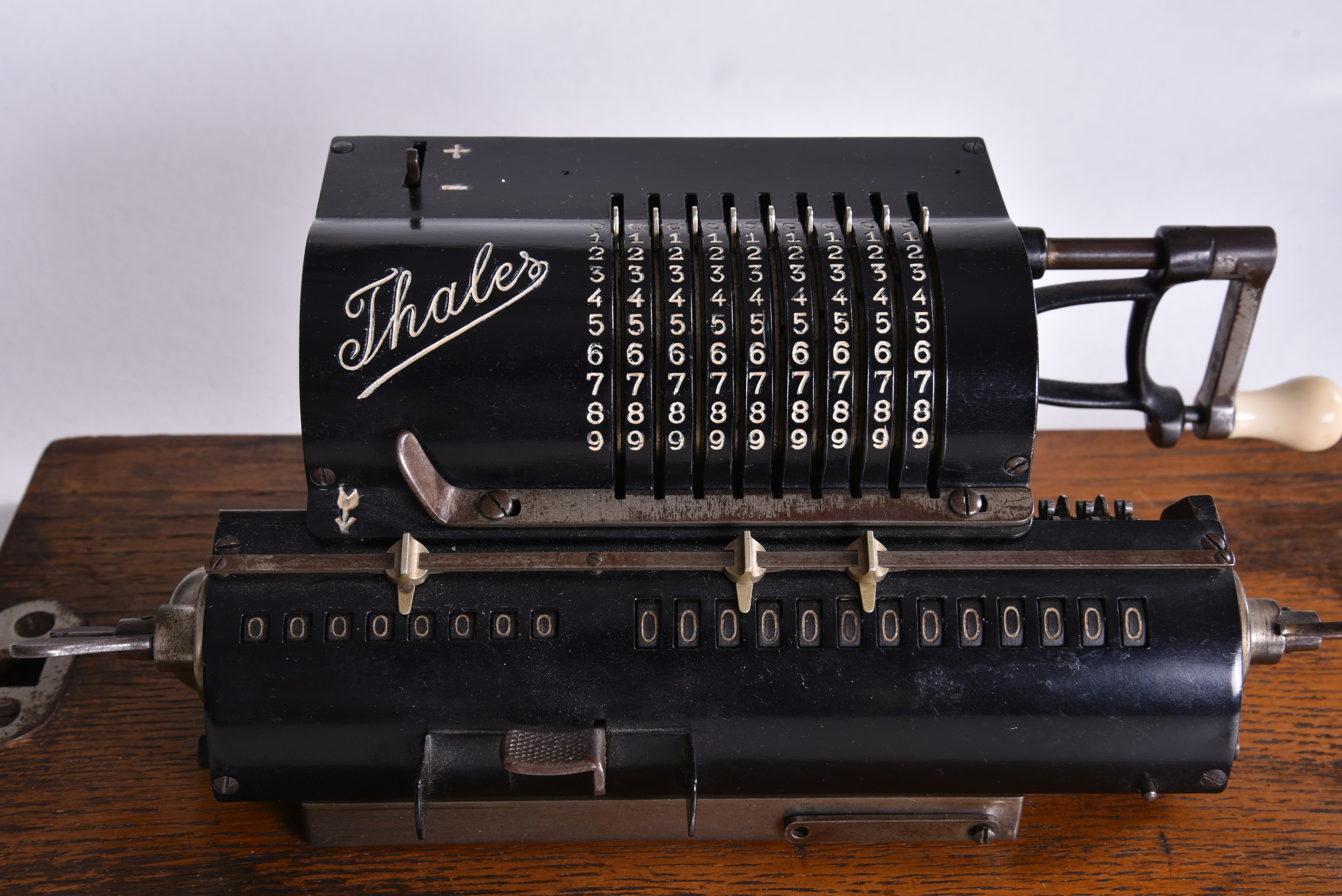
Today we are enamored with (or terrified by) AI. But computer-aided communication tools find their roots in the sixteenth- and seventeenth-century work of scientists and mathematicians, such as Blaise Pascal, who in 1642 developed what is believed to have been the first calculating machine. His goal was simple: to automate tedious calculations.
In the mid-1800s, British mathematician Charles Babbage shared that motivation and built a much larger and vastly more complex calculating machine than Pascal’s. His drawings of the most advanced version included twenty-five thousand parts and four-hundred square feet of paper (p. 101).
Those developments spawned new ideas among twentieth century scientists who worked on inventing a formal information theory. They included famous figures such as Alan Turing in England, Claude Shannon (MIT), Vannevar Bush (MIT), Norbert Weiner (MIT), and many others.
Gleick shows how these researchers focused their attention on quantifying and measuring information. To accomplish this, Shannon pushed aside concerns about the meaning of messages. He centered his work on developing a mathematical theory of communication; that is, on how to efficiently transmit data.
“The meaning of the message is generally irrelevant,” wrote Shannon. “What is significant is the difficulty in transmitting the message from one point to another” (p. 219).
Because this theory was mathematical and not bound by the subjective meaning of messages, it could be applied in nearly every field of research, including in biology and genetics. Scientists came to see that the human body is essentially a product of information and coding. DNA contains the “literature” of our physical designs.
However, as Gleick shows, efforts to focus solely on the mathematical aspects of data transmission soon stirred up significant philosophical questions. Many researchers realized they needed to think carefully about meaning, not just beeps, bits, and signals.
MIT scientist Norbert Weiner coined the term cybernetics to describe a new field of research “that would synthesize the study of communication and control, and the study of human and machine” (p. 235). He didn’t abandon the math, but his questions inevitably required more emphasis on philosophy.
“Cybernetics,” Weiner wrote in his memoirs, “is a new interpretation of man, of man’s knowledge of the universe, and of society” (p. 238).
This “new interpretation of man” was often mechanistic, leading people to compare humans with computers. Computers employ electrical relays just as the brain has neurons connected by synapses. Computers need memory as do brains. These truths, however, often had the effect of ruling out other aspects of human nature.
“The idea of a machine thinking is by no means repugnant to all of us,” said Shannon. “In fact, I find the converse idea, that the human brain may itself be a machine which could be duplicated functionally with inanimate objects, quite attractive [and more useful than] hypothecating intangible and unreachable ‘vital forces,’ ‘souls,’ and the like” (p. 256).
More recently, as Gleick shows, scientists have realized that if all biological life is the product of information, it is logical to ask whether and how the genetic code had been infused with meaning—a biological “literature.”
“Scientists of the early twentieth century … [discovered that] purposeful processes seemed to operate at tiny scales (e.g., at the cellular level). Who or what was in control? Life itself seemed an organizing force,” write’s Gleick (pp. 277-278).
Scientist Douglas Hofstadter also asked difficult philosophical questions. “If there is a code, then who invented it? What kinds of messages are written in it? Who writes them? Who reads them?” (p. 296).
So, whereas Shannon’s emphasis was on the efficiency of data transmission, many other thinkers turned their attention to the ethics and philosophy of communication—a broader consideration about human relationships in a healthy society.
Gleick ends his book by pointing out a grand irony of this long and fascinating history of communication. He reminds us that we call ourselves homo sapiens: beings with knowledge. However, we face a flood of information that flows through algorithmic digital platforms. This makes it increasingly difficult to discern what is fake or real, true or false.
“Who could love a theory that gives false statements as much value as true statements?” wrote Gleick in 2011. “[Information theory] was mechanistic. It was desiccated. A pessimist, looking backward, might call it a harbinger of a soulless internet at its worst” (p. 417).
Gleick also quotes Jean-Pierre Dupuy, a historian of cybernetics. “The more we ‘communicate’ the way we do, the more we create a hellish world … A paradox is at work here: Ours is a world about which we pretend to have more and more information but which seems to us increasingly devoid of meaning” (p. 417).
Quote to Ponder
“If we allow ourselves to be convinced by a thirty-second ad to vote for or against a particular candidate, then we are not fulfilling our job as citizens. Good citizenship requires us to base our votes and opinions on trustworthy, thoughtful, factual information.” — Dr. Deborah Clark Vance, in the Upriver Press book Overcoming Information Chaos.
Comments
Nothing yet. Say the first thing.
Sign in to join the conversation.