
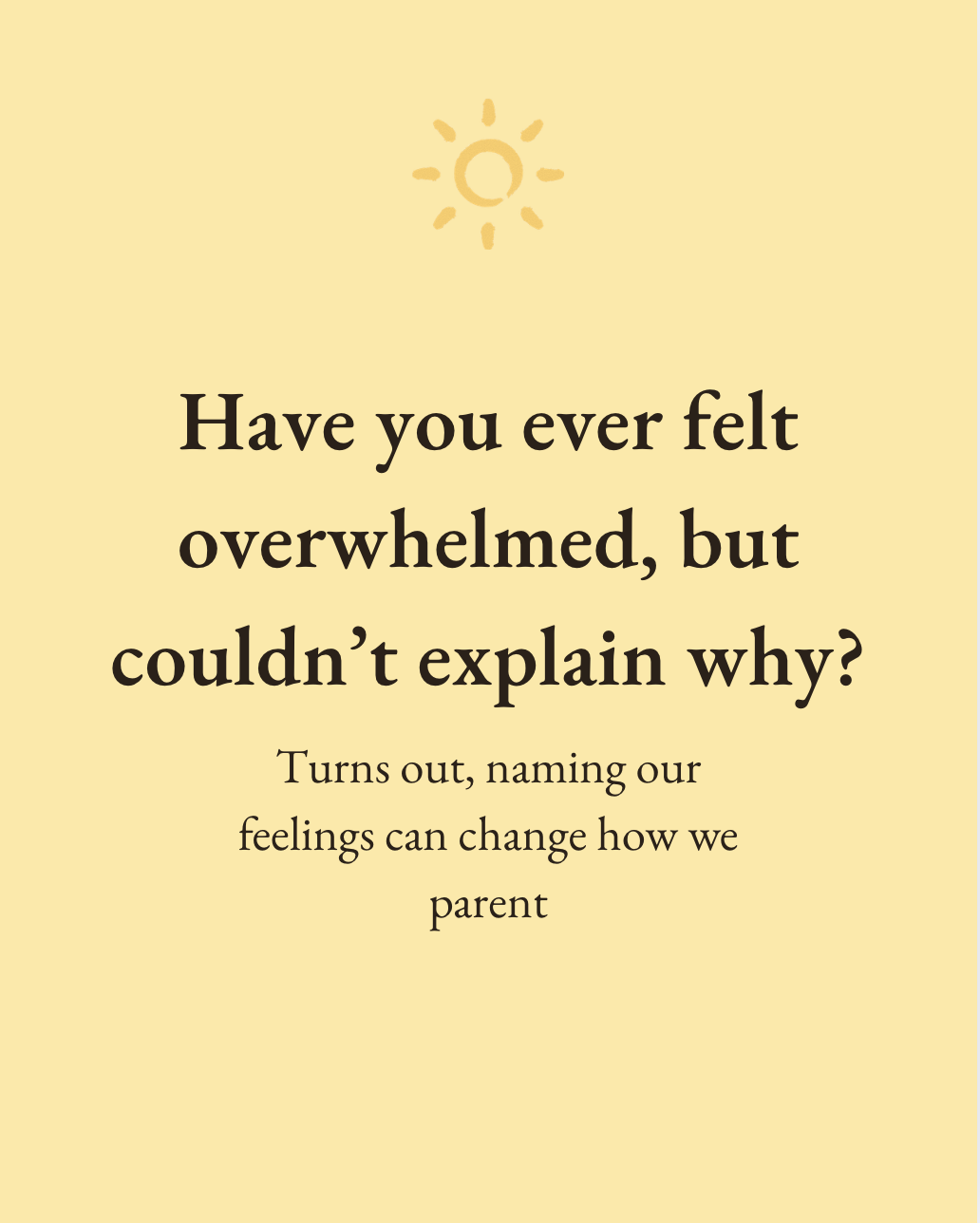
Many parents live in a narrow emotional vocabulary. We cycle through words like *tired*, *stressed*, or *fine*—not because that’s all we feel, but because that’s all we’ve learned to name.
In Atlas of the Heart, Brené Brown offers a powerful premise: language shapes experience. When we can’t name what we’re feeling, we can’t make sense of it, communicate it, or move through it with intention.
When emotions remain vague, they often come out sideways—as irritability, withdrawal, or self-criticism. We may think we’re angry when we’re actually disappointed. Burnt out when we’re grieving. Numb when we’re overwhelmed.
Naming emotions doesn’t make parenting easier—but it makes it clearer. Emotional granularity gives us more agency. When we can say “I’m resentful” instead of “I’m mad,” or “I’m lonely” instead of “I’m overwhelmed,” we move from reaction to understanding.
This clarity doesn’t just help us. It models emotional fluency for our children. Kids don’t learn emotional regulation from calm parents—they learn it from parents who can name and navigate their inner world.
You don’t need to label every feeling perfectly. You just need to be curious instead of dismissive.
Gentle practices to try:
- Replace “I’m fine” with one more specific word
- Notice what emotion lives under frustration
- Name feelings aloud without fixing them
- Treat emotional language as information, not weakness
P.S. Using the language change, I realised today I may not be as much overwhelmed by the things going on in the house and the chores, as much as I am bored of being indoors and need a breath of fresh air. I couldn’t actually leave because I have to work but opened a window. That must still count…!
What language are you using when describing how you feel? What’s your strongest feeling today? I found the change of framing as a little revelation, and would love to hear how other parents are feeling about this!
No posts
Comments
Nothing yet. Say the first thing.
Sign in to join the conversation.