
Don’t get them wet.
Keep out of bright light.
Never feed after midnight.
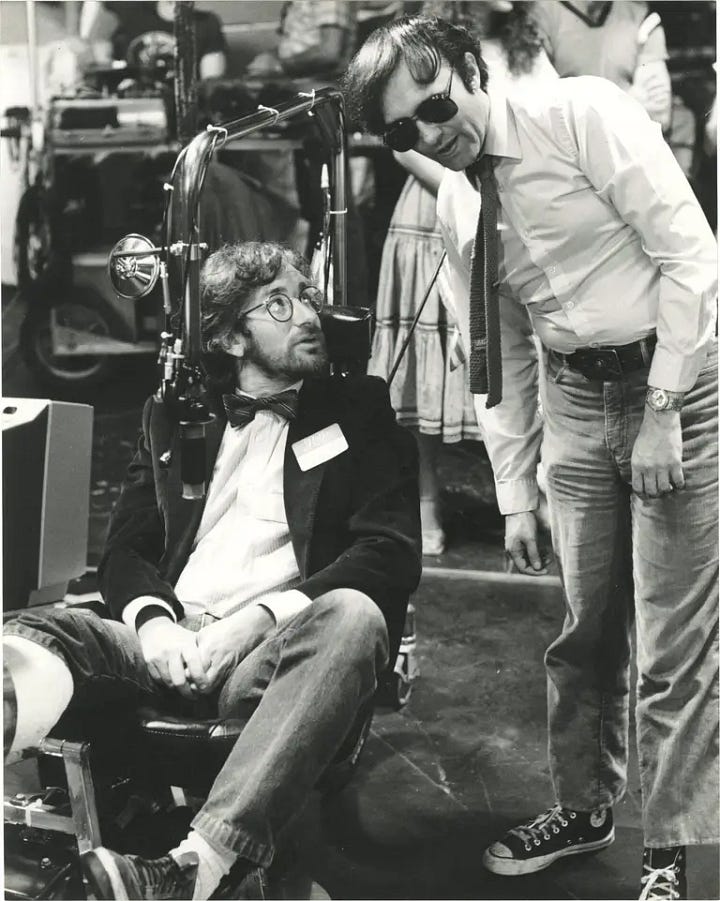
One of the most original things I’ve come across in many years. — Steven Spielberg, on why he bought the script for Gremlins
Thanks for reading Before You Watch! This post is public so feel free to share it.
Columbus wrote the first draft while broke and living above a Manhattan porn theater during his NYU years, and the Gremlins were based on mice. He’s described lying awake listening to what sounded like a platoon of them skittering through the walls at night, which became the kernel for creatures that invade a cozy house after dark.
That original script was brutal. The gremlins ate the family dog, killed the neighbor and decapitated Billy’s mother and threw her head down the stairs. It was in many ways unproduceable and written as a spec, to show Columbus could write. However once Spielberg read it that all changed.
Tim Burton’s GREMLINS
Tim Burton was in serious contention to direct, riding the buzz from his short film Frankenweenie. Spielberg liked him for it. But Burton hadn't directed a feature yet, and that worried Spielberg who went twith Dante (who Spielberg had previously worked with on Twilight Zone: The Movie). Burton went on to make Pee-wee's Big Adventure.
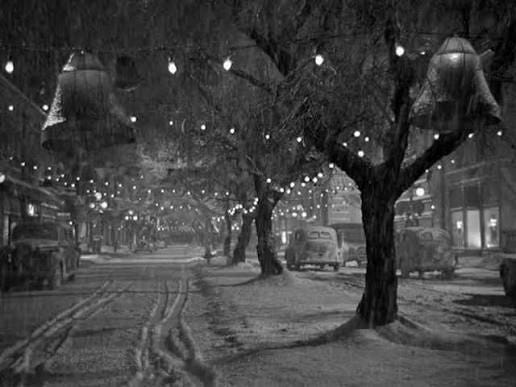
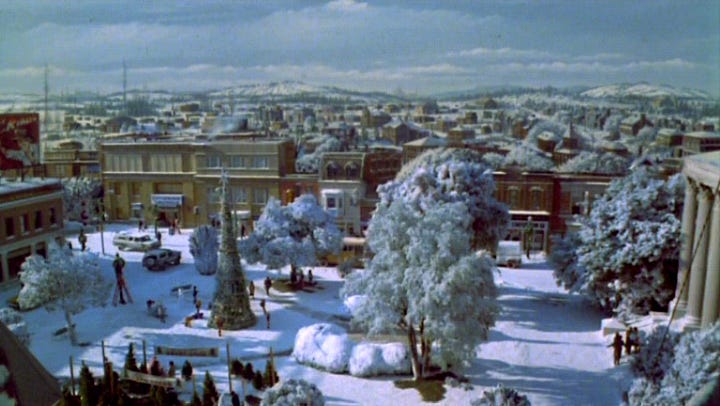
Joe Dante made a deliberate choice, no real locations. Kingston Falls was built on a studio backlot, because Dante didn’t think the puppets would read as real anywhere that was real. He modeled the town directly on Bedford Falls from It’s a Wonderful Life.
Kingston Falls is George Bailey’s nightmare come to life. It is a world where he was never born, and there is no one to save the town from the evil powerbroker who wants to own it. There’s no one to protect people like the Peltzers and the other struggling families
Dante has described the premise as cartoon anarchy breaking into a Capra town. Kingston Falls as America’s idealized postcard of itself, and the Gremlins as everything that postcard is suppressing. You can see an Homage to It’s A wonderful Life in Gremlins and Bedford Falls becomes even more iconic as it becomes Hill Valley the next year for ever locking it in a 1980’s era Americana.
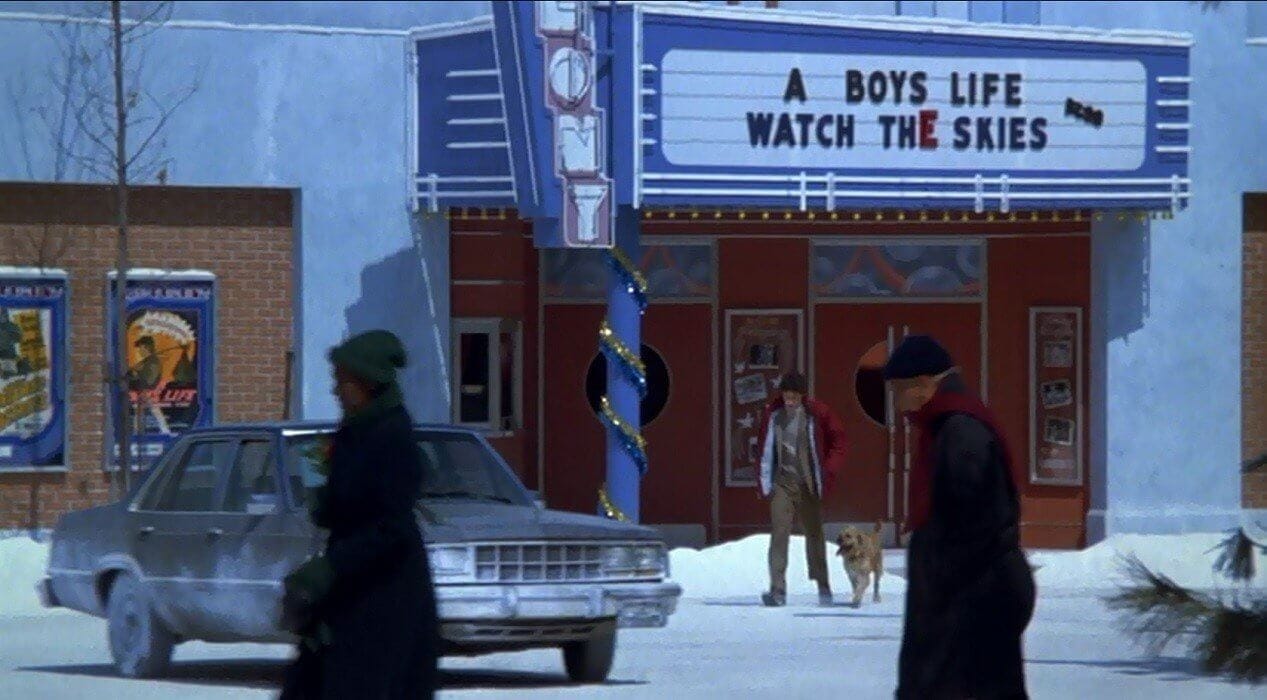
The Kingston Falls movie theater marquee advertises two titles: A Boy’s Life and Watch the Skies. One was the working title of E.T. and the other was Spielberg’s 1st film. The actor playing local TV reporter Lew Landers had played a reporter with the exact same name in Dante’s The Howling (1981).
Early drafts had Gizmo transform into Stripe. Spielberg killed that idea. He pushed them to make it a boy and his gremlin story running underneath the horror-comedy.
He also made a second, smaller fix at the very end of the film. In the original cut, Billy worked with Gizmo and pulled up a second blind alongside Gizmo to expose Stripe to sunlight. Spielberg had it re-edited so Gizmo alone gets the win, and becomes the hero.
Frank Welker, who voiced the villainous Stripe, talked his friend Howie Mandel into auditioning for Gizmo, it became Mandel’s first voiceover job. Michael Winslow, already known for the sound-effects bit in the Police Academy movies, helped fill out the gremlin chatter. Most of what the creatures say wasn’t scripted at all; the dialogue was largely ad-libbed, which had the side benefit of making the film easier to dub for international markets.
Gizmo’s one moment of actual singing didn’t come from Mandel, Jerry Goldsmith wrote the tune and brought in a 13-year-old girl from his own synagogue to record it.
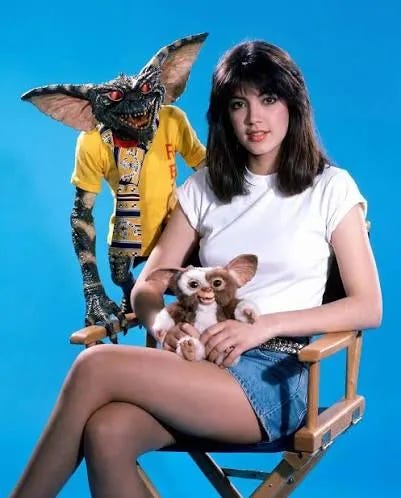
Emilio Estevez and Judd Nelson were both in the running to play Billy before the part went to Zach Galligan, and Pat Harrington Jr. (Schneider from One Day at a Time) was even floated for Billy’s dad before Hoyt Axton was cast. But the studio’s real hesitation was around Kate. Phoebe Cates’s topless scene in Fast Times at Ridgemont High made executives nervous about putting her in a family film..
What settled it was chemistry, Galligan and Cates won the role because of how they played off each other in the room together during audition.
Kate’s monologue about her father dying in the chimney dressed as Santa nearly got cut. Both Spielberg and some Warner Bros. executives wanted it gone from the rough cut because nobody could agree if it was supposed to be sad or funny. Dante held the line, arguing that exact confusion was the whole point of the movie. It has indeed become an iconic moment in the film.
Roger Ebert singled the scene out in his review, placing it in the tradition of 1950s sick jokes.
The movie exploits every trick in the monster-movie book. We have scenes where monsters pop up in the foreground, and others where they stalk us in the background, and others when they drop into the frame and scare the Shinola out of everybody. And the movie itself turns nasty, especially in a scene involving a monster that gets slammed in a microwave oven, and another one where a wide-eyed teenage girl (Phoebe Cates) explains why she hates Christmas. Her story is in the great tradition of 1950s sick jokes, and as for the microwave scene, I had a queasy feeling that before long we’d be reading newspaper stories about kids who went home and tried the same thing with the family cat. - Roger Ebert’s Review of Gremlins
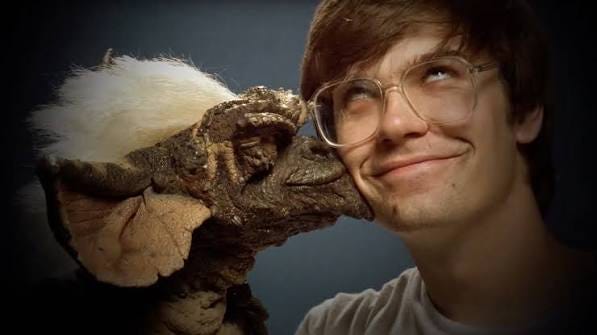
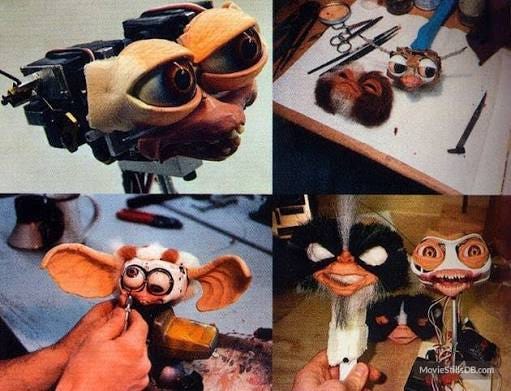
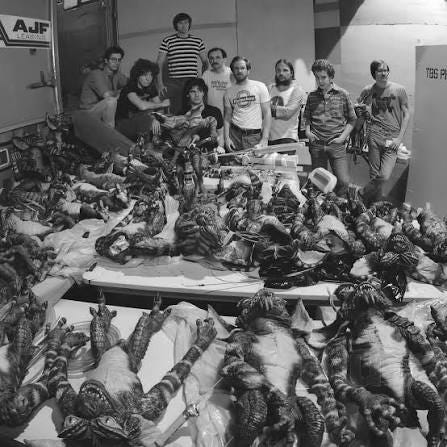
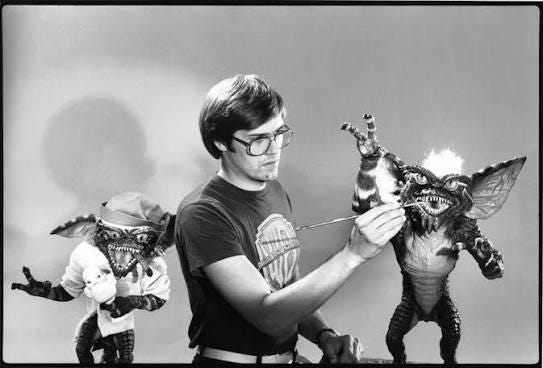
There was no CGI in 1984. Chris Walas and his team built dozens of animatronic Mogwai and gremlins, each with its own moving parts, and those puppets broke constantly, every shooting in addition o shooting they were being repaired. Walas has talked about staying awake for 40 straight hours just to get one puppet functional.
Dante has called the shoot “punishing” especially scenes with dozens of puppets performing gags simultaneously.
Walas ued balloons, which powered both the gag where a new Mogwai pops out of Gizmo and the gremlin’s messy exit from the microwave.
Kate serving drinks to a room full of partying gremlins was so logistically impossible that Dante halted production entirely to figure out how to physically stage it. Finnell remembers it as the turning point where the sheer complexity of that many puppets performing gags at once forced a full rewrite of how the sequence would even be blocked.
They brought Phoebe Cates back for a dedicated week just to shoot the bar material, then used rough cut test screenings to figure out which gags actually landed with an audience before locking the final edit.
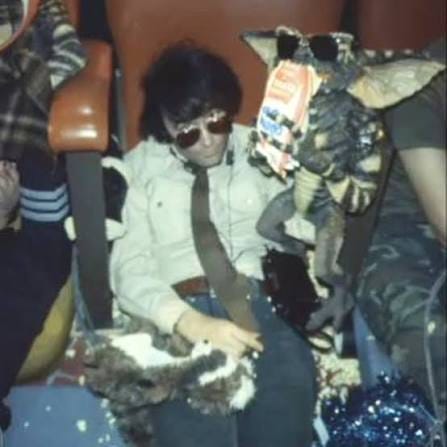
Dante has said the theater explosion, was the most nerve-wracking day of the shoot. Safety oversight in 1984 amounted to an explosives expert telling him, essentially, “we packed it pretty good,” and leaving it there.
“We’ve packed it pretty good.” That’s the whole risk assessment.The explosives expert, per Joe Dante
The blast was strong enough to blow the theater doors clean off — you can see it in the final cut and shattered windows on a building a mile away, on the actual Universal lot.
Dante said when it worked, it beat anything early CGI could have offered.
While the Gremlins were hard, the dog proved more problematic, Barney, Billy’s mutt named Mushroom, refused to actually follow Zach Galligan on camera, so the crew rigged him to an invisible monofilament line to fake the walk.
Gremlins was originally slated for a Christmas release until Warner Bros. realized it had nothing to counterprogram against Ghostbusters and Indiana Jones and the Temple of Doom that summer, and moved the date up. It still finished 1984 as the fourth highest-grossing film of the year, behind Beverly Hills Cop, Ghostbusters, and Temple of Doom.
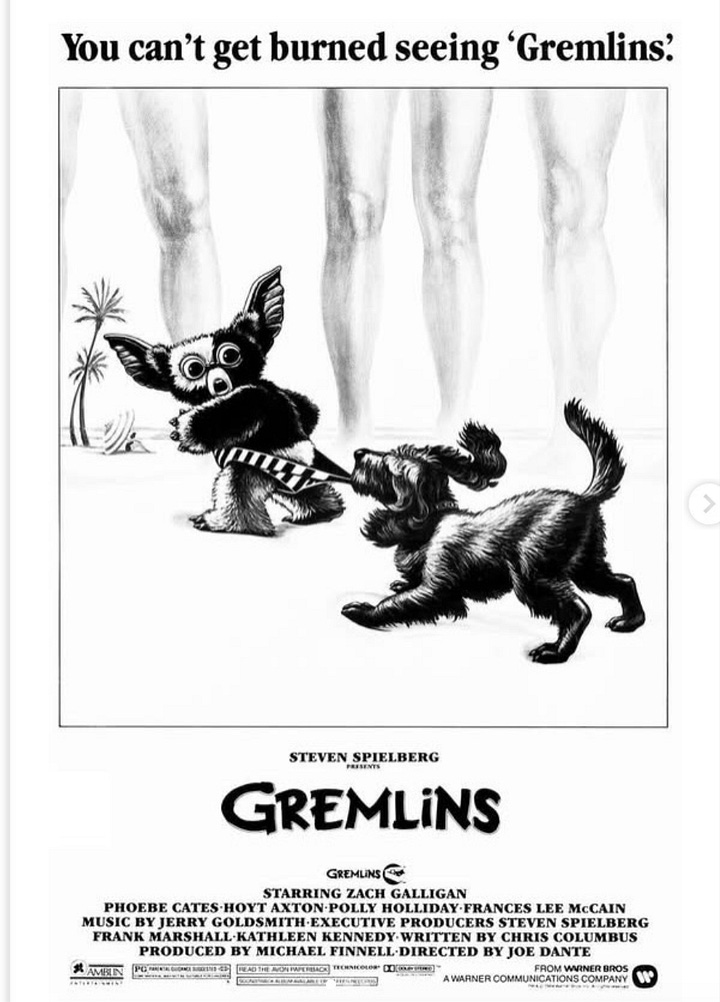
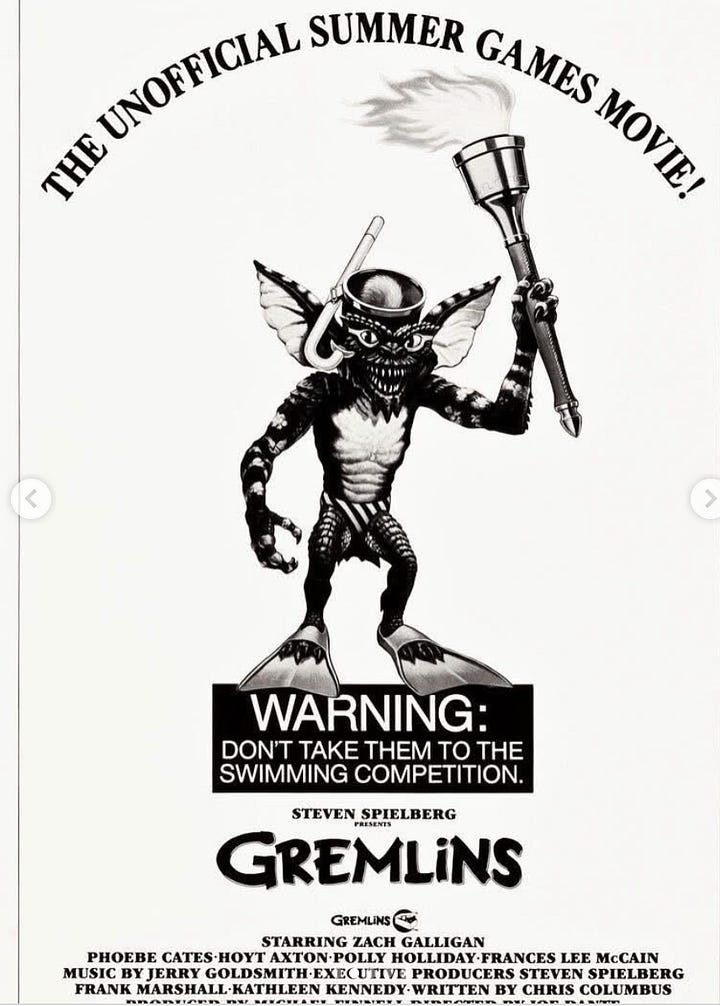
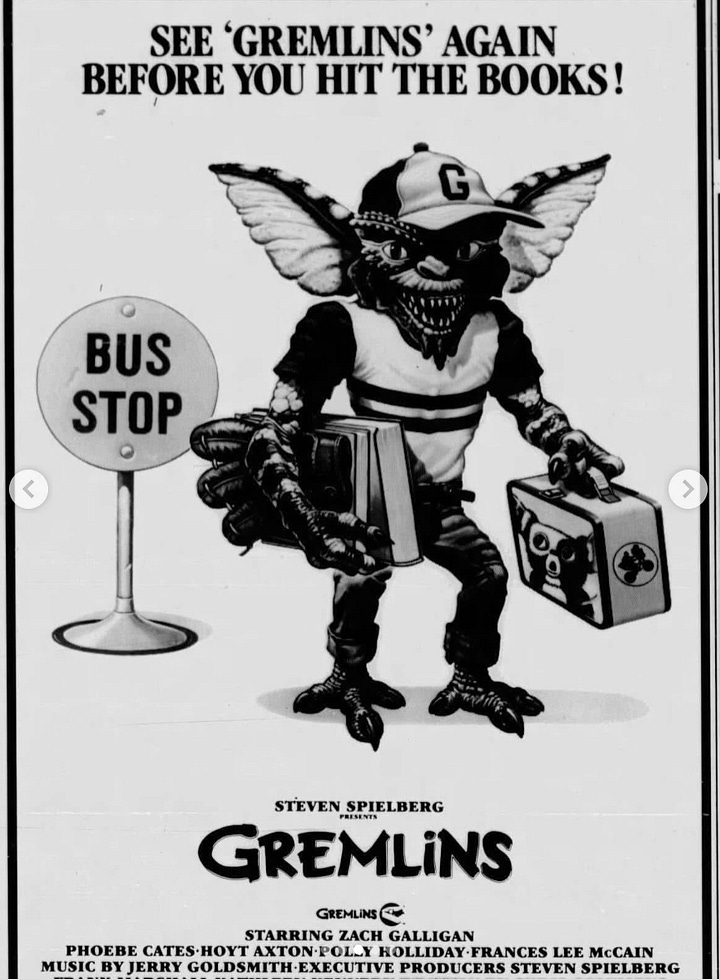
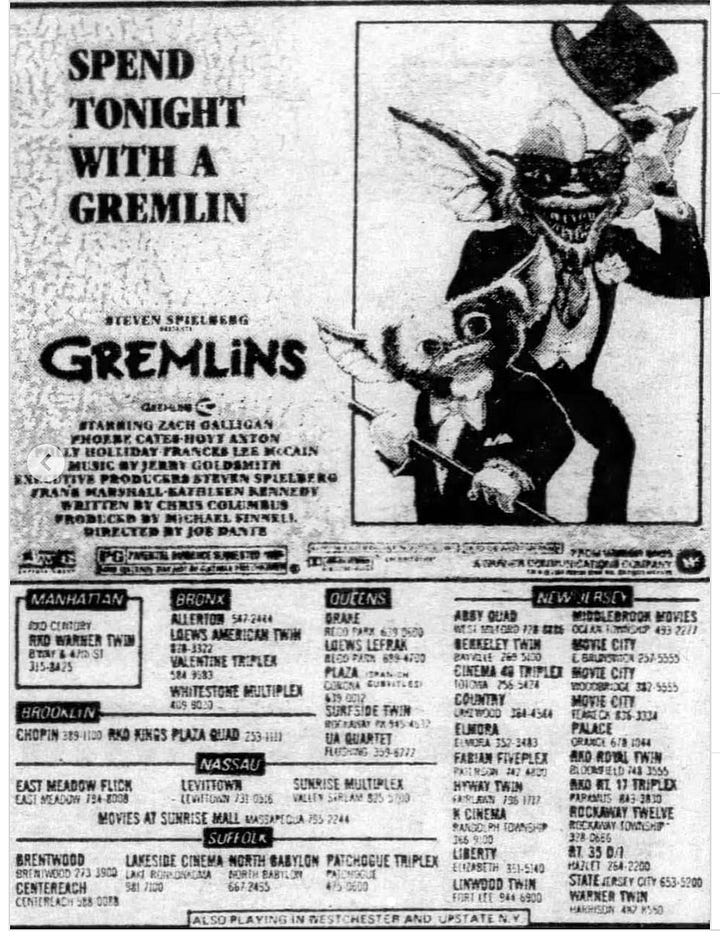
Gremlins and Temple of Doom released within weeks of each other that summer, both rated PG, both criticized hard for being too intense for the rating. Spielberg, who directed one and executive produced the other, personally suggested the MPAA create something between PG and R. Red Dawn became the first film released under the new PG-13 rating that August
Are you following us on Facebook?
Want Paul to sign and personalize a book just for you? It can happen
No posts
Comments
Nothing yet. Say the first thing.
Sign in to join the conversation.