
Last Friday we released Sofie Birch and Antonina Nowacka’s second album, Hiraeth.
We first brought Sofie and Antonina together for Ephemera Festival back in 2021, then again for Unsound. Both concerts were largely improvised, but revealed how closely their spirits are aligned, musically and otherwise. It’s been a joy to witness their collaboration – and friendship – blossom over the years.
I listened to the calming music on the plane on the way to Unsound Adelaide – a trip that takes an entire day – skimming the surface of dream and consciousness as the hours passed and we flew over countries whose airspace was closed just a few weeks ago. I had a layover in Qatar, and drank a coffee at the airport, wondering about the meaning of putting on festivals – and releasing music – when we live in a reality where flight paths are routinely re-routed to avoid war. Given the extreme times in which we live, what’s the point?
But then, in Adelaide, I felt the manifestation of the Unsound 2025 WEB theme, the way that the festival and its music can bring together artists and audiences. We need music more than ever, as a place of escape, or respite – but also as a form of protest, as clearly shown in recent weeks in respect to the genocide in Gaza.
These feelings also arose when I read of the sad news of Keith McIvor and his illness. Keith played at Unsound three times, first as part of Optimo, then as JD Twitch presenting a legendary set mixing tracks by Muslimgauze, whose massive discography is a deeply political exploration of conflict in the Middle East. You can listen to it here:
Finally, Keith played a lengthy Against Fascism Trax set in Hotel Forum’s Kitchen in 2019, again as JD Twitch, describing it as “an experiment in whether music can convey an intent non verbally”. Starting the set and threaded throughout is the Italian protest song Bella Ciao, which originated in the late 19th century as a working-class anthem and was adopted as a hymn of the anti-fascist resistance in the 1940s. What could feel more relevant in the present moment? Listen to it here:
When the world feels so fucked, one can feel like giving up, but that makes it more important that we continue to create a variety of spaces, ideas and music that exist in opposition to reactionary forces. We intend to get into this in depth at Unsound Kraków this year via our discourse program, taking place alongside the music – and we hope to see you there.
For now, enter the world of Hiraeth…
PS - If you would like to support Keith and his care, you can do so here.
Mat Schulz, Unsound Artistic Director
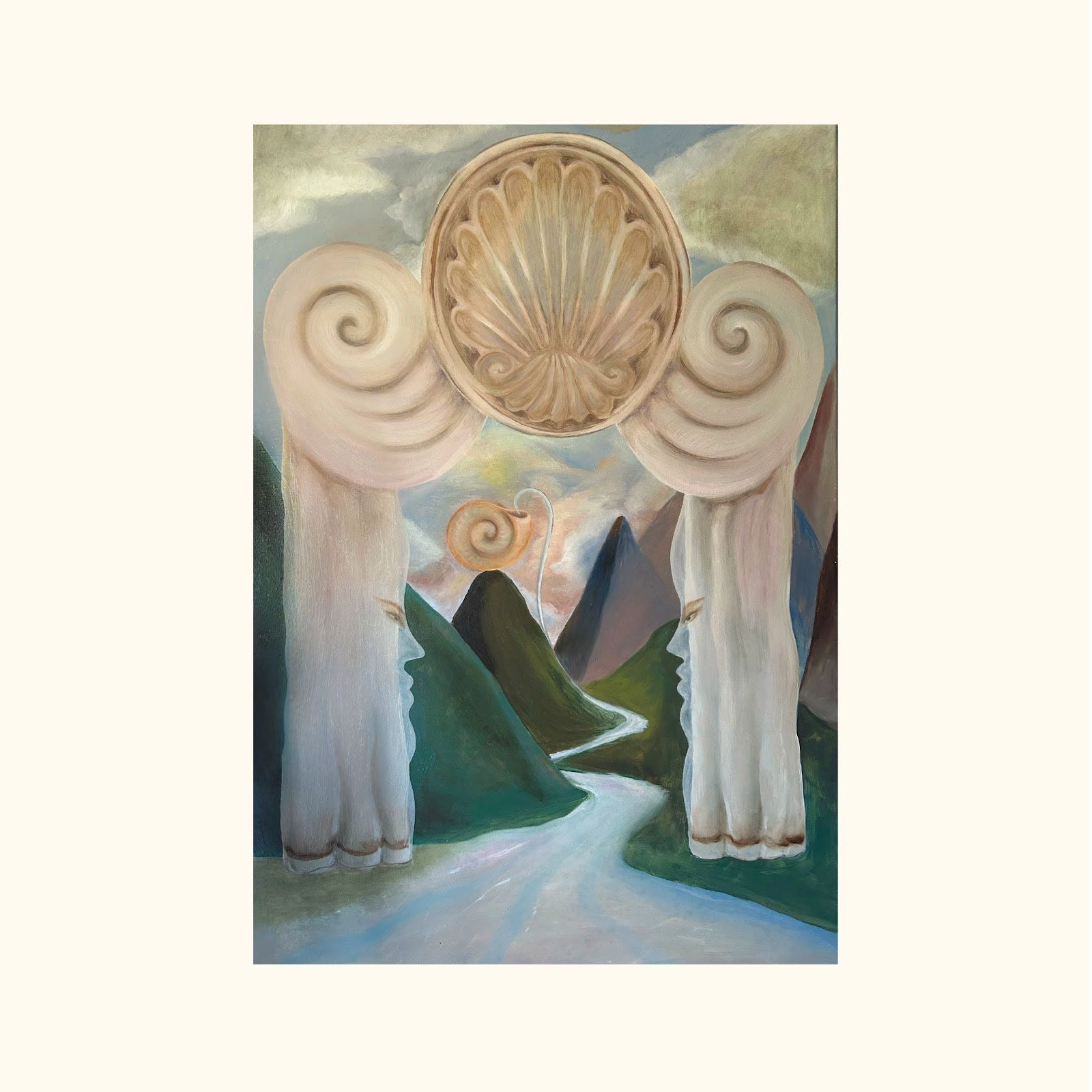
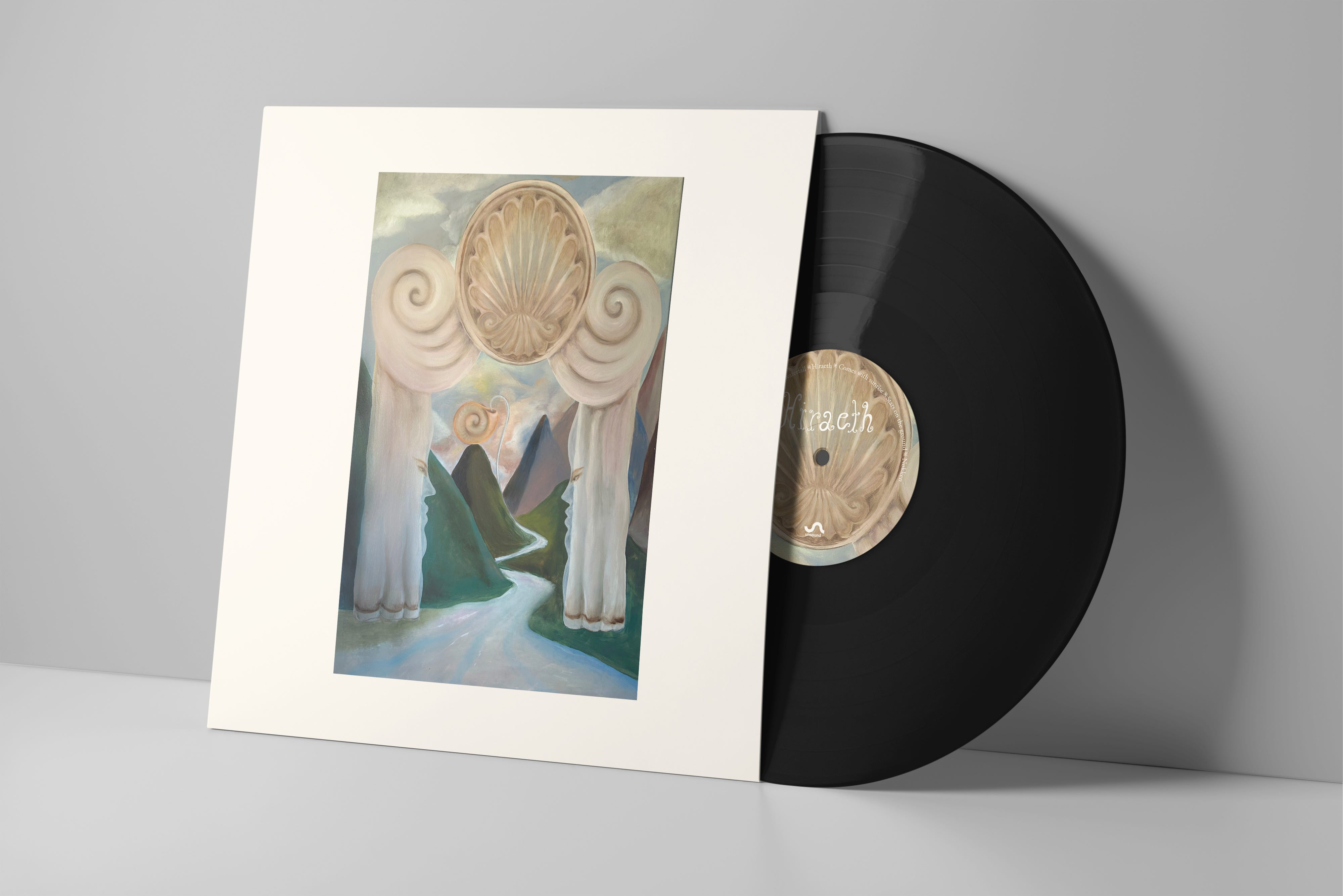
The second album by Sofie Birch and Antonina Nowacka was released by the Unsound label last Friday, and has received glowing reviews. Philip Sherburne wrote in Pitchfork that the music “drifts even deeper into the bewitching universe they conjured on their last album… a testament that there are realms beyond our ordinary perception”.
Hiraeth was recorded in the mountains of Sokołowsko, an idyllic village nestled in the verdant hills of Southern Poland, close to the Czech border. Sokołowsko surrounds a large ruined sanatorium that’s rumored to have inspired Thomas Mann’s 1924 novel The Magic Mountain, and has long been a magnet for artists. The two took the opportunity to rethink their approach completely, arriving with just a guitar, a zither and a portable Nagra reel-to-reel machine. Recording directly to tape, they sketched out ideas with just their voices and instruments, reflecting their surroundings without being distracted or mediated by modern technology.
There’s no direct English translation for the word “hiraeth”. In the Welsh language, it describes a form of longing for an intangible something, somewhere or someone that no longer exists. Birch and Nowacka draw on the concept to guide their second collaborative album, a suite of vulnerable, open-hearted improvisations and reflections that attempt to grasp an image of the past that’s chimeric, dissolving almost as soon as it materializes. The duo’s process follows the same distant beacon; unlike Languoria, their critically acclaimed debut, Hiraeth is, at heart, an acoustic record, informed by in-person improvisations with voices and string instruments that gesture to an era before computers, AI and DAWs. It’s just as lush, but Hiraeth is warmer and more muted than its predecessor.
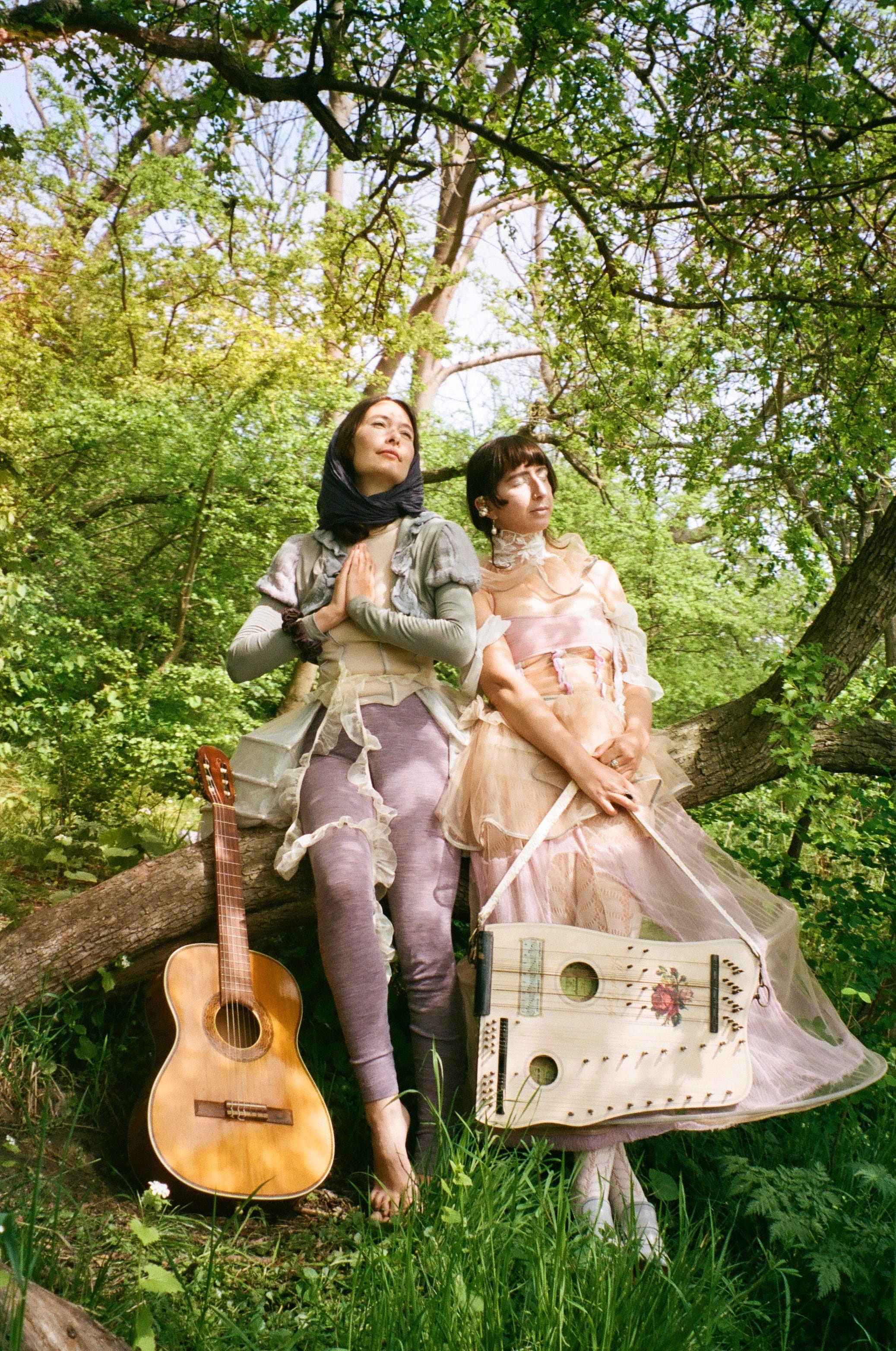
“We wanted to get away from screens as much as possible,” says Birch, “to bring to the world something vulnerable and honest. Without advance preparation, every day we went out into the open air, finding places to sit, during sunset or the midday sun. We discovered new tunings on our instruments, picked up a melody, and started the machine, playing over and over till we got a take.” In the autumn, they met again in a Copenhagen studio, sparingly and carefully layering old synths and organs to add more depth without muddying the mix.
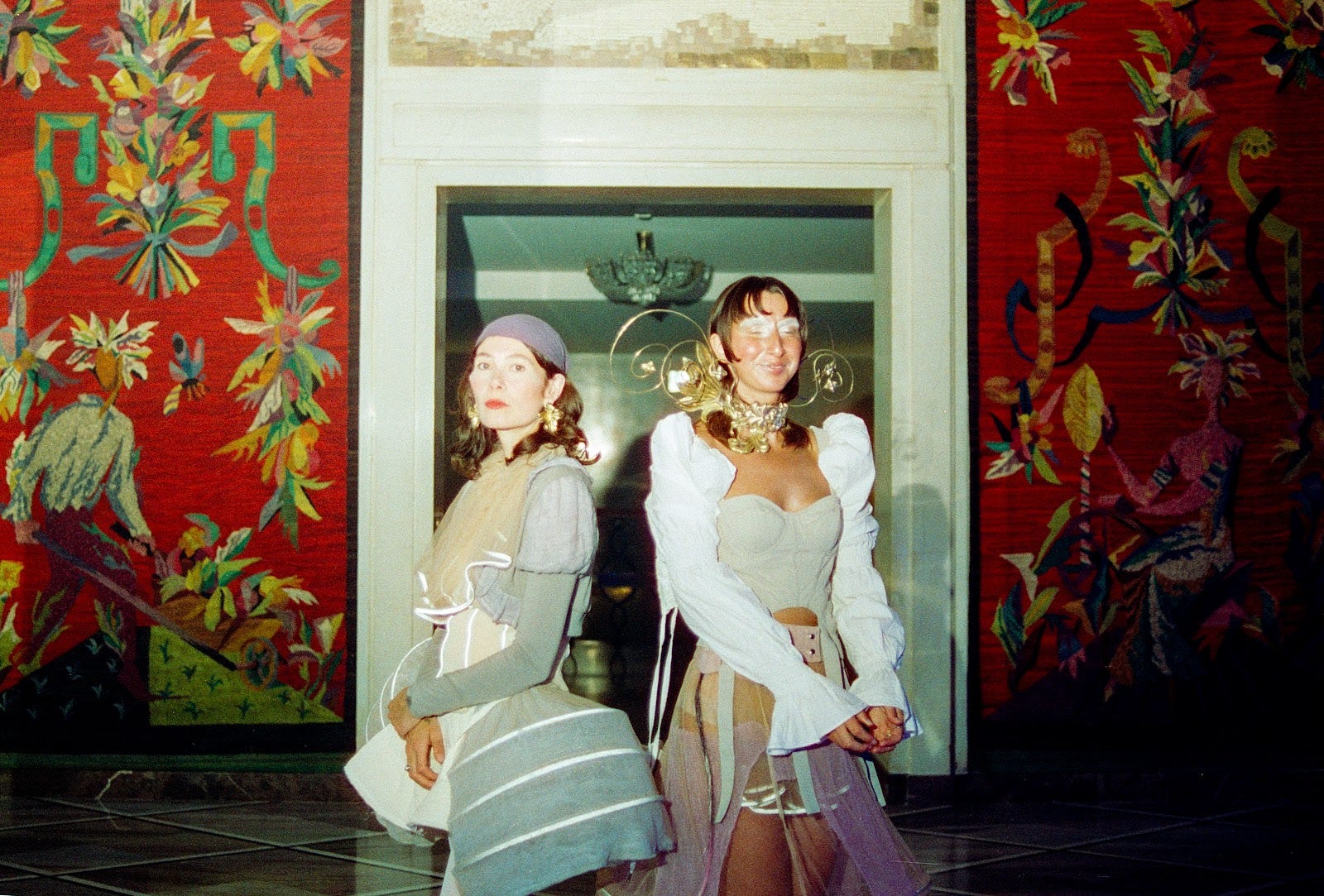
Both Nowacka and Birch sing throughout, their voices threading the acoustic instruments and tangling with each other, almost becoming one. But it’s the environment of Sokołowsko, “the birds and the light, even the wind playing against the harps,” that’s woven into the music’s lining. Affected by time spent meditating and in nature, as well as the fact that Birch was pregnant whilst recording, the album feels alive and remarkably present. Even the sound quality of the tape machine gives Hiraeth a tactile, organic quality, as Nowacka puts it, “like being in a warm bath.”
They still have the raw recordings from Sokołowsko on old reels, physical souvenirs of their time spent making music in a “habitat for intuitive songs, a little ecosystem, alive and spirited.” The outmoded gear and remote setting helped the duo disengage from the modern world for a few moments and imagine an existence that’s been lost to time and nominal progress. With digital technology receding into the background, Nowacka and Birch had space to make “intuitive connections with frequencies and people,” as Birch explains. Hiraeth is a testament not to nostalgia, but to the power of kinship.
You can stream or download the album, and you can order the vinyl on Bandcamp or in your favourite store.
Finally, you can read a great interview with Antonina via the culture.pl website, in which she discusses Hiraeth, and her practise more generally.
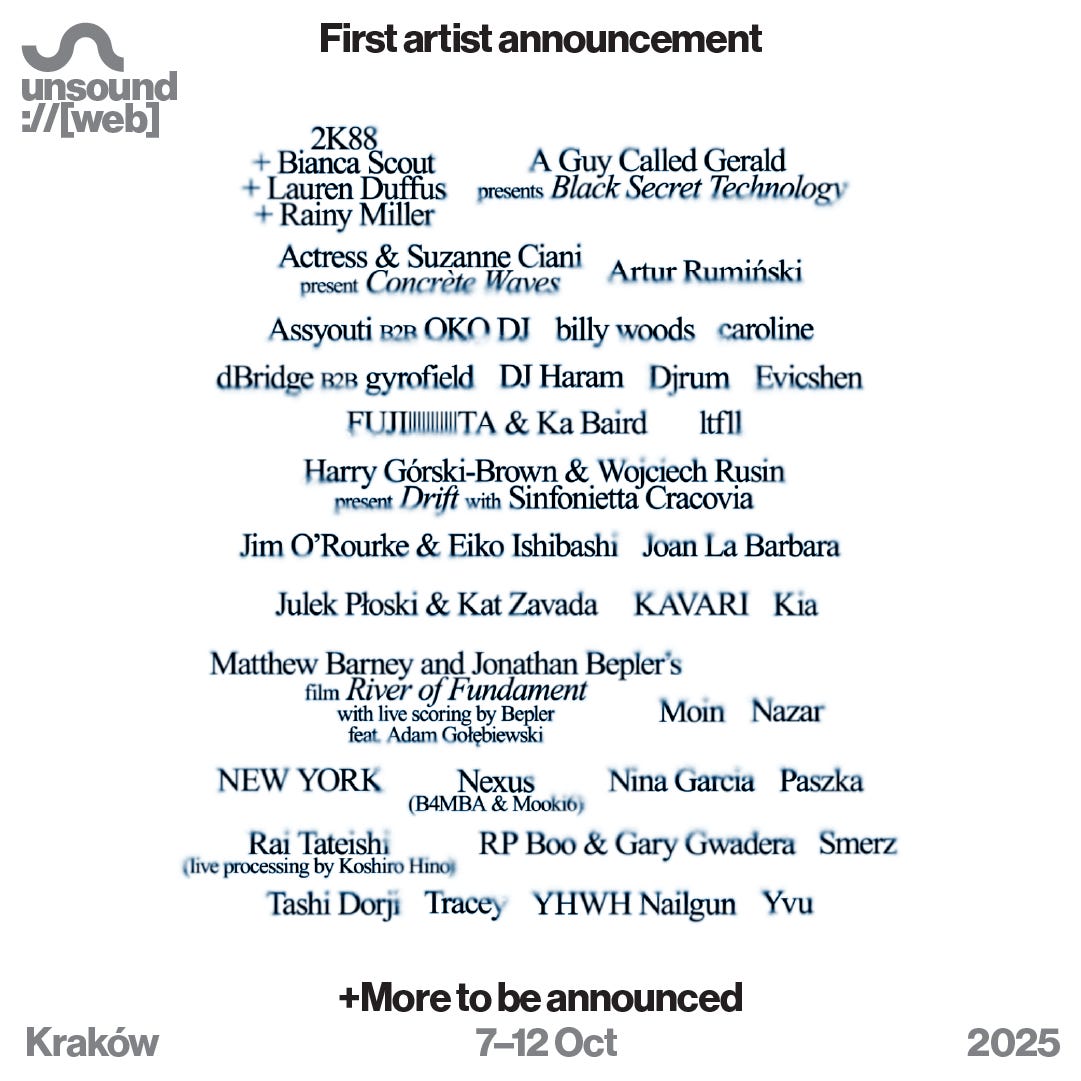
Unsound Kraków takes place in the first part of October. Weekly Passes are now sold out, but you can purchase one of the last remaining Long Weekend Passes here, which give you access to the festival from Thursday October 9th - 12th. You can read about the lineup here.
Note that our next announcement is coming at the start of August, when we will sell individual tickets to all events, as well as Unsound Club Passes.
Also, stand by for news of Unsound Osaka – taking place at from September 5th - 7th.
Comments
Nothing yet. Say the first thing.
Sign in to join the conversation.