
Japanese Americans have played a far more significant role in St. Louis history than many people realize. Although they have always represented a small percentage of the region’s population, their legacy can be traced across more than a century of local history, from the 1904 World’s Fair to the aftermath of World War II and to the cultural programs, landmarks, and architecture that still exist today.
Join us on Thursday, July 16, at Leviathan Books, 3211 S. Grand Blvd., for the next Unseen STL History Talk with Robin A. Hattori. Doors open at 6:30 p.m., the talk begins at 7 p.m., and cover is $5.
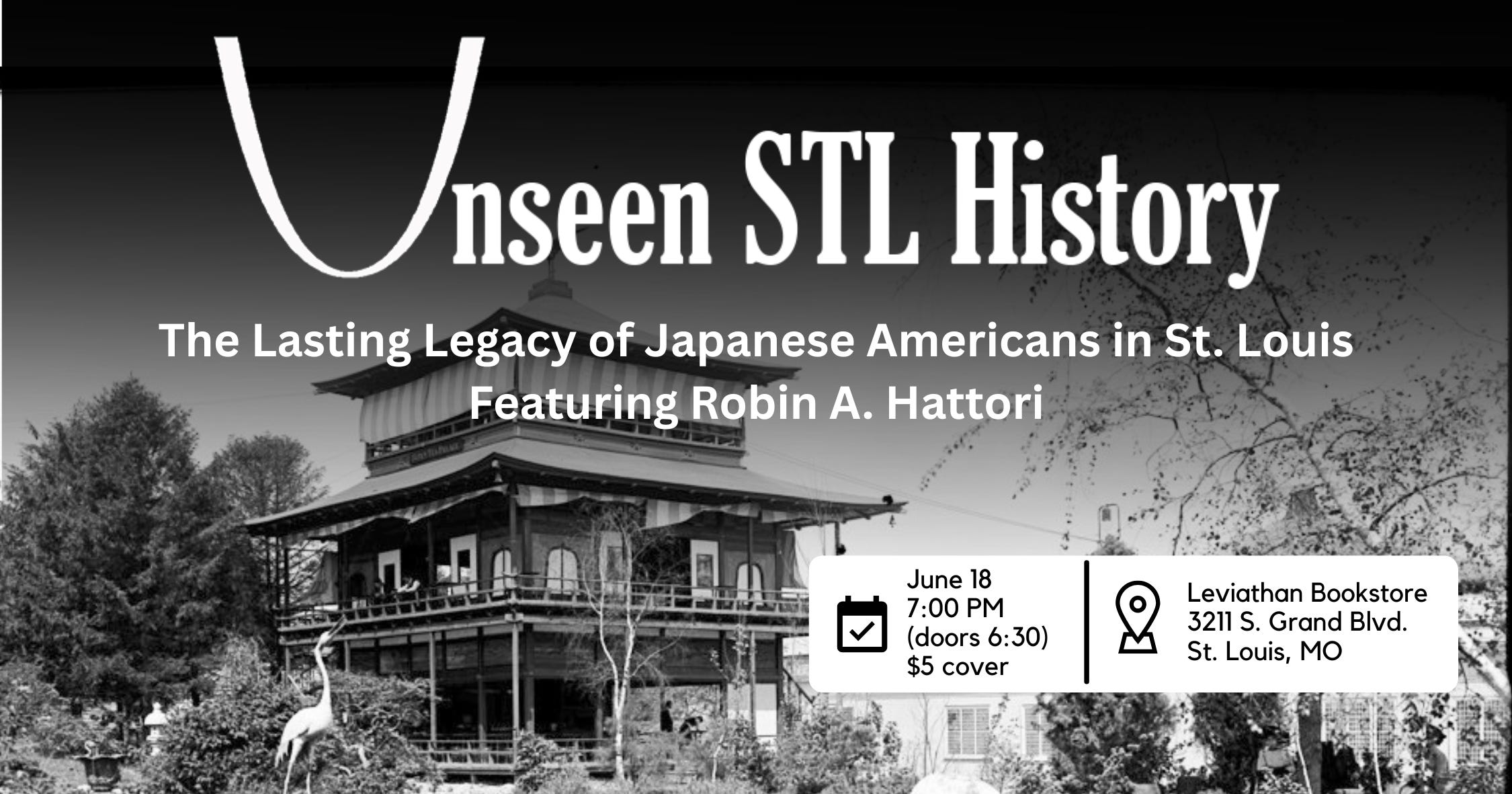
Japanese Americans have had a surprising impact in St. Louis, despite being a very small percentage of the population. This presentation will provide details about the legacy of Japanese people in St. Louis that can be traced from the 1904 World’s Fair, to the aftermath of Japanese American mass incarceration during WWII, to current-day physical relics and cultural programs that have endured over time.
This aspect of St. Louis history provides a local lens through which to examine racialized policies and practices that affected Japanese and Asian immigration, settlement, and assimilation.
The story of the Japanese and Japanese Americans in our region, which includes hard-won reparations for wartime losses, is particularly relevant to policies that the U.S. government is currently pursuing. Much of the same rationale has been used to restrict immigration and perpetuate troubling stereotypes. Yet the story of Japanese Americans can be viewed as one of resilience that may guide others in the ongoing fight to preserve civil rights and flourish as a diverse, democratic society.
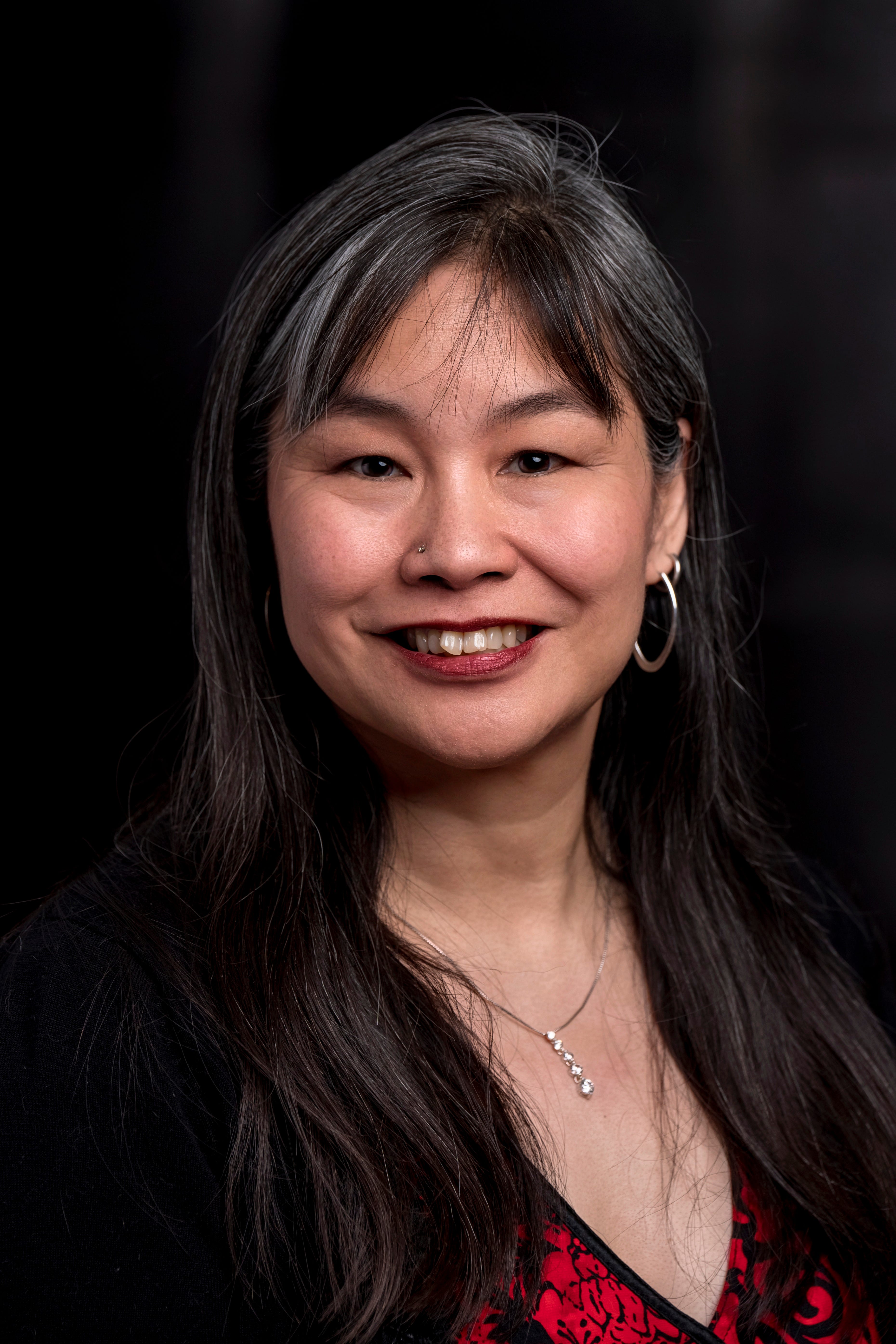
Robin A. Hattori is passionate about elevating Asian American perspectives and voices in the Midwest. As the daughter of Japanese American parents who were incarcerated during WWII, Robin has a strong sense of social justice. She has presented on this topic locally and nationally at schools, companies and organizations. She has also played a leadership role in the digitization of Japanese American oral histories from the 1990’s, the “InVISIBLE” Asian American art exhibit, the “AAPI Voices” Oral History Project, the “Asian Americans in STL: Stories of Resilience Across Generations” Storytelling Initiative, and a discussion series exploring Asian American identity.
Robin serves on the boards of the Japan America Society Women’s Association and the St. Louis chapter of the Japanese American Citizens League. As a trustee of the Missouri Historical Society, she has provided consultation on historical exhibits and also serves as chair of the MHS Education and Visitor Experience Committee. Robin works at Washington University’s Program in Occupational Therapy as a research lab manager and lives in University City with her husband Mike Kimzey.
We hope you’ll join us to explore a remarkable story of resilience, community, and belonging. This fascinating look at the history of Japanese Americans in St. Louis reveals a legacy that extends far beyond what most people realize, offering fresh insight into both our city's past and the enduring values that continue to shape it today.
Please consider subscribing to Unseen St. Louis here on Substack, and for even more content, follow Unseen STL on Instagram and Facebook.
Unseen St. Louis is truly a labor of love, and paid subscriptions make a real difference. They help offset the costs of running the project and allow me to research and write new stories, organize monthly history talks, and bring together a growing community of people passionate about St. Louis history. Your support is sincerely appreciated and helps ensure this work can continue.
And please share this post with your friends and encourage them to come out!
Comments
Nothing yet. Say the first thing.
Sign in to join the conversation.