
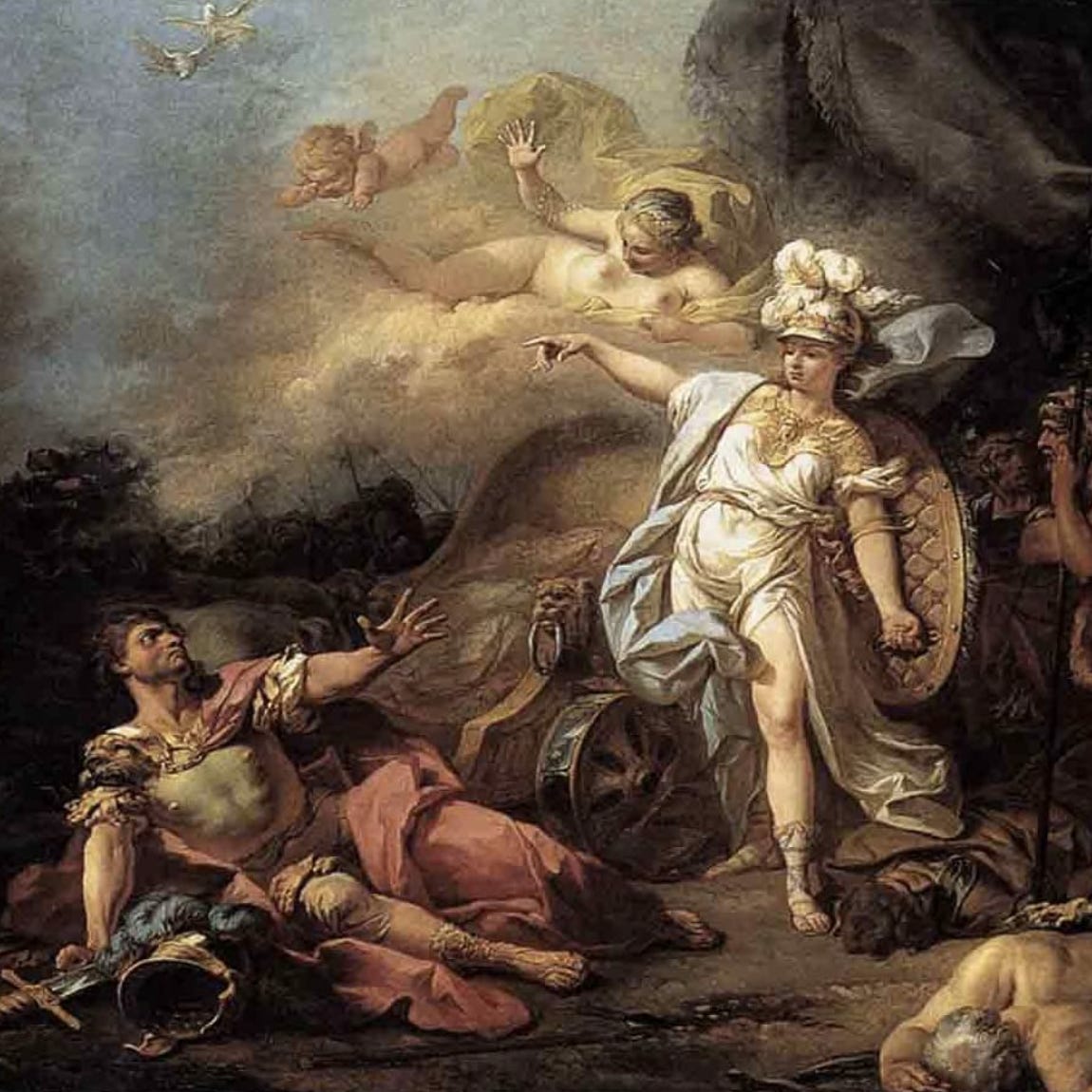
When I told Hoca Camide that a collection of his early work was published on Professor Jussim’s “Unsafe Science” substack (Camide, 2025), Hoca said, “Why can’t it just be a ‘stack’? I feel so diminished!” I said, “Hoca: gift horse . . . mouth. . . don’t look!” “Gift horse,” Hoca snorted, “my ass!” It wasn’t easy to persuade Hoca to grant permission for his earlyish work to be released, and prehumously so. “You never know,” Hoca said, “what readers will make of your sayings. Then again, I suppose that’s the point.”
Here now is a second set of sayings. Hoca, being a post-structuralist, asked me to note that there’s either rhyme or reason, but never both. “In fact,” Hoca puffed, “I often puzzle over why I said something or why I said it that way. I can’t go back to my analyst for an explanation. She fired me because of my free dissociations, or so she claims. I think she wanted to get rid of me because I told her that her steep fee revealed her anal retentivity.” “What then, Hoca,” I asked Hoca, “can we do now so you feel understood?” “Feed my sayings,” Hoca declared, “to Claude, and ask for a 200-word analysis.” I did. The result is attached below Hoca’s pronouncements.
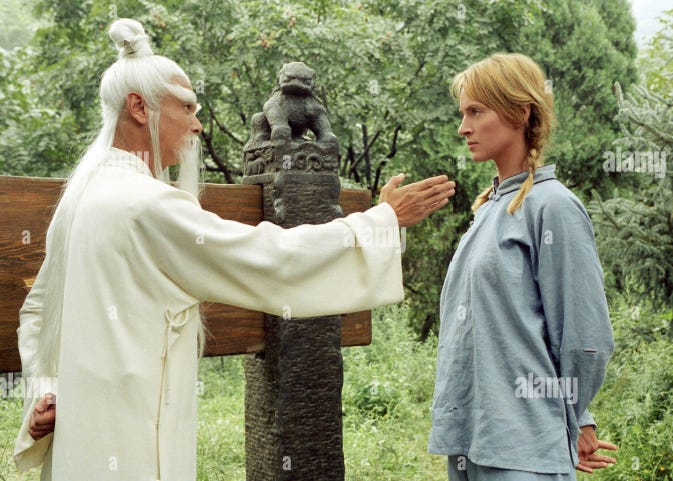
221 Hoca Camide was once invited to host a debate between a Zen master and a theoretical Taoist. “Why did you do it?” I asked him. “I didn’t want to miss,” Hoca explained, “the spectacle of the two of them not yelling at each other.” “And, who won the debate?” I followed up. “Well, I did! I just told them to sit still, shut up, and ignore my authority.”
`224 I once asked Hoca Camide how he felt about the claim (e.g., by Krishnamurti the Elder) that time is an illusion. “I’ll tell you later,” said Hoca.
226 The first time I met Hoca Camide I told him I was a seeker. “Just as well,” Hoca said, “I am a hider.”
229 I once asked Hoca Camide why he resigned from the Logical Society. “I did not resign,” said Hoca. “They banished me from the premises.”

231 “Those who say ‘I wish I could trust people’,” Hoca Camide said, “are really saying ‘I wish people were trustworthy.’ But if they got their wish, they wouldn’t need to trust. They are wishing for something that if they got it, they wouldn’t need it.”
235 I once asked Hoca Camide what he thought of Professor Habermas’s idea of ‘communication without domination’ (herrschaftsfreie Kommunikation). “Not much,” Hoca said, “but you can refute the professor’s claim by agreeing with him.”
237 I asked Hoca Camide about his recent book ‘Critique of Critical Criticism’ (Suhrkamp; 2 volumes). Hoca, looking glum, said “The reviews were scathing.”
240 I once asked Hoca Camide if he ever used words, with 4 or 6 or whatever number of letters, that have been declared unutterable. “Of course not,” Hoca said, “I need to make a living.” “Then what about,” I pressed on, “the word consisting of the unspeakable word’s first letter, a hyphen, and the word word?” “Can’t say that either because if you do, you reveal that you are thinking the word, and that’s a thought crime.” “You are such an F-word-head, Hoca!” I ejaculated – in the 2nd meaning listed by Merriam-Webster.
241 Hoca Camide was once active in the self-esteem movement until he tired of the incessant mutual praise. “I designed an app,” he told me, munching on his crudité, “that sends out congratulatory emails to random people, for random achievements, at random times.” “Does this work, Hoca?” I inquired. “And how!” Hoca intoned in classic Turkic. “The app and I got a lot of likes, loves, and hugs.” “Are you going to take it to the next level, Hoca?” I asked. “Of course,” came the reply (again in classic Turkic, which I have mastered, but no one has patted me on the back for it.), “I am now working on Äpp2, which will distribute random reminders of raised expectations. I call it ‘Tread the mill!”
246 I once asked Hoca Camide what his favorite memory from college was. “At the Communitarian College of Amasya (CCA)” Hoca said, “I was on the dean’s shit list.” “How did you get there, Hoca?” I asked, my curiosity piqued. “I flunked a course on ‘Interrogating Meritocracy’.”
251 I caught up with Hoca Camide in his hamam down by Dolmabahçe. I asked him “Hoca, what is your advice for writing a syllabus?” Squinting at me through the scented steam, Hoca revealed “The modern syllabus documents the victory of bureaucracy.” “But Hoca,” I objected, “the bureaucrats don’t write the syllabi; we do.” “You’re catching on, junior,” Hoca concluded, without breaking a sweat.
252 I once asked Hoca Camide why we always have to do another study. “Find,” Hoca said, “and ye shall seek.”
254 On a hike to Grevasalvas, Hoca Camide told Nietzsche that an apology is an act of the will to power. Nietzsche pointed out that he had already said as much in his ‘Genealogy.’ “I’m sorry!” Hoca quickly declared, whereupon Nietzsche beat him with his walking stick.
257 Before finding the courage to watch a TV program said to involve ‘mild violence,’ I asked Hoca Camide if he knew what that was. “Mild violence,” Hoca explained, “is much like a really cruel micro-aggression, but with skin contact.”
261 I once asked Hoca Camide what he thought about fame. “Fame is tricky,” Hoca said, “because you may find that you have passed into oblivion just when you thought you were a legend in your own time.” I reassured Hoca by telling him that no one had heard of him. “Indeed,” Hoca said pensively, “I much prefer obscurity to oblivion.”
262 I once asked Hoca Camide why it was that he has such great facility talking to strangers. “That’s because,” Hoca said, “my friends rarely return my calls.”

265 Back in Toluca I asked Hoca Camide if there was something he’d never do, besides debating parthenogenesis with the Pope or retweeting a tweet. “Sure,” Hoca said, “Being caught dead in a survivor support group.”
268 Just when I thought I’d never get into a he-said-he-said shouting match with Hoca Camide, it happened. “So, Hoca,” I complained, “is it the case that whoever has the last word wins the pissing contest?” “Yes,” Hoca said.
270 I went all the way to Astrakhan only to find Hoca Camide in a funk. “What’s the matter, Hoca?” I asked. “I am full of regrets, junior,” Hoca said. “Why, Hoca?” I asked. “I was never good enough to become a has been,” Hoca said.
274 Hoca Camide and I reminisced about the time when education and entertainment were different departments. I asked Hoca if we now, when lecturing, have to submit warnings of content. “Yes, indeed,” Hoca quietly nodded. “At the madrasah of Abu Hamad,” he said, “I noted that there’d be ‘some language’ and ‘brief nudity’.” “And how did that go, Hoca?” I asked. “Pretty well,” Hoca said. “The kids liked it but the eamids (deans) sent me a survey asking to explain what I meant by ‘some’ and by ‘brief.’”
282 I once asked Hoca Camide what he thought of ‘the curse of knowledge.’ “Never heard of it,” Hoca declared, taking another drag from his Papastratos Assos Filtro. “But you know of the gambler’s fallacy, right, Hoca?” I pressed on. “You bet!” Hoca said.
286 Finding Hoca Camide meditating on a glass of Fuhrgassl-Huber in Neustift am Walde, I asked him why his analysis had come to an end. “My analyst,” Hoca said, “refuses to see me.” “But why, Hoca?” I inquired. “I gave him a tip after a session I had enjoyed,” Hoca explained.
290 I saw Hoca Camide sneak into the corner store and buy lottery tickets. “But Hoca,” I said indignantly, “how could you?” “Yeah,” Hoca said, “this is why I broke with Kahneman. He wasn’t willing to take a long view on reverse myopic loss aversion.” “Hoca,” I said, rolling my eyes into the back of my head, “here’s five bucks. Buy some more tickets.”
292 Having passed through the cedar groves of the Lebanon, Hoca Camide and I crossed the Anti-Lebanon looking for the Syn-Lebanon. I asked Hoca ,“Hoca, what do you have to say about race?” Taking a sip of Arak from his flask, Hoca declared “Of course, race is a social construct, and those who believe this most fervently have to pretend that they don’t in order to argue with the boors and the bigots of the world who do.” “That sounds back-asswards, Hoca,” I said. Why not directly argue the social-construction line?” “Well junior,” Hoca mused. “If you don’t really believe that there is such a thing as race, how can you believe there is racism?”
299 After one of our bitter disputes over metaphysics I asked Hoca Camide, “Hoca, is it ok for me to believe in determinism?” “Feel free,” Hoca replied.
305 I once asked Hoca Camide whether it was true that the Reverend Thomas Bayes developed his theory of conditional probability because back at the abbey he was surrounded by priors. “Quite right,” Hoca confirmed, “but don’t underestimate the posteriors.”
306 When we were discussing the frequentist interpretation of probability over a random glass of D.O.M. Benedictine, I asked Hoca Camide if he might endorse that theory. “Not bloody likely,” Hoca retorted between sips of D.O.M.. [or: “3 out of a 100 times, I would”]
309 I once asked Hoca Camide, “Hoca, what is the gambler’s fallacy?” “To gamble,” Hoca declared.
310 After my last epistemological crisis, I went down to Hoca Camide’s Kappadokian Kave where I found him burning the candle at both ends. “Hoca,” I said, “I think it’s so unfair that scientists get canceled and abused when their findings don’t replicate, but the theologians rejoice when their miracles don’t replicate – for that’s what makes them miracles.” “Junior,” Hoca muttered, “You came all this way to tell me this?” “Well yes,” I said, “and I won’t do it again. Consider it a miracle.”
JIK: Here are some quotes I found from a certain Hoca Camide. Can you say in 200 words what you make of this? Ignore the numbers in front of the quotes.
Claude: This is a pastiche of the Nasreddin Hodja/Mulla tradition — the wise fool whose answers are literal, deflationary, or self-undermining — transplanted into the register of analytic philosophy, psychoanalysis, and academic satire. The comic engine throughout is the same move: take a piece of intellectual jargon or a philosophical puzzle (self-reference, the gambler’s fallacy, social construction, Bayesian priors) and either answer it too literally, invert it, or let it collapse under its own logic (”Find, and ye shall seek”; agreeing with Habermas as refutation). A second recurring target is institutional/academic pretension — deans, syllabi, IRB-style content warnings, critical theory jargon — deflated by Hoca’s plainspoken irreverence. There’s also a persistent thread of psychoanalytic and probabilistic in-jokes (Jung, Gross, Charcot, Bayes, frequentism) treated as gossip rather than doctrine, which assumes a reader steeped in the history and personalities of these fields.
Structurally it’s aphoristic and dialogic, close to Zhuangzi’s anecdotes or Wittgenstein’s imagined interlocutors as much as to Hoca tales — the “straight man” narrator (”junior”) exists mainly to be deflated. The pleasure is doubled: getting the reference, then watching it get subverted. It reads like a philosopher’s private commonplace book dressed as folklore.
Reference
Camide, H. (2025). The sayings of Hoca Camide: The early work. Edited and curated by Abdul Rahim a.k.a. Joachim I. Krueger. Unsafe Science. https://unsafescience.substack.com/p/the-sayings-of-hoca-camide-the-early?utm_source=post-email-title&publication_id=762897&post_id=163080507&utm_campaign=email-post-title&isFreemail=false&r=1lcuow&triedRedirect=true&utm_medium=email
Before commenting, please review my commenting guidelines. They will prevent your comments from being deleted. Here are the core ideas:
Don’t attack or insult the author or other commenters.
Stay relevant to the post.
Keep it short.
Do not dominate a comment thread.
Do not mindread, its a loser’s game.
Don’t tell me how to run Unsafe Science or what to post. (Guest essays are welcome and inquiries about doing one should be submitted by email).
No posts
Comments
Nothing yet. Say the first thing.
Sign in to join the conversation.