
TL;DR: Experts with real practices keep being told that visibility online means becoming a business influencer. The dread that follows is good judgment. New research shows that when audiences sense manufactured intimacy, the connection breaks, and manufactured intimacy is exactly what AI now mass-produces. Platforms have started suppressing it, reach is falling for everyone playing that game, and more than half of what influential LinkedIn voices published in 2025 was likely machine-written. What can’t be copied is a practice, a small room of people who trust you, and a pace that survives a bad month. If you want to build authority without it costing you your dignity, subscribe.
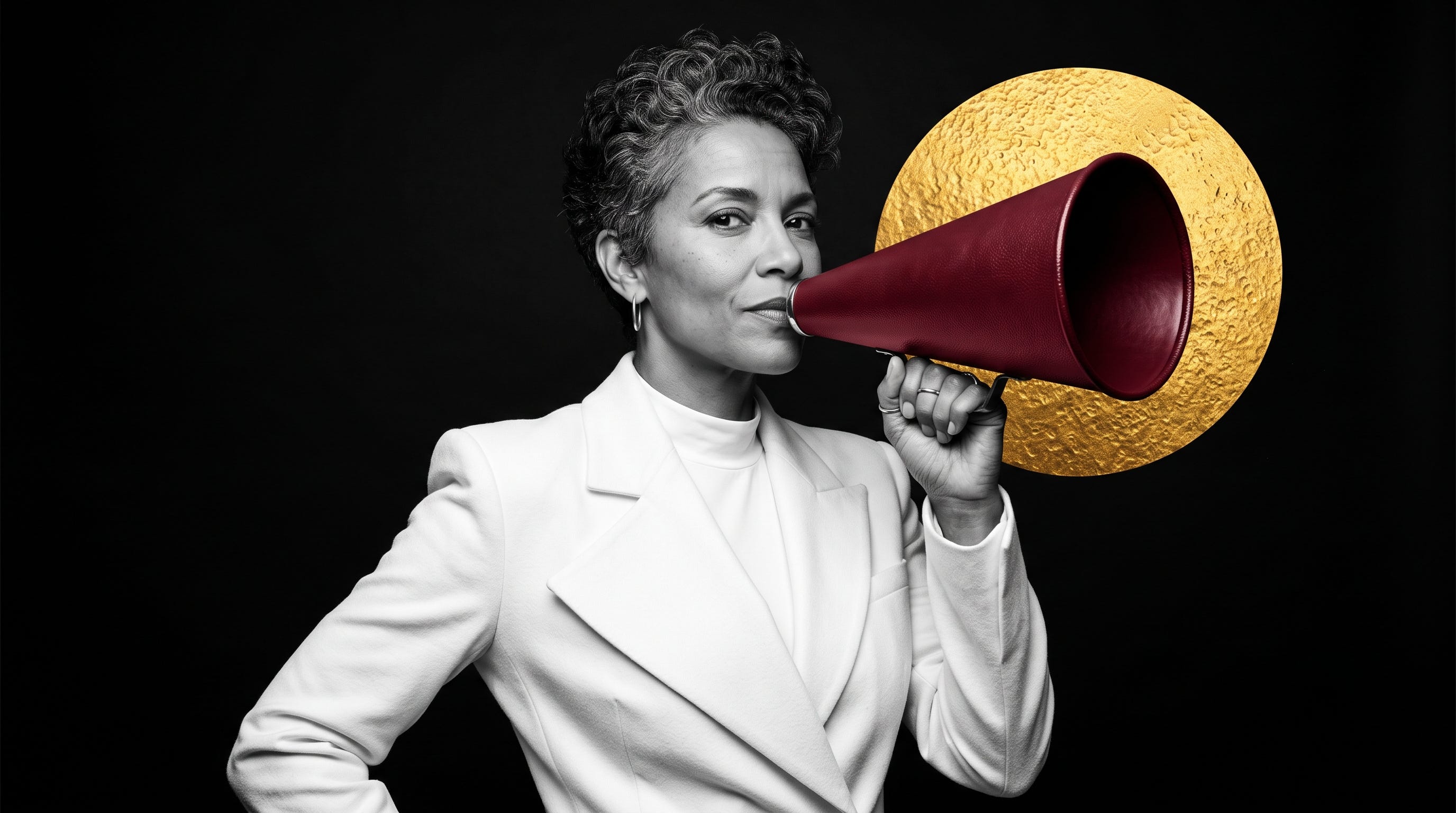
I lost my writing clients to ChatGPT.
I didn’t lose them to a better writer or an agency, but to a bunch of code. The client worked out that the thing I sold him, an okay article on a subject he chose, could be produced in thirty seconds by a machine costing less than my invoice. He was right. What I sold was a format, and formats fall first.
That year taught me the only rule I trust online now. Whatever a machine can produce in bulk gets cheap. Whatever it cannot produce at all gets valuable.
Which brings me to you, and the advice you keep being handed.

New here? I’m James. I help founders and experts turn what they know into AI systems no one else can replicate. Here on Substack, I write about Unpromptability, exploring what it takes to become irreplaceable in the age of AI.
If you want the philosophy underneath all of it, start with How I Use AI To Become Irreplaceable.
You have twenty years of practice behind you. Clients who found you by referral. A body of judgment you can’t fully explain because you live it every day.
And you know, in the uncomfortable way people know things they’d rather not, that referrals are thinning and the people who need you are looking online first.
So you go looking for how to be seen online, and the internet hands you a job description. Post daily. Show your face. Ride whatever is trending this week. Share the morning routine, the humble setback, the lesson you learned at 5AM.
Build a personal brand, which somehow always means performing a personality at scale.
I want to be precise about who I mean, because “influencer” is a wide net and I’m not throwing it over everyone.
I mean the business influencer. The personality-first operator whose whole apparatus exists to funnel attention into something at the bottom. The course. The supplement stack. The cohort. The coaching program about running coaching programs. The daily text post engineered to feel like a confession, the curated life, the ragebait dressed as a strong opinion. Every piece of it is intimacy, manufactured on schedule, pointed at a checkout page.
That’s the job you’re being told to take. And your gut says no, and you’ve been treating that as cowardice.
It isn’t. It’s judgment. Sit with it.
Here is the part almost nobody selling you the influencer playbook will say.
Attachment is what an influencer actually sells. Not information, which is free. Not expertise, which they often lack. The audience keeps coming back because it feels like they know the person, and that feeling is the entire inventory.
Which means the whole model rests on the audience believing the intimacy is real.
Researchers at USC’s Marshall School published a study in the Journal of Consumer Research this year, combining behavioral analysis on TikTok with eight preregistered experiments.
They found that when content carries an AI disclosure, engagement drops. And the drop had a specific cause. It wasn’t concern about quality or a general dislike of AI. The parasocial connection weakened. The audience read the disclosure as low effort, and the bond that was the product quietly dissolved.
Manufactured closeness only works while nobody looks at the machinery.
And the machinery is now everywhere. Originality.ai ran long-form LinkedIn posts from ninety-nine influential voices through AI detection and found that more than half of what those accounts published in 2025 was likely machine-written.
The people selling you authenticity had already outsourced theirs.
The platforms noticed. LinkedIn published Keeping conversations real this year and rolled out the changes the industry now calls the Authenticity Update, going after engagement bait, automation pods, and the inauthentic behavior that built half those accounts.
The tactics that made the playbook work are now the tactics that get it buried.
Meanwhile the ground is giving way underneath everyone still playing.
Richard van der Blom’s Algorithm Insights research puts LinkedIn views down around 50% year over year, engagement down 25%, and follower growth down 59%, with average organic reach falling to 8 to 12% of followers, from 15 to 20% the year before. Over on TikTok, Socialinsider’s benchmarks show views down 23% year over year and follower growth down 33%, with the smallest accounts hit hardest.
I’ll be honest about the limits of this. Influencer marketing spend is still growing. The industry is NOT dying.
What is happening is worse, especially for the person doing the work without the AI crutch.
The price of admission keeps rising, the return on each unit of effort keeps falling, and the exact behaviors the playbook demands are now both mass-produced by machines and actively suppressed by the platforms.
You are being handed a job description that is being automated out from under the people who wrote it.
Decline it.
There is another way to gain online visibility, and it starts with a different question. Instead of asking how to perform, ask what a stranger with a prompt could never make.
I call that being unpromptable. It’s the only thing left to do.
A machine can produce a daily post that sounds like you. It can produce a vulnerable confession, a contrarian take, a carousel about the five lessons you learned from failure. What it cannot produce is twenty years of your practice, the passion burning behind every year of work, the grudge against your industry that you’ve been carrying since time immemorial.
Three parts of your working life sit permanently outside its reach. None of them require you to film your breakfast.
The influencer runs on lifestyle. The day becomes the show, and eventually the wall between your life and your feed comes down.
Experts hear that and conclude they have nothing to publish. That’s the wrong conclusion, though drawn from a healthy instinct. You don’t have a lifestyle worth broadcasting. You have something better: twenty years of pattern recognition that other people would pay to learn, or borrow.
Mine came out of that bad year. I want experts to turn what they know into systems nobody can take from them, so that nobody else gets replaced the way I was. A machine can imitate my sentences all day. It cannot hold that grudge, keep that mission burning.
That conviction is the only moat left in the AI age, and it’s the one thing the flood can’t touch.
Yours is sitting in your caseload. The mistake you watch clients make in the first session, every time, for two decades. The industry advice you know is wrong and can prove is wrong. The thing you tell people at the end of a consultation that lands like a small detonation, because you’ve refined that sentence over hundreds of repetitions.
Start capturing it. Open a file and keep it open during your working week.
Every time a client says something that stops you, write it down in their words.
Every time you catch yourself explaining the same thing for the hundredth time, write the explanation down.
Every time your advice contradicts what the industry says, write down both and note why you’re right.
Do that for four weeks and you will have more material than you can publish in a year. It writes itself, because you already said it out loud. You just never wrote it down.
None of that comes from your private life. It comes from your working life, which is where the good material was hiding the whole time.
And it filters for you. Lifestyle content collects people who are bored. Practice content collects people who have the problem you solve, and those are the only people who were ever going to hire you.
Influencers need scale because of how they get paid. Sponsorship rates are priced on reach, so a bigger number is the business model. Chasing followers is rational when you’re selling attention wholesale.
Now run your own numbers. Write down what you charge, and how many clients you need this year to have the year you want. Most experts have never written that number down, and it shocks them when they do.
A therapist with a full caseload needs maybe twenty-five clients. A consultant with a good year needs eight. A surgeon, a fractional CFO, a specialist advisor, most of you are working with a number small enough to fit in one room.
Ten thousand followers is not a goal against a number like that. It’s noise. You could have four hundred readers, and if thirty of them have the problem and trust you completely, your calendar is full and your business is done.
So stop performing for a crowd and start hosting a room. Keep a short list of the people who have told you something real about their situation. Twenty names is plenty. Reply to every one of them properly, in full sentences, using what they told you last time.
More: write your next piece for the person on that list who has the problem most clearly, and let everyone else watch you do it.
A room also survives things a following can’t. Reach gets throttled on a random Tuesday for reasons nobody explains. Platforms rise, platforms rot. Borrowed attention vanishes the day you stop paying for it.
The people who trust you will follow you anywhere, including off the platform entirely. In that way, relationships are your strongest defense against being replaced.
The treadmill has one speed. Post daily or decay. Feed it through illness, grief, family, and every other thing life does to a person who has an actual practice to run. Burnout there is almost a certainty.
I’m moving across the country right now. Half my life is in boxes and every day hands me a small emergency. By the influencer playbook, this is a goldmine. Film the packing. Sell the stress before the feeling cools.
I didn’t. I have five rules for weeks where your life falls apart, which can be boiled to the phrase “just try to do something”. The most important thing of the week ships and everything else drops without guilt. That rule is why the newsletter hasn’t completely decayed while my life is basically falling apart.
You need a pace you can hold in your worst month, not your best one.
Two thoughtful pieces a month, held for two years, builds more than daily posting for a season followed by a year of silence. Trust is built on a pattern, and a pattern only counts if it survives the bad month.
There’s a second reason, and it matters more than the first. Nobody hires a frantic advisor. Steadiness reads as competence, because it usually is. The expert posting through a panic spiral is teaching the audience something, just nothing that helps them.
Pick the pace you could keep during the worst month you can imagine. Then keep it.
The dread lifts first. Publishing stops feeling like a performance and starts feeling like talking about your work, which you already do all day for free.
Then the work changes. A stranger with a prompt can generate infinite morning routines and endless contrarian takes. They cannot generate the framework you built out of a failure that still stings, or the sentence a client said to you last Tuesday that you’re still turning over. That gap is how you build authority without becoming an influencer, and it widens every week the flood rises around everyone else.
Then the business changes. Influencer growth is a spike you re-earn every morning. This kind is a slope. Slower, steadier, compounding, and attached to you rather than to a platform’s mood.
You already have what this requires. A practice worth twenty years, judgment nobody can download, and a small number of people who need exactly what you know. If you want to pressure-test where you stand, the Unpromptability audit will tell you in an afternoon.
The visibility was never the hard part.
The costume was, the performance was. Take it off.

P.S. I write for experts who want to be visible without becoming a personality. If that’s the road you want, subscribe and walk it with me.
Comments
Nothing yet. Say the first thing.
Sign in to join the conversation.