
Welcome to Unprocedurally Generated. If you’re new here, don’t be afraid to hit the subscribe button so you don’t miss the next post. If you’ve been here, welcome back!
The longest train ride of my life was the one a friend and I took to Pisa, Italy, back in college. We arrived at the station looking to board the next train out of Rome. Luckily, there was a train leaving in just a few minutes and the fare, for some reason, was only 25 euros. Our train wasn’t hard to spot on the platform. It was the oldest most janky looking one out there. We happily boarded and took our seats.
We anticipated the trip taking only a few hours. As we slowly ground our way through the Italian country side, stopping at every little town along the way, it began to dawn on us that we might be arriving in Pisa a little later than we expected. It was 2004 and I had just bought my first mp3 player, an iPod Nano. One of my buddies had recently loaded gigabytes worth of pirated jazz albums onto it and I was perfectly content to enjoy the day in this antique Italian train car with my window down taking in the country side air and sunshine while listening to some jazz classics.
At some point after riding between the cooling towers of a nuclear power plant and arriving at our final destination, I listened to John Coltrane’s Blue Train record. I’ll never forget being blown away by the last phrase of Curtis Fuller’s trombone solo on the track “I’m Old Fashioned”. It was one of the first times that I could hear an instrument talking. (You can have more than one first time. They said so on a podcast so it has to be true.)
The popular music of my time didn’t have this flavor of music on the menu. Down tempo tunes in major keys with seventh chords was a sound that hadn’t been in mainstream culture during my teens. At 21 years old, this old music was the freshest thing I had heard in years.
The sound of music from different generations captures different moods. I often lament about modern culture missing the mood of slow music in major keys. There is a reflective melancholy in the sound. The world in 1957, the year Blue Train was recorded, was still made up of people who had grown up without cable television, let alone cell phones or computers. What was it like to live in the mind of someone born in the first half of the 20th century? Listen to their music and take note of how it makes you feel. Music is an emotional time capsule that communicates the timbre of mood through time. How their music makes you feel might be how it felt to live when they made it.
Ever since the 1990s the sound of slower jazz music in major keys has been largely absent from mainstream culture. Slow introspective mental spaces, like those prompted by that music, are ones that people seem to avoid more than ever in our doom scrolling social media driven age. Ask yourself this: When was the last time you went to the bathroom without your phone? We don’t let ourselves sit with our own thoughts anymore, even in the most intimate of moments. We’ve let go of reflective melancholy, right down the toilet.
***
I’ve been fascinated with dropped tuned djent bands since the first crop of them started releasing records in the late 2000s. Like myself, these musicians grew up with hip hop, EDM, and nu metal. Mix those influences with the innovations of Meshuggah (especially their Nothing album) and you get modern metal.
One of the things about modern metal that most of the non-believers don’t understand is that metal is the genre that most of the more vanguard oriented young musicians gravitate towards. For those who want to push the envelope of technique, sound, and even harmony, metal is now where the more forward looking progressive players go. These players used to go to jazz until jazz, wrongly or rightly, started to be perceived as an exclusive music concerned more with tradition than innovation.
As a lister I keep my ears peeled for fresh sounds in metal because I know this is where a substantial amount of innovation in modern music comes from. One of the first wave djent bands that I remember listening to circa 2010 was a band called Vildhjarta. As it turns out, Vildhjarta just released a new album called + där skogen sjunger under evighetens granar +.
I pressed play on this record in my home office last week and was immediately taken aback . The opening cut starts with what sounds like alarms, almost referencing Fear Factory’s “Securitron (Police State 2000)” from their album Obsolete. But rather than the dystopic tone found on Securitron, Vildhjarta evokes images of space flight, visions of a satellite in orbit perhaps, with a major sounding tonality. Then the dropped guitars come in speaking in some alien tongue that fits the underlying harmony while not fitting at the same time. (I find that a lot of the good djent sounds like 20th century classical music, with much of its atonal leanings, put to guitars.) It feels organic in its disjunction. This eventually leads to a moment where all of the conjured anxiety stops, replaced by a feeling of stability reminiscent of those major moods found in old jazz ballads Then, at 2:08, I lose my mind with what I hear. I yelled to my wife standing next to me, “It’s like ‘Portrait of Tracy’!”
***
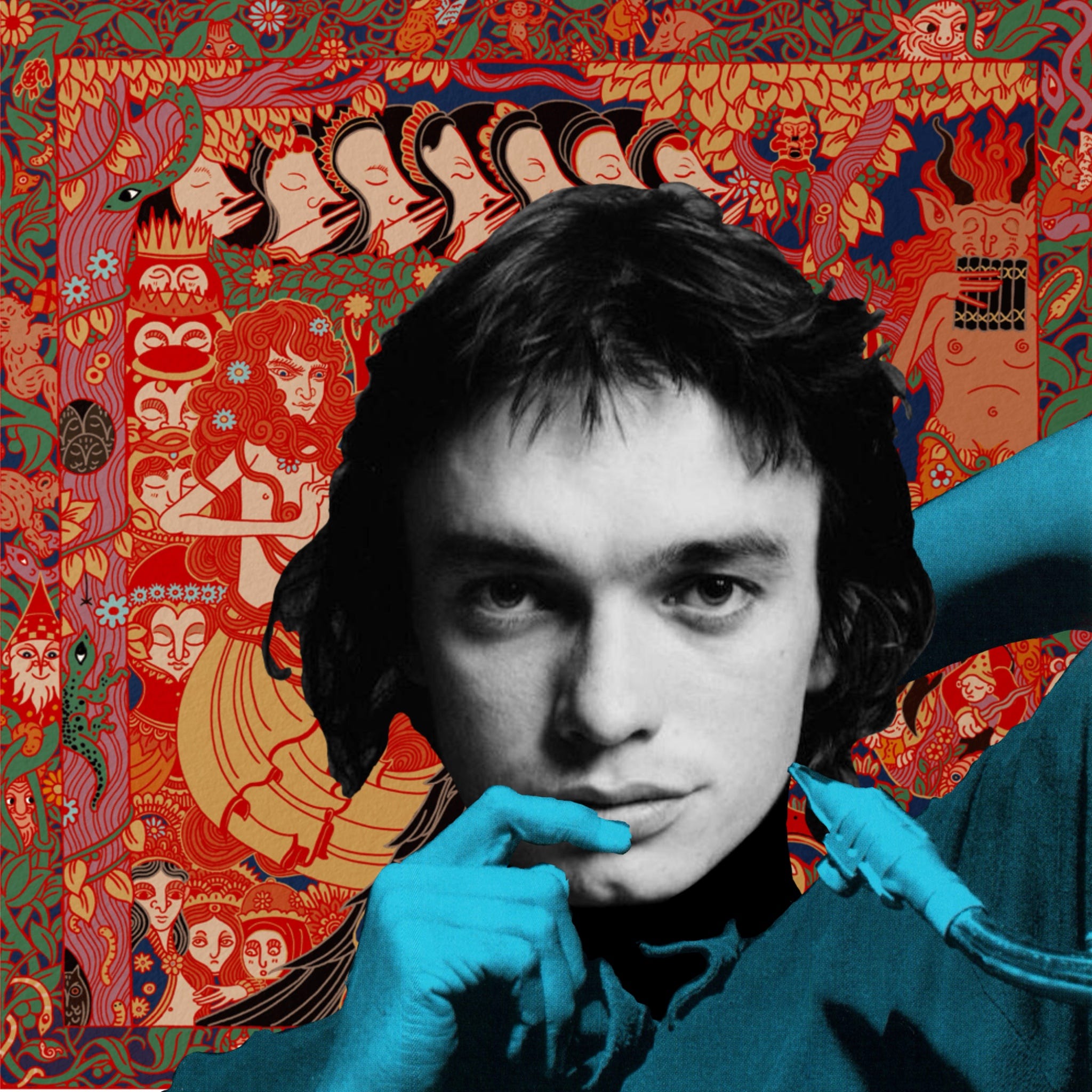
There was a time in the 1970s and 1980s when jazz fusion is where the innovators went. Jaco Pastorius was one of these innovators. His self titled album, Jaco Pastorius, is a showcase of boundary eschewing music. The first cut on the record is him shredding over Charlie Parker’s (but actually Miles Davis’) tune “Donna Lee” using a fretless electric bass guitar with nothing but conga accompaniment, putting the traditionalists on notice. The track proceeding this homage to bebop is a funk tune, furthering the sentiment that we are firmly in Jaco’s world where we play by Jaco’s rules. Genres need not apply.
Another stand out cut on this album is an unaccompanied solo bass performance called “Portrait of Tracy”. It’s a beautiful ballad that employs the heavy use of harmonics to play chord tones. It’s an incredible statement and I’d urge you to check it out if you haven’t already.
The use of harmonics on the bass isn’t new. Upright bassists use harmonics to provide reference pitches for intonation when not able to play the fixed notes of the open strings. What was fresh about Jaco’s take is that he used harmonics over a root note to play color tones of the underlying chord. To my knowledge, nobody had ever used harmonics to perform a chorded melody arrangement on the electric bass like this before.
When you listen to a band like Weather Report, a band Jaco was in from 1976 to 1982, it’s hard to imagine what the songs would sound like without the bass. The bass lines have so much personality that it’s almost like the bass line is the song. I think modern metal is the same except with guitars tuned so low that they are more like Jaco’s bass: Low notes out front with ample mid-range frequencies applied through the employment of a bridge pickup.
Was Jaco metal or is metal actually jazz fusion? I don’t care as long as the music is fresh and looking forward. In today’s cultural landscape of reboots and aging pop stars, I guess you could say I’m old fashioned that way.
These tracks are presented in the order that they appear in the essay but I would suggest listening to the Vildhjarta after Jaco. If nothing else, go to 1:55 of the Vildhjarta cut. This section is largely based on a I6 vi-7 progression just like the first two chords of “I’m Old Fashioned”. There is an underlying sense of elation, even in the heavy guitars. It’s wild.
No posts
Comments
Nothing yet. Say the first thing.
Sign in to join the conversation.