
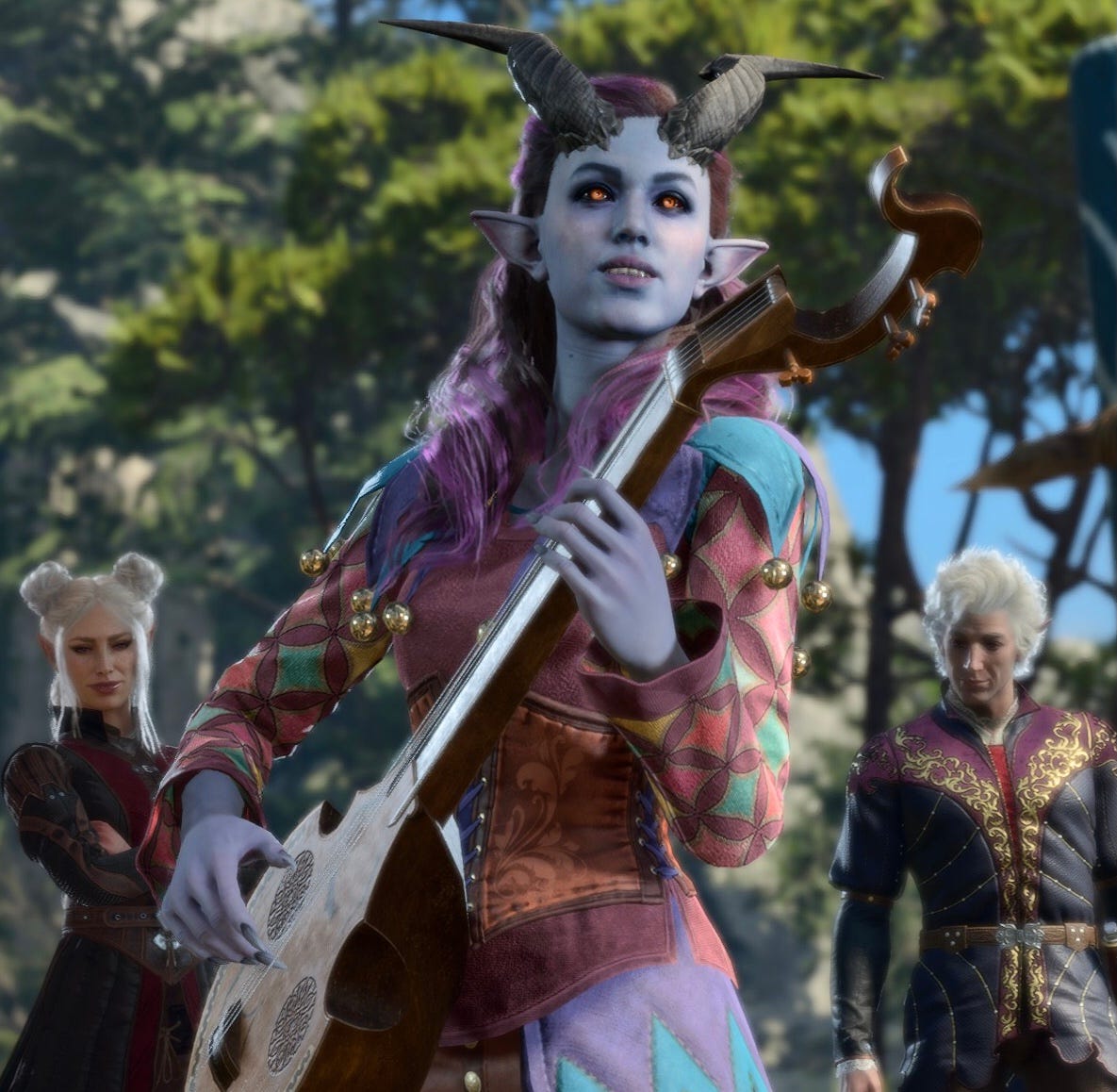
When I bought a PlayStation this summer, I was honestly worried that I wouldn’t want to play or listen to music anymore.
What a relief.
What a relief that video games don’t interest me like music does.
I find music to be infinitely more satisfying than video games. That being said, video games are fun, it’s just that I can relate to making music in a way that I can’t with video games. Even if we consider video games to be their own art form, they usually require large teams and large money to make. It’s harder to connect with the maker when the maker isn’t an individual or a very small group of individuals, like a band. I’m also not a programmer or coder and don’t understand the process involved in making a video game. It’s easier to relate to the story of a songwriter or instrumentalist because I’ve had the experience of making music.
I’ve also noticed that listening an album never feels like a waste of time. In fact, it usually feels like a fantastic use of time. Playing video games? Often, they make me feel like I’m throwing time in the garbage and then leave me with a headache afterwards. Games like Red Dead Redemption and Zelda: Tears of the Kingdom were actually kind of boring in hindsight. That’s the hazard with video games. You don’t really realize that you’re bored until long after the boredom sets in. And even then, you just keep mashing buttons like an old lady sitting at a slot machine because, for some reason, it’s easier to keep playing than to walk away.
The other day I decided to listen to John Coltrane’s Crescent instead of playing Balder’s Gate 3 (which is actually an exceptional game) and noticed some things in bassist Jimmy Garrison’s playing that, while imperfect, were fun to hear. On the tune “Wise One” he seems to forget the harmonic rhythm of the chords during the first chorus of Coltrane’s solo, playing the bass note of the next chord too soon. Pianist McCoy Tyner jumps in and reorients Garrison, guiding him back on track by playing low notes with his left hand. To be sure, Tyner plays low notes in his left hand all the time, but these notes sound subtly different. You can almost hear him looking directly at Garrison as he plays the roots of the chords.
The mistake in Garrison’ orientation is handled gracefully and without judgment from the band, at least not that we can hear from our side of the speakers. This moment is part of the story of the Crescent session. A moment when four players, comrades if not friends, improvised their way through a map of chord changes on a journey through the land of music. One guy slipped in the mud and another other guy offered a hand to help him up. These are the stories told by music.
What are the stories told by video games? You can know the story in a game (save the princess, obviously). But what’s the deeper story, the one that tells us about the creators? Maybe those stories are evident somehow in the creation but I don’t hear them. Maybe I just don’t know how to listen to video games. Lucky for me, that’s why there’s music.
No posts
Comments
Nothing yet. Say the first thing.
Sign in to join the conversation.