
Note: This post includes some video clips that are essential to the story, so I strongly recommend that you read the web version, not the emailed version. Also, there’s an important programming note at the end of the post, — Paul
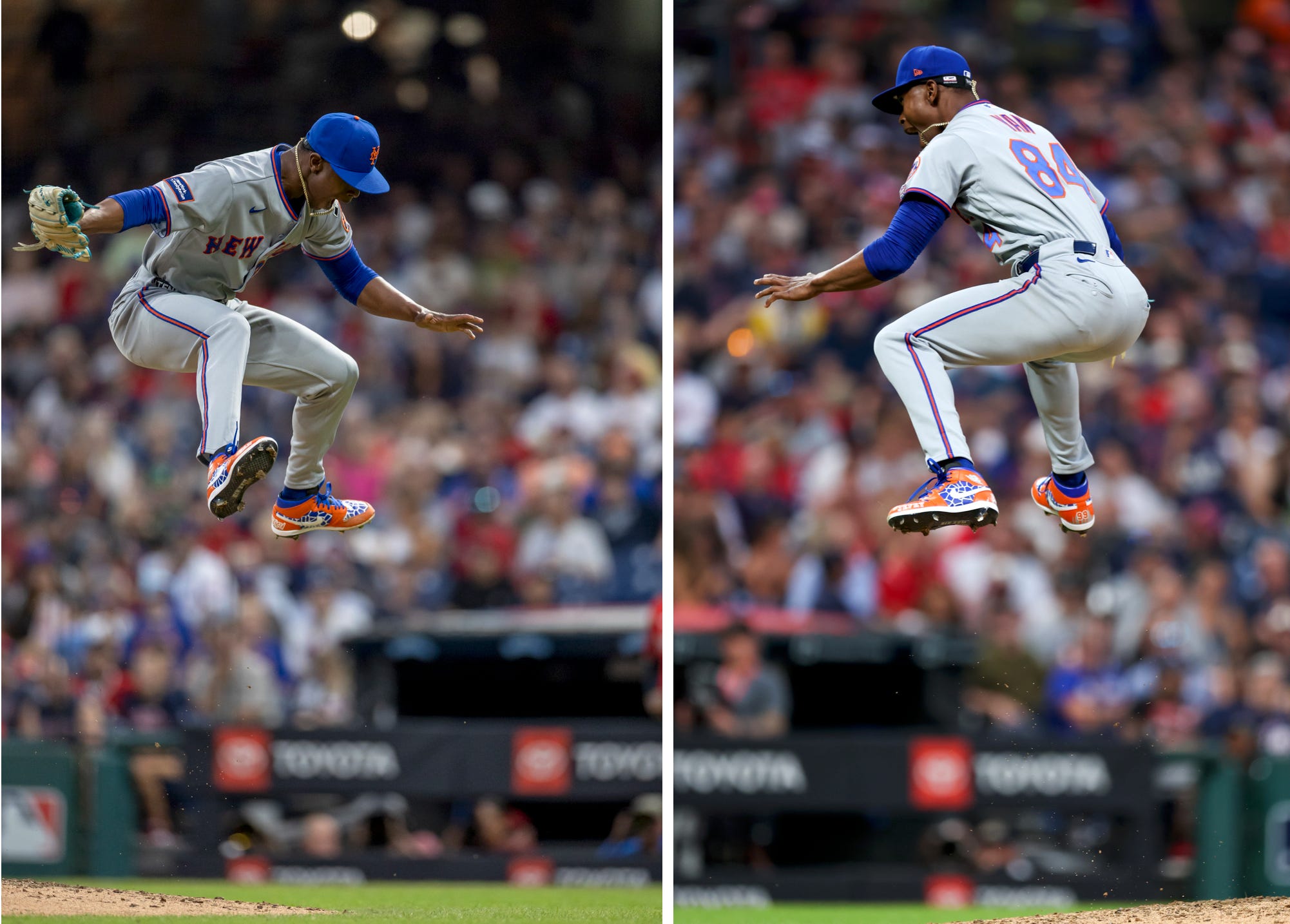
Unless you’ve been under a very large rock, I assume you’re at least vaguely aware of Mets rookie reliever Jefry Yan, who was called up last week from Triple-A and has achieved instant fame due to the very distinctive celebration routine that he executes after striking out a hitter. In case you haven’t yet seen it, here’s a good look, including replays from several different angles:
Yan has been doing this jump-split-slide choreography for several years now at various stops in his career, including in the minors, spring training, Japan, the Dominican Winter League, the Caribbean Series, and so on. He’s attracted some media attention before, but the coverage really exploded when he got called up to the bigs last week, made his MLB debut on Wednesday, and struck out the first batter he faced.
The response to Yan’s gymnastics has been interesting. While there’s been some gnashing of teeth by old-schoolers who think he’s disrespecting the game (or words to that effect), my general impression is that his celebration has been pretty well received. One reason for this, I’m fairly certain, is that Yan has had a long, tough road to reach the majors, including a four-year period when he was out of organized ball altogether and worked primarily as a roofer, so his story has a certain Horatio Alger factor that makes his celebration feel earned. It probably also helps that his general demeanor seems to be more jovial and than sneering. (Unfortunately, he doesn’t speak English — or at least there are no English-language interview clips of him that I’ve been able to find — so it’s hard to get a deeper sense of his manner and tone, but he does seem to smile a lot, which goes a long way.)
Yan has pitched in only two Mets games so far, and he had strikeouts in only one of them, so it’s still early days. But I wanted to discuss some of the nuances of his situation, and I knew just the person to call: Ken Davidoff. Although he’s now a journalism professor at Endicott College in Massachusetts, he spent more than 20 years as the national baseball columnist for Newsday and then The New York Post, and he’s also the co-author of a recently published book called 101 Lessons from the Dugout, which is about how developing good baseball habits can be a guide for living a successful and virtuous life, so I thought he’d be the perfect guy to address some of the issues raised by Yan’s celebration. Here’s the transcript of a Zoom call we had yesterday morning, edited for length and clarity:
Uni Watch: What was your first thought or reaction when you saw Jefry Yan’s strikeout celebration?
Ken Davidoff: I was amused. I mean, I think it’s entertaining.
UW: There have been lots of relievers over the years who’ve had signature celebrations, like Fernando Rodney with the bow and arrow, and even going back 50 years ago, you had Tug McGraw thumping his glove against his thigh as he walked off the mound, which for that era was very demonstrative. How do you feel Yan’s celebration either fits into or deviates from that tradition of relievers with a signature celebration move?
Davidoff: Oh, I think it very much fits into it. And the more you learn about his story, the more I felt like he’s earned the right to dance. It’s just such a great story — he’s obviously just so grateful to have persevered and made it to the big leagues, so let him dance.
UW: Yeah, I’ve noticed that as well, that a lot of people seem to like his backstory. And as a result — I mean, I’m projecting a bit here, but it seems like people who might otherwise find his theatrics objectionable, or at least an eye-roll kind of situation, are more inclined to forgive or even embrace what he’s doing. So you think that’s a big part of it?
Davidoff: I don’t want to speak for the public at large, but my reaction certainly was colored by that.
UW: He’s pitched in only two games so far, and he didn’t have any strikeouts in one of those appearances, so he’s only done the celebration in one game. And when he came into that game, the score was 4-3 in the 6th inning. Do you think his routine would land differently if it’s a game when the Mets are losing 8-1, or even winning 8-1?
Davidoff: That’s a good question. I think there’s nuance to it, and I think it’s episode by episode. The fact that the Mets’ season is basically done also plays into it. If they were in the thick of it and he did it during a blowout game, that might color things differently. So yeah, I think it’s a very context-dependent thing.
UW: You recently co-authored a book called 101 Lessons from the Dugout. Does Yan’s celebration fit into any of those 101 lessons in either a positive or negative way?
Davidoff: You know, I looked through the book again before this call, and we don’t have a chapter that really nails this dynamic. And in retrospect, I regret that we don’t, because I think this is a real thing, that line between celebrating and showboating, between respecting your opponent and disrespecting your opponent.
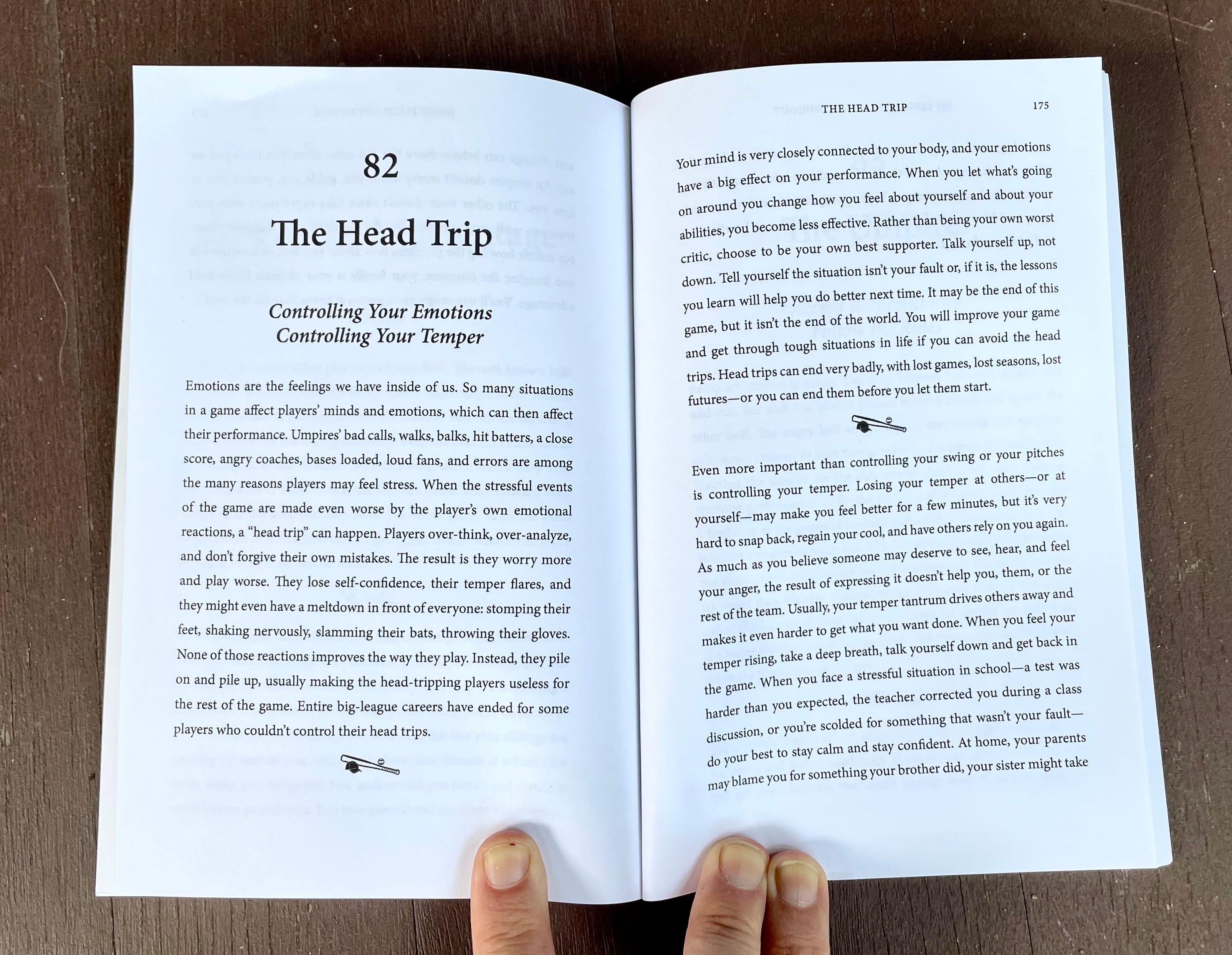
The closest thing we have is Chapter 82, “The Head Trip,” which is about controlling your emotions, controlling your temper. But that’s more about staying in control when you get a bad break, so it’s not quite the same. I do wish we had covered this.
UW: You and I are a pair of middle-aged white guys. When it comes to something like this strikeout celebration, how much of this type of behavior, and the response to it, do you think is generational and/or cultural?
Davidoff: I think it’s pretty huge. One thing that stands out in my mind, Paul, is that when bat flips really started to become a thing, let’s say in the 2010-ish time frame, and CC Sabathia was on the Yankees by then, and I remember talking to him about it. He said, “Look, man, if someone takes me deep, let them celebrate because they’ve earned that right!” CC was not showboaty at all, but he was emotional — when he had a big strikeout, he would roar and he wasn’t quiet. So yeah, I do think there definitely is a significant generational societal element to this.
UW: If a player does something showboaty, we’ll often hear the broadcasters — who, again, are usually older than the players — saying, “Oh, he’ll get plunked next time.” Or if it’s a pitcher, they’ll say, “He’s going to get one of his teammates plunked if he keeps that up.” But you’ve spent a big part of your professional career talking to these athletes. Do they really care so much about this kind of stuff nowadays?
Davidoff: I think it’s case by case, and I think that’s what makes the Yan thing so interesting, because his story is so compelling. If people think someone is a jerk, they’re not going to like his celebration. But it’s often the jerkiness will precipitate the celebration — there are people who you think are good guys, so you’ve fine with it if they celebrate, and then there are jerks, so you think their celebration just enhances their jerkiness. But there are also people who don’t celebrate at all, but who are still regarded as jerks. So it’s complicated. It’s a soup.
From what I’ve read, it seems like Yan’s teammates are enjoying it, so I think that’s the key dynamic here. And I know he got booed by the fans in Cleveland, but that’s fine — they should boo him! He’s the opponent and he’s celebrating.
UW: I’ve also heard some people say their biggest problem with the celebration is that he’s going to injure himself — twist an ankle, blow out a knee, something like that.
Davidoff: Yeah, that would be bad. But I’d file that under the same heading of “If everyone on the team is good with this…”
Paul here. Good stuff from Ken! Please join me in thanking him for his insights.
As for me: I’m generally not a fan of “Look at me!” antics, but I agree with Ken that Yan’s routine is entertaining. It has zip, pizzazz, charisma, all that fun stuff, and I’m pretty sure I’d think that even if Yan wasn’t playing for my favorite team. I do think it would probably be less appropriate in a blowout game, so I’m curious to see how he handles that type of situation, and I also wonder if the whole thing will feel tired and rote once the novelty wears off. Also, both of his appearances have been on the road, so we don’t yet know how the home crowd may egg him on, or how the team will promote his routine with scoreboard animations, a signature music clip (maybe Van Halen’s “Jump”?), and so on, all of which could quickly devolve into an insufferable shtick.
But my bigger concern is a practical one: Based on Yan’s first inning (admittedly a very small sample), it appears that he launches into his jump on every two-strike pitch, as if he’s anticipating the strikeout before it happens. If the pitch doesn’t result in a strikeout, he doesn’t do the full routine with the leg-split and the slide, but the jump still leaves him ill-equipped to field his position, and that’s not good.
To see what I mean, look at this next video, which shows the entire inning of Yan’s MLB debut from last Wednesday. Skip ahead to the following time marks:
1:02: 1-2 count, Yan jumps, pitch is fouled off.
3:37: 0-2 count, Yan jumps, pitch is grounded past shortstop for a single.
10:13: 0-2 count, Yan jumps, pitch is grounded to shortstop for a fielder’s choice to end the inning.
Yan didn’t jump for any pitches except when there were two strikes, so it was clearly something calculated, not spontaneous. And if any of those batters had hit a comebacker, he probably wouldn’t have been able to field it. Ditto if he had to cover first base on a grounder to the right side.
But there were encouraging signs of progress two days later, when Yan made his second appearance. He didn’t strike anyone out, but he did throw two two-strike pitches, both of which were taken for balls, and didn’t jump for either of them. So maybe the two-strike jump was just adrenaline from his MLB debut. Or maybe he only jumps if the batter swings. Or maybe someone on the coaching staff said something to him. Something to keep an eye on.
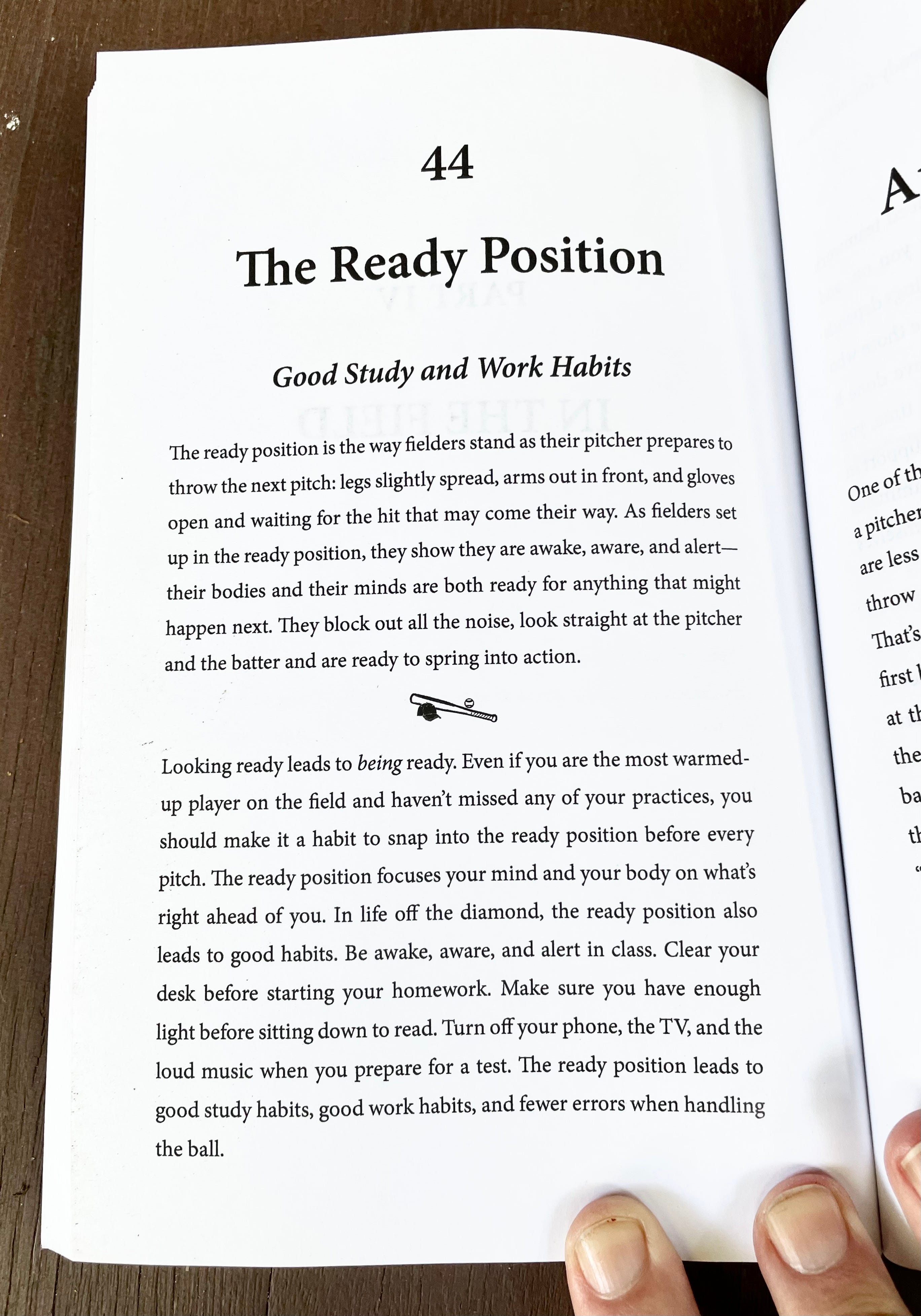
I mentioned all of this to Ken, who agreed that the two-strike jump could be problematic if it continues. He also said 101 Lessons from the Dugout has a chapter that relates to this — Chapter 44, “The Ready Position”:
Maybe we should chip and get Yan a copy of Ken’s book!
As I’ve written before, most notions of playing the game “the right way” are rooted in ancient codes of behavior that are foundational in our culture, like the Ten Commandments and the Seven Deadly Sins. For example, we’ve all seen a batter stand and admire a ball he’s hit and then end up with a single when the ball hits off the wall instead of going out. Although you probably don’t think of that sequence in theological terms, the reason the batter’s behavior offends our sensibilities is essentially because he’s committed two of the deadly sins: sloth (by not hustling out of the box) and pride (by admiring his hit instead of running). The fact that he ends up with a single — instead of the double he would have had if he’d run hard from the get-go — reinforces the notion that engaging in vice has consequences. This, we intuitively understand, is a form of justice.
Certainly, nobody can accuse Jefry Yan of sloth. But if his two-strike jump leaves him unable to field his position, that seems like a case of letting pride get in the way of doing your job. Something to keep an eye on!
Meanwhile, you may have noticed that although Yan wears No. 84, he has No. 99 on his belt loop:

I initially figured, “Oh, he must have worn No. 99 at Triple-A and gotten a matching belt, and he hasn’t gotten a new one yet to match his MLB uni number.” But it isn’t quite that simple. Yan has worn lots of different numbers as a professional but, near as I can figure, his first time wearing No. 99 was this past winter, in the Dominican Winter League. He then wore 99 for the Mets in spring training but, oddly, did not wear the 99 belt (at least in any photos or footage I could find). As far as I can tell, he began wearing the 99 belt while pitching this year at Triple-A Syracuse — where his uni number was 70, not 99. And now he’s brought the belt with him to the majors. (If anyone can help flesh out this chronology, feel free to do so in the comments.)
It turns out that the 99 is part of Yan’s personal branding. He refers to his celebration dance as “La Sentencia 99,” which is also his Instagram handle. So that’s why he insists on wearing a belt emblazoned with a number that isn’t his uniform number. Personally, I find that much more annoying than the strikeout celebration. (In case anyone’s wondering, No. 99 is available. The last Met to wear it was pitcher Taijuan Walker in 2022. It’s not clear if Yan requested it when he was called up last week, but they may as well assign it to him, if only so his jersey will match his belt.)
The Mets open a three-game series tonight in Atlanta. Yan is well-rested — he last pitched on Friday — so there’s a good chance he’ll get the call at some point tonight. Stay tuned.
(Special thanks to Jerry Wolper for invaluable fact-checking assistance.)

I’m pretty happy with the way things have gotten started with this new Substack version of Uni Watch, and I’m feeling like I can keep this up for a bit. So the next post — which will be published either later this week or early next week — will be the last freebie. After that, new content will be available only to paid subscribers. (Content that was originally free, like this post you’re reading right now, will remain freely accessible in the archive.)
I realize some of you may not want to pay for Uni Watch, and of course that’s fine. For my part, I don’t want to write for free, and that’s also fine. If our priorities align in a way that results in you staying on as a reader, that’s great! If not, so be it. Either way, I hope you’ve enjoyed the Substack rollout.
Uni Watch, created by Paul Lukas, has been covering the world of athletics aesthetics since 1999. He also writes Inconspicuous Consumption, which is sort of like Uni Watch for everything other than sports.
Comments
Nothing yet. Say the first thing.
Sign in to join the conversation.