
There are two kinds of difficult in puberty.
There’s the girl who develops early. She’s the first in her class to need a bra, the first to notice the stares, the first to feel like her body has moved ahead without asking permission. She feels too visible.
And there’s the girl who develops late. All her friends have moved on. She’s the one still waiting, wondering if something is wrong with her, quietly checking the mirror. She feels invisible in a different way.
Both are painful. And almost nobody is talking about it.
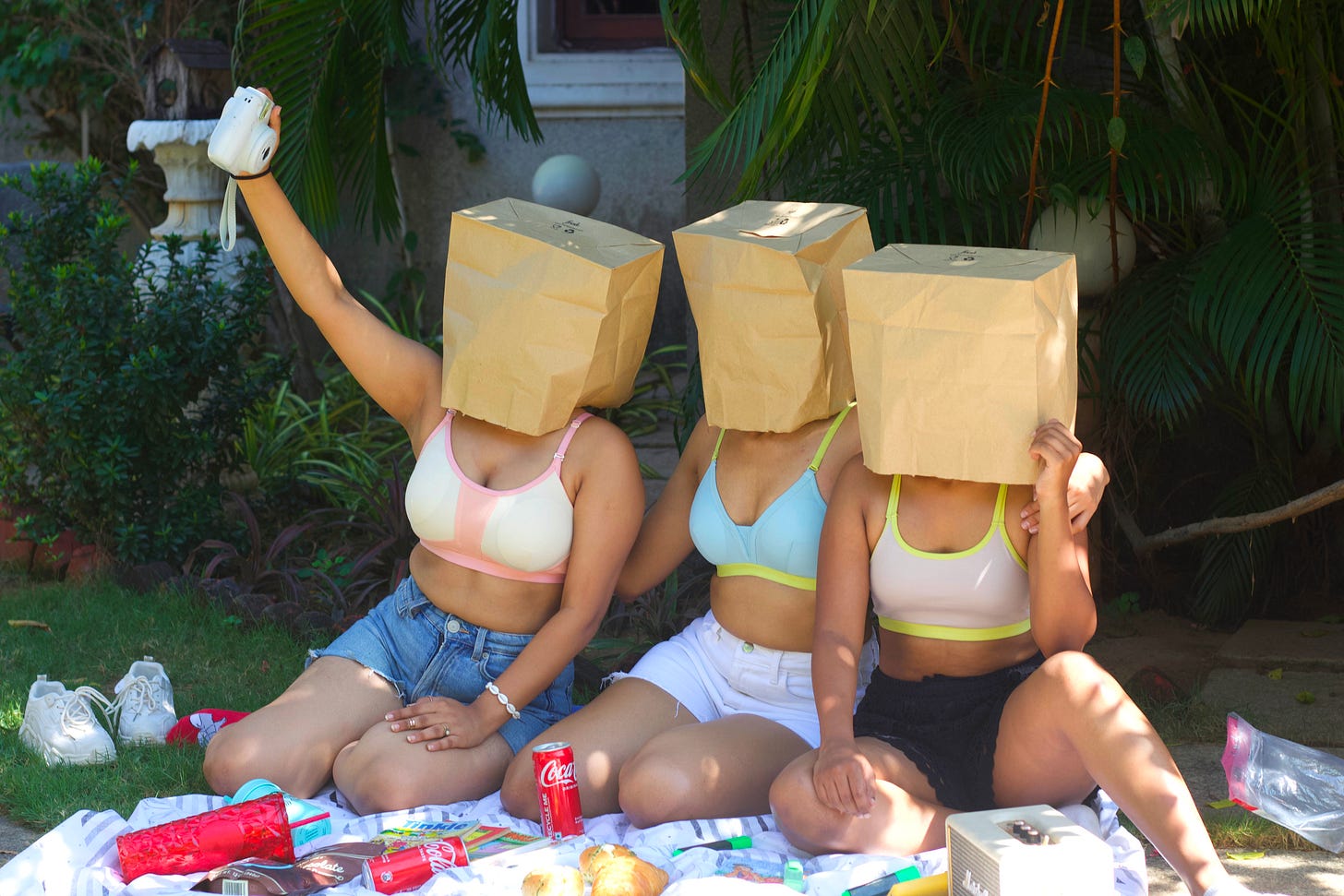
Growing at a different pace than your friends is one of the quieter loneliness of adolescence.
Friendships at 12 and 13 are built on sameness. Same music, same clothes, same everything. When your body diverges from the group, in either direction, it creates a gap that a girl doesn’t always have the words for.
She won’t come home and say, “Mama, I feel left out because my body is developing differently.”
She’ll probably just go quiet. Or start wearing oversized clothes. Or suddenly not want to go to sleepovers. Or ask you, in the most offhand way: “Is it normal that I still don’t have…?”
And that “is it normal” question is the most important one she’ll ask you.
She doesn’t need a biology lecture. She already has the internet for that, and she’s already used it.
What she needs is someone to tell her: her timeline is hers.
Not behind. Not ahead. Just hers.
At Qiwion, this is why we design by stage, not age. Because a 13-year-old can be at Stage 1 or Stage 3, and both are completely, entirely normal. Our stage-based range exists to say: wherever you are right now, there is something designed for exactly that. Not a compromise. Not a “you’ll grow into it.” For where she is, right now.
If your daughter is going quiet, pulling away, or asking small versions of the “is it normal” question, here’s how to meet her:
Don’t project. Don’t assume she’s struggling. Ask open, low-stakes questions.
Normalise the range. Share that girls develop across a wide spectrum, and both ends are completely fine.
Separate her body from her timeline. She is not “late.” She is not “early.” She is just her.
The goal isn’t to take the loneliness away entirely. Adolescence has its seasons. The goal is to make sure she knows that in your home, her pace feels safe and respected.
Has your daughter ever expressed feeling different from her friends physically? How did you handle it, what worked, what didn’t? I’d love to hear from you in the comments.
With conviction (and a little bit of madness),
Aditi
P.S. I’m Aditi — founder of Qiwion, India’s first growth-stage innerwear brand for girls between 9 and 19. Every product we build starts with one question: what does she actually need right now, not in two years?
No posts
Comments
Nothing yet. Say the first thing.
Sign in to join the conversation.