
When I decided to build Qiwion, I did something I should have done years earlier.
I read everything.
Books on puberty, developmental biology, textile research on adolescent bodies, cultural studies on girlhood. I consumed it the way I should have been taught it at 12, thoroughly, openly, without shame.
And the thing that struck me most wasn’t what I learned. It was how much of it I should have already known.
The information existed. We just weren’t given it.
Most of us, I’m including myself, and probably you reading this, got some version of The Talk. The clinical, awkward, once-and-done version. Periods. Maybe some anatomy. Almost certainly nothing about bras, growth stages, body image, or the emotional weight of having a body that is changing in public.
The gaps were enormous. And we filled them the way girls always fill gaps: by guessing, comparing ourselves to friends, and quietly concluding that whatever was happening to our bodies was probably wrong.
A girl’s size changes multiple times during development, sometimes every few months. Buying one bra and expecting it to last a year is why so many girls spend so long in the wrong fit.
These are different garments with different purposes. A sports bra minimises movement during exercise. A training bra offers gentle support during early development. Using one as a substitute for the other means she’s either under-supported or over-compressed. Neither is fine.
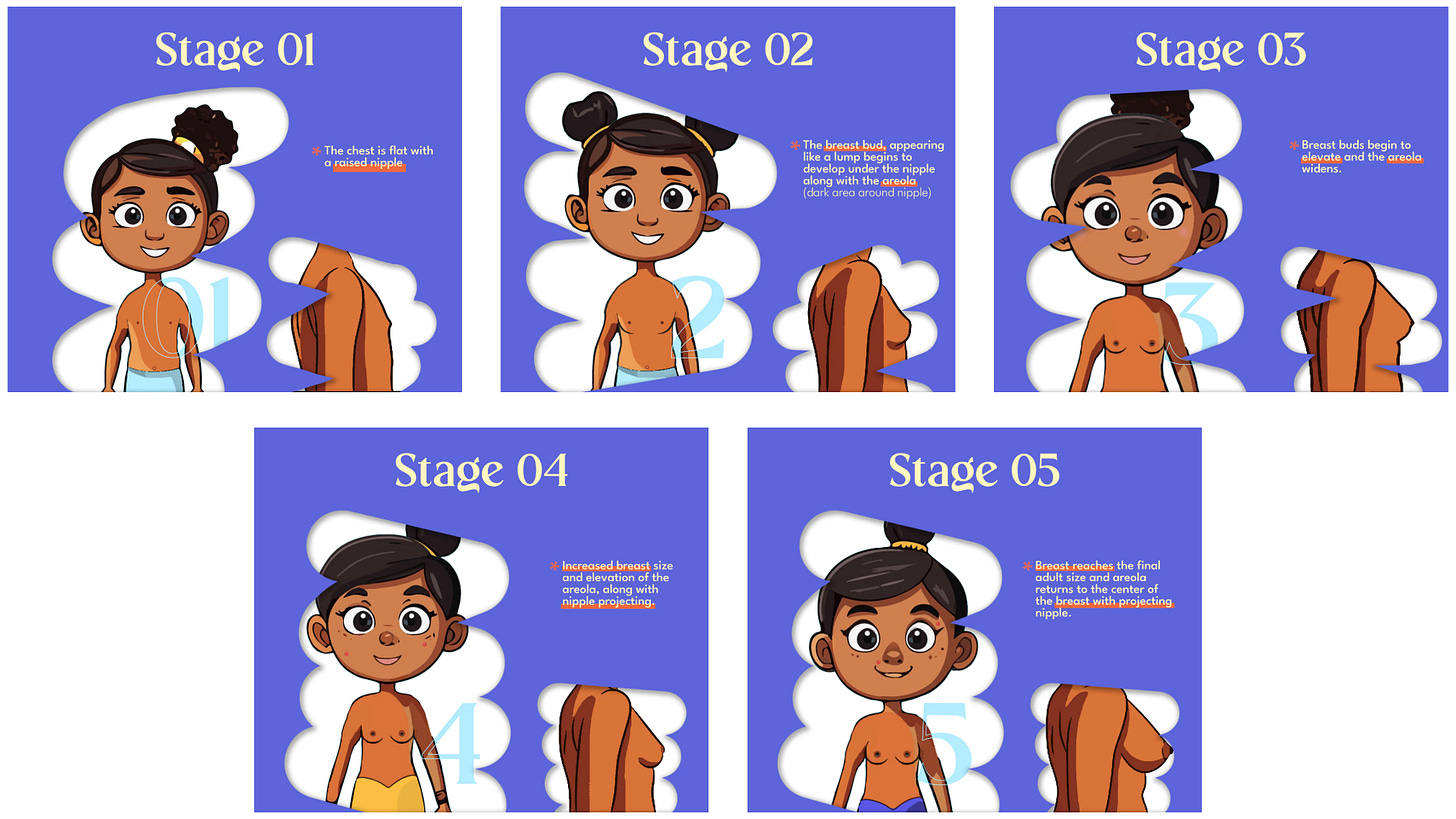
Puberty doesn’t run on a calendar. Two girls the same age can be at completely different stages, both entirely normal. Designing by age instead of stage is why so much of what’s on the shelf doesn’t actually fit.
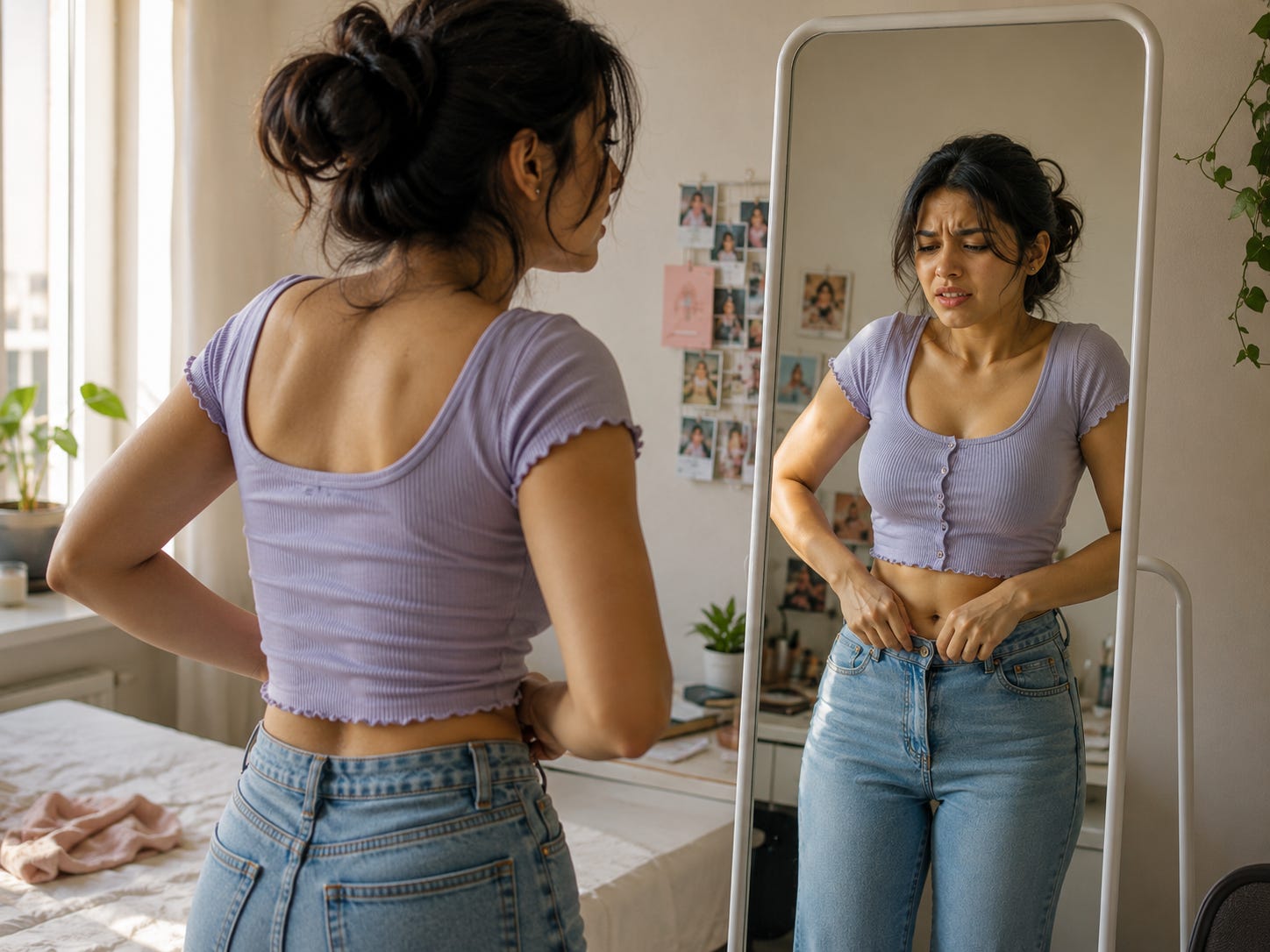
Girls normalise physical discomfort in their clothing so early that most don’t even flag it. The strap that digs in, the seam that chafes, the fit that gaps; all these are daily experiences that accumulate into a very specific resignation: this is just what it feels like to be in my body. It doesn’t have to be.
Girls process quietly. They research privately. They have questions they’ll never ask out loud because they don’t know if the question is okay to ask. The more openly you talk about these things at home, the more she knows her questions have a place to land.
At Qiwion, every design decision starts with these gaps. The stage-based range, the adjustable fits, the materials chosen for a full school day is an attempt to give her, through the product itself, the information and support she should have had access to all along.
With conviction (and a little bit of madness),
Aditi
P.S. New here? I’m Aditi, founder of Qiwion, and I started this newsletter because the conversations about growing up deserve to be louder, more honest, and more useful than they currently are.
No posts
Comments
Nothing yet. Say the first thing.
Sign in to join the conversation.