
If you’d like something putter-ish to keep you company while you read, Opening by Philip Glass holds the kind of stillness in motion I defend.
I used to meditate. Legs folded, altar arranged, a carved wooden Buddha, the protective ankh Brother Eric gave me to carry on solo travels. And of course, a candle.
In my early twenties, I fell into the practice like slipping into a warm body of water. A quiet homing at the start of each day, first to my thoughts, then to their loosening, then to the silence that held them. It felt easy, easier than normal life, an escape from this loud, look-at-me, world. My nervous system craved the ritual where the boundaries between body, mind, and my surroundings became soft.
And then Mal de Débarquement happened, the nonstop sloshing in my head; I have become a human wave pool. At first the flailing-armed amygdala inside those waves screamed with each crest and crash. Now she’s used to it, body surfing along the rhythms. But when I stop moving, when there is no motion at all, the waves are often still too much. I wiggle a lot. Someone once told me in those early days, “Just go within, Kim,” and I wanted to punch her in the neck. The last place I felt I could be was inside my body, inside my tormentor, inside my brain’s hokey-pokey-as-it-turns-itself-around. That’s-why-I-wanted-out.
And there is only one way out. Motion. As long as my body is moving, I am free from dizziness, not just a little, but completely. My favorite is driving. Like a golden retriever with the windows down, I am in breezy bliss, cars zipping by, hawks perched high on poles scouting their prey, but their talons have no purchase in me. I.Am.Free. The dizzies fly out the window like litter, gone before anyone can tell me to give a hoot. And while passive motion is the most effective, really, any kind of motion helps. Biking, walking, rocking back and forth, even wriggling my feet, anything that offers just enough proprioceptive feedback to drown out the drunkard in my brain.
I did try to “go within,” as suggested by my not-friend, because I would have tried anything. But the waves grew louder, larger, all-consuming. I clenched my mind around the swaying sensations, made them my mantra, my mudra, my slow dance with God, but my body kept answering back, insistent, almost pleading: move. I would step off the cushion in a ball of sweat and nerves and finally understood, this is no longer my way.
Now, I putter. Faithfully.
The kind that begins on the heels of slumber before thought organizes the day, when hands move first and the rest of me follows, a little of this, a little of that, attention drifting and landing wherever the whisper calls. I feel no urgency, no familiar shoulder tightening around outcome, just a steady, grinning motion that generates its own sense of enough.
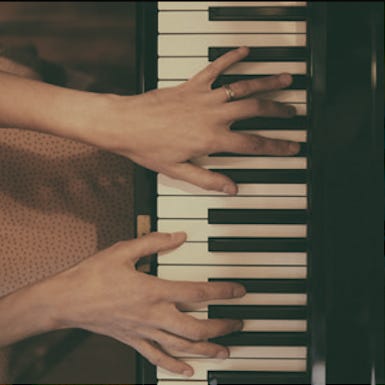
When puttering, I become a babbling brook, wandering without ambition, wetting pebble and root and fallen leaf with easy curiosity. I become a bird bathing in the pond, her flitting both deliberate and spontaneous at once. Or a dog on his morning walk, nose low, led onward by a thousand invisible delights rising from the ground. A jazz pianist noodling, an artist doodling. Puttering meanders like small talk with a best friend, the kind that rolls out in parallel play, phrases and inside jokes drifting up then falling back into silence.
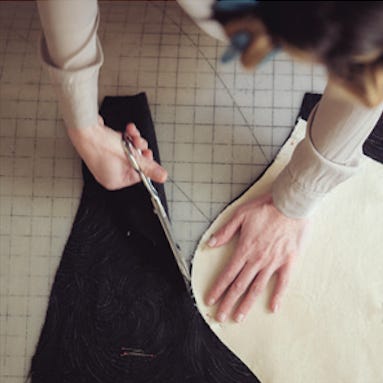
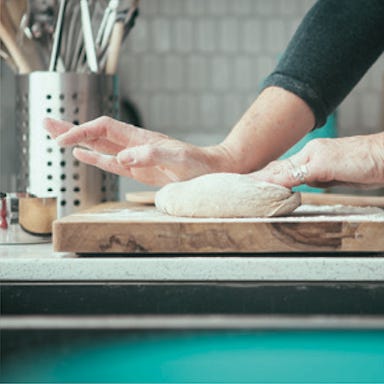
My muscles soften when inside it, breath unremarkable, posture unguarded, eyes receiving more than seeking. The world presents herself in small, specific ways and my body answers. Crumbs are gathered into my palm and brushed away, arms refold a throw from last night’s lounging, a plant is lifted, turned, its leaves thinned with a careful pinch, water poured until the soil darkens and drinks. Outside, hens cluck and scatter as I toss meal worms, eggs gathered into crook of arm, a feeder refilled, a weed loosened from the path with a small, satisfying pull. Each gesture completes itself and opens into the next. And within this continuity the morning finds its way into hands far more infinite than my own, shaping what I no longer have to hold still.
Eckhart Tolle once shared that setting aside time for meditation can keep us tethered to the very structure we hope to soften, that the act of doing it carries its own bound insistence. How funny that we need so much time and practice to finally realize there is no time (and therefore no practice), and yet here, in puttering, I recognize that release almost immediately, when practice marries life, and my body no longer has to choose between stillness and relief. The moment I stop trying to arrive somewhere else, I settle into what has always been here, an aha! that was waiting beneath the effort to reach it. In the relaxed drift of attention and response, silence gathers inward. Even with eyes open and body in motion, a quieting balloons within and around, a stillness revealed through movement.
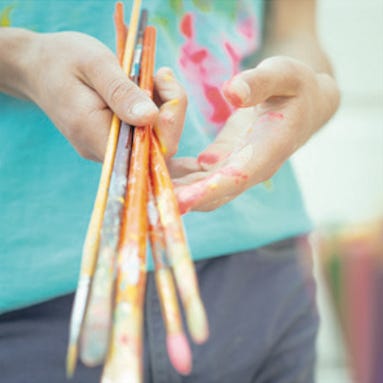
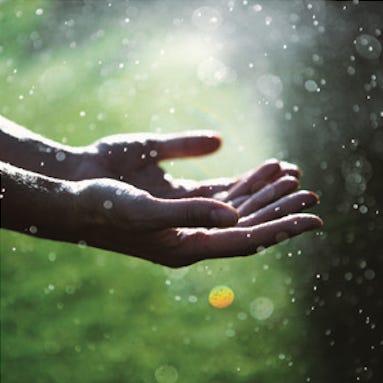
While puttering, it’s almost as if my hands and body become their own ancient mudra. A cupped palm along the spine of Otis, fingers pressing gently into soil, hands moving through the kitchen, pulling ingredients from shelves and cupboards, rinsing, setting them out in readiness, a circular sweep of cloth across the floor as I lower myself down, knees finding the ground without ceremony, the turn of a wrist, the gentle touch to whatever is in front of me. These tasks of the morning become offerings, my body holding the poses of tending, of care. The most ancient mudras of all, long before yogis brought pinkies to thumbs, our bodies bend into the oldest shapes of caring, arms like the canopy of a tree, hands like the bowl of a tulip opening to bees, body bowed like leaves returning to the ground. These mudras arise on their own, formed in contact, the body taking on the posture of care again and again. The gesture holds, then dissolves, then returns in another form.
Puttering asks only that I stay open and present, a kind of presence that gathers deeper in the body, closer to the chest than the mind. Would I call it puttering if I didn’t care? I don’t think so. Something in it would fall flat, lose its warmth and inherent reciprocity. Puttering asks that I listen to and remain with what is here, it asks that I let relation lead. And when that guidance is followed, the same actions carry a generative pace as though tending and giving move in a circle I am already inside of; entanglement not only understood, but felt. If I’m quiet enough, I can feel the current running through it, subtle but continuous, as though each object, each surface, each small living being is participating in the same exchange. The plant leans into the water as I tend it, the dish warms inside my hands, the animal arches into touch. Even the floor takes in my slow, circular motion of cloth and shines her reply.
I think the earth putters. Today, a light breeze wanders through the yard, lifting and carrying scents of spring from one place to another. Hummingbirds whiz by, a pink pleasure here and there, squirrels trace paths up and down trees, a thousand hellos a second as life touches life. Pausing, I become the one being greeted, and then move on.
Puttering doesn’t last forever though. The moment I turn toward the computer, my attention pulls forward; fingertips curl to meet the keyboard as my body and mind snap into a fixed rhythm. A narrower awareness and pace take hold. Some would call this productivity, but when I look back at the hour that came before, I see how much has already been touched and tended. Productivity stems from the Latin producere, to bring forth, but in puttering, it’s impossible to know who is bringing whom forth, the act unfolding in many directions at once, where the isolated me loosens into a dancing we.
Putter, putter, putter. Say it under your breath. The phrase carries its own delicateness, a light humor, enunciating in my mouth an ease that bubbles just beneath the surface. And inside it, I begin to recognize a familiar quality, one that many years ago involved crossed legs, a candle, a mantra, a breath. Now, legs meander, hands reach, light kindled not through wick and match but through presence. A way of being that homes itself through relation, through the simple act of loving what is already within reach. My body continues her small, responsive shapes, held then released, a continuous unfolding of gestures that ask nothing more than to be inhabited as they arise, and occasionally, to be repeated for no reason other than they feel good in my hands. Sorry Otis, I’m not done petting you.
So this is puttering, my meditation. Next time you think to sit, set a timer, and make time to lose time, you might notice the stillness already there, always there, revealing itself when you stop trying to find it. From there, putter away, and feel your presence open, body, mind, and environment moving as one in small, shared devotions, unstudied, unoptimized, unnoticed by anyone but the ones living it.



Comments
Nothing yet. Say the first thing.
Sign in to join the conversation.