
Hi everyone, I’m working on a post about Dutch Golden Age artists, including Maria van Oosterwijck, the inspiration for the main character in Victoria Redel’s novel I Am You. But I haven’t finished it yet. So I added a little more to a previous post about Edith Wharton’s war work during WWI, and I’m resharing it. It somehow seems appropriate for this upsetting, confusing time.
“….It was a perfect summer day; brightly dressed groups were gathered at tea tables beneath the overhanding boughts, or walking up and down the flower-bordered turf….As we sat there, a cloud-shadow swept over us, abruptly darkening bright flowers and bright dresses. “Haven’t you heard? The Archduke Ferdinand assassinated…at Sarajevo…where is Sarajevo? His wife was with him. What was her name? Both shot dead.” A momentary shiver ran through the company. But to most of us the Archduke Ferdinand was no more than a name…”
—Edith Wharton, A Backward Glance
“A perfect summer day” is how Edith Wharton recalled the moment she learned about the inciting incident of the Great War, as they called it. She wrote of her own ignorance, and the ignorance of her artist, writer, and even diplomat friends, about what this incident would lead to.
A few years earlier, nearing age 50, Wharton had moved to France to seek a new, more literary life after her marriage to Teddy Wharton broke down. Now she was happily ensconced in Paris, in a rented apartment on the Rue de Varenne on the Left Bank.
(Part one of my post about Edith Wharton at midlife, and the country house where she wrote her first novels, is linked below.)
Wharton had planned to spend the fall of 1914 in England in a rented house, writing and hosting her American-expat and British friends like Henry James, Howard Sturgis, and Mary Hunter. In late June, she closed her Paris apartment and sent her servants ahead to England (as one does, if one is a privileged American, whose novels have added to one’s fortune), while she traveled with friends in Spain, wandering through Barcelona, then the Pyrenees, looking for cooler weather. In late July, she returned to Paris, “where the air was already thick with rumors. Everything seemed strange, ominous and unreal, like the yellow glare which precedes a storm.”
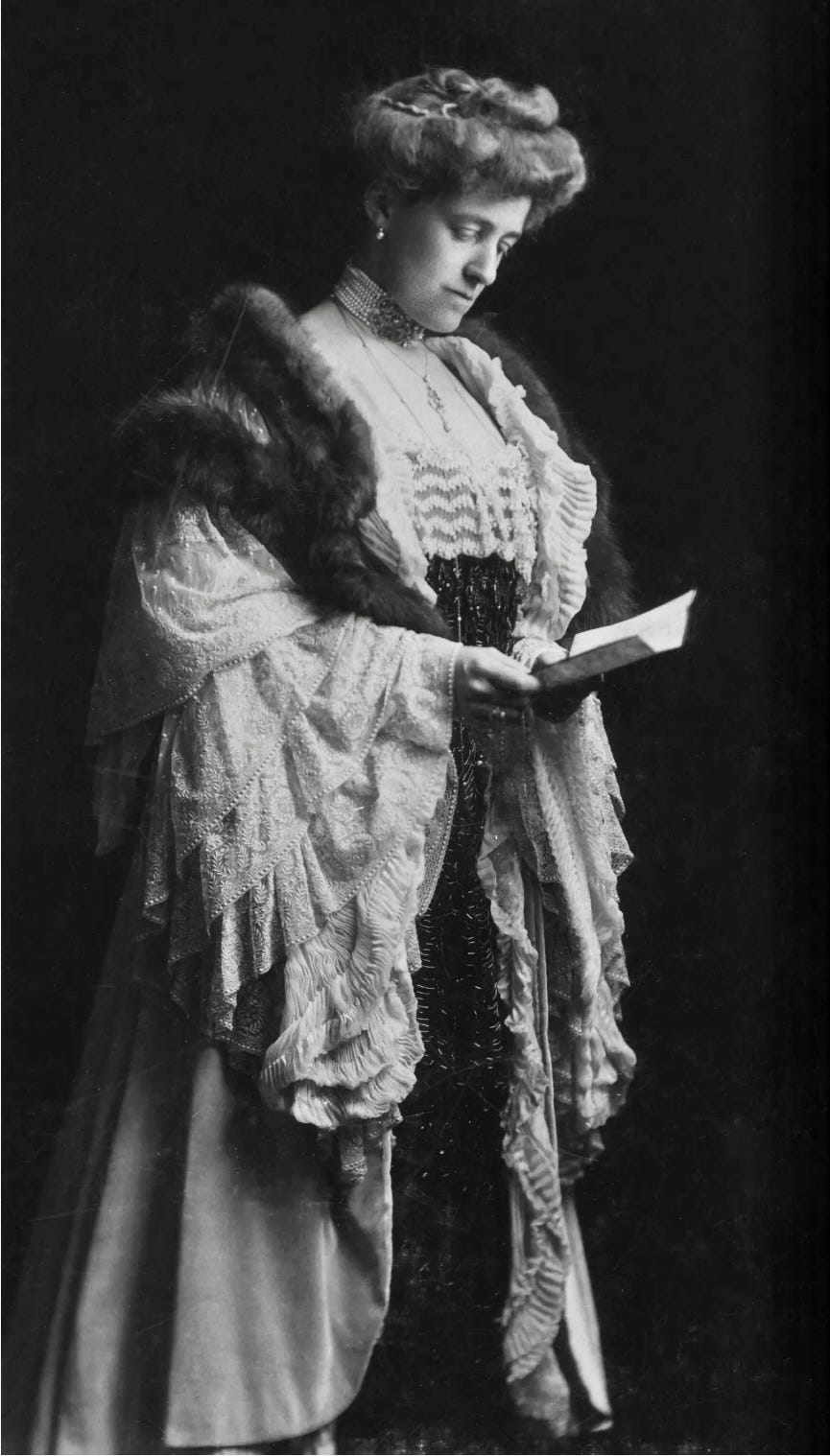
When war broke out, Wharton suddenly had no money—the banks wouldn’t release funds to anyone—and no way to get to England or to pay her servants for their work in the English house. She finally retrieved $500 from New York by agreeing to pay $500 for the transaction, and her friends advised her to go to England, as they were doing, and to stay there “‘till the war was over,’ that is, presumably, sometime in October,” she wrote.
While Wharton waited for a permit to go to England, her friend the Comtesse d’Hussonville, who served as Paris President of the Red Cross, asked her for a favor: to organize a workroom for the women in their arrondissement who were waiting for government assistance. As the men went off to war, everything had shut down, and women and children all over Paris had no income, and no way to make money.
“I was totally inexperienced in every form of relief work, and not least in the management of anything like a work room for seamstresses….and I had no money to do it with,” Wharton wrote. Still, she found an empty apartment nearby, and drew on her own funds as banks allowed. “I assailed all my American friends who were either living in Paris or stranded there,” and collected twelve thousand francs. Soon, she was in charge of 90 women seamstresses. She decided that these seamstresses could make lingerie instead of hospital supplies, and she badgered (her word) her friends to order lingerie and other items, building “a thriving trade in unexpected lines, including men’s shirts (in the low-neck Byronic style) for young American artists from Montparnasse!”
“I was totally inexperienced in every form of relief work, and not least in the management of anything like a work room for seamstresses… and I had no money to do it with.”
As the Germans advanced, Paris filled with Belgian and French refugees, and since the Red Cross was overwhelmed with field duties, Wharton was again asked to help out. She formed a committee to raise money for the refugees and to do the hands-on work of feeding, clothing, and resettling the refugees. She raised more money, helped create departments, and dug in to the work of getting the refugees registered and meeting basic needs. She also recruited many more volunteers, including a who’s who of artistic Paris (André Gide, Percy Lubbock, Darius Milhaud).
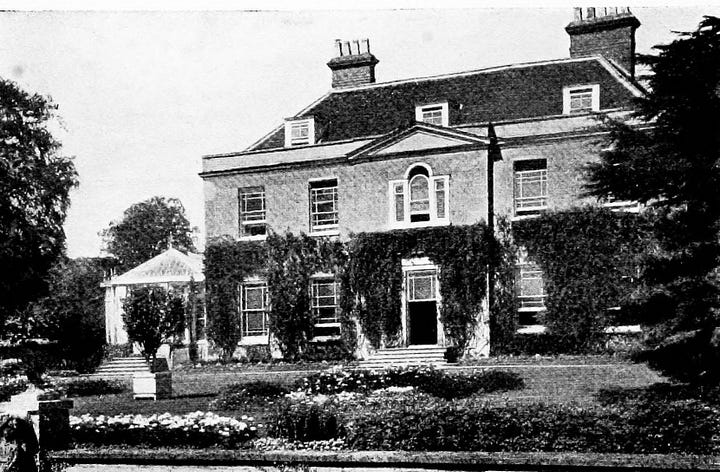
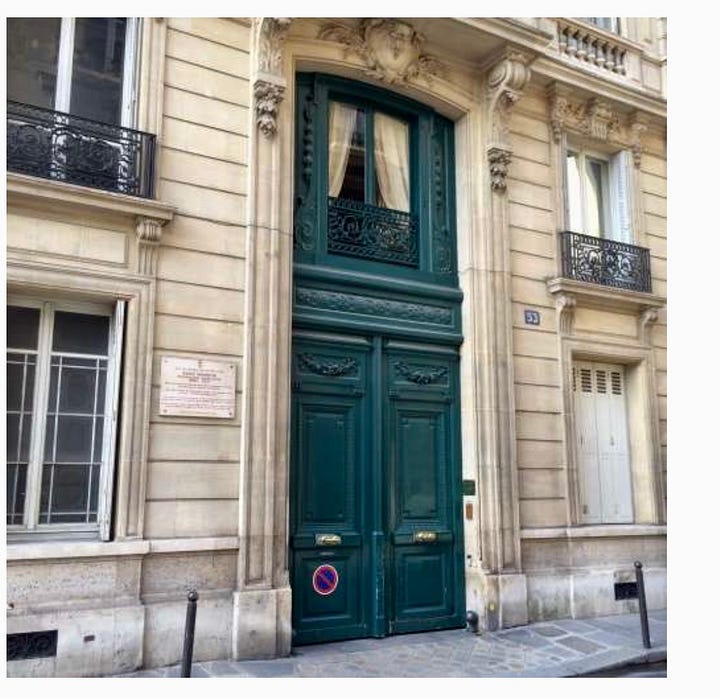
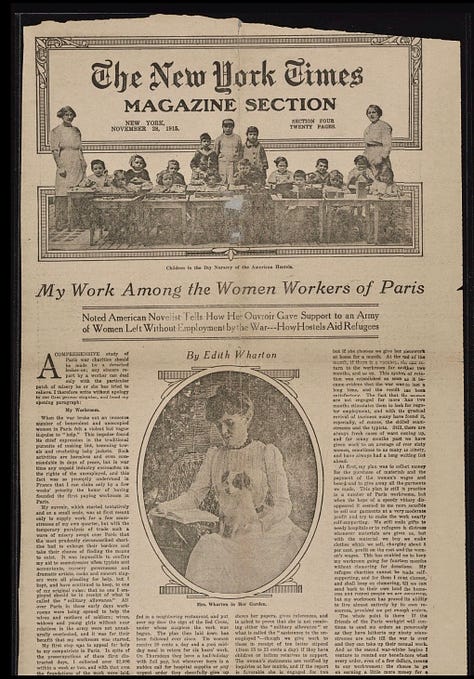
Before long, Wharton was presiding over an enormous endeavor, and she continued to raise money for refugees and working-class women and children. To promote this effort and fundraise, she wrote for American magazines, like this long 1915 piece for the NY Times Magazine (below). Here’s what she wrote about one of the charities, the Children of Flanders Rescue Committee: “This is my prettiest and showiest and altogether most appealing charity, but I am not going to say as much about it, as it needs less help than the others, though those number nearly a thousand!” Then she goes on to tell all about it…
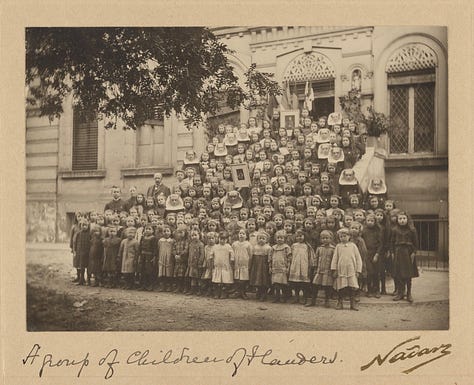
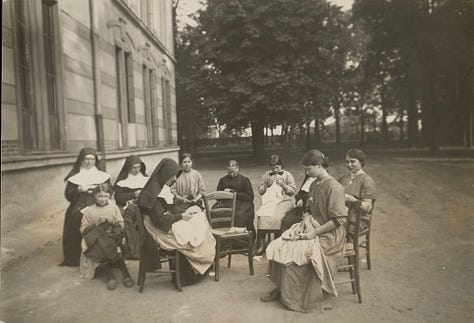
I love how she later described the difficulty of figuring out which volunteers she could count on. “Some would drift in vaguely, saying…’don’t expect too much from me,’ and would turn out to be the future cornerstones of the building. Others, lucid, precise, and self-confident, would point out our deficiencies, offer to remedy them, and fade away after a week.” If you’ve ever been part of a volunteer effort, doesn’t this ring true?
Wharton also visited the French front multiple times, invited by the Red Cross, and she reported on the needs of military hospitals in still more articles for American magazines, arguing for the US to join the war. She also created a physical fundraiser, The Book of the Homeless, soliciting entries from literary and artistic luminaries (Yeats, Monet, Henry James, Sarah Bernhardt, Sargent, Renoir, Rodin, and on and on), and raising still more money for refugees.
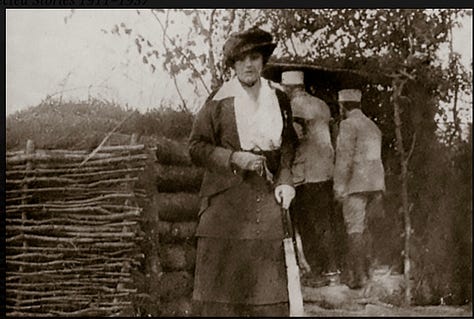
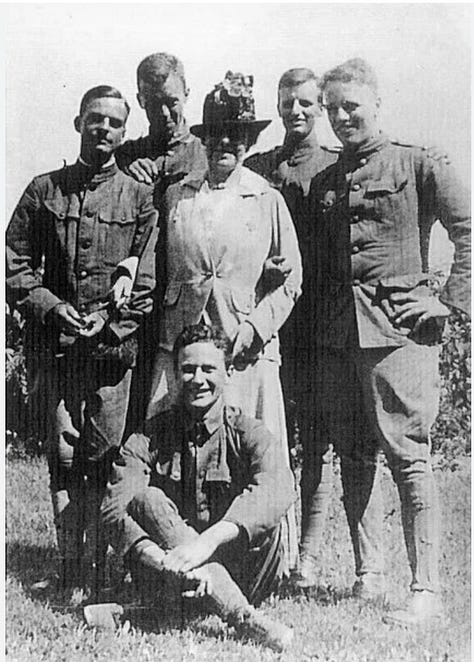
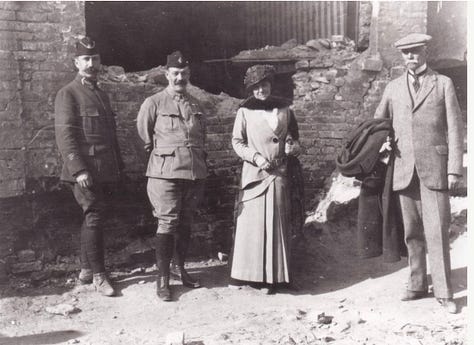
By the end of the war, Wharton and her committee had cared for 5000 refugees, and had built four tuberculosis hospitals for women and children, along with care homes for old people and children. The French government awarded her its highest honor, making her an officer of the Legion of Honor for her service to France.
Years later, Wharton wrote that the end of the war brought a brief feeling of rapture, followed by a growing sense of the waste and loss of those years. “Death and mourning darkened the houses of all my friends, and mingled my private grief with the general sorrow.” She noted all the friends and relatives who’d died in the war, along with the deaths of her friends Howard Sturgis and Henry James, “the perfect friend of so many years…”
And while she easily could have written about her work work as the honor of a lifetime, or some other humble-brag, she wrote this self-aware reflection instead:
“Many women with whom I was in contact during the war…found their vocation in nursing the wounded, or in other philanthropic activities. The call on their cooperation had developed unexpected aptitudes which, in some cases, turned them forever from a life of discontented idling, and made them into happy people. Some developed a real genius for organization, and a passion for self-sacrifice that made all selfish pleasures appear insipid. I cannot honestly say that I was of that number. I was already in the clutches of an inexorable calling, and though individual cases of distress appeal to me strongly, I am conscious of lukewarmness in regard to organized beneficence. Everything I did during the war in the way of charitable work was forced on me by the necessities of the hour, but always with the sense that others would have done it far better, and my first respite came when I felt free to return to my own work.”
“I was already in the clutches of an inexorable calling, and though individual cases of distress appeal to me strongly, I am conscious of lukewarmness in regard to organized beneficence. Everything I did during the war in the way of charitable work was forced on me by the necessities of the hour, but always with the sense that others would have done it far better, and my first respite came when I felt free to return to my own work.”
As to that work of her own, Wharton wrote little fiction during the war years, other than a short novel, Summer, and at war’s end, a novella, The Marne, which sold poorly, probably because people had had enough war stories.
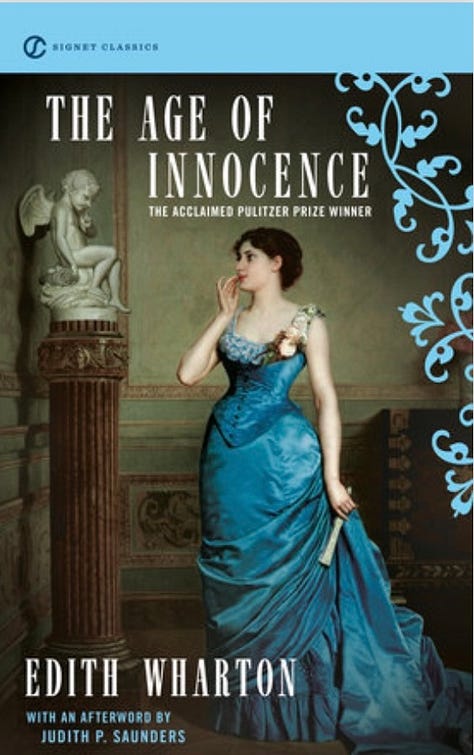
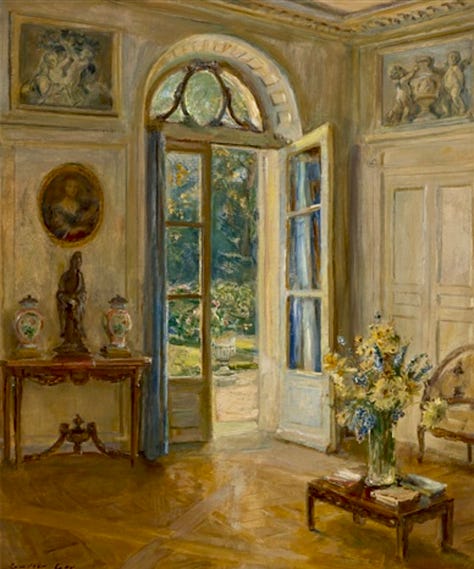
But soon after the war, Wharton left Paris for a suburban house north of the city (see below for a view of her sitting room, French doors open to the garden), and began to write The Age of Innocence. It’s the novel she’s probably best known for. It won the Pulitzer Prize, and it’s still read today.
It’s possible that she could have written The Age of Innocence if the war had never happened. But it seems possible, even likely, that the work, the strain, and the grimness of the war years, along with the deaths of her best friends, Henry James and Howard Sturgis, led her to write an elegiac, looking-back novel, though still with plenty of barbs in its observations. It won her a Pulitzer Prize, making her the first woman to win the prize.
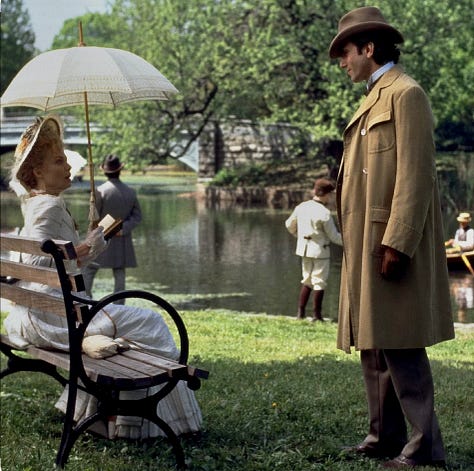
The Age of Innocence is set in 1870s New York City, in the era of Wharton’s girlhood. By 1920, that world—privileged, WASPy, rigid, constrained, “gentlemanly,” even in wartime—was long gone. It was a world she’d deliberately left behind, when she left her marriage and the US for France.
And yet, after the war, maybe she longed for it, a little.
Further reading:
A Backward Glance, Edith Wharton, first published in 1933; Touchstone, 1998.
Henry James and Edith Wharton, Letters: 1900-1915, Lyall Powers, editor, Scribner, 1990.
“Dearest Edith,” Janet Flanner, The New Yorker, 1929, Janet Flanner’s snarky yet admiring piece about Edith Wharton.
“My Work Among the Women Workers of Paris,” Edith Wharton, Nov. 28, 1915, The New York Times.
Edith Wharton, Hermione Lee, Vintage, 2008. Definitive biography.
The Age of Innocence, Edith Wharton, and The Buccaneers, Wharton’s last novel, unfinished, about the young American heiresses who were sent to England to nab husbands with titles.
The Age of Desire, Jennie Fields, 2012. A novel about Wharton’s late-midlife affair with Morton Fullerton. Point of view moves between Wharton and her longtime maid and helper, Anna Bahlmann. I have my quibbles with this novel, but I did enjoy it. Let me know if you’ve read it!
Comments
Nothing yet. Say the first thing.
Sign in to join the conversation.