
I’ve always had something of an interest in new towns. They are, of course, a post-war utopian vision which ran headlong into the reality of human nature. Hamstrung by sub-par materials, poor design and horrific costs, they’re a dream that died, like the social contract or affordable housing.
I caught the very tail-end of this dream. When we moved to Hertfordshire in 1982, my dad concluded that he’d rather do the weekly family shopping venture in Hatfield than St Albans because of the free parking. I still remember the bustling marketplace and the feeling of fresh modernity, a pedestrianised shopping precinct with a huge Woolco at one end of it.
Within a decade, that mood of post-war optimism felt dead. British Aerospace, by far the biggest local employer, moved out, and a plate glass shopping precinct called The Galleria, which had a built-in cinema, opened in 1992, dealing the final blow to the already beleaguered town centre. The idea of a concrete pedestrianised town centre with two storeys of shops that people would volunteer to walk upstairs to get to suddenly seemed like an extremely outdated idea.
London is encircled by new towns; Basildon and Harlow to the east, Stevenage, Hatfield, Welwyn Garden City and Hemel Hempstead to the north, Bracknell to the west and Crawley to the south. Milton Keynes, Corby and Peterborough followed in the second wave, further out from London but still in their own way commuter towns.
In London itself sits one of the most ambitious of the lot, but one which failed so hard that it’s already being demolished and replaced. Thamesmead was supposed to be different. It was part of the second wave of new towns to be built, and the planners believed that they had learned their lessons from the first wave. The architecture was radically different to anything seen before, with radical-looking buildings made in the most modern style. People and cars would be separated, with elevated walkways and roads underneath, or pathways well away from roads.
Quality of life was carefully considered. Thamesmead would be given everything it needed to be a fully self-supportive town. Green spaces would be installed with artificial lakes. There would be pubs, shops, parks and jobs. The new town would be linked to the centre of London by new transport links, making the West End just half an hour away.
Of course, the idea quickly fell flat. Sub-standard building materials made for buildings that started looking extremely crappy, extremely quickly. The elevated walkways became a criminal’s paradise. The jobs never arrived and, crucially, neither did the transport links.
The project was left to wither on the vine until the Peabody Estate bought it up in 2018 and promptly started demolishing it. This has not been universally popular with residents, though. Plans to demolish the Lesnes Estate in South Thamesmead have recently been referred for a judicial review following years of protest against its destruction.
Nowadays, Thamesmead is best remembered as the setting for many of the external scenes from A Clockwork Orange. It probably wasn’t what the newly-built town would have wanted, to be the poster town for a futuristic vision of dystopia, and I watched it again in preparation for this trip. The film was banned by Stanley Kubrick himself as a result of reports of copycat attacks, and wasn’t lifted until after his death in 1999, so I’d have been in my late twenties.
All I remembered of it was that I didn’t like it at all, and watching it on a second viewing a quarter of a century later, my feelings hadn’t changed that much. Kubrick’s version is, in many ways, an incredible film. The soundtrack is excellent and the cinematography is stunning, but it’s also so nihilistic in its outlook that I just felt grubby afterwards.
Some of the old Thamesmead is, of course, still there. And since I like to pack a lot in, that’s not my only stop on the way to see Erith Town, who play at the ground formerly used by the now-defunct Thamesmead Town, take on Eastbourne Town in the Preliminary Round of the FA Cup. The nearest that Thamesmead has to a train or underground station is Abbey Wood, which is about a mile to its south, and the amount of time that I’ve allowed for this journey has plenty of space for shenanigans.
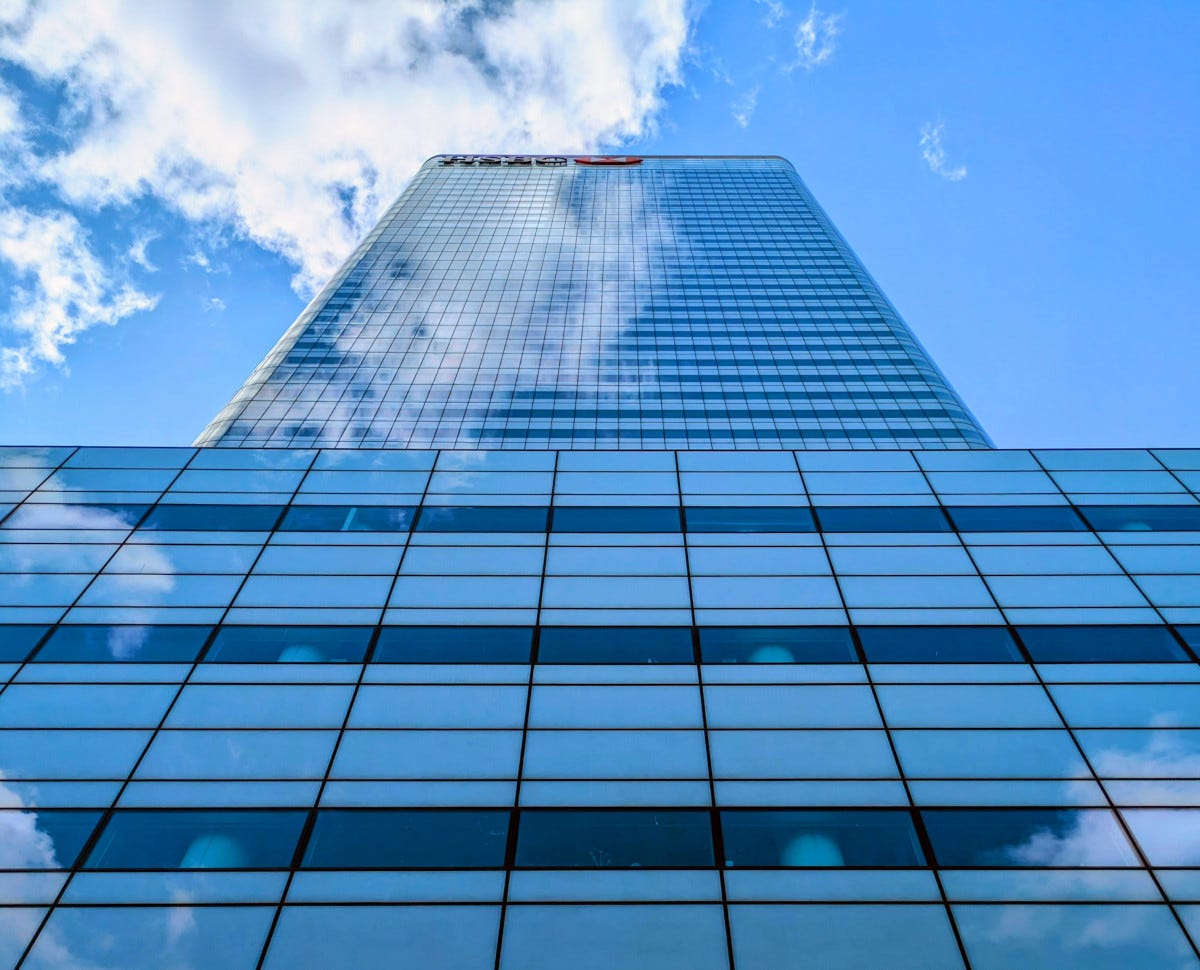
The Elizabeth Line now connects Farringdon to Abbey Wood. My original plan had been to head up to Uxbridge first, for some shots of the University building used for other scenes in the film, but there are works going on on the Piccadilly Line which are enough to make me think “fuck that” and give consideration to something else instead.
The part of East London that is the most affordable is, as I discovered as the result of ill-advised thoughts on my part of moving back to London a couple of years ago, that which is on the flight path to City Airport. It’s close to where I’m headed, albeit on the other side of the river. I’ve decided to stop off at Canary Wharf to gawp at some BLODDY MASSIVE BUILDINGS.
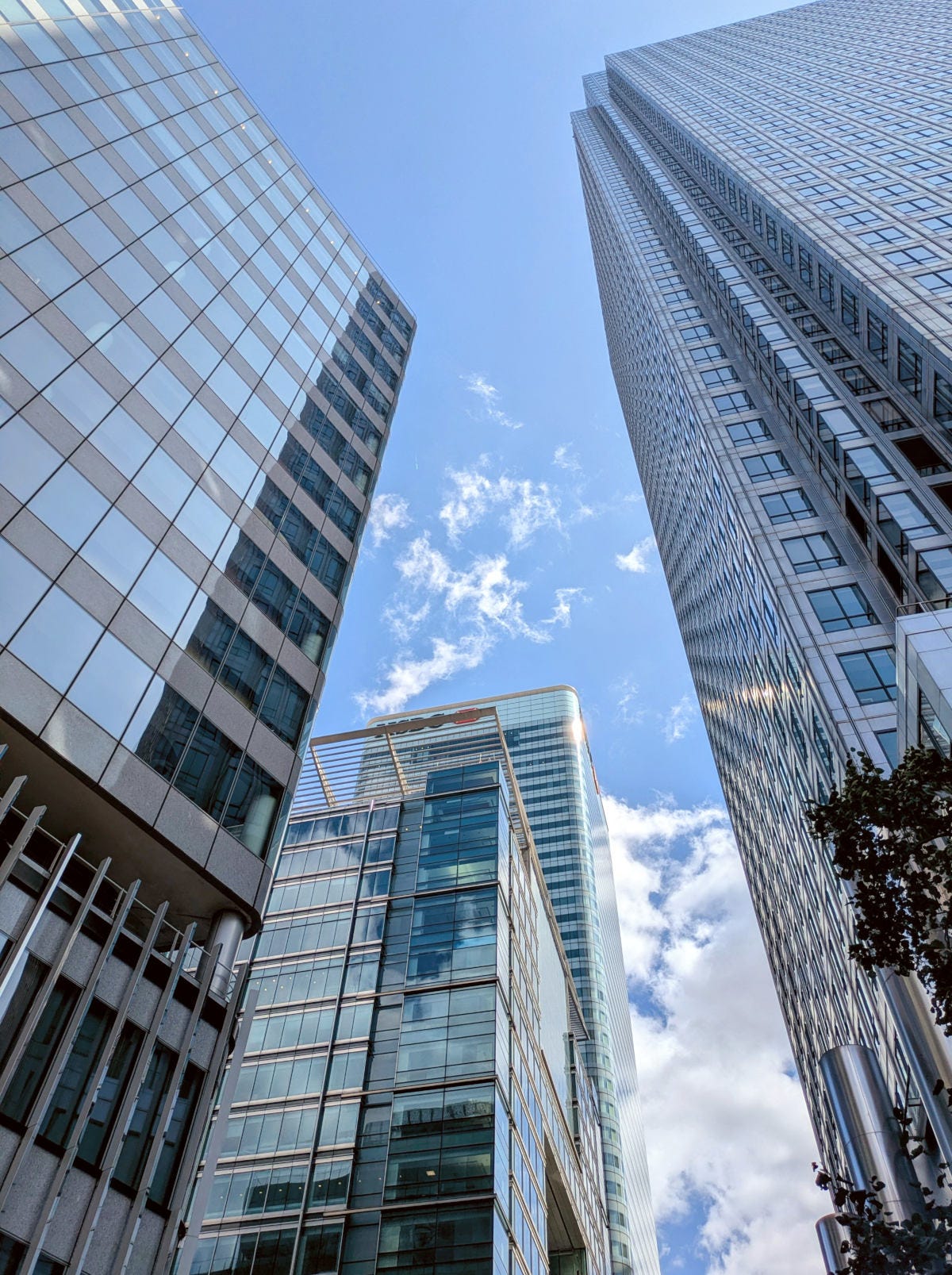
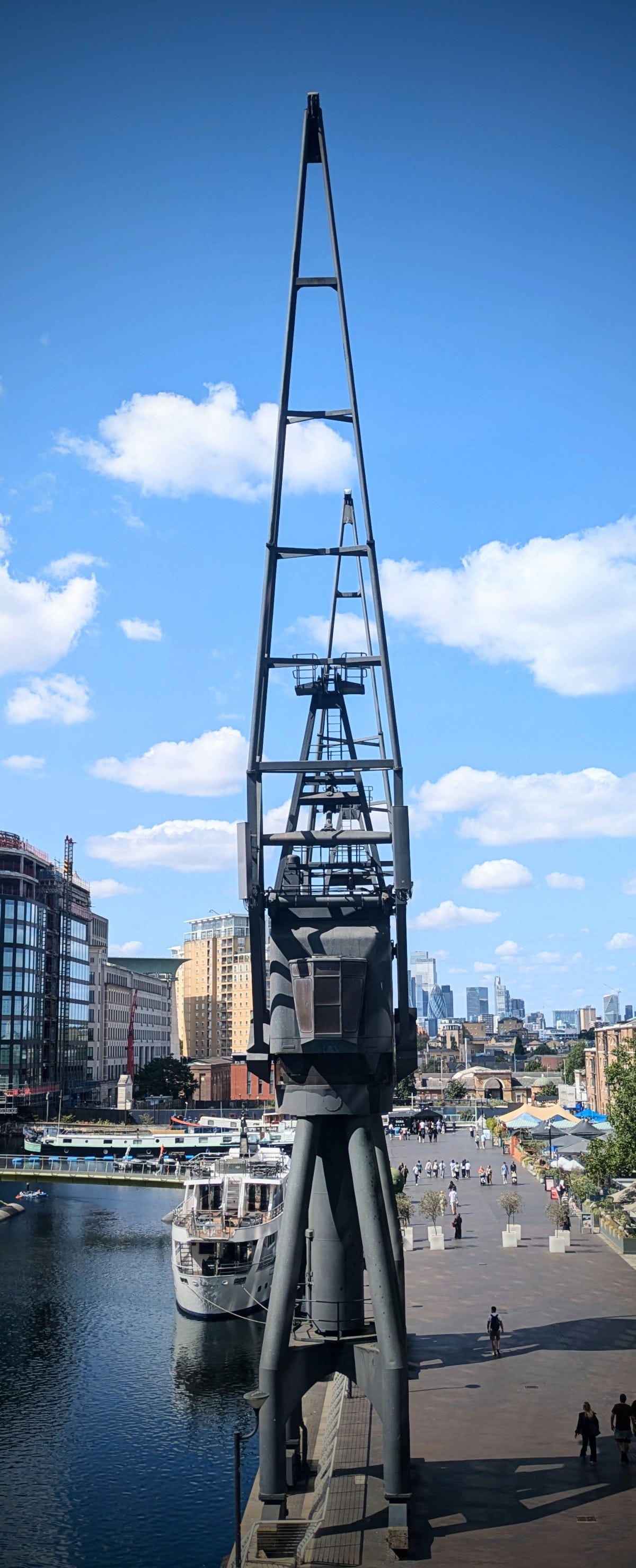
I feel as though I should be clear that I fucking hate Canary Wharf, just as much I hate the Shard. I hate all these temples to Mammon which have permanently bespoiled the London skyline. The last time I was here was in about 2011, for an interview in the building next to Canada Tower. At 10.30 on a Tuesday morning, it was absolutely deserted outside, not a single soul to be seen. There probably wasn’t a single soul in the entire area.
Times have changed. It’s just after noon on a Saturday when I arrive there, and it couldn’t look much more different. It’s a town without inhabitants nowadays, and for reasons that I can’t fathom there are a lot of tourists milling around. It essentially looks like a giant Brighton Marina. All it really needs is a TGI Friday’s with whitewashed windows.
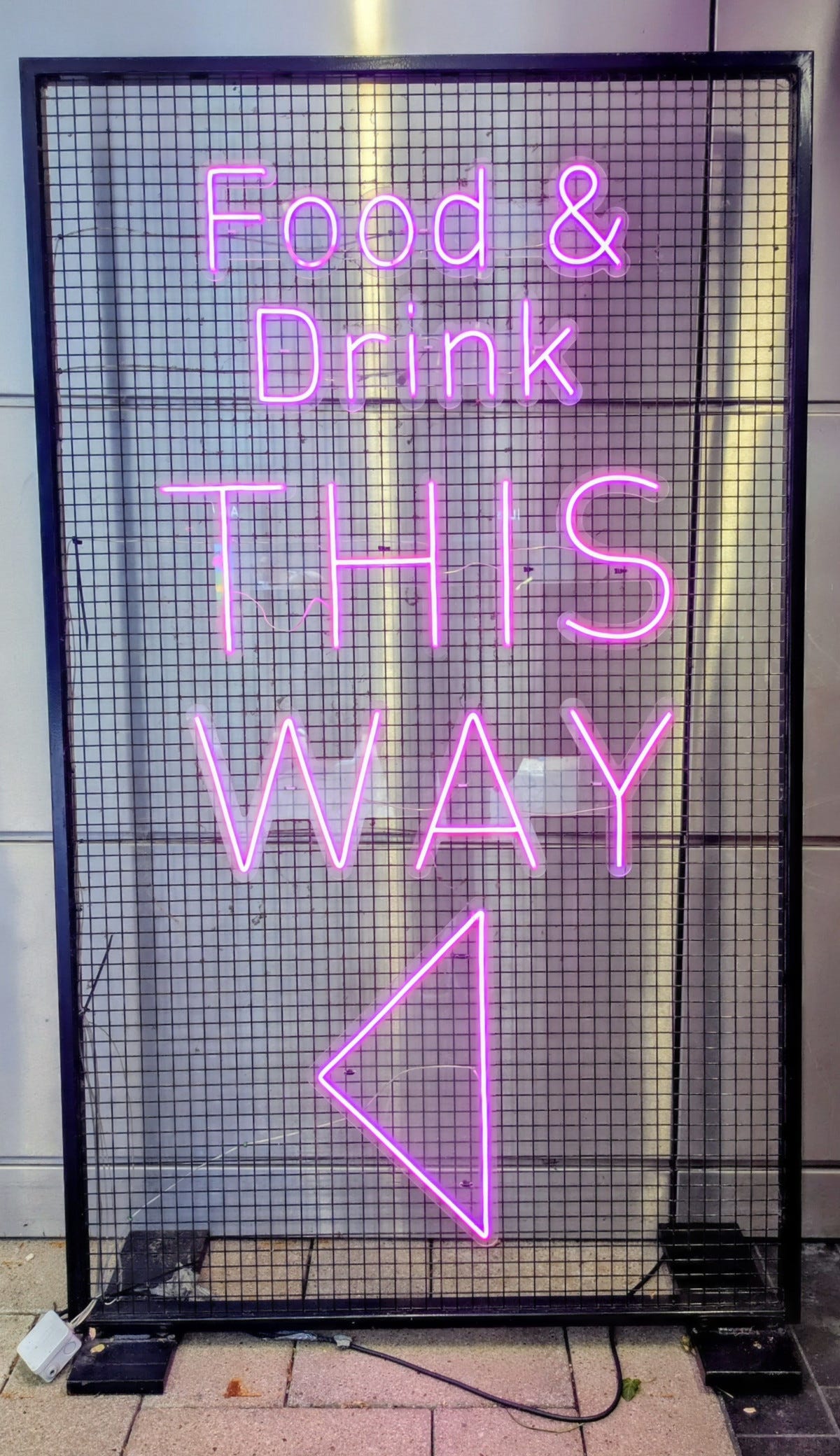
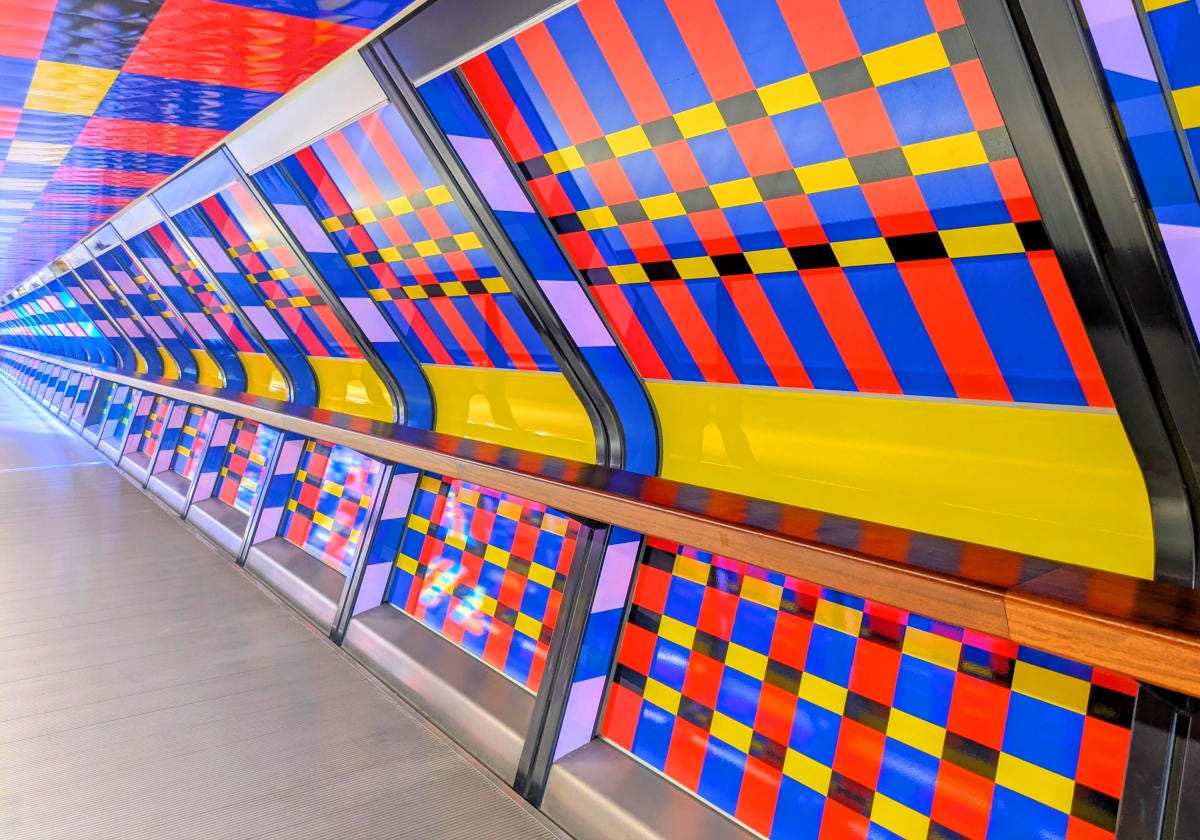
I go for a little walk around and take a photograph of some buildings that smell of money. I’ve decided that, out of deference to m’former podcast co-host, I will at least go to Shadwell. He is a big fan of the movie ID, and yes, we do quote it at each point even though I’m in my mid-50s and he’s in his mid-40s. There doesn’t appear to be much to do in Shadwell. We can’t even go dahn The Rock. And once I’ve negotiated those two stops back to Canary Wharf and got mildly lost trying to find the Lizzy Line again, I’m off to Abbey Wood.
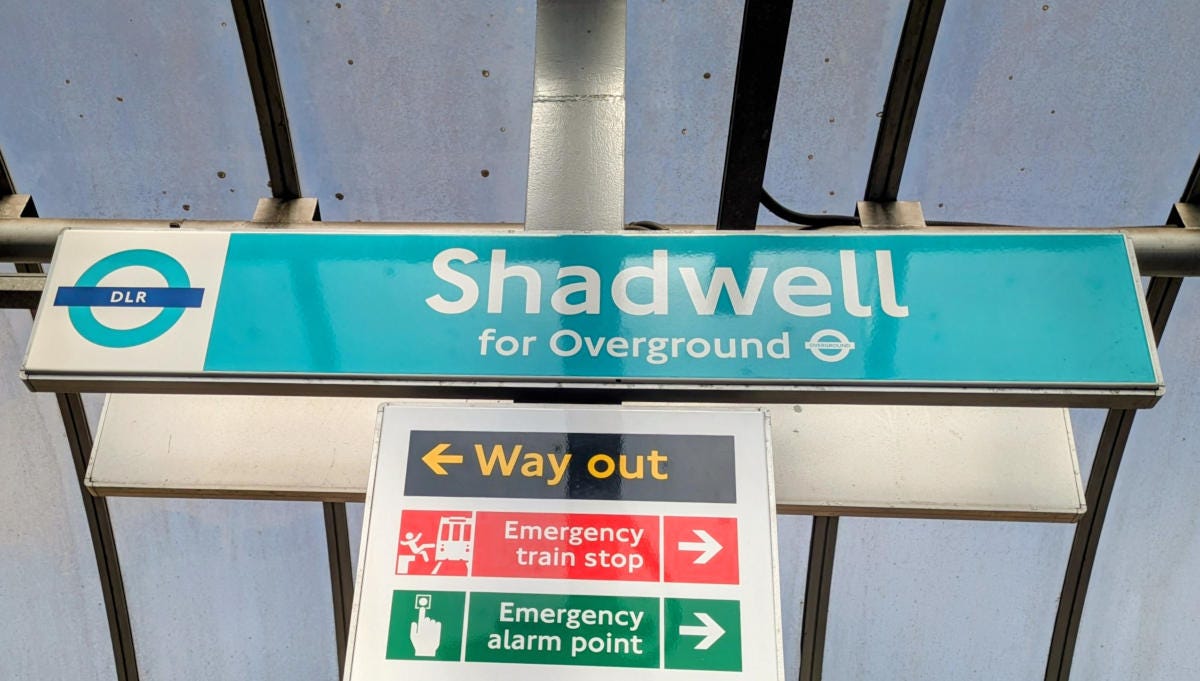
Going to Shadwell also allows me to travel a couple of stops on the DLR, a light railway which makes me instinctively want to shout, “monorail, Monorail! MONORAILLLLLLLL! [pause] mono” as it rumbles through this plate-glass hellscape. It has also been a long time since I’ve been on the Docklands Light Railway, and I obviously head straight to the front of the driverless train, take a photo, and send it to my older kid with a message attached which reads, “Hey Older, THEY’RE LETTING ME DRIVE THE TRAIN!!!”
He does not respond.
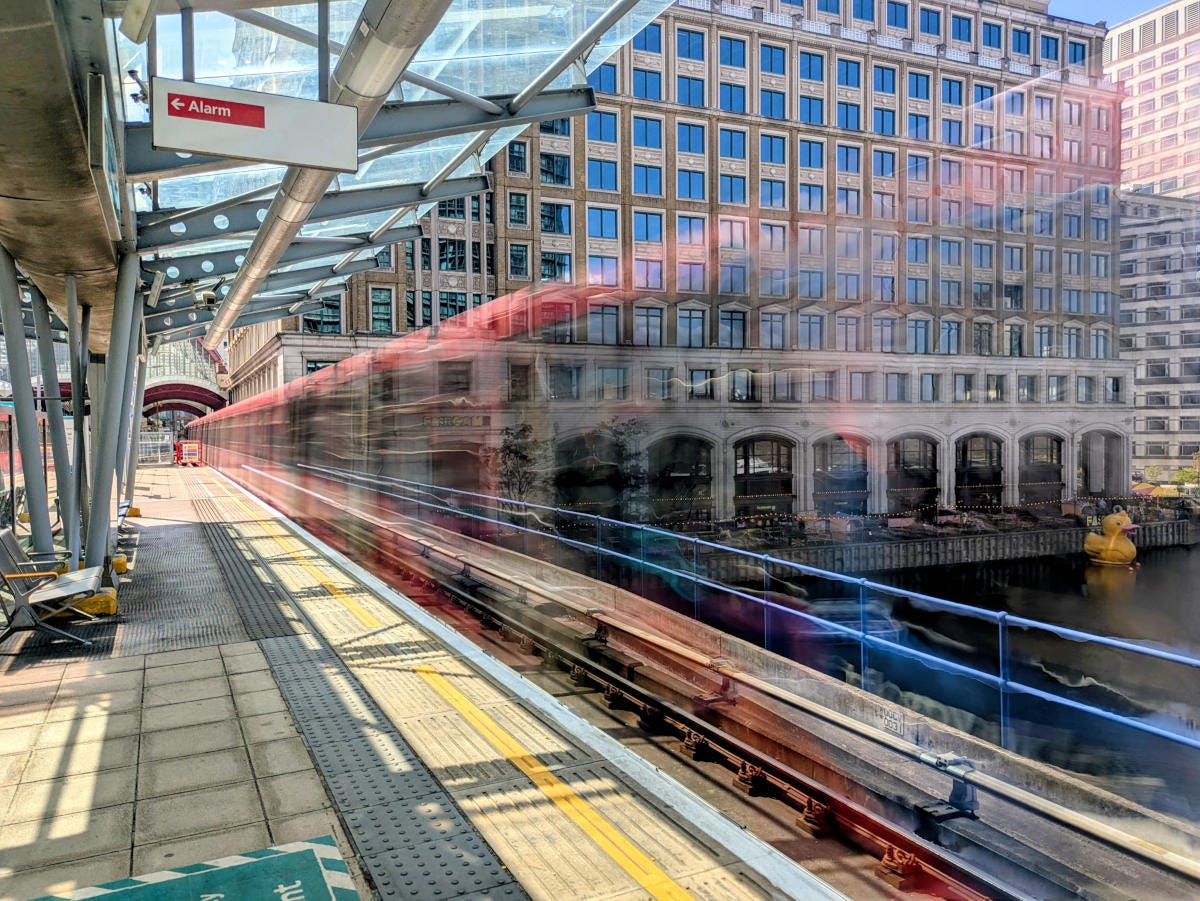
Back at Canary Wharf, there isn’t much to do beyond consume or go elsewhere, unless you work there, so I might as well travel on to Abbey Wood. One of the most frequent criticisms of the planning of Thamesmead was how much of it prioritised cars and how little of it prioritised public transport. But these complaints are by London standards. In reality, Abbey Wood Station is about a 20-minute walk from the centre of Thamesmead. There’s a big Sainsbury and a Lidl. Whatever this place might have been in 1974, it doesn’t feel like a backwater any more.
I walk up to a particularly forbidding roundabout and decide that crossing it is probably not a good idea, and turn left instead, heading for Birchmere Lake. This wasn’t the one that was used in A Clockwork Orange, but I’m keen to see what this planned community looks like in 2026 and it’s only a ten minute walk - albeit through an estate which has a large number of St George’s flags hanging in people’s gardens before I get there.
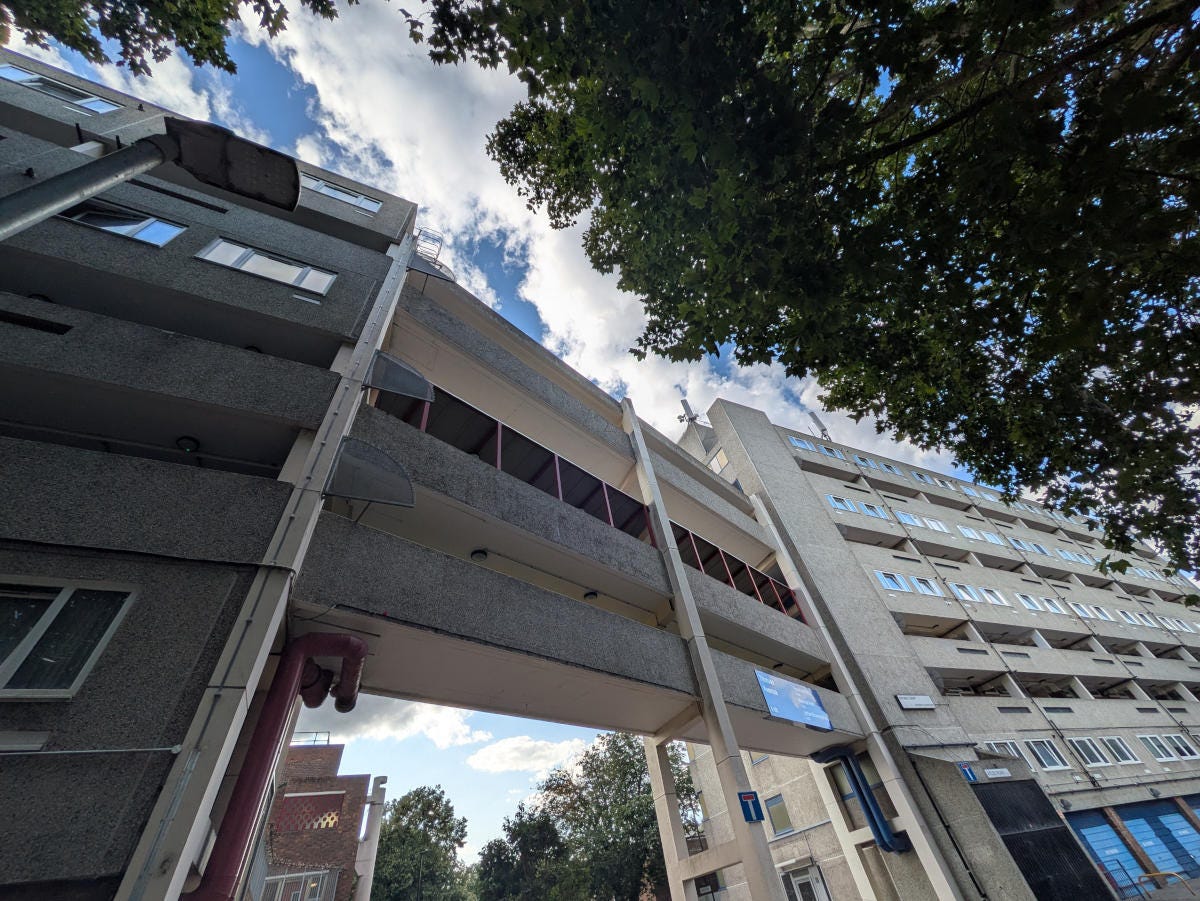
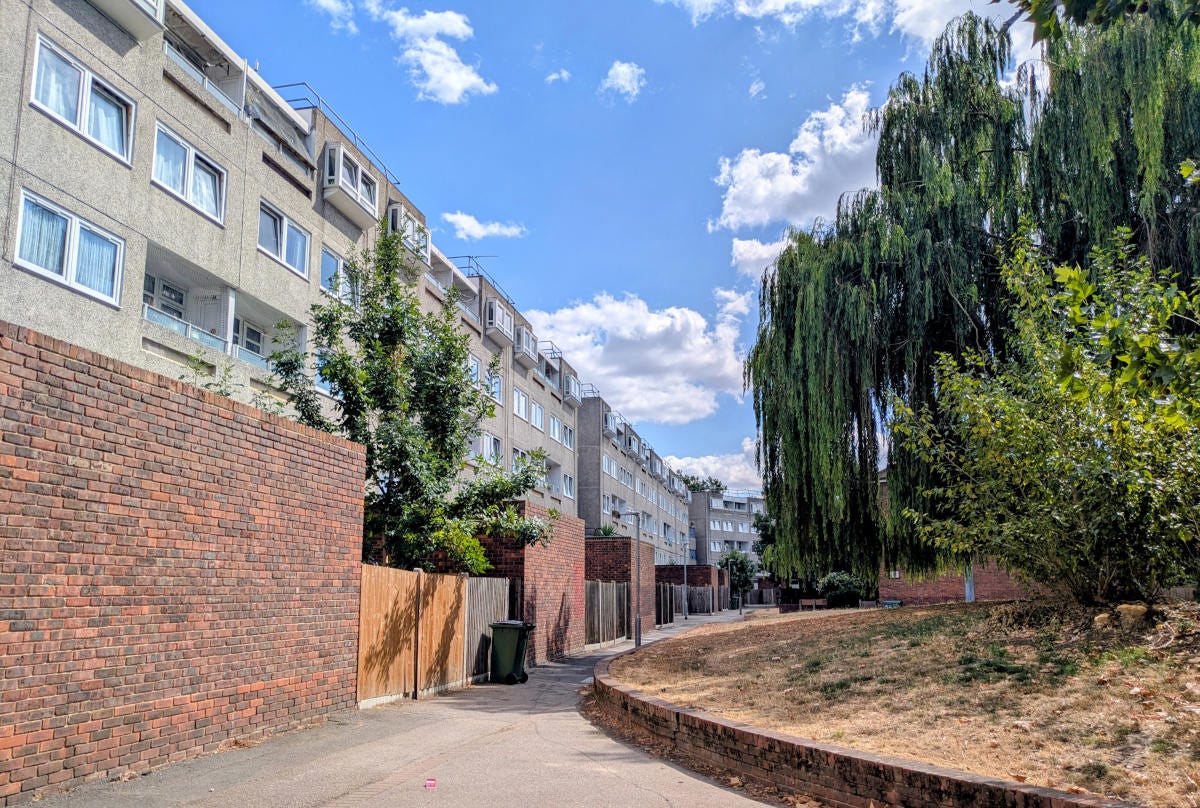
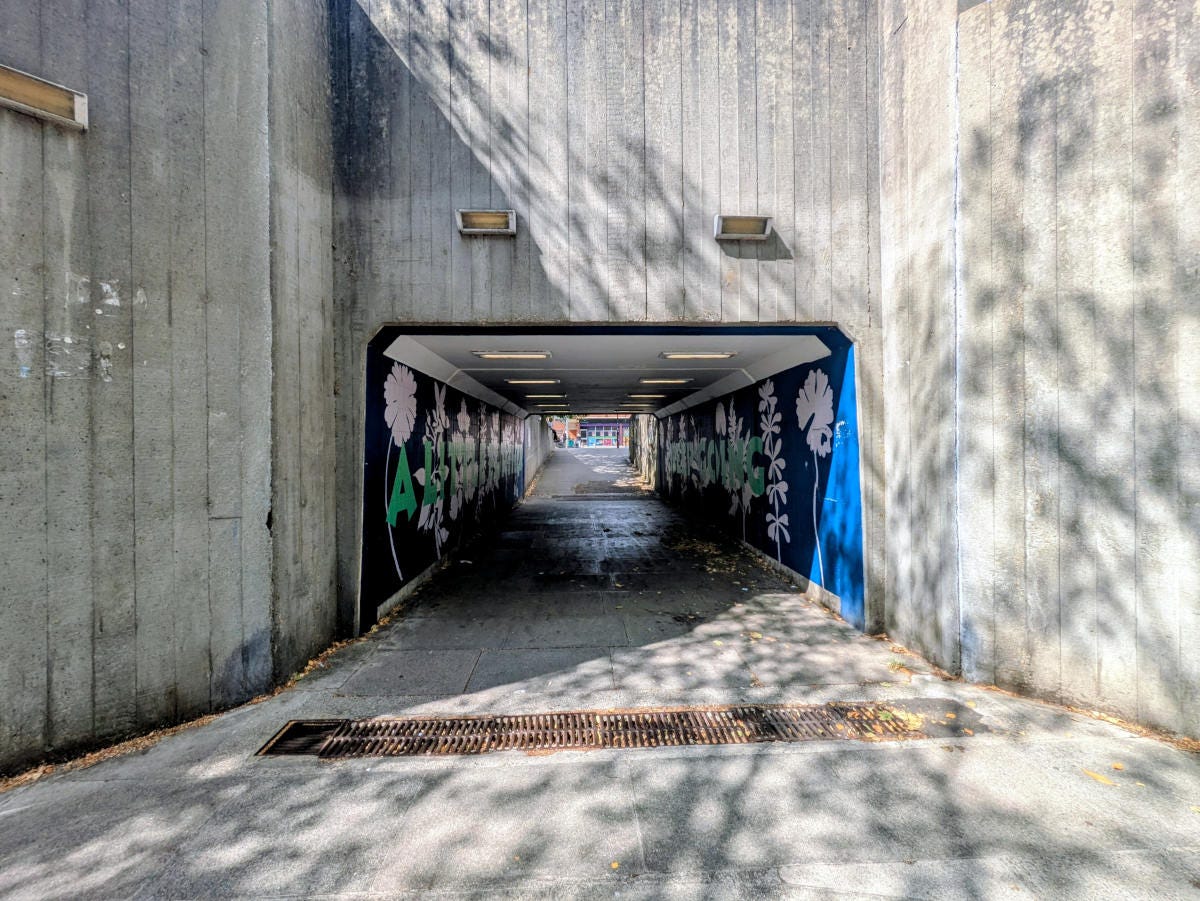
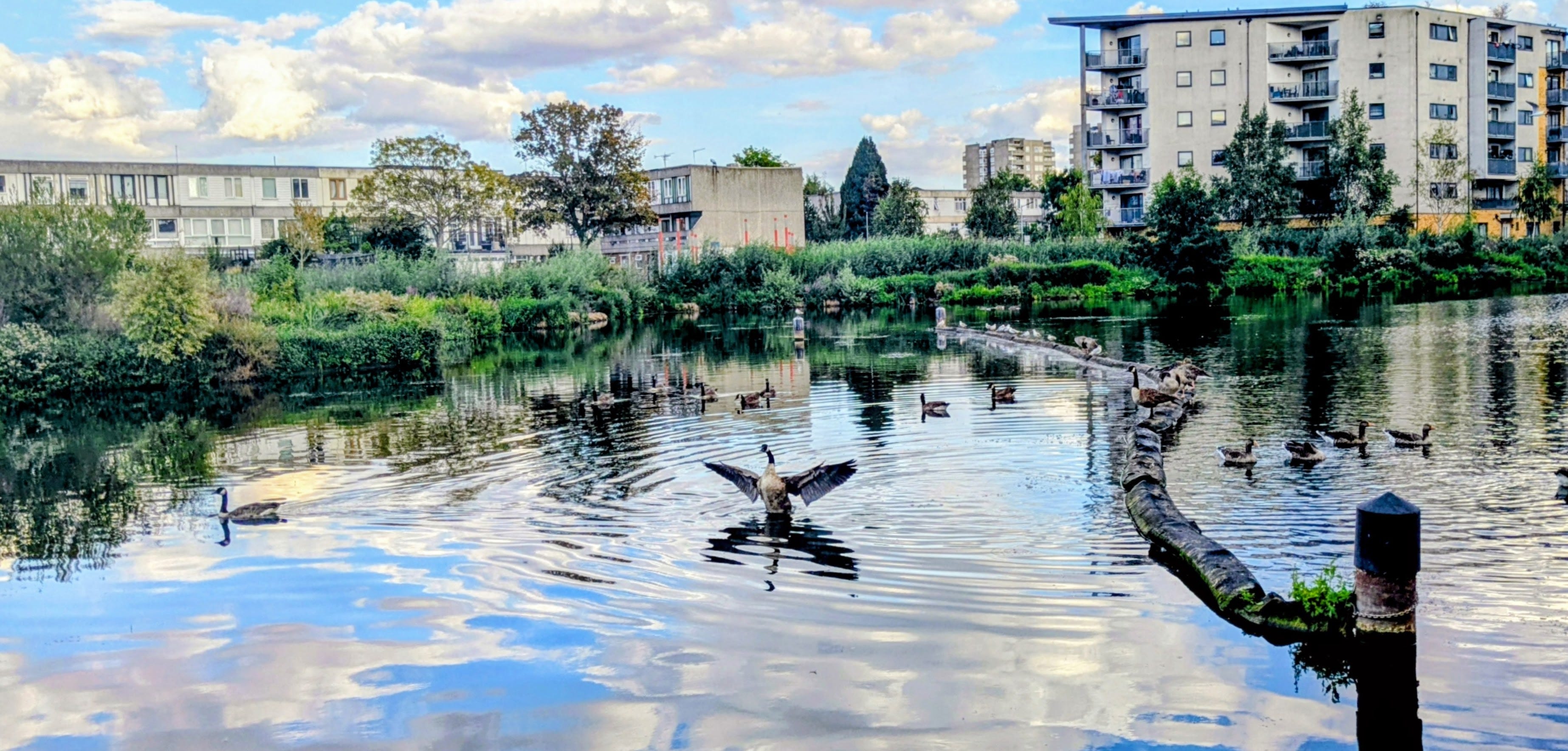
It’s a stunning place. There are geese on patrol, although they don’t appear too perturbed by the arrival of a sweaty, grey-haired man who keeps taking photographs of them. Since these are London geese, of course, I can’t be 100% certain that they’re not carrying knives.
But I could do with a sit down somewhere relaxing, and Birchmere Lake offers that. There’s a dad and lad sitting at the edge of it fishing, and very few other people about. The view across the lake is sensational, and for the first time I get a feel for what they were trying to achieve when they built all this in the first place.
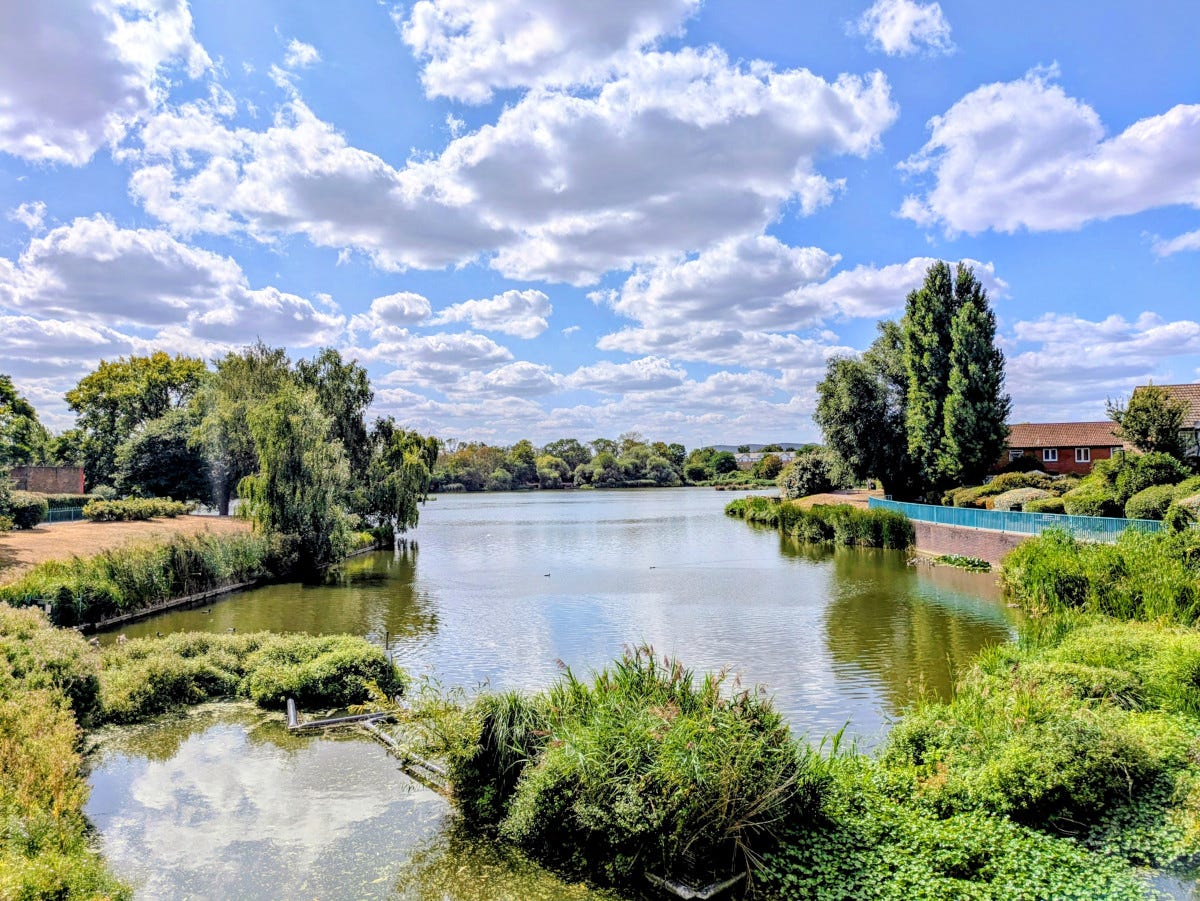
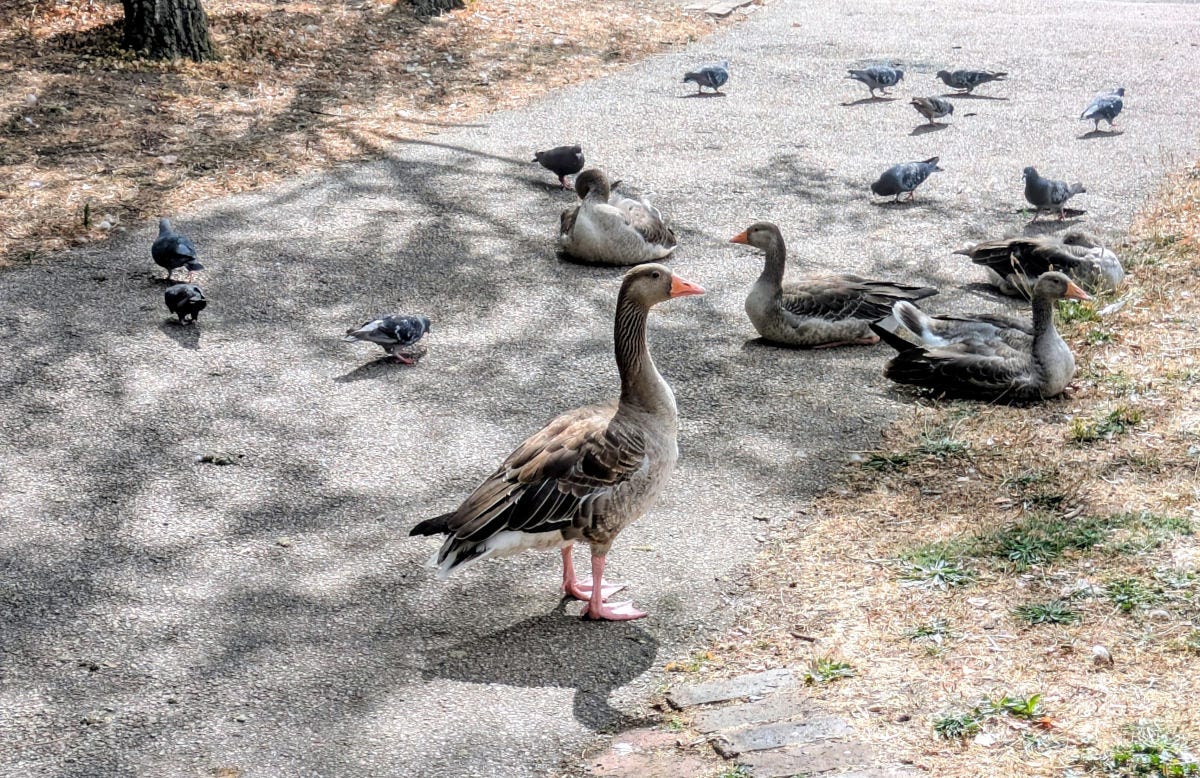
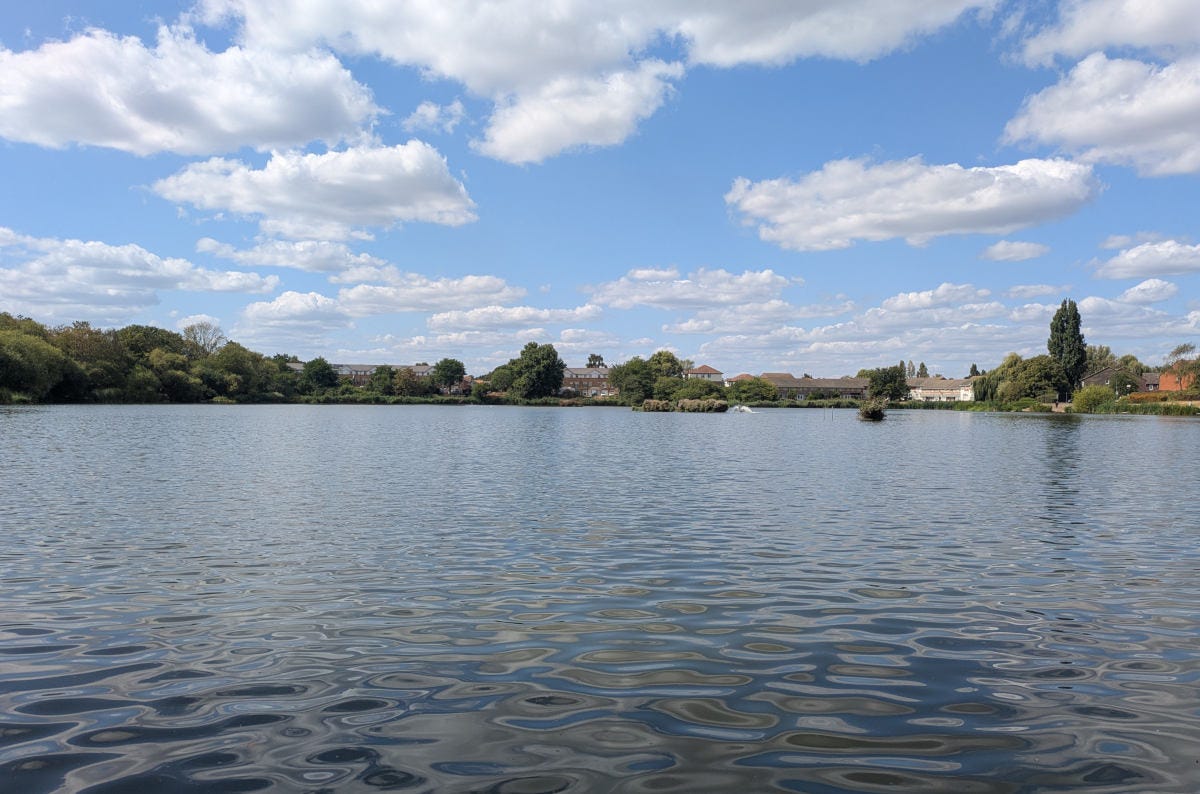
But I don’t have all day to sit in the sunshine. It’s getting on for 2.30 by this time, and I have a football match to attend. Not for the first time, it’s a match in the early rounds FA Cup matches that could double up as a league match. Erith Town and Eastbourne Town both play in the Isthmian League Division One South East and they’re both plenty familiar with each other.
Bayliss Avenue isn’t difficult to find, but getting there does involve having to pay attention to that one rule of new town building that you do have to follow in the 21st century, that pavements are well removed from main roads. One of the key themes of the original construction of Thamesmead was that cars and pedestrians should be separate, and they stick to that still now.
One of the pavements gets so narrow that you really get the feeling that they don’t want people walking along it, and this is more or less confirmed when I arrive at a little bridge, alongside which are two sets of upturned spike cobblestones of the type that they sometimes put at the ends of railway station platforms to stop people from walking down onto the track and a route which requires an 80-odd yard diversion to cross a footbridge.
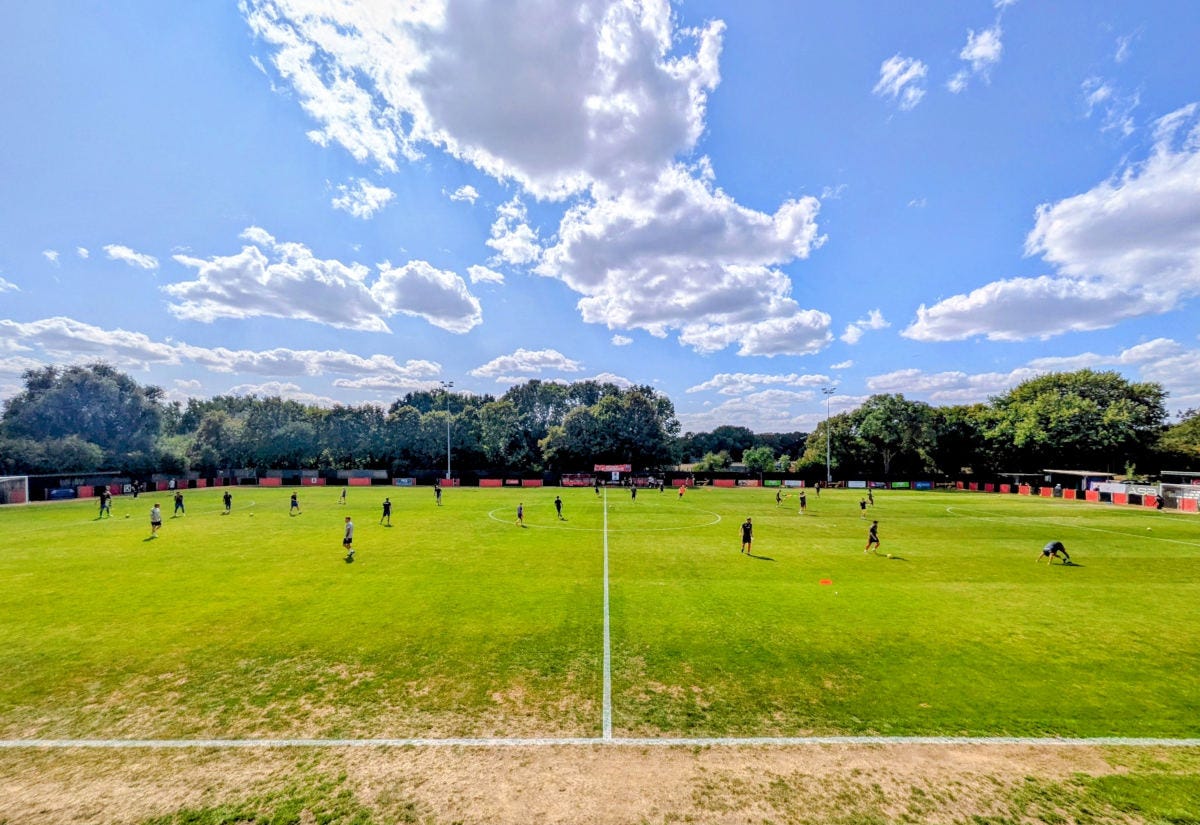
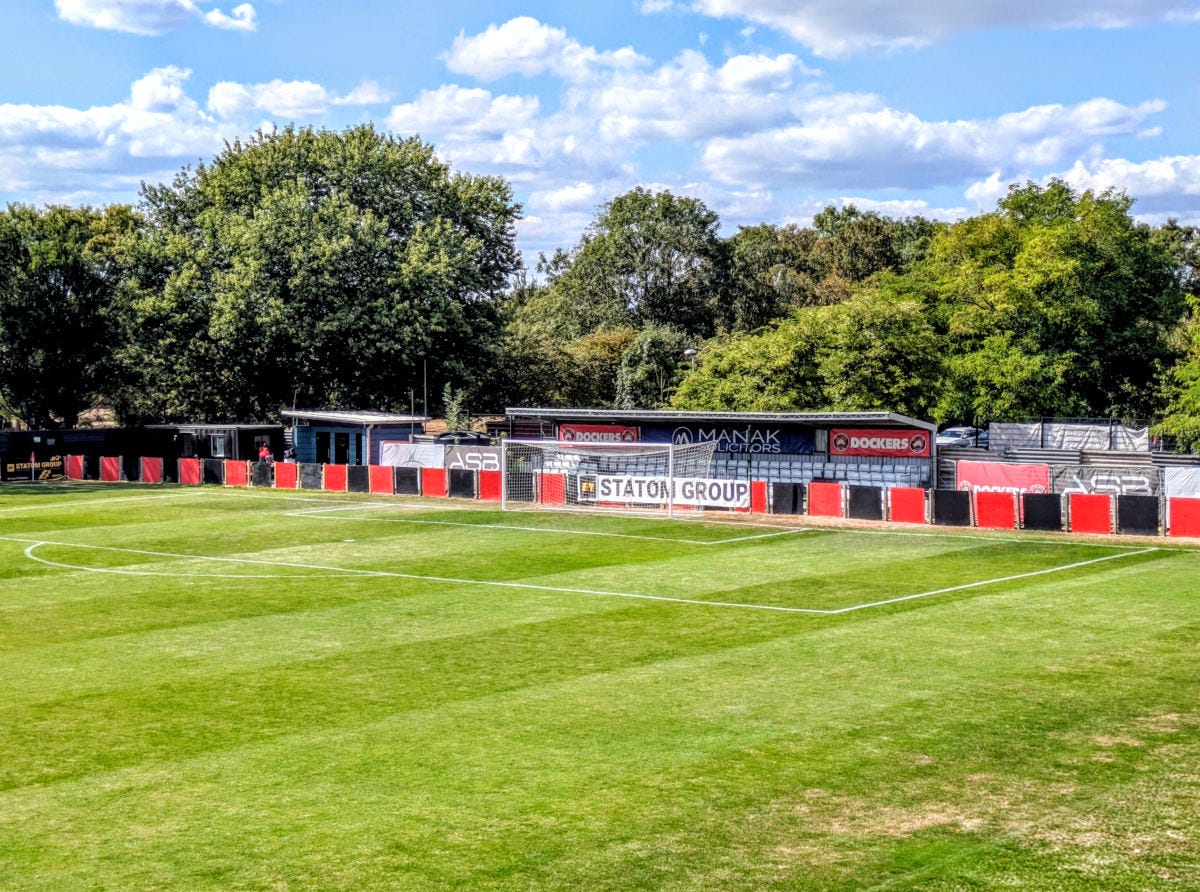
I arrive at the ground about twenty minutes from kick-off. Bayliss Avenue isn’t Erith’s ground. They share here with SC Thamesmead, the club previously shared it with Thamesmead Town, who moved out of the ground in 2017 to play at Dartford and who folded a year later. A lot of money had been put into redevelopment of the ground, which was carried out just four years earlier, and it shows.
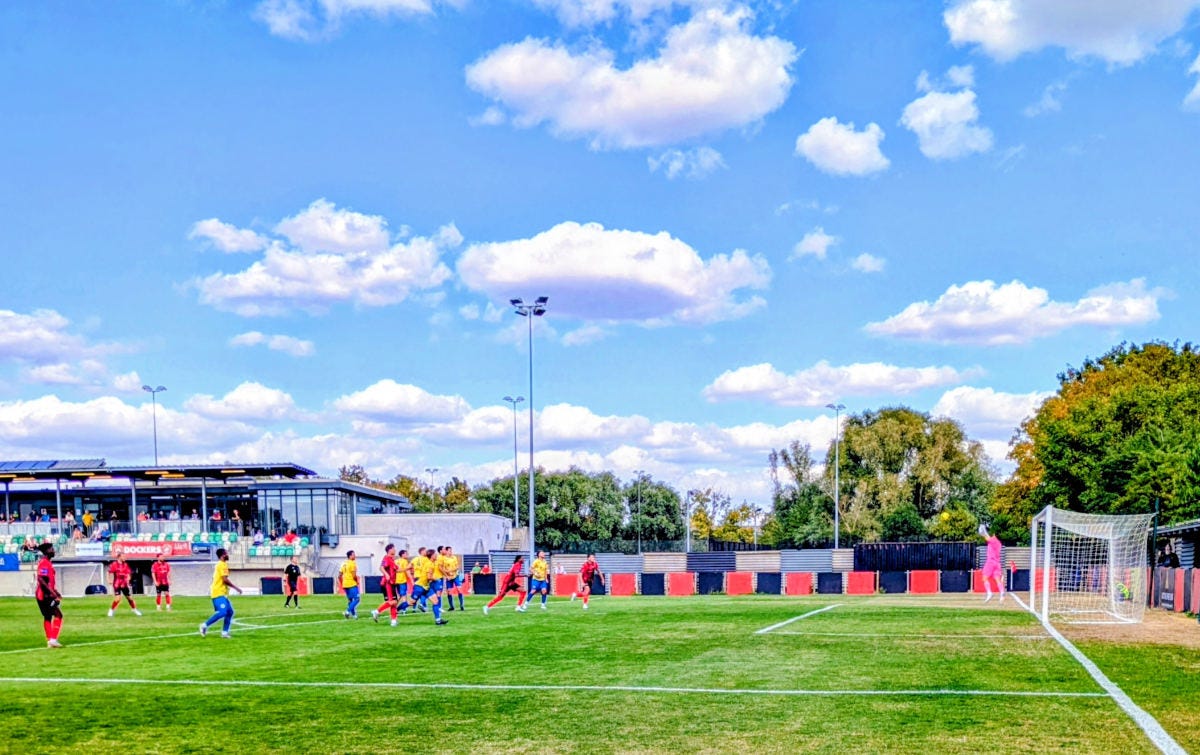
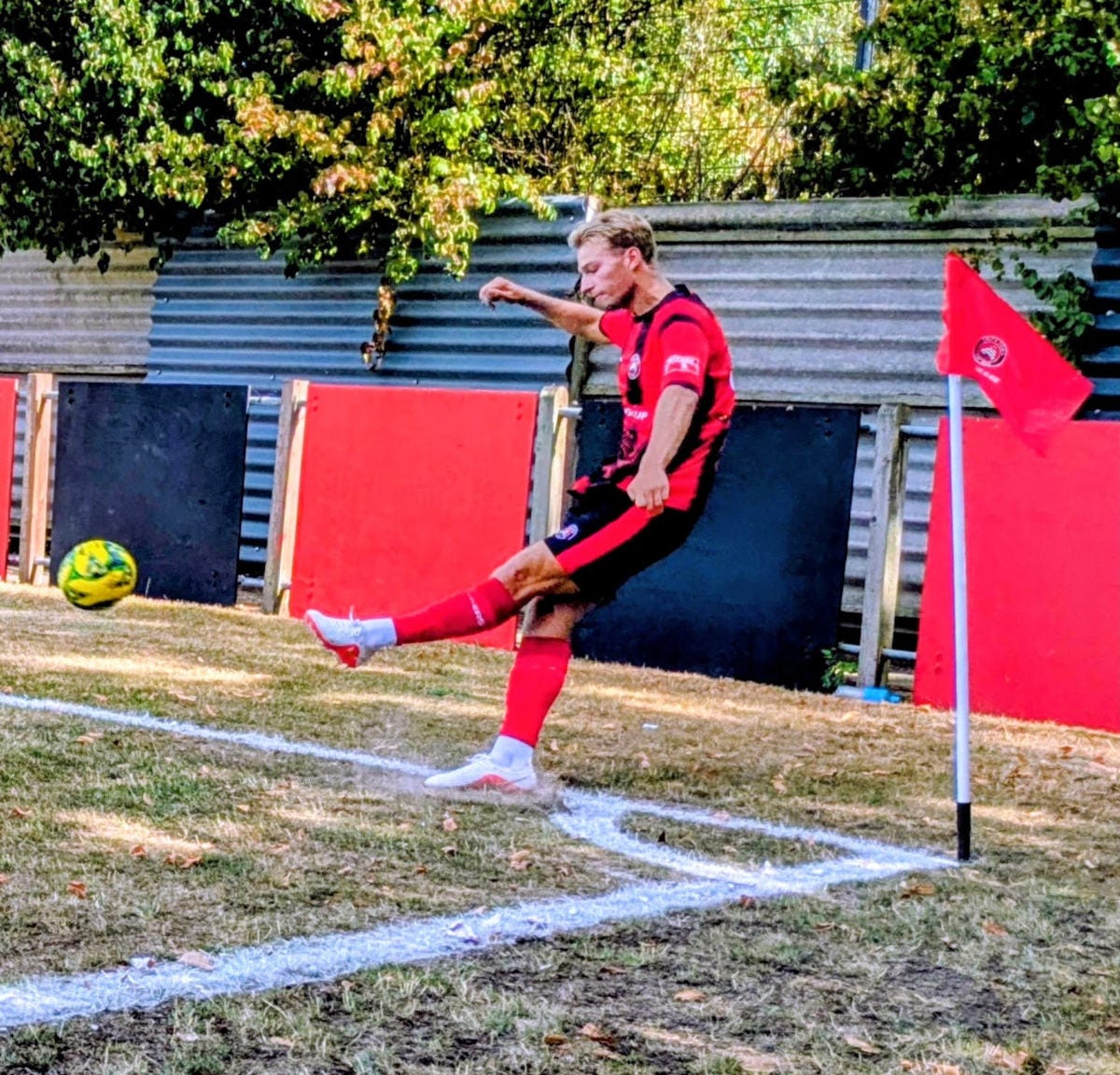
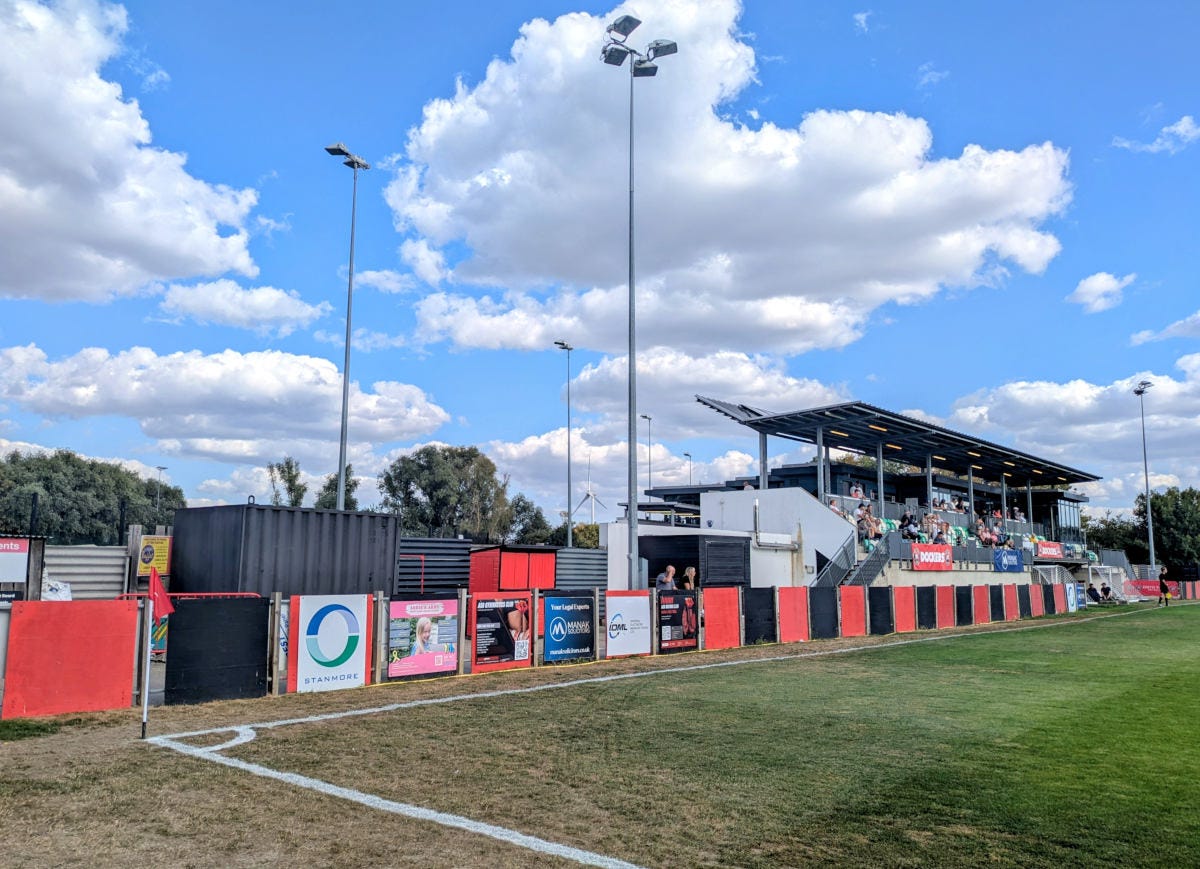
There’s a large stand in which almost everybody in attendance is sitting. The turnstile operator directs me immediately to the bar, in which you’re reminded by the trophy cabinet that you’re in SC Thamesmead territory, really. The stand is tall and narrow and offers an excellent view of the pitch, and when the teams take to the pitch, it’s with Ready or Not by Fugees, which is an excellent, if unexpected, choice.
Erith Town were Woolwich Town until 1997, and were Kent League - which changed its name to the Southern Counties East League in 2013 - members until getting promoted as play-off winners in 2024. Their two seasons of Isthmian League football have ended with them in 14th and 16th place in the table, and in the Extra Preliminary Round they travelled down to my neck of the woods, winning 7-3 at Steyning Town of the SCFL Premier Division.
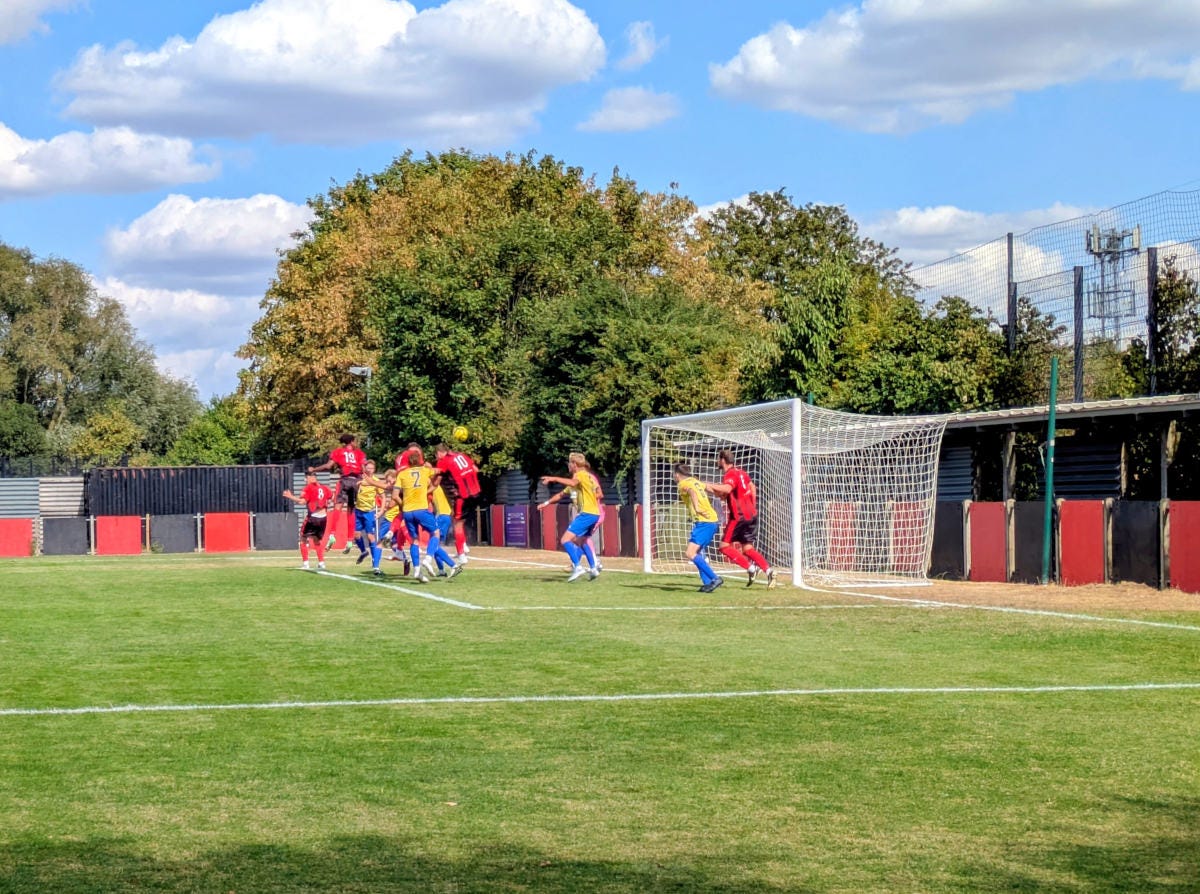
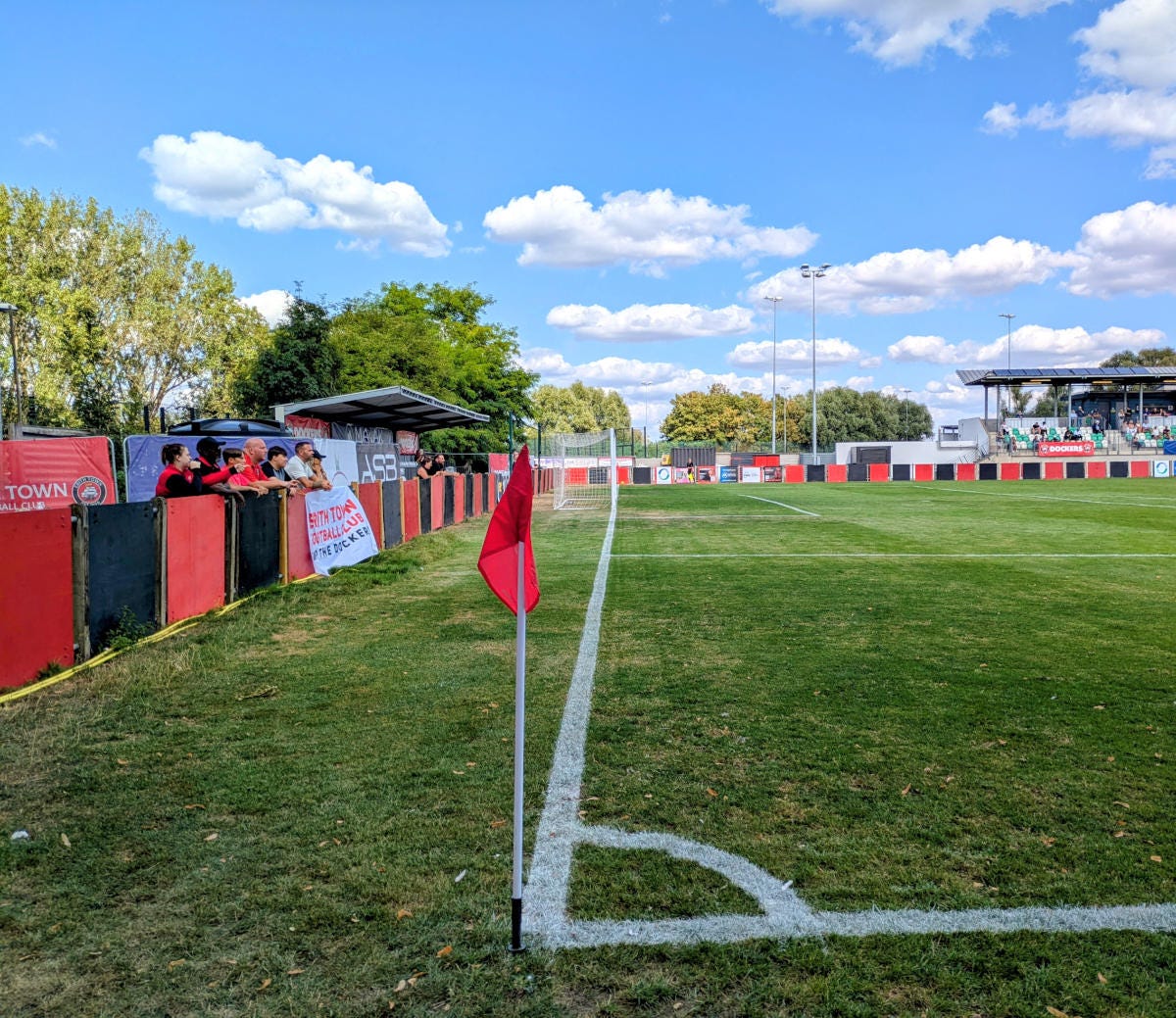
The opposition today are Eastbourne Town, who are one of three non-league clubs in Eastbourne. They have brought a small number of supporters, seven of whom are behind the goal, trying to gee up their team. “Oh Eastbourne Town is wonderful, it’s full of old people and seagulls”, they offer as a song, which is, as I can attest from personal experience, not an unreasonable summary of the place.
It’s still goalless by half-time. The first half is more heat than light, although both teams hit the woodwork. But Erith are the more physically imposing of the two, swarming around the Eastbourne players in what we might reasonably assume to be the Isthmian League Division One South-East’s equivalent to a high press. There are hydration breaks, even though the temperature doesn’t crack 20 degrees celsius all afternoon.
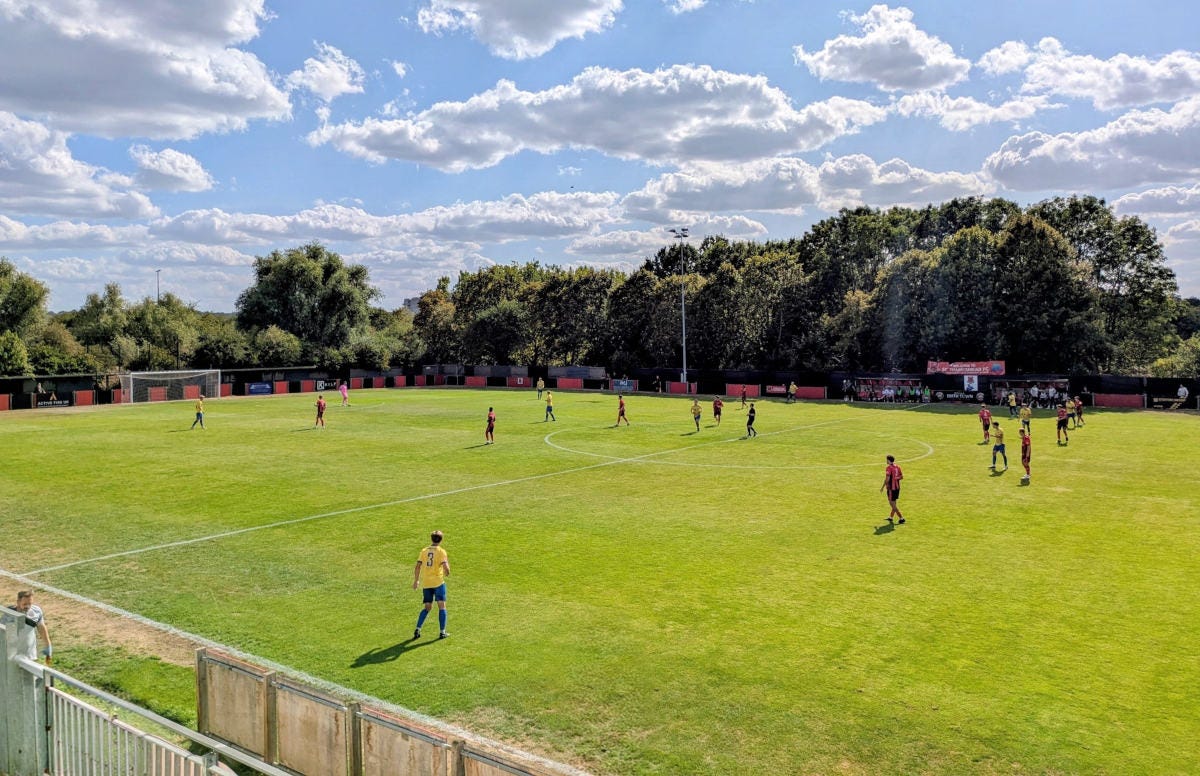
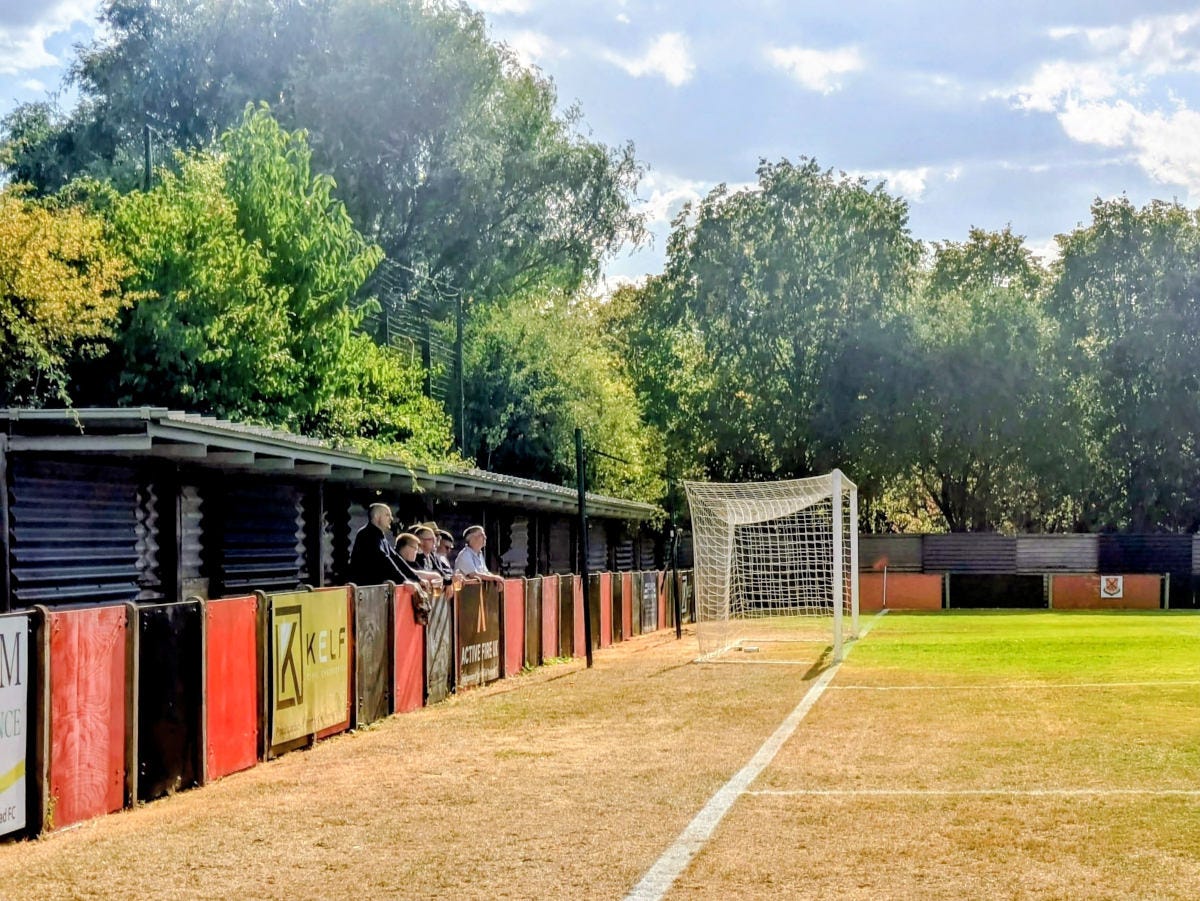
There’s little enough going on to be able to have a little exploration of the ground. Bayliss Avenue is certainly well-appointed. The stand is the main event, but there’s also a small seated stand behind one of the goals and cover at the other. The grass is reasonably green, though it does brown by the touchlines, which themselves are long lines of brown dust.
The goals start to flow just before the hour. Erith take the lead on 59 minutes through George Goodwin, and from then on it’s really a matter of how many they’ll win by rather than Eastbourne getting back into the game. The sweetest moment of the afternoon comes after the second goal is scored, when the PA announcement of the second goal is made by what is clearly a five-year-old girl. To be fair, she nails it. “Goal scored for Erith Town by… Harry Taylor.” The announcement gets probably the biggest cheer of the afternoon.
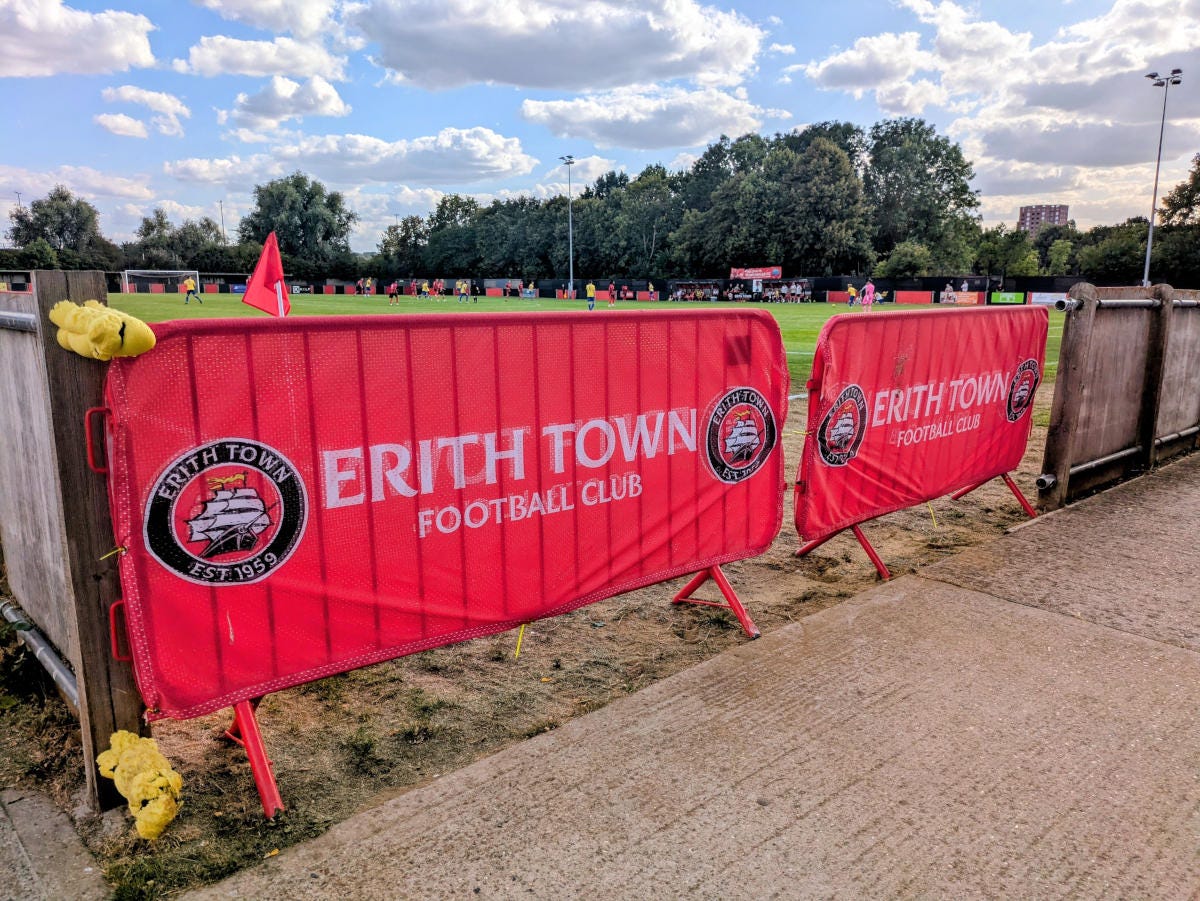
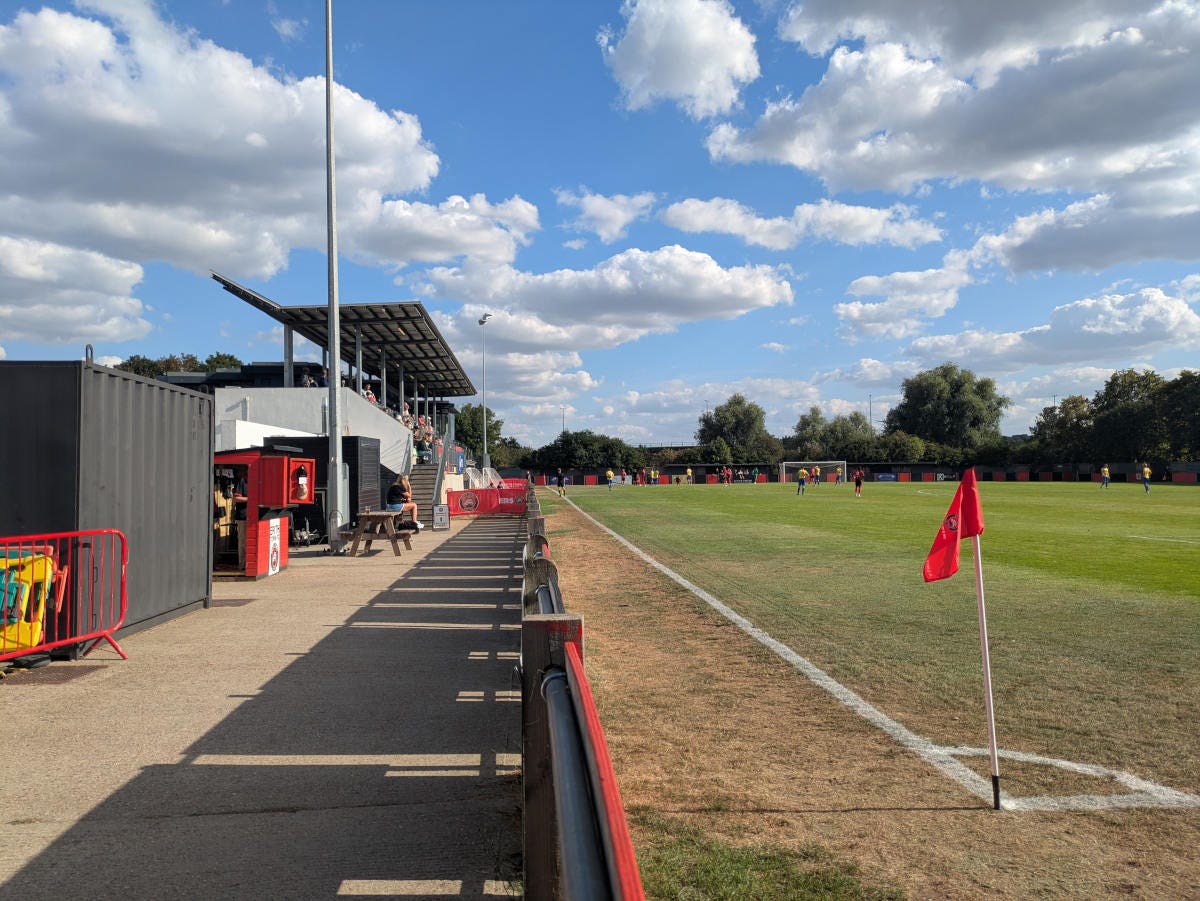
There’s little more than a smattering of applause at the final whistle. This has been a comfortable win in the sunshine for Erith, who now proceed to the First Qualifying Round of the competition. They’ve made it as far as the Second Qualifying round on four occasions before but never beyond that. Maybe they will, this time around. They certainly warranted their win today.
I’m in no particular hurry to get home, and if I’m close to a river then I want to see it, so when I get back to the Big Roundabout, I walk up to the south side of the Thames rather than back towards Abbey Wood. It is now what I expected. There’s no brutalist concrete here, rather hundreds of starter homes, and a small entrance leading through to the pathway that runs along the south side of the river. The view is genuinely breathtaking. Far away in the distance, you can just make out the distinctive angled roofs of the Docklands.
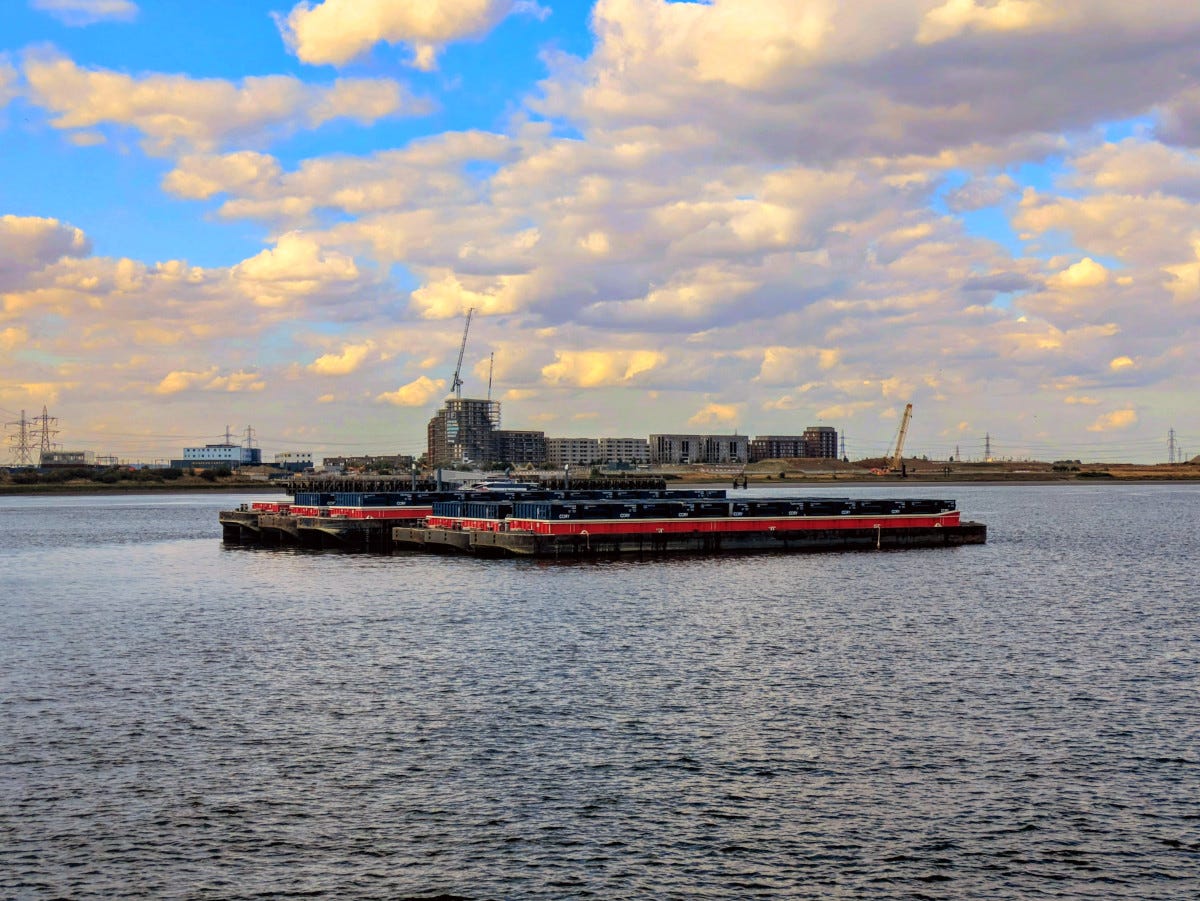
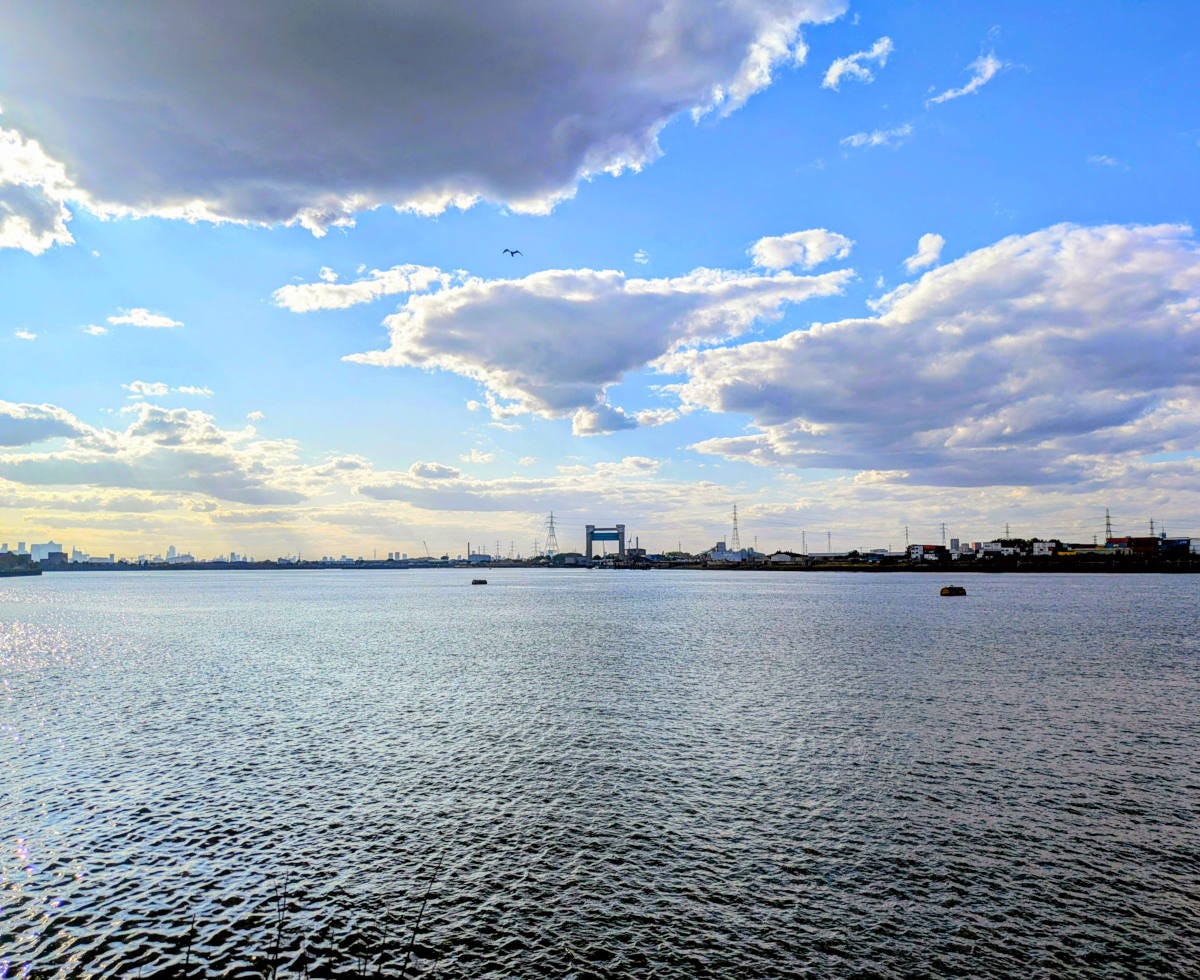
The walk back to Abbey Wood takes me past the Southmere Lake, which was used for outside shots in A Clockwork Orange. The brutalist buildings which were along its western flank have long gone, replaced by angular five, six and eight-storey blocks. In the distance is The Thamesmead Social, a large building with “Lakeside” emblazoned across it in the same typeface as was used in the movie. With the time now passing six in the evening, the sun is just starting to set, and it feels peaceful.
I sit on a bench and look out across the lake, pondering the story of this neck of the woods. The carpet bombing of London was what caused all this, and it was the optimism brought about by a desire for that to never, ever happen again which brought about communities like Thamesmead.
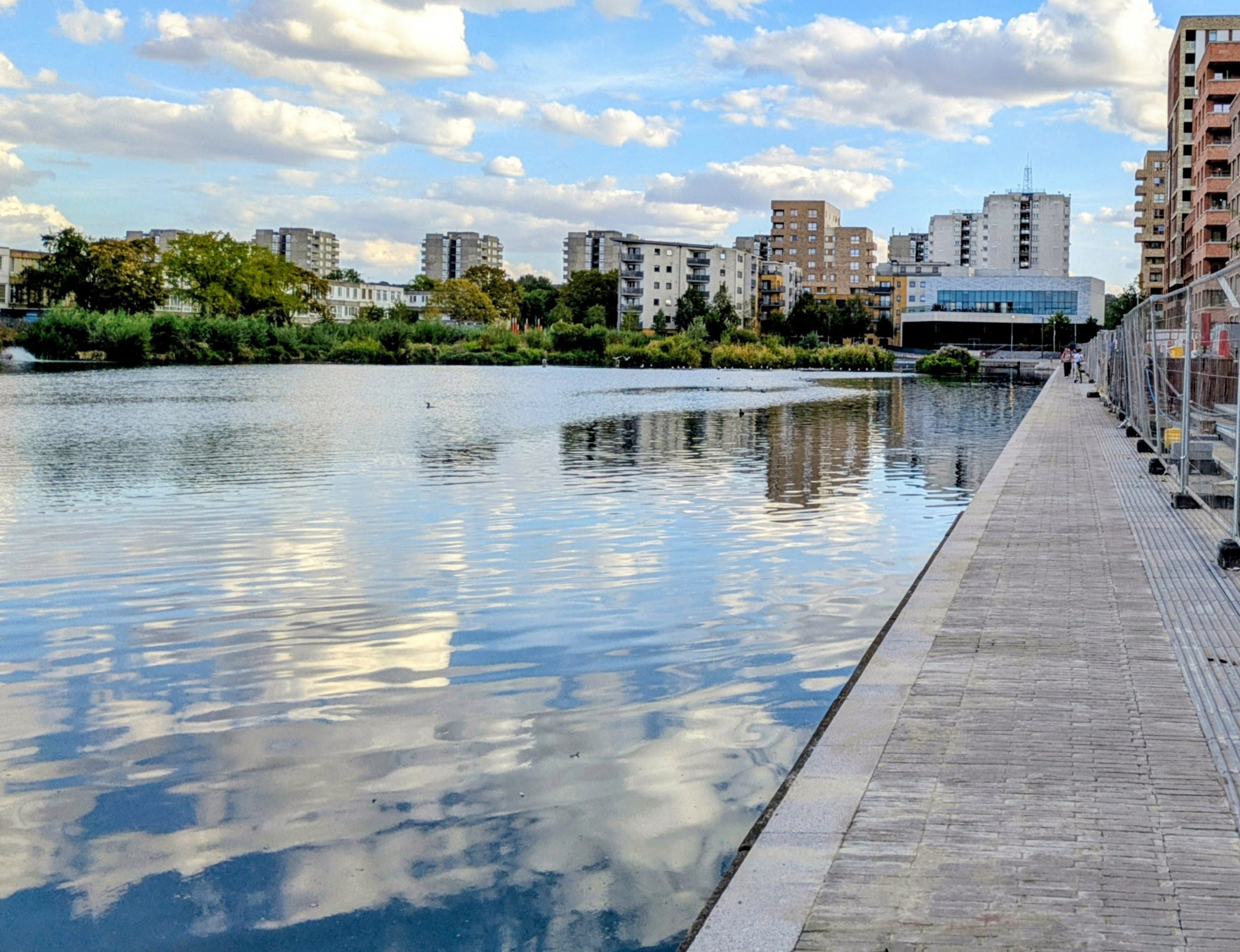
The original version of this place didn’t fail because of the architectural style of the time or the people who moved here. It failed because uncompleted transport links and missing amenities left it isolated and cut off from the rest of the city, while poor construction on unstable ground, severe dampness and unsafe elevated concrete walkways caused a rapid physical decline.
Not all of it has decayed. This is why the residents of the remaining estates are fighting plans to demolish their homes and rebuild. For thousands of people, Thamesmead became home and remains so to this day. And all this leaves me wondering what I came here for. Was I just attempting to rubberneck some interesting-looking urban decay which was predicted by Stanley Kubrick more than half a century on?
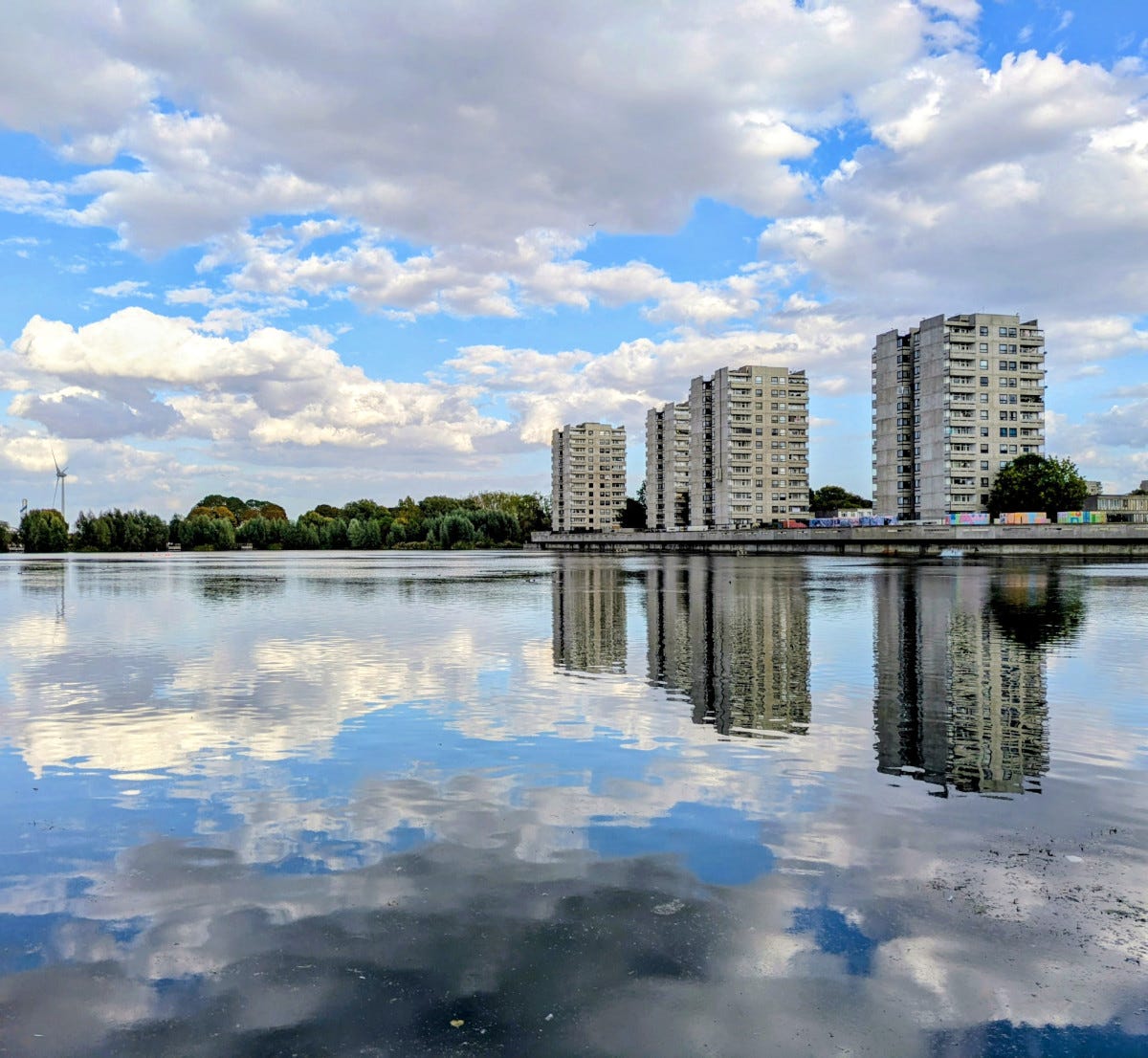
Because if Kubrick got one thing wrong, it’s that he emphasised decay in the wrong place. In his world, the brutalist architecture of the 1960s and 1970s survived and looked as immaculate in the unknown date of the near-future that he imagined as it did in 1971. There was plenty of criticism of the decisions being made at the time, but little of it concerned how long the buildings might actually last.
But he did also get one thing right. Our society was headed towards a nihilistic future that would come to treat violence as something to consume for entertainment. It just didn’t manifest in the ways in which anyone would have predicted, and on the evidence of what I saw on this sunny Saturday afternoon in Thamesmead, more than five and a half decades years on from when he was in exactly the same place, imagining what the future might be like, it hasn’t happened in this particularly secluded corner of this endlessly fascinating city, either. If dystopia landed anywhere in this city over these intervening years, it happened a few miles up the river at Canary Wharf.
No posts
Comments
Nothing yet. Say the first thing.
Sign in to join the conversation.