

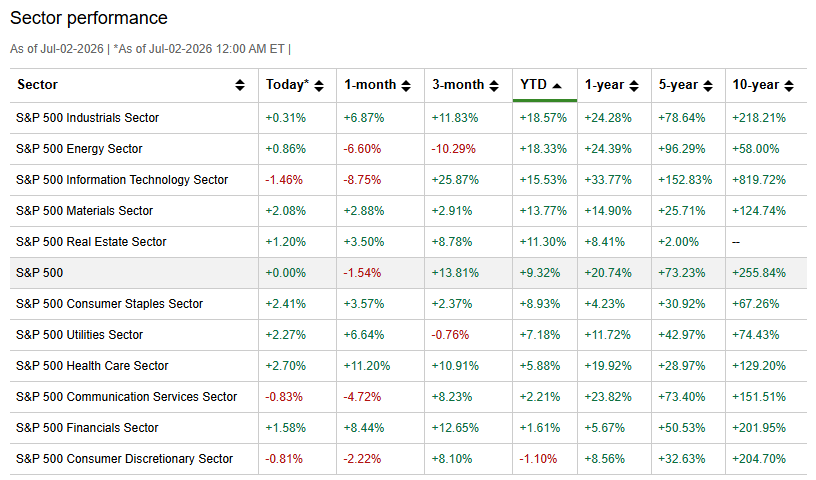
We might be in a two to three month period of a rotation away from Artificial Intelligence beneficiaries and toward value. Several sectors are positioned to benefit, Consumer Discretionary, Healthcare, etc., but I always have a soft spot for Financials. Financials aren’t quite as explosive as software with zero marginal cost, but they do typically have a very low marginal cost. Once the systems are in place, most Financials can accept new clients without too much additional headcount, and AI might even eventually increase their operating leverage with labor cost reductions.
One characteristic of small cap stocks is that they are often sub-scale, and growing toward a flip to GAAP net income profitability. Other times they are very cyclical, and oscillate between periods of positive and negative GAAP net income. In both of those situations, the price to earnings ratio (PE ratio) isn’t very insightful, which is a tragedy, because after adjusting for growth, the PEG ratio is very useful for rank ordering companies within a sector.
For small cap stocks, I have found the price to sales ratio is often more useful than price to earnings, but I haven’t seen anyone else adjust the price to sales ratio for growth. I’m probably not the first one to create a PSG ratio (Price to Sales divided by the Growth Rate), but I have never encountered it in the wild. Rank ordering all the Financials that I am following was a very insightful process, and it had a few surprises for me.
So without further ado, the results of my PSG ratio for all the financials I’ve written about recently, from worst to best with part 3 behind the paywall for paying subscribers.
BitMine Immersion Technologies (BMNR) 21st place:
With a Price to Sales of 561x, even with aggressive growth, BMNR comes in with the highest PSG ratio on my list. Unlike the other top scores, however, I am slowly adding to my BMNR position, selling weekly puts and using the cash to buy a few shares. There is a real possibility that Etherium becomes the backbone of tokenized financial transactions, Blackrock’s BUIDL, JPMorgan’s MONY and JLTXX, Franklin Templeton’s FOBXX, UBS’ uMINT, and Goldman Sachs, State Street SocGen have also launched some sort of Etherium based product or plan to in the near future.
Most Financials are Customer Acquisition Cost (CAC) businesses, but money itself is a network good with a self-reinforcing feedback loop. The dominant money chases out the competition and it becomes a winner-take-all system. Getting in on the ground floor of a network that goes on to be the winner, with even 2% of your portfolio, can be a life-changing experience. Here’s hoping Tom Lee is correct and Etherium doesn’t lose out to Solana. I have a limited expertise with crypto, but I have asked experts, even experts who hate Etherium in favor of Bitcoin, and they reluctantly agree that Etherium has a very decent shot at winning.
And on top of all of that, BitMine has a tiny equity stake in Beast Industries who just bought a neobank. If Jimmy Donaldson figures out how to make sure that all contestants on his show are drawn only from the pool of people that have direct deposit with Beast Bank, then he’ll become a top 5 global bank within 15 to 20 years. Those are two attractive lottery tickets which I believe have a very decent chance of paying out, and so I choose to participate, even if the immediate valuation doesn’t rank high by my new PSG metric.
Legacy Housing Corp (LEGH) 20th place:
I really like the two co-founders of LEGH, but unfortunately, by rolling all profits into their loan book, they dramatically limit the torque of a cyclical business. Because of the limited upside, I just don’t find myself adding to the position, although I do own a tiny bit out of pure admiration for old codgers who dance to the beat of their own drums. From the perspective of a risk / reward tradeoff, LEGH is one of the best lower-risk stocks out there, but I find myself a bit more degenerate during this AI industrial revolution.
One of the drawbacks of including growth as a metric is that future growth might not resemble past growth. The two co-founders fired the old management team who weren’t growing, and are searching for a new management team who are supposed to bring LEGH back to growth. If growth were to return, LEGH wouldn’t be in 20th place, although it still wouldn’t break into the top ten.
LEGH has the tailwind of the data center buildout in Texas and the need for workforce dormitories, and they have fantastic incentive alignment with management. But at 3.5x price to sales, and a 5% growth rate over the last five years, the PSG ratio doesn’t favor them. Even looking at a price to book metric they are only at around 1.03x, with a best case scenario of approaching 1.5x - 2.0x. I like LEGH, I like their loan book, and I own a few shares to keep an eye on them, but I just don’t like them enough to be adding here.
Neptune Insurance Holdings (NP) 19th place:
In my search for AI beneficiaries with proprietary data sets, I stumbled across the recent flood insurance IPO Neptune Holdings. But even with the insurance sector performing poorly for most of 2026, they aren’t terribly cheap, with a 21x price to sales and revenue that hasn’t quite doubled in three years. One of the drawbacks of the price to sales ratio is that it isn’t a great comparison for middleman type businesses with small revenue and large margins, which Neptune is. This metric is for rank ordering within a sector, under the implicit assumption that businesses within a sector are similar enough, and often that assumption breaks down. This isn’t a fair placement for Neptune, but insurance buts up against my own circle of competence.
The market is pricing in an accelerating growth rate that is possible, but doesn’t seem plausible as an insurance amateur. Neptune is expanding into earthquake insurance, they have about 7% US market penetration today, the domestic US market could grow, and management has talked about expanding internationally as well. So the growth potential is real, but how many years do they have before they invite competition? This is a great company to watch over the next couple of years, hoping for a dip to buy, but with no guarantee that the market will provide one. The problem with paying up for future growth today is that sometimes the growth doesn’t materialize, and without confidence in an aggressive growth trajectory, Neptune isn’t cheap.
Rocket Companies (RKT) 18th place:
With a price to sales of 4.4x and a three year sales growth of 21%, Rocket Companies comes in on the expensive side of this new PSG ratio. And worst of all, some of that growth is through dilutive acquisitions, on a per share basis the growth rate looks even lower. Mortgage origination is very cyclical, in 2020 revenue was over $15 billion compared to $3.6 billion in 2023, so sales could 3x if we hit a housing boom. The trailing twelve month revenue of $8.3 billion could easily be less than half of 2028 revenue.
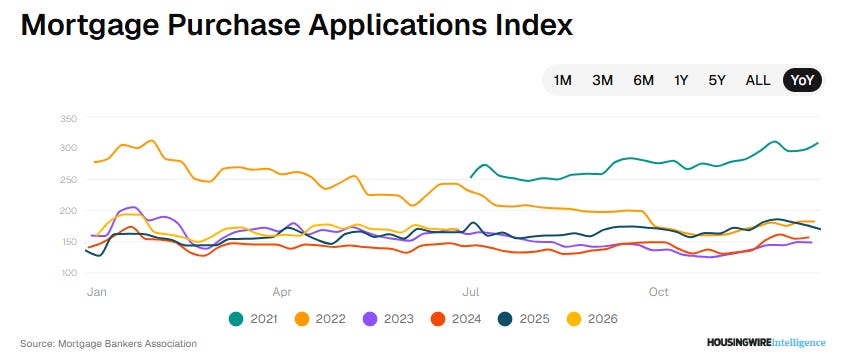
The Mr. Cooper acquisition should stabilize net income, removing cyclicality and improving the quality of Rocket Companies. The mortgage origination cycle is likely turning in their favor, but slowly. Mortgage purchase applications are the highest in three years, but by a very thin degree. The real cycle is somewhat stalled out until we get some change to interest rate policy.
I have been using RKT as a vehicle for selling weekly options to raise cash, and hopefully as a magic money machine as it bounces aggressively in a channel the way that Peabody Energy did for several years. RKT has a larger market cap than my usual preference, but I still listen to earnings calls because they are the largest mortgage originator and following them gives me insight into the larger economy. They are a stealth fintech, outside of the Silicon Valley ecosystem, but their platform is unique and hard to replicate. I am not adding here, but I am still selling a few puts for income.
StoneCo (STNE) 17th place vs PagSeguro (PAGS) 9th place vs NuBank (NU) 8th place:
When I looked into Brazilian fintech platforms, I eventually chose PAGS over STNE and NU. The three have a lot in common, but what I really like about PAGS is that they almost exclusively focus on collateralized debt. I want exposure to the Brazilian economy, but I don’t need to take unsecured Brazilian lending risk to do so. Since my original choice to buy PAGS, STNE and NU has outperformed it. Sometimes it makes sense to buy the leader, but the valuation difference is so wide here, I still want to buy laggard. I can’t see myself buying STNE at 4.4x price to sales with unsecured credit risk when I could have PAGS at 0.67x price to sales. Also, PAGS’ growth is underestimated because they voluntarily fired their smallest customers. The core business has been growing the whole time, and their profitability has improved without serving microvendors.
I avoided NuBank because they seemed expensive at the time, and they were, but all Financials have since sold off. Revenue growth of PAGS and STNE is masked by a rapidly depreciating Brazilian currency, and odds are rising that the next election goes capitalist. A capitalist Brazil would find itself with a strengthening Brazilian Real, at which point the dollar denominated growth of PAGS and STNE would be manifested.
However the big surprise to me is that this new PSG ratio helps me to see NuBank with fresh eyes. Trading at a price to sales of 3.97x seems expensive, but adjusted for growth, the PSG ratio comes out a bit cheaper than PAGS at a price to sales of 0.67x. The management team of NU has been able to maintain a 57% revenue CAGR for five years, and while some of their markets are becoming more mature, there are still worlds left to conquer, and there is a lot of room to deepen relationships with clients and expand ancillary services. I have an enormous admiration for NU’s management team after what they pulled off in Brazil, capturing 50% of the market with a single raffle to attend the FIFA world cup in Dubai. I do believe that one of the biggest constraints is true genius, and when a leadership team demonstrates such enormous competence, it’s worth allocating a small percentage of the portfolio, especially on such a large pullback in stock price. I am going to start a new position in NU next week. And I’m not selling my PAGS, but I likely won’t add any more either.
Burford Capital (BUR) 16th place:
Burford Capital has a lot in common with Abacus Global Management or Opendoor, all are market leaders trying to create an entire ecosystem around their niche. But Burford Capital’s performance highlights to me that most often a CFO doesn’t make a good CEO, even with good incentive alignment What Burford Capital has done well is lock down their supply chain by selling small equity stakes to major law firms, and to gain access to unlimited capital for growth by managing a portfolio for a Gulf State’s sovereign wealth fund, all great accomplishments of a founder / CEO with a strong financial background. But what Burford has failed to do is to execute operationally anywhere near as well as ABX has done under Jay Jackson’s leadership, and what OPEN appears to be doing under Kaz Nejatian’s leadership. It really might be the case that the founder of BUR should step aside and hire a CEO who can really take the business where it deserves to go operationally. I still like BUR, especially as AI transitions from the data center buildout to AI beneficiaries, I believe BUR’s proprietary data set is very unique and very valuable. Lawsuit settlements are always locked behind non-disclosure agreements, so large databases of lawsuit details, including eventual outcomes and settlement amounts, are very rare.
With the recent ruling against BUR on the YPF case of Argentina, BUR lost about 10% of deployed capital, but the stock price was cut in half. This probably marks a buying opportunity, odds are good that the stock has bottomed and will be higher a year from now. Measuring price to sales growth is tricky due to the lumpiness of their business, but 2025 revenue was $390 million compared to 2021’s $220 million. I am not currently deploying more capital to BUR, it has enormous potential, but has been a huge disappointment.
Conclusion:
In this first part of the series, there aren’t many things that I am adding to, there are very few narratives that outweigh expensive valuation, I am after all, still a value degen. But there are a couple of interesting lottery tickets to consider. I am selling weekly puts on RKT for income, the mortgage origination cycle still hasn’t quite achieved liftoff, but it probably will soon enough. Crypto is one of the most hated sectors right now, and after a decade and a half, we are finally seeing use cases roll out at exactly the moment nobody wants to invest in it. I own shares of all companies mentioned above, except of StoneCo, but I am not adding to many.
Part 2 of this rank ordering is coming soon, and that is where a lot of valuations start to become much more compelling.
I have been AWOL for a several weeks, but I am happy to say that I am settled into the new house, and the old house is sold. There was a lot of work to do cleaning up the old property, and traffic back into Tampa was a monster. I will be traveling to New York for a few days for Abacus Global Management’s investor day, I was invited by Jay Jackson, and I will be happy to attend. I will also be gone for three weeks starting at the second half of July for a trip to my wife’s native country, but odds are good that I will still be able to write while away. To all subscribers who didn’t cancel during this period, thank you for your understanding!
No posts
Comments
Nothing yet. Say the first thing.
Sign in to join the conversation.