
HELLO! Surprise! My wife and I had a baby this month. We were somehow able to keep it a secret for the entire pregnancy, and then - sooner be known to me HERE SHE WAS this perfect baby we had spent five years trying to bring into this world.

I saw a clever video from creator Rae Bonez when we were still in the hospital that gave me the best perspective on having children which is -
“WE ARE TOO.. fucking casual about motherhood. What do you mean I summoned a soul from the ether? Used my body to create an entirely new organ for myself, then created an entirely new body for another, in my own body, from my own resources, and then I brought that body into manifest reality!?!? I have bridged the soul realm with the physical realm and continue to feed this new person.. with my body. WHAT? Genuinely my bad for ever being calm about this” Rae Bonez
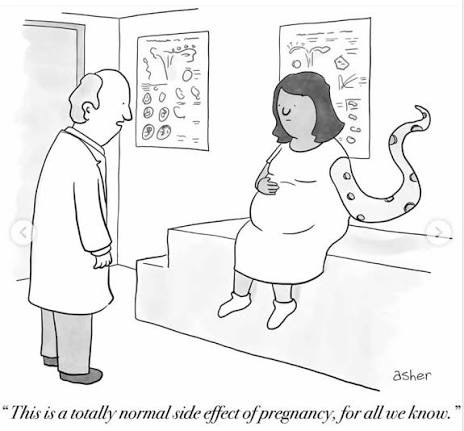
It’s beyond comprehension what women can do with their bodies. It’s a miracle to see up close, and while this etherial, magical, transcendent thing is happening.. AND a lot of it really sucks. And we don’t talk about that part enough. And thats dangerous and unfair. The suck is part of the miracle, but without tools to navigate the suck - a miracle can start to feel like an albatross.
I became very worried about this as the Lindsey Clancy trial played in the background of every seemingly hospital room, radio show, podcast, TikTok scroll I was watching while we were in the maternity recovery ward. I’m not much for CourtTV but her case sent me down a rabbit hole of trying to find out why something like this happens, how common it is, and why it seems like no one wants to talk about it?!
For those who are unaware Lindsey Clancy is a former labor and delivery nurse who had three children with her then husband Patrick. She spent years seeking treatment for her postpartum depression, intrusive thoughts and hopelessness. The treatments were ineffective (when offered to her at all), and eventually for reasons that they are exploring in this court case, her three children died by homicide. This article is not about her story in particular so thats all I’m going to give for details there, what I want to talk about is the affliction of postpartum. It’s not just “baby blues”.
Postpartum depression is a serious mood disorder that can begin during pregnancy or up to a year after childbirth. It causes intense sadness, exhaustion, and anxiety that interfere with daily life and caring for your baby. My wife and I had a baby two weeks ago and were talked to about postpartum several times along the way. Always in a kind of hushed tone, always “make sure you look out for signs of depression, moms can get the blues once the pregnancy phase is done, it’s totally natural”.
That made sense to me. Whenever I’ve completed a difficult but rewarding task, I too get the blues for the thrill of the chase, the energy of a new project, the ups and downs of building something. It’ll be like that! Right.. right?
Wrong.
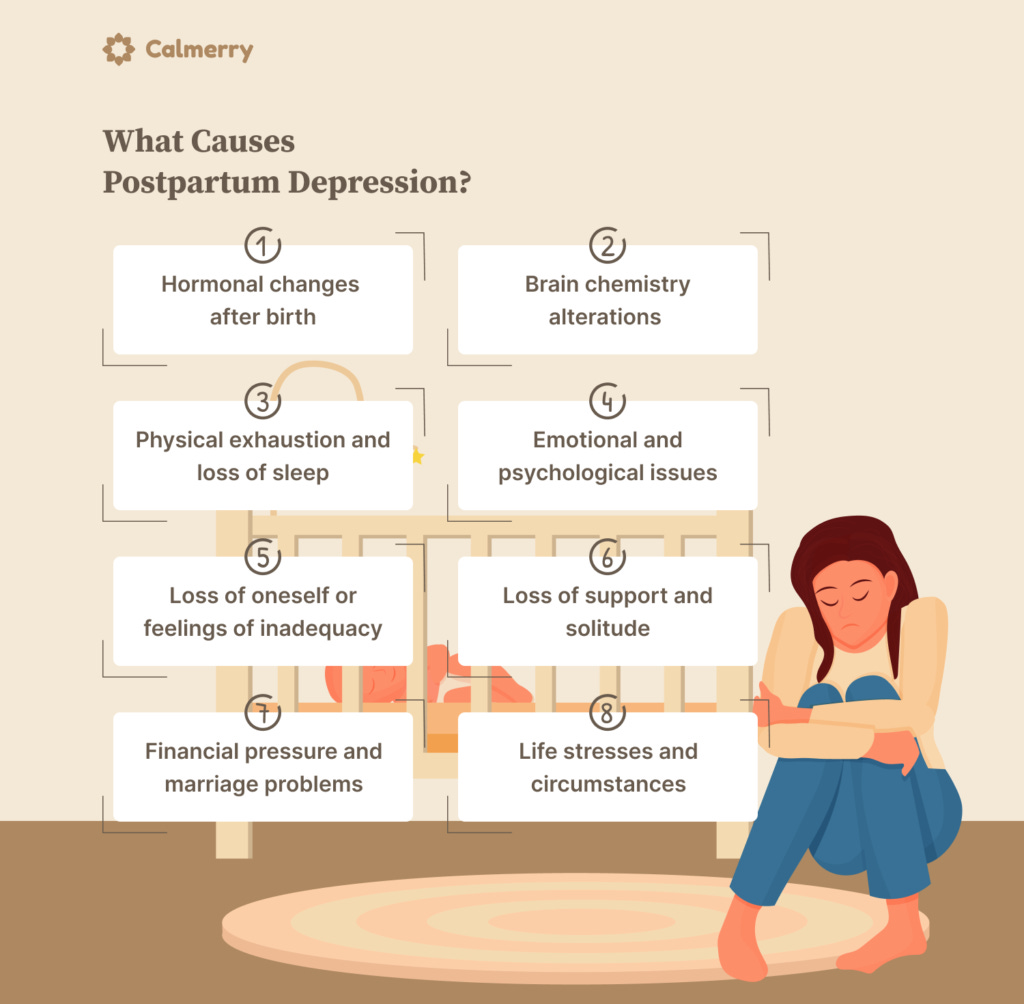
Postpartum is “something that happens to everyone” but no one really explains it with the kind of detail and severity the phenomenon deserves. Probably because of the shame women feel for experiencing emotions that make other people uncomfortable. Women are trained to be accommodating, to “glow” during pregnancy, and to be a “natural” when it comes to mothering. There’s little room for insecurity that your bond isn’t bonding right, or that your body still hurts weeks after birth, or that you’re now experiencing a chemical imbalance that for whatever reason (it’s misogyny) doctors haven’t quite figured out how to medicate people post delivery to account for the rush of hormones that take you to mental spaces you didn’t even know existed.
As “Dad” to our baby girl, I’ve spent the last few weeks of sleepless nights researching postpartum. So here’s what I found:
Estrogen and progesterone levels rise high during pregnancy and then drop sharply in the first 24 hours after birth. This sudden drop can affect brain chemicals that control mood. Thyroid hormone levels can also drop quickly after delivery, making you feel very tired and sluggish. . Money worries, relationship trouble, or a difficult birth experience add heavy emotional weight. People with a personal or family history of depression or anxiety are more likely to get it. Experiencing depression during pregnancy increases the chance of postpartum depression. Sometimes it's called peripartum depression because it can start during pregnancy and continue after childbirth. Rarely, an extreme mood disorder called postpartum psychosis also may develop after childbirth.
IT CAN ALSO HAPPEN TO DADS.
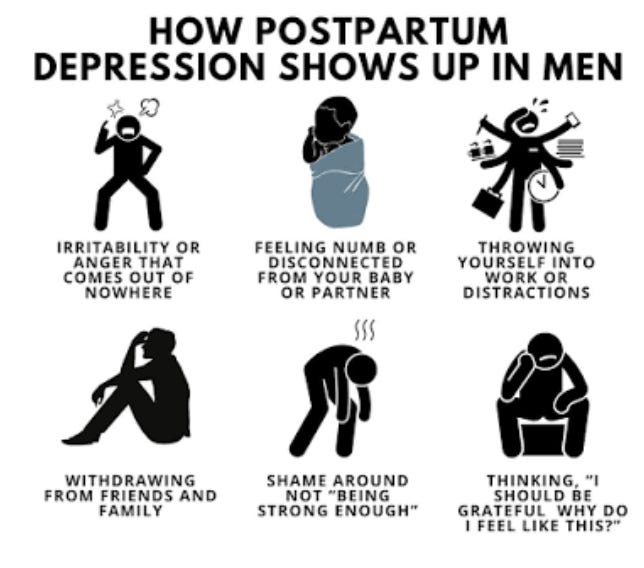
That’s right! Men can experience postpartum depression, often called paternal perinatal or postnatal depression (PPND). Opinions on Reddit are mixed regarding terminology: some users argue the term "postpartum" should only apply to the person who gave birth, while others emphasize that fathers undergo real hormonal shifts and severe psychological stress that merit the same recognition. Medical providers agree that paternal depression is a serious condition that benefits from support and treatment. About 1 in 10 new fathers experience it. Thats about 360,000 people annually. Thats the population of Cleveland, Ohio (363, 600 people) or New Orleans, LA (362, 154). Symptoms in men often peak later than in women—typically 3 to 6 months after birth—and frequently present as anger, irritability, and withdrawal rather than sadness.
There’s also help for non-binary or gender non-conforming parents via Postpartum International. Here is where you find info on how navigating hormones, gender dysphoria, and even identifying internalized oppression can be part of the birth plan. There is also some great info on the 4th trimester site dealing with finding community and developing language that affirms your gender while respecting your new role as a parent who may feel pushed, or even biologically required, to perform tasks (like breastfeeding) typically associated with a traditionally female role.
And then there’s this thing called pregnancy psychosis (antenatal or peripartum psychosis) is a rare, severe mental health emergency where a person loses touch with reality during pregnancy. It affects about 2 out of every 1,000 births.
WHICH FEELS LIKE A LOT OF BIRTHS! Symptoms include hallucinations, delusions, severe confusion, and extreme mood shifts, requiring immediate medical care. Just to give you an idea, there are about 3.6 million births per year, taking this statistic and extrapolating out how many women experience pregnancy psychosis annually we get 7,200.
7,200 women are on average diagnosed with pregnancy psychosis annually.
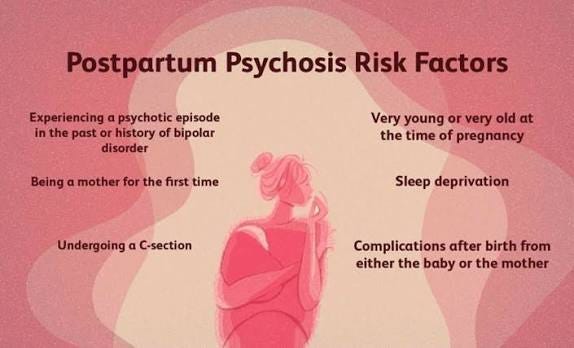
Everyone who has had an episode of postpartum psychosis has a unique story. Researchers at Massachusetts General Hospital’s (MGH) Ammon-Pinizzotto Center for Women’s Mental Health announced the launch of a new national research study called the MGH Postpartum Psychosis Project (MGHP3), and are looking for people who experienced an episode of psychosis within six months of giving birth. The purpose of the study is to better describe the symptom pattern of postpartum psychosis and to examine the genetic contributions to risk for this disorder. Very little is known about the factors which contribute to postpartum psychosis, and the genetics of the disorder are particularly understudied. This project aims to identify potential genetic risk factors in order to provide better care to future patients potentially at risk for postpartum psychosis.
You can learn more about that here: PP Study
What other options are out there for folks? Some strategies we were taught include:
Creating a trust space with your partner, where either person can say outloud whatever wacky, crazy, scary thought that enters their mind. Nothing gets kept on the inside to fester, put it in the light - and laugh about it if you can, reason with yourself that a thought like that isn’t true, it’s not something you’ll actually do, or will actually happen, its a fear not a prophecy.
Reduce isolation (this one was hard for us because we really like being home alone). Community matters to your healing. Let people help, let friends come over to hold the baby, bring you food, or just sit and chat to help restore a sense of normalcy to your life. YOU still exist even though you’re a parent now as well. You still have society to participate in, and adult conversations and deep thinking to do.
Seek emergency care right away if you or a loved one shows any of these warning signs:
Seeing, hearing, or smelling things that are not there (hallucinations)
Strong beliefs or suspicions not based in reality (delusions or paranoia)
Extreme confusion or jumbled speech
Severe mood swings, agitation, or rapid shifts in energy
Extreme inability to sleep or total lack of need for sleep
Thoughts of self-harm, suicide, or hurting the baby
What to Do
Go to the Emergency Room: Take the person to the nearest hospital emergency department if they are a danger to themselves or others.
Call Specialized Hotlines: Reach out to the National Maternal Health Hotline (1-833-852-6262) or connect with Postpartum Support International for guidance.
Do Not Leave Alone: Keep the individual safe and supervised while awaiting professional emergency medical intervention.
“WE ARE TOO.. fucking casual about motherhood.” But we don’t have to be, and we can reset norms surrounding talking about the tough parts of family building without the shame and social stigma past generations had to endure.
Thank you for listening, and please leave any of your advice for other folks navigating parenting (myself included, I need A LOT more advice!) in the comments. <3 V
No posts
Comments
Nothing yet. Say the first thing.
Sign in to join the conversation.