
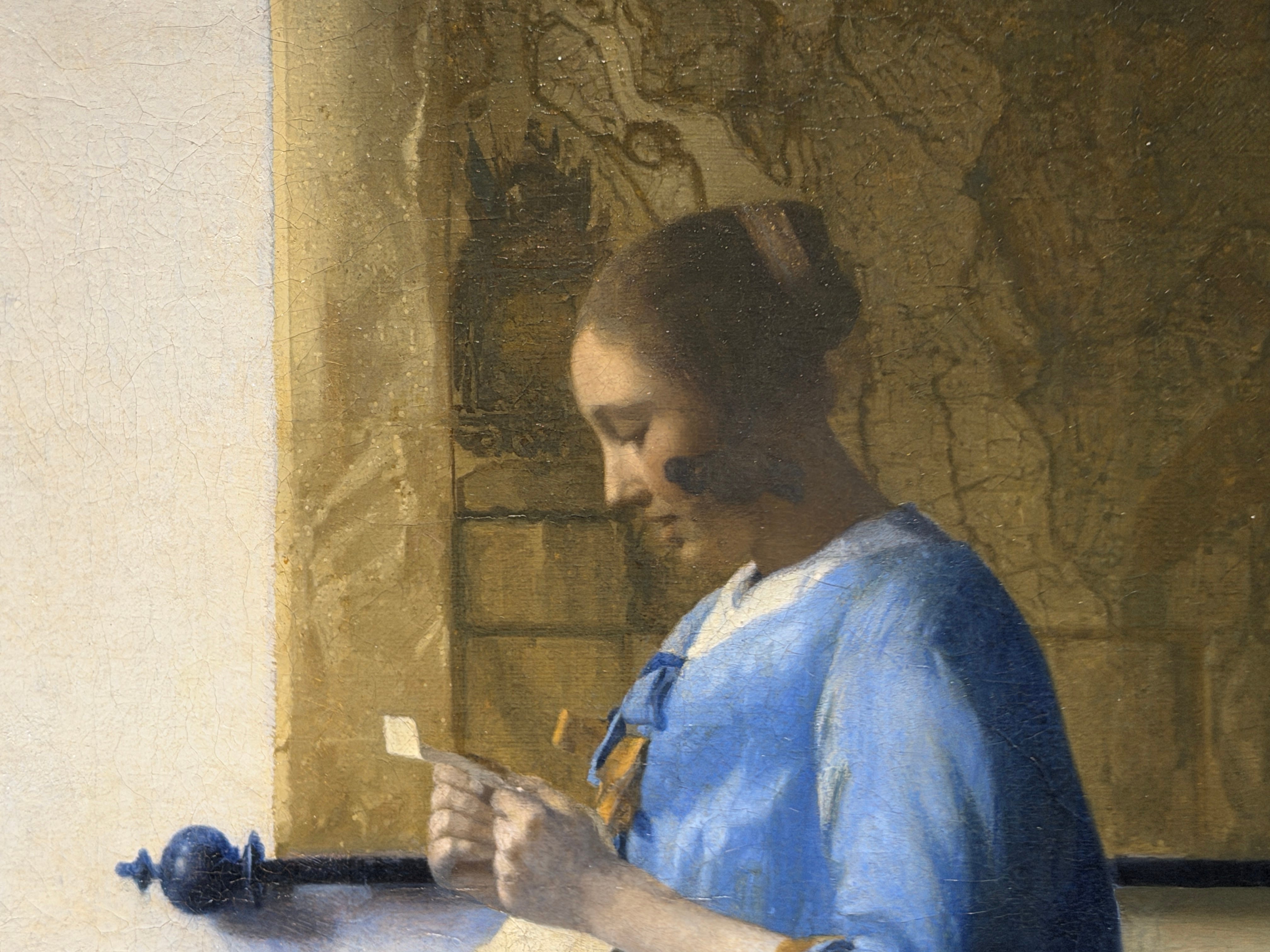
At present there is an exquisite Vermeer on display in Rome, on loan from the Rijksmuseum in Amsterdam and gleaming in the quietly atmospheric gloom of the Room of Landscapes just off the Oval Hall at Palazzo Barberini. Given that famously perhaps only thirty or so paintings known to be by Vermeer exist—none of them in Italian permanent collections—it is a super opportunity if you find yourself in Rome before 11 October.
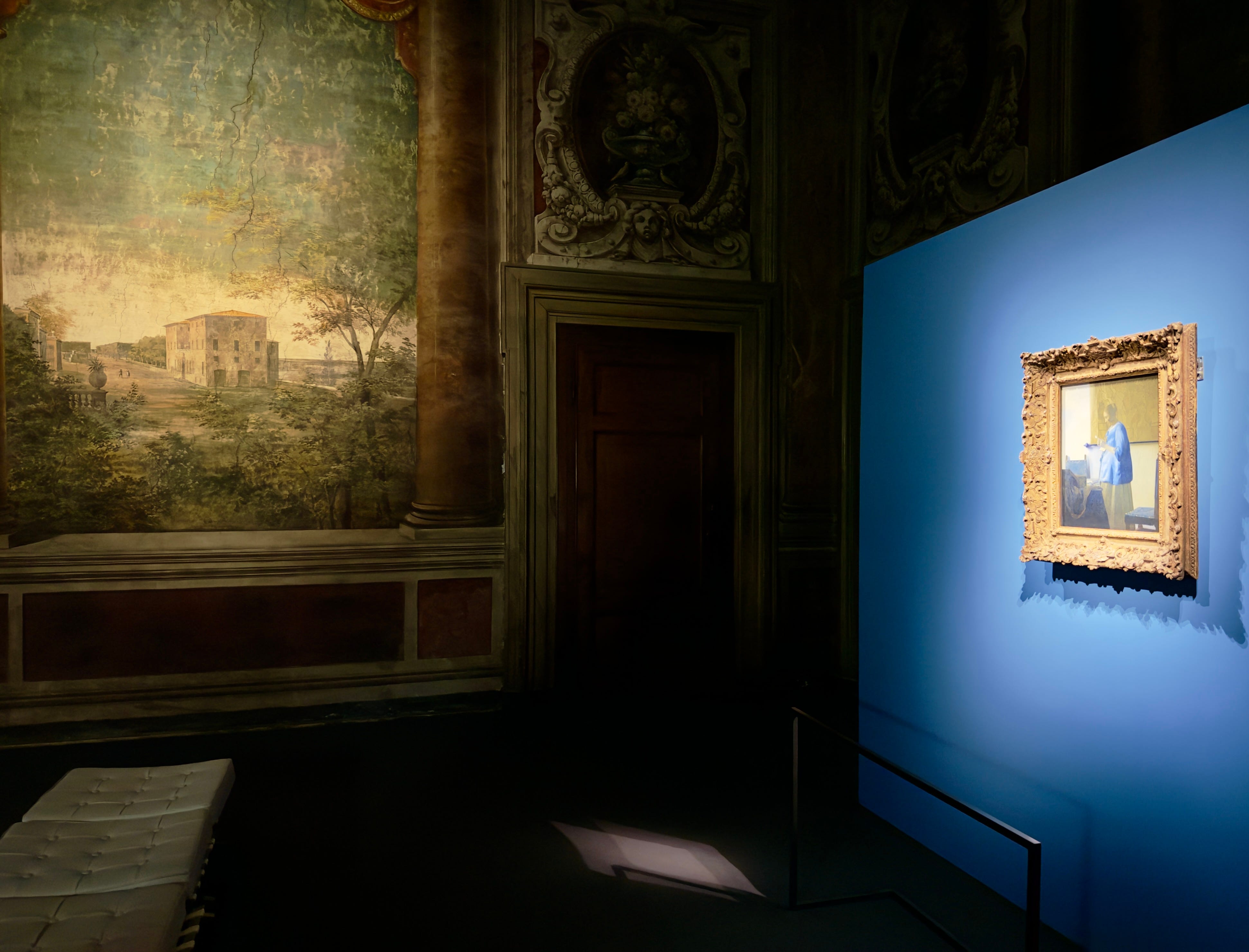
On the handful of occasions I’ve dropped by Palazzo Barberini since the one-painting exhibition opened on 8 July, both with clients and not, there have been at most half a dozen people. It is just another reason to visit one of Rome’s most splendid painting collections in one of its finest palaces.
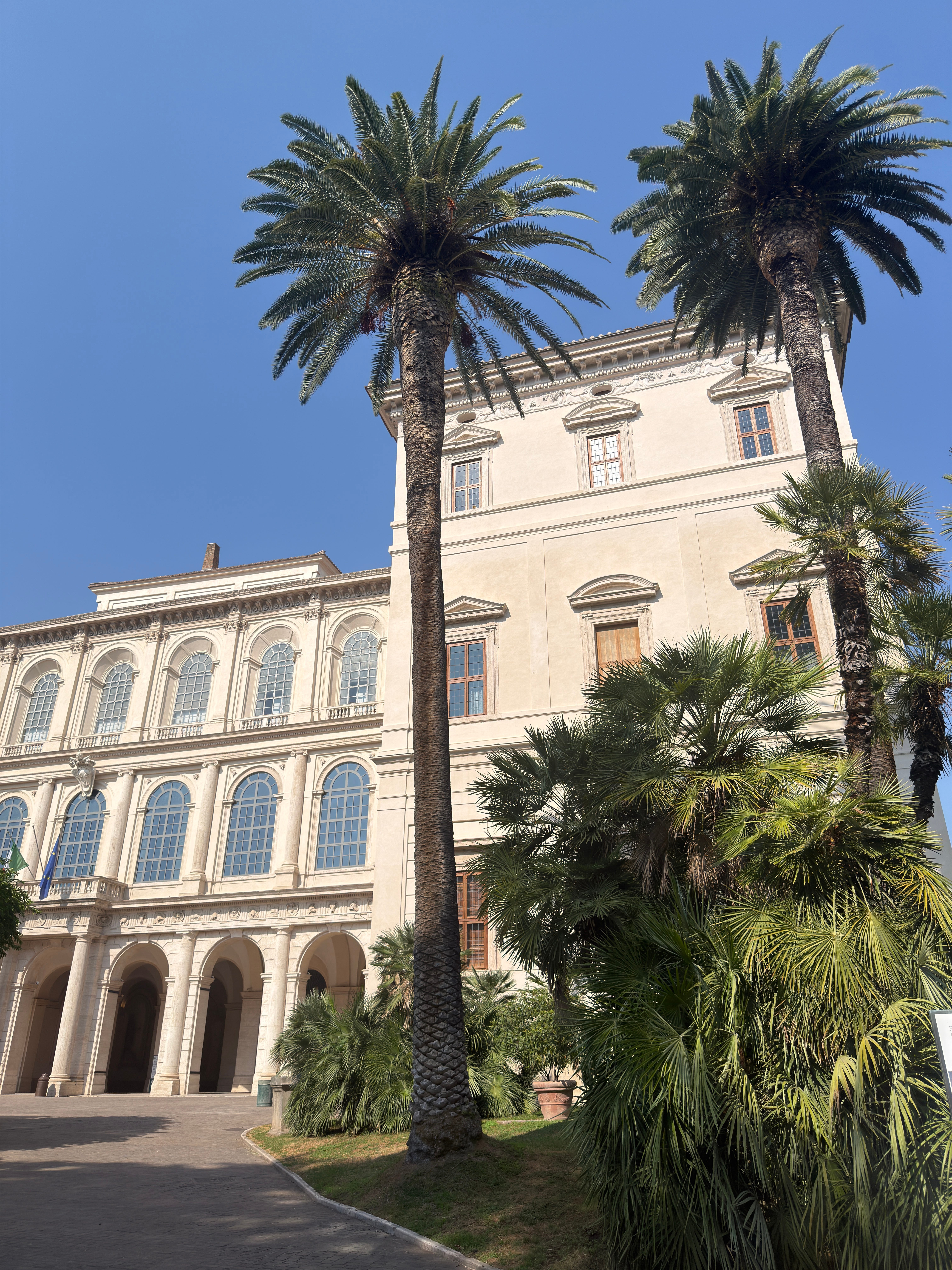
Johannes Vermeer was born in Delft in 1632, the same year that Il Sant’Alessio was staged at the newly completed Palazzo Barberini; Baroque opera collides with Netherlandish burghers in a fabulously discordant contemporaneity. My first thought on seeing the painting in the palace built by Pope Urban VIII was of this extraordinary dichotomy between two contemporary aspects of seventeenth century Europe: for a few months the Protestant bourgeoisie of Northern Europe glows, unrepentant, in the heart of Papal Rome’s very own ancien regime.
Vermeer’s father was at the more intriguing end of that burgeoning northern European petite bourgeoisie: silk weaver, art dealer, indebted innkeeper; part burgher, part scoundrel. The infant Jan was baptised at the Reformed Church in Delft, while in Rome Pope Urban VIII’s extravagances would have had Calvin spinning in his grave.
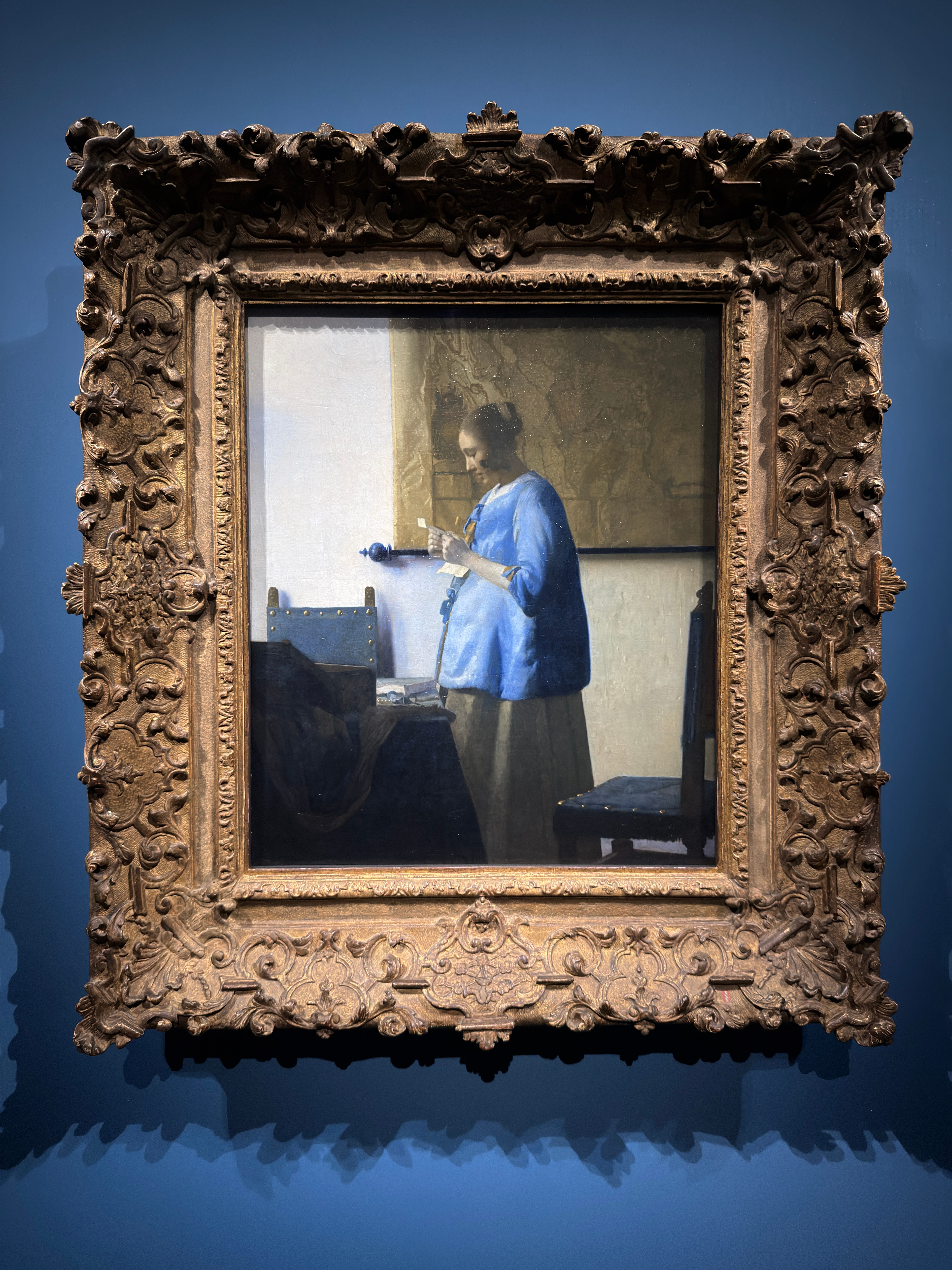
In fact, despite this apparently austere background, Vermeer seems to have had a fairly liberal and cosmopolitan upbringing; after all not many Calvinists were indebted innkeepers with a spot of dealing in art on the side. It is likely that Vermeer’s family were, despite his baptism in the established Reformed Church, followers of the breakaway liberal Remonstrant congregation.
The tavern in question was on the main square of Delft and backed onto a canal. It was a large place, with four fireplaces and rooms to rent to travellers. If we employ a little imagination it offers an intriguingly tangible glimpse into Vermeer’s early life: This was a place where artists gathered and, as archival evidence reveals, conducted business (presumably often through Vermeer’s father). Delft was also home to an office of the Dutch East India Company, and the inn saw folk passing through on their way to and from distant and exotic climes; we can imagine heated conversations, tales of foreign lands, and serpents of wood and tobacco smoke dancing in shafts of low winter sunlight. Such a tavern seems the ideal place to begin a lifetime spent emulating the nature of light.
Comments
Nothing yet. Say the first thing.
Sign in to join the conversation.