
Woodcut Review is a regularly occurring analytical publication featuring a well-known or lesser-known woodcut. I analyze the woodcut for stylistic techniques and general woodcut methods the maker used and, if applicable, what the maker could have done better.
This article’s subject is Paul Landacre’s ’’Edge Of The Desert’’ from 1930-1931.
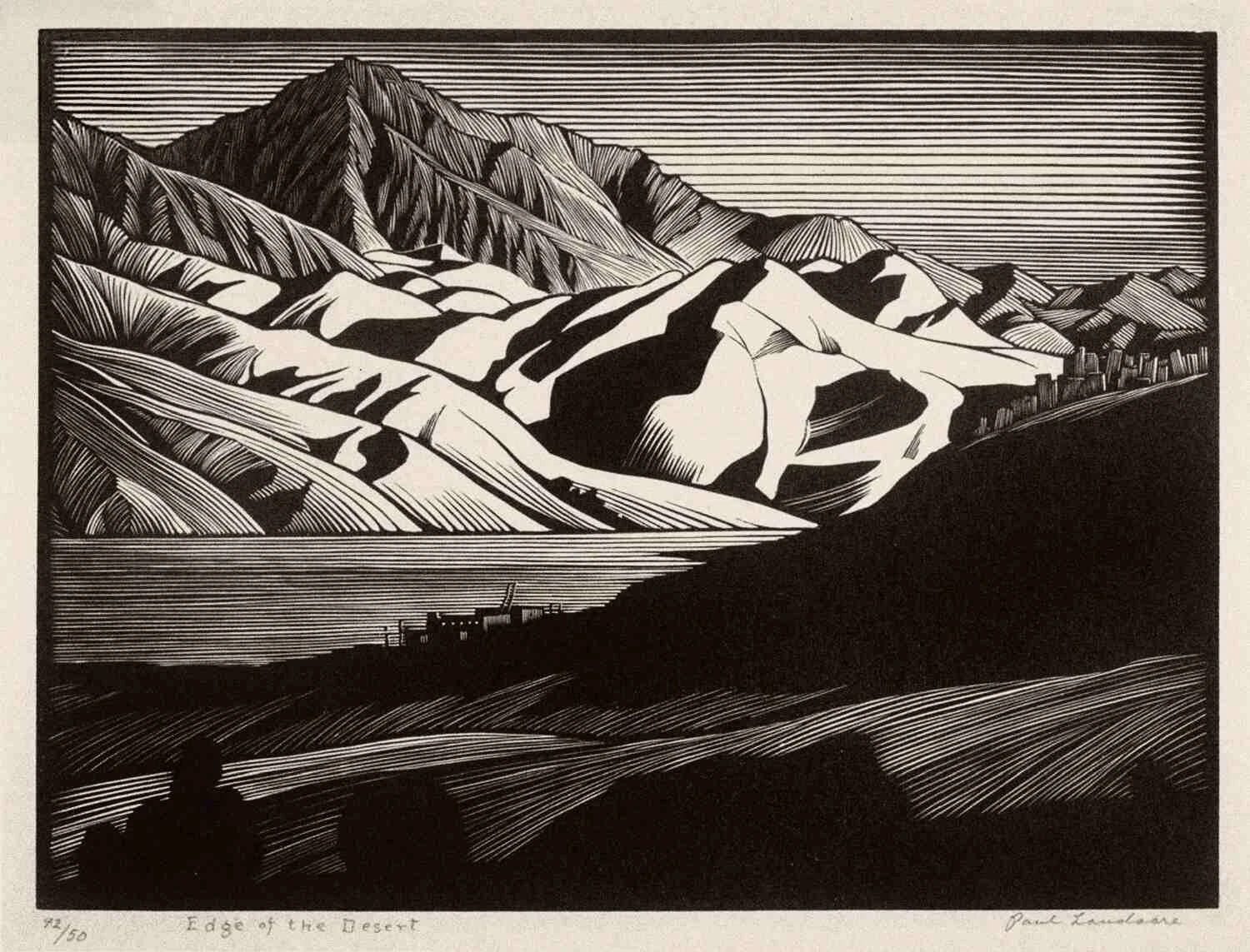
Paul Landacre was an American artist who lived from 1893 until 1963 in California. Many of his works were created in the golden age of woodcuts, at the beginning of the 20th century.
’’Edge Of The Desert’’ is actually a wood engraving. What is the difference between a wood engraving and a woodcut? A wood engraving uses the end grain of a piece of wood, where a woodcut is carved into the long grain. Wood engravings can therefore technically hold a lot more detail than woodcuts. But they are limited in their size.
Landacre had excellent technique, as you can see from this print. The lines are precise and constant. The composition is very balanced and features black shadows, some mountains that are in direct sunlight and some mountains further away are presented in grey.
I really like how majestic and impressive the desert looks. My favorite thing are the mountains in the background.
The only thing Landacre did was carve away areas on his block that were white. The black areas are inked and printed onto the paper. So how do you make grey?
Let´s zoom in.
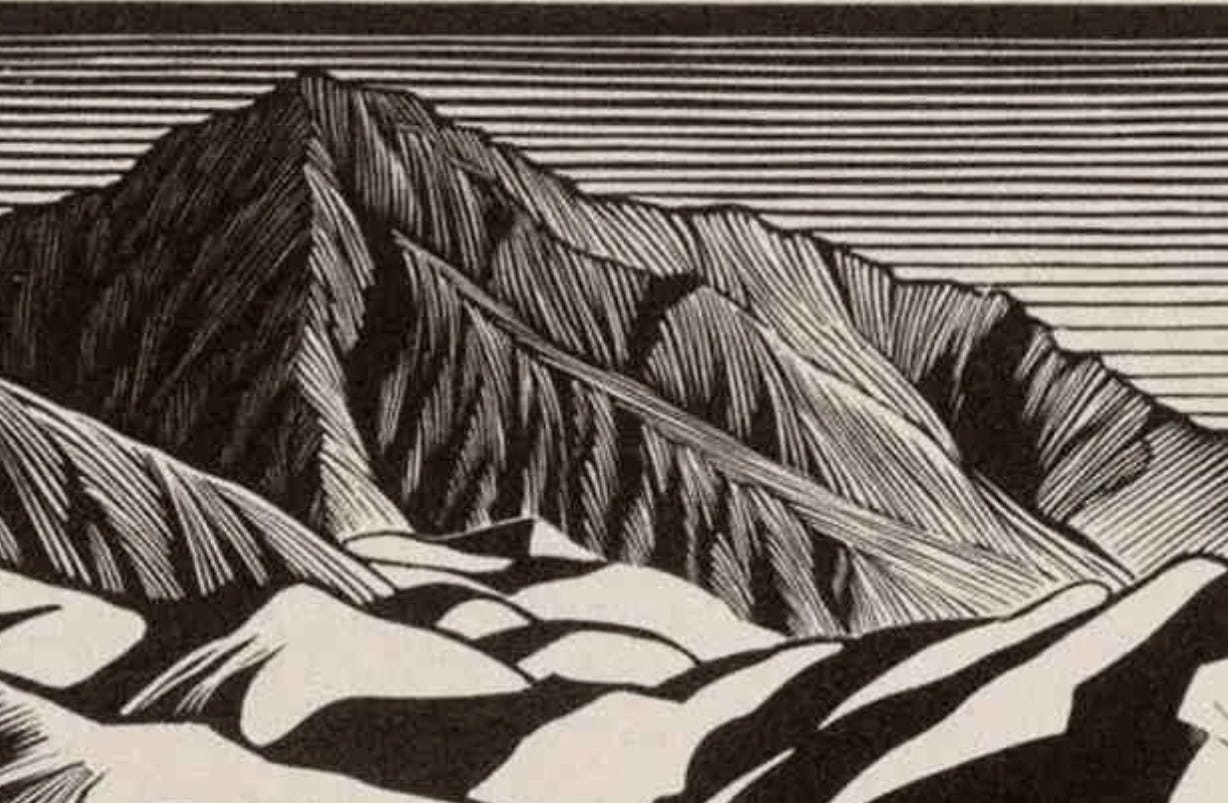
These are the mountains in the background. Notice they are composed of black and white lines. When you see the print from a distance, they merge to the color grey.
Comments
Nothing yet. Say the first thing.
Sign in to join the conversation.