
Non-response is read as permission. Every unanswered drone invites the next one.
Russia doesn’t need to invade. Disrupt a country’s airspace and you can switch its critical infrastructure on and off.
Deterrence only works if the consequence is named before it’s needed—and then carried out.
Russia’s Starlink alternative might go live this year. Europe might arrive by 2035.
Better equipment won’t save you if nobody knows how to fix it under fire.

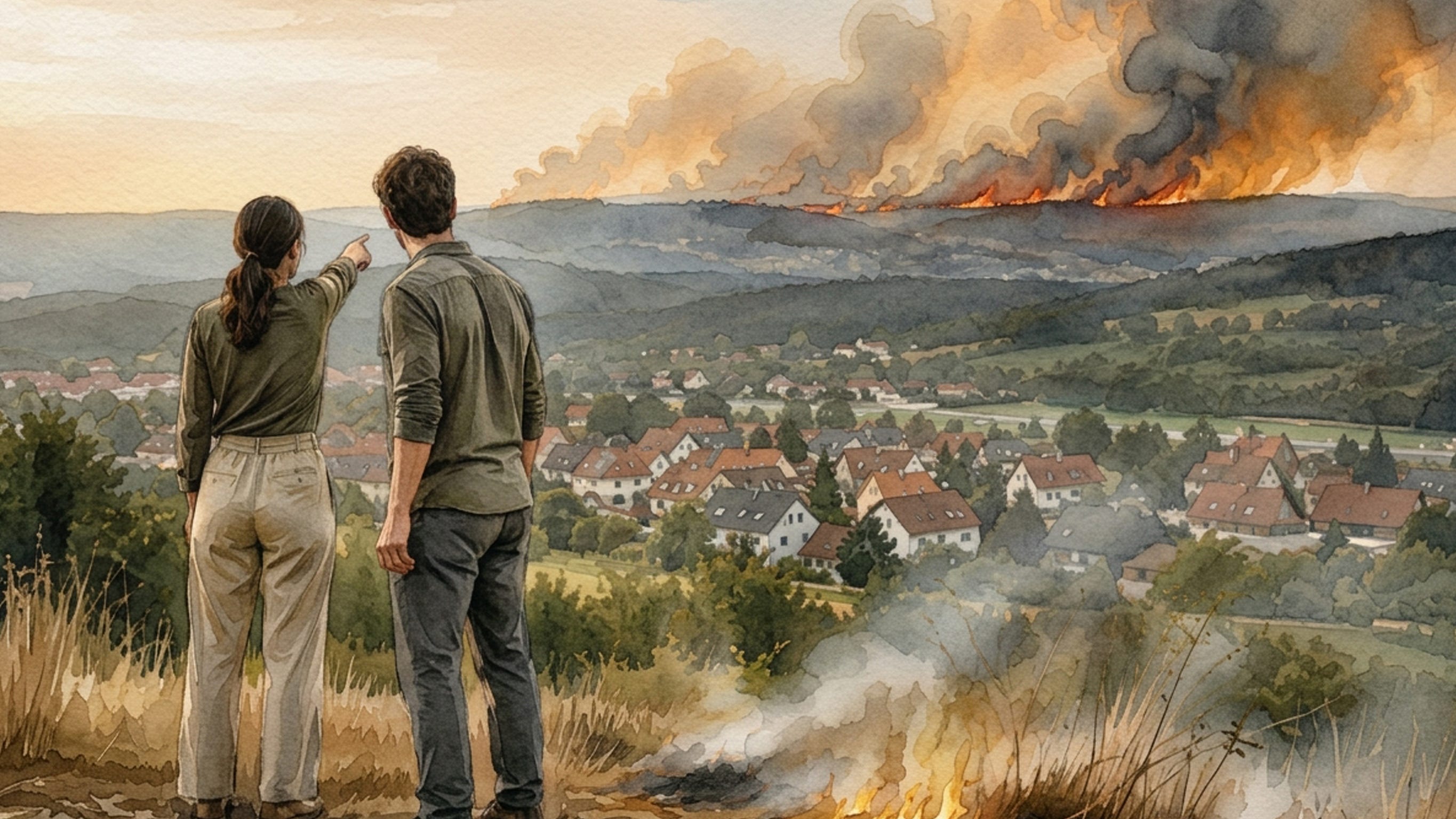
TIRANA, ALBANIA—Yesterday I drove into the Albanian alps, home to much guerrilla warfare from the age of Homer to just a few years ago. I was prepared for some August fresh air and nothing was going to get in the way of it. Then my driver-guide and I saw smoke on a distant ridge: wildfires, as so much of the world is now experiencing. From one switchback turn to the next, I kept seeing that mountain on fire. A helicopter passed, dropped its bucket in a river deep below us, and returned to the fire.
We publish this newsletter every day at 9:05am NYC time / 4:05pm Kyiv.
Your subscription fuels our work.
“Listen to Ukrainians today, because it means the difference between saving your life and the lives of your loved ones tomorrow.”
When I reached my destination, the isolated town of Pukë, I had a view of smoke engulfing a mountain in the distance.
Eh, it’s far away, locals said. Indeed, in Pukë the air was clear and clean.
But my Donbas instinct, forged these past years in Ukraine, said: get the hell out, now. I thought of the people in Spain and France who assumed the fire was safely distant and woke to flames licking at their yards with hardly time to escape.
We turned around swiftly. Coming back through the same passes an hour later, the smoke was at least ten times worse. Today the spot where I stood briefly yesterday, in that otherwise pleasant place called Pukë, is covered in smoke as the fire expands. I imagine the visibility on the only roads to get out of there is near zero.
What today seems far away and of little concern for us, can quite quickly be our tomorrow problem. We should know this by now, whether its wildfires or fiery war.
Ask Ukrainians. Many of them in 2021, and even in January and February 2022, were sure Russia would not launch a full-scale invasion, and so they were unprepared. Many Americans and Europeans are just as sure today that invasion, whether armed Russians in Ukraine or unarmed migrants in Ceuta, are someone else’s problem. But as our panel of experts cautions this week, the matches have already been lit in our own backyards.
The mood is dour. Russia hit Kyiv like hell last night and the West is not ready to face such a fire. All the more reason to stand with Ukrainians: perhaps the world’s best survivalists.
Let’s now get our weekly hit of the COALITION OF THE DOING: UFN’s Panel of Experts:
Maksym Eristavi is a Ukrainian journalist based in Prague and author of the award-winning Russian Colonialism 101. He is a former senior fellow at the Atlantic Council.
THE NEWS: Leaked plans this week for new Russian bases along the Ukraine–Belarus border, putting Bucharest and Sofia inside the range of Russian drones.
“I definitely think that we’re oftentimes talking different coding languages. Part of the reason is because the Russians have been so successful at their influence operations and propaganda and cognitive influence over Europe—convincing Europeans that the Russian Empire is another European nation state, that they think like Europeans and follow the same logic. When in fact, when you study Russian imperial warfare through centuries, you understand that they have a certain logic that is completely different. …”
“And part of it is the importance of these power flexes. When you flex your power and you flex your capacity to signal that I can do that—even without doing it directly. That’s exactly what Russia has been trained to do. Not only operationally: mapping the vulnerabilities, testing, looking to see where the cables are, where the critical infrastructure is. They’re also doing it in a not very discreet manner, to send the signal that I can do it.”
“And if you don’t do anything back, it’s just an invitation for them, automatically, to keep doing it. They don’t have to, at some point, even invade. If they have total control of your airspace, they can switch on, switch off your critical infrastructure. They’re already in control.”
THE NEWS: The campaign to readmit Russian athletes under their own flag and anthem is gathering pace ahead of the next international season.
“This push to return Russian athletes under Russian flags, and hearing Russian national anthems in international sports arenas, is happening absolutely not as a coincidence. This part of the great Russian culture narrative is even a kind of master code for Russian imperialism in general.
“When bad things start happening for Russia as a state, there has to be a refuge for Russian imperial narratives and greatness. And Russian culture comes to this rescue all the time. What they’re trying to do at the moment is shield all of that from the accountability that is catching up with ordinary Russians, with the state, with their economy, with their reputation, which is absolutely destroyed all over the world.”
“There’s this video of a Russian athlete crying—these imperial tears, that she cannot perform under her flag and people are not nice to her. And she wonders why. After her country killed hundreds of Ukrainian athletes, destroyed entire stadiums, destroyed the sport infrastructure, mass murdering people who could have competed alongside her.”
THE NEWS: Ukrainian strikes, including with British drones, reached further into Russia this week, hitting oil depots and warehouses—and Russians filmed their own petrol queues.
“We cannot possibly think that Ukraine, on its own, with its limited resources, a country ten times smaller than the Russian Empire, can destroy the entire war economy in Russia. But what they’re doing is piercing this superiority myth—that you can face consequences for those crimes done in your name. As a Russian citizen, they’re all done in your name. Not in Putin’s name. In the name of the greatness of Russia.”
“The average Russians, who have not faced any consequences in the last four years, are starting to feel it. And they’re starting to ask these questions: okay, if we’re so superior, why do I see Ukrainian drones bombarding my neighbourhood, destroying warehouses and all those supposedly unreachable sites?”
“Despite having fewer resources, they have the initiative. And then Russia hits back in a mirror way, because they’re already following that initiative. Losing this initiative, and showing their public that they’re not in control and are just responding, is such a huge hit to Russian imperial greatness.”
Deborah Fairlamb, an American, is founding partner at Green Flag Ventures in Kyiv and co-hosts our Coalition of the Doing podcast.

Comments
Nothing yet. Say the first thing.
Sign in to join the conversation.