

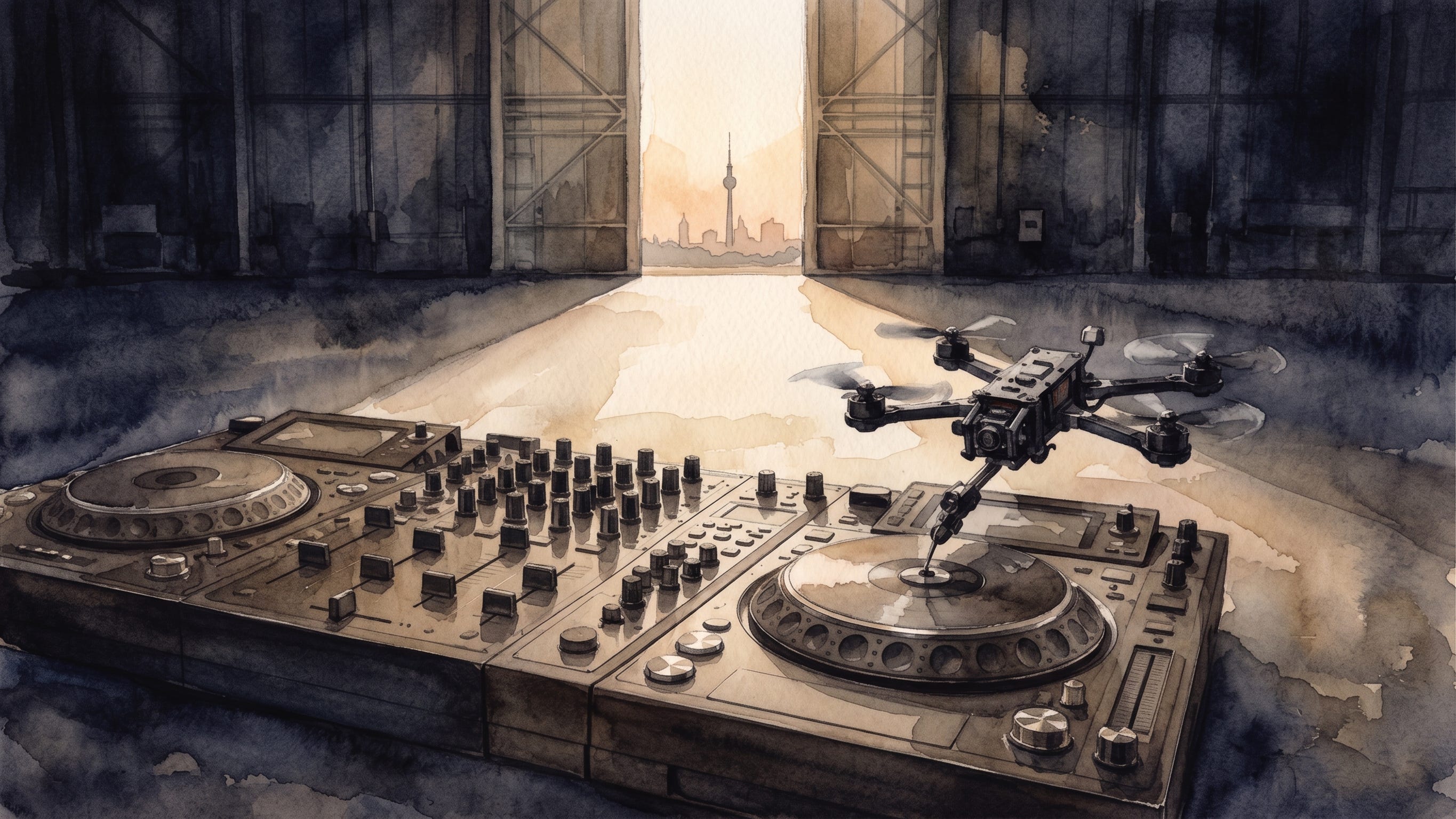
BERLIN—Hundreds of Europe’s most ambitious defense builders took over a former airfield, brought their prototypes, and had a runway on which to prove the things actually work.
I went to see whether they did.
We publish this newsletter every day at 9:05am NYC time / 4:05pm Kyiv.
Your subscription fuels our work.
By the time I arrived at Neuhardenberg Airport on a Saturday morning, the four-day European Defense Tech Festival—read our Q&A with the event’s cofounder here—was already well underway. Inside the hangar, founders demonstrated prototypes, engineers discussed material questions, and military personnel posed the direct, sometimes uncomfortable questions that young defense companies need to hear. Outside, the airport’s runway allowed the technology to move beyond presentation slides and prove what it could do.
Berlin may have built its international reputation as Europe’s party capital, but it is rapidly becoming a mil-tech building capital as well.
By Sunday evening, I was convinced that this was one of the strongest defense-tech events Europe has held in recent years. Organized by the European Defense Tech Hub (EDTH), the festival combined a clear sense of purpose with an unusual degree of openness. One of the key aspects of EDTH’s conferences and gatherings is that they are highly informal, and yet very productive, and that is how it was this time again: Some of the most valuable conversations began unexpectedly beside a prototype or over coffee, then ended with exchanged contacts and plans for cooperation after the festival.
Dryad Networks uses solar-powered, AI-enabled gas sensors connected through a mesh network to identify wildfires at a very early stage.
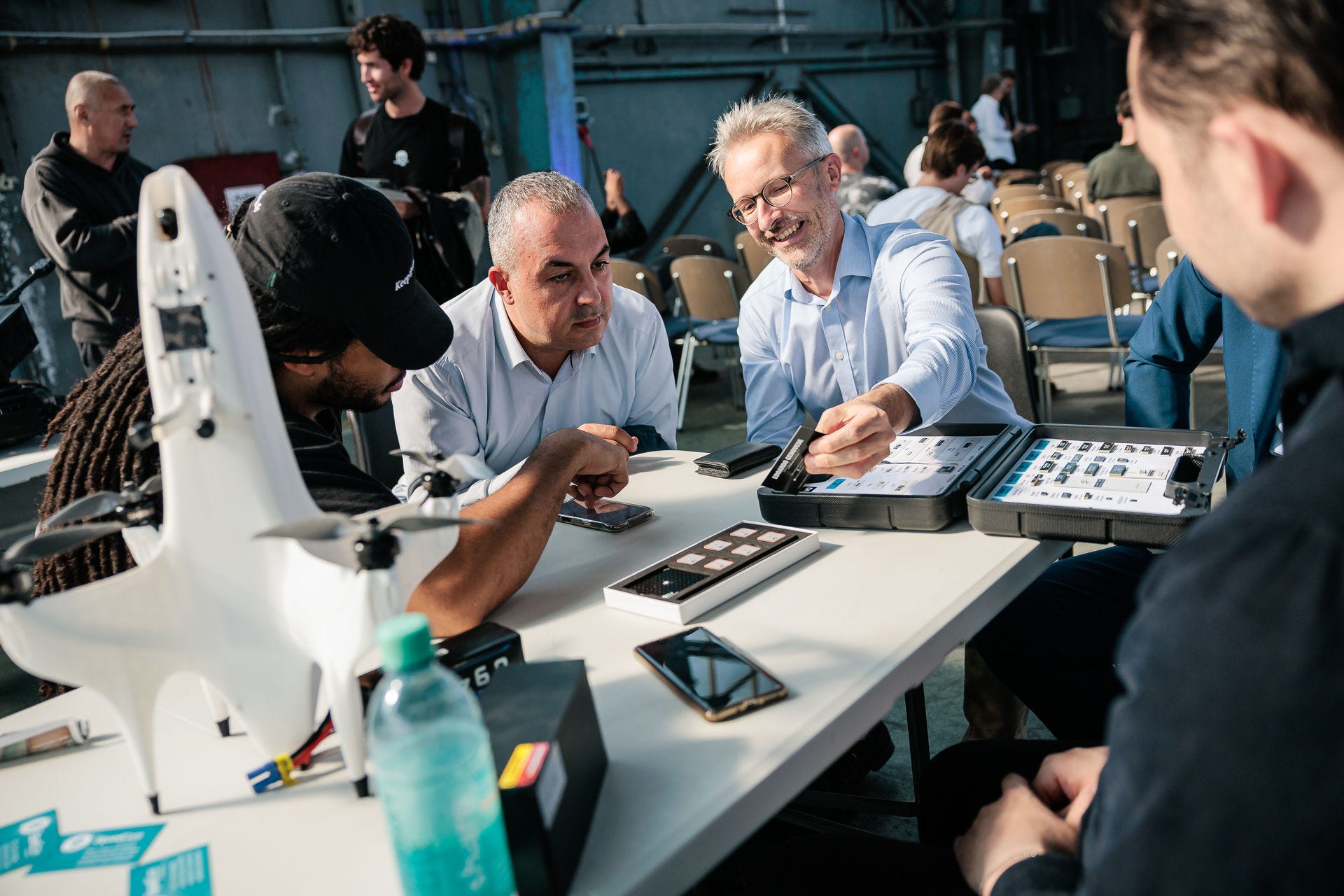
The atmosphere reflected a sector undergoing a rapid transformation. European defense technology is no longer confined to a handful of major contractors, government procurement offices, and closed industry conferences. A new generation of companies is emerging, often founded by people with backgrounds in software, artificial intelligence, robotics, medicine, telecommunications, or emergency response. Many are small, some are still operating in stealth mode, and others have already begun working with military users. What unites them is a willingness to build quickly and test their assumptions against operational reality.
The festival, held August 20-23, brought that community together at an appropriate location. Neuhardenberg’s hangars and runway provided the space for demonstrations, testing, and technical discussions that would have been impossible in a conventional conference center. Berlin may have built its international reputation as Europe’s party capital, but it is rapidly becoming a mil-tech building capital as well. But true to local tradition, even an event devoted to rearming Europe still came with music, drinks, and an afterparty.
Among the companies I encountered was Steggo, whose platform transforms battlefield radio communications into structured intelligence.
Read on to see who else stood out at the European Defense Tech Festival …
You might also find this interesting:

Comments
Nothing yet. Say the first thing.
Sign in to join the conversation.